

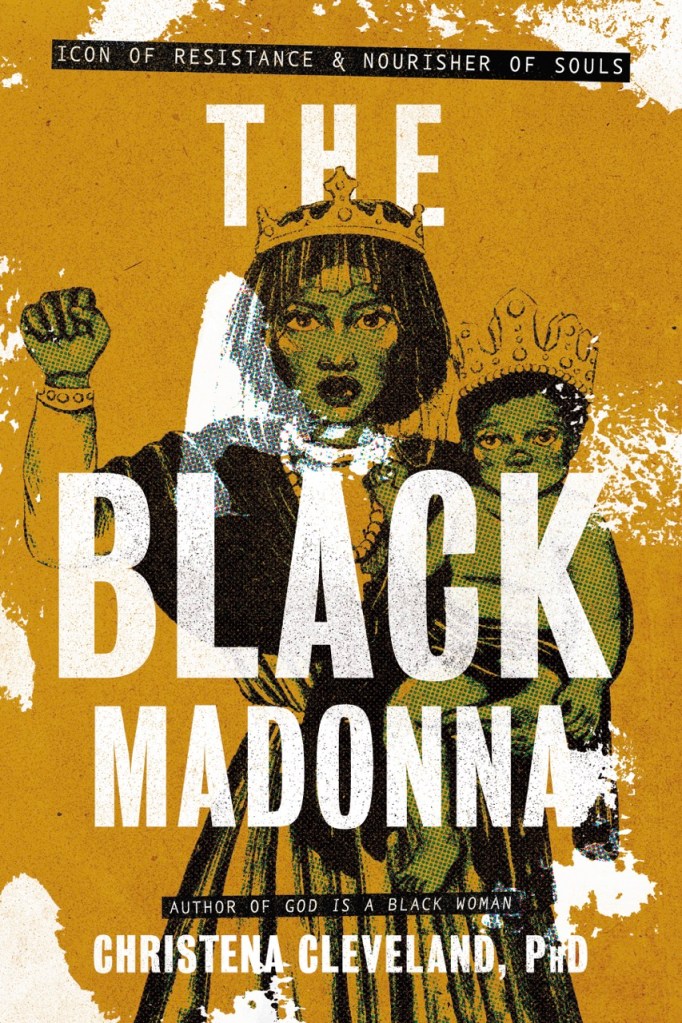
Though we often assume that Christianity was introduced to Africans after colonial enslavement, groundbreaking work by historians such as David Daniels unveils the truth that many African communities practiced a version of Christianity while still living on their ancestral lands Prior to the transatlantic slave trade, the Portuguese established Catholicism in the Kongo, and many Kongolese made magic by integrating the most life-giving aspects of Catholicism with their Indigenous spiritualities. Specifically, many Kongolese Catholics nurtured a deep devotion to the Virgin Mary, elevating her beyond her diminished status as an unassuming and relatively powerless “servant of God” to co-chief of Christ and a goddess in her own right. Despite the patriarchal teachings of the Catholic Church, the Kongolese drew upon an Indigenous cosmology that affirmed the divine power of women and embraced the Virgin Mary as an emboldened Christ figure who possessed all the powers and grace that Jesus and the Father possessed. They implicitly understood what Black Madonna devotee Mirabai Starr would teach over 250 years later: She is “. . . the quintessential Mother, the feminine face of the Holy One, fierce protector and gentle consoler . . . She refuses to be defined as the passive, obedient handmaid of the Father. She is the radical, powerful, engaged Mother of the World.”
But to the Kongolese, the Virgin Mary was so expansive and compelling that she couldn’t be fully defined by or confined to Christianity; she was also venerated as a Kongolese ancestor. As historian Mark Smith writes, “Beyond the Kongolese commitment to Catholicism generally, evidence suggests that the Virgin Mary occupied an important place in their cosmology.” As both a Christ figure and an ancestor, the Virgin Mary of the Kongolese was explicitly African. For example, in 1704 back in the Kongo, Dona Beatriz Cimpa Vita, a young Kongolese anti-colonial revolutionary, decried the racism of the Catholic Church and audaciously took it upon herself to revise the official church prayers to affirm that “Jesus and Mary were actually Kongolese” and that Mary could be reliably called upon when Kongolese people experienced colonial violence.7 Unlike the distant, porcelain white Mary of European Christianity, the Kongolese Virgin Mary was Black Madonna—a Black version of the Virgin Mary who relates to the unique experiences of Black people and reliably stands with us as a powerful advocate against racial oppression and the other colonial powers. Since Black Madonna was both their holy queen and their ancestor, her very existence affirmed the Kongolese’s divine birthright as cherished and sacred human beings. As members of her lineage, the Kongolese knew they were divine too, and far too worthy for life on the plantation. No amount of colonial programming could dissuade them from the liberating truth they encountered in Black Madonna.
Though the Stono Rebellion was the largest slave rebellion in early colonial America, it was unsuccessful in a purely physical sense. Once the local militia was alerted, it quickly mobilized and engaged the revolutionaries in a field near the Jacksonborough ferry. Thoughthe revolutionaries fought valiantly, more than half of them were killed before they could escape, and most of the ones who escaped were hunted down and beheaded. Nevertheless, the Stono Rebellion sparked a series of slave revolts around colonial America. As news of the Stono Rebellion spread, many other enslaved people began to embody their sacredness in a new way and seek freedom for themselves. In a cosmic sense, the Stono revolutionaries—with their unforgettable white attire, sacred drumming, and fearless beheadings—liberated the imaginations of countless enslaved people who could now echo their cry for liberty.
I am astonished that in a colonial world ruled by white supremacy and its patron saint, white jesus, the Kongolese devotion to Black Madonna clothed them in sacredness, inoculated them from the forceful colonial conditioning that claimed they were worthy only of enslavement, and fortified their efforts for liberty. Despite the towering uncertainty that surrounded them, the Kongolese embraced
the cosmic truth that Black Madonna teacher Clarissa Pinkola Estés would affirm centuries later, about “how deeply incubated we are in the Holy Mother, we, the children of the dark-skinned holy woman who is never afraid of the dark.”8 Black Madonna was their North Star, and with Black Madonna guiding them, they could face anything. Through the Stono Rebellion, Black Madonna nourished generations of enslaved Black people to embody their sacredness, find their North Star, and get free. Even more, I was astounded when I learned that right around the time of the Stono Rebellion, Black Madonna was also inspiring revolution among enslaved Africans in Haiti. In this book, as we explore resistance efforts throughout the African diaspora, we’ll come to see that Black Madonna is a holy insurrectionist who is known for empowering radical freedom. We’ll come to see that Black Madonna is often the who that sparks liberation.
—-
If you would like to go deeper with the Black Madonna and experience the transformative love of the divine feminine, join my virtual retreat happening on November 7, 2026. Maybe you’ve known her for years. Maybe you just (consciously) encountered her. Either way, you are Black Madonna kin and you are welcome at the circle.
Purchase The Black Madonna at Bookshop.org with this link, or at your preferred retailers such as Barnes & Noble, Amazon, or Books A Million.
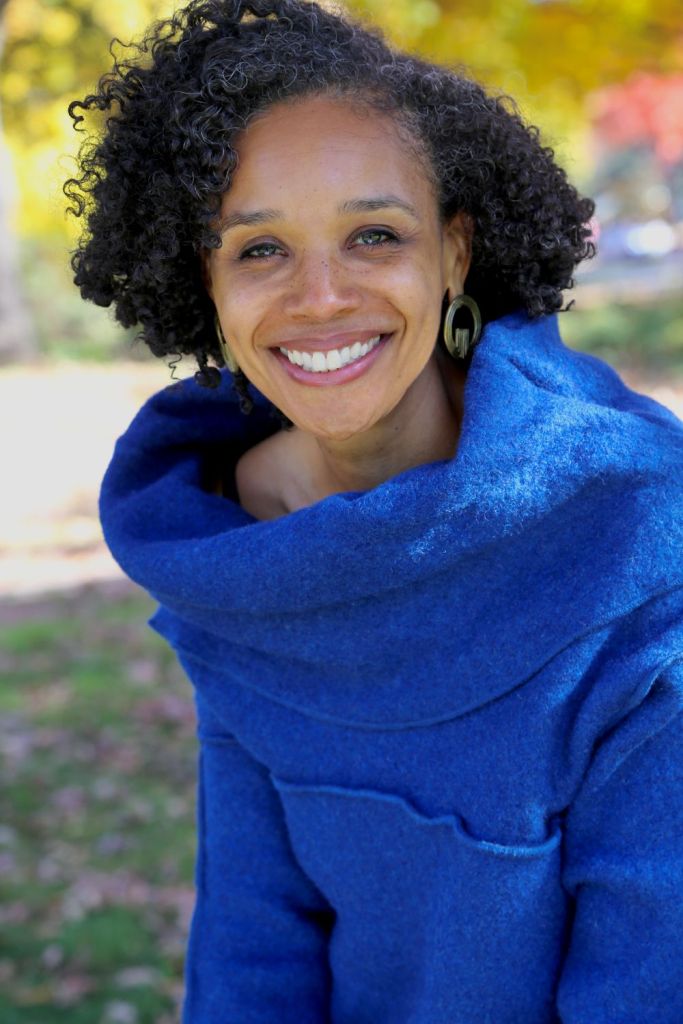
BIO: Christena Cleveland, Ph.D. is a social psychologist, public theologian, author, and activist. A weaver of Black liberation and the Divine Feminine, Dr. Cleveland embraces the archetype of the Black Madonna as she guides people of all races and genders into freedom, wholeness, and embodied justice. She is the founder of the Black Madonna Freedom School, which nurtures courageous and compassionate people who are uprooting white patriarchal religious conditioning in themselves and their communities, while skillfully planting intersectional divine feminine wisdom. Her latest book is The Black Madonna: Icon of Resistance & Nourisher of Souls where she explores the miraculous, liberating, and zany ways that the Black Madonna has protected, empowered, and nourished people around the globe and throughout history. An award-winning researcher and former professor at Duke University’s Divinity School, Christena lives in Minneapolis, Minnesota. You can discover more about the Black Madonna and Christena at www.christenacleveland.com.
Discover more from Feminism and Religion
Subscribe to get the latest posts sent to your email.


I can remember when the Black Madonna caught me as an emerging feminist – I was in Assisi Italy when I dreamed she rose out of a stone tower of some kind.I read every volume I could get my hands on…etc etc embracing this other side of Mary who I had loved as a child. In my way of thinking the Black Madonna is a powerful image open to all – an archetype as in pattern, but also as an immense force of energy – I think she is most radical because she privileges unconditional love and endurance…
LikeLike
So happy to see you here Christena! I have shared on the divine feminine app.
LikeLike