My Afternoon with Amina Wadud: Some Pearls of Wisdom for a Warm Autumn in Santiago by Vanessa Rivera de la Fuente

Vanessa Rivera de la Fuente. Amina WadudAlbert Einstein said that there are two ways for understanding life: One, to believe nothing is a miracle; the other, to believe everything is a miracle. I think life is a bit of both. There are experiences that result from a chain of events we can easily recognize. Others are just a gift. My meeting with Amina Wadud was of the second kind – a beautiful gift from life in the beginning of the autumn in Santiago of Chile.

Meeting The Lady

Since I converted to Islam, around 5 years ago, and started my path now as a feminist Muslim, it is not possible to explain one without the other in my life history- the presence, words and activities of Amina Wadud have been a source of inspiration for me.

Her book, Quran and Woman, was the first approach to and basis for an Islamic Feminism that stands with strong feet against misogyny and fundamentalism in the name of religion. Her courage when she dared to preach a jutba (sermon) and lead a mix prayer – something still forbidden officially for women in Islam – led us to question our  physical place and its symbolic meaning in the mosque. Her vocation as a globetrotter, talking, meeting, and encouraging people in the world to build new meanings and communities based in freedom of spirit, made me understand that the message of Islam and its different reading on gender, is not only on behalf of Muslim women or Muslims in general, but is on behalf of all humankind, like a whole family looking for social justice and freedom, passengers in this big mosque and madrassa that is Allah’s creation.

Continue reading “My Afternoon with Amina Wadud: Some Pearls of Wisdom for a Warm Autumn in Santiago by Vanessa Rivera de la Fuente”

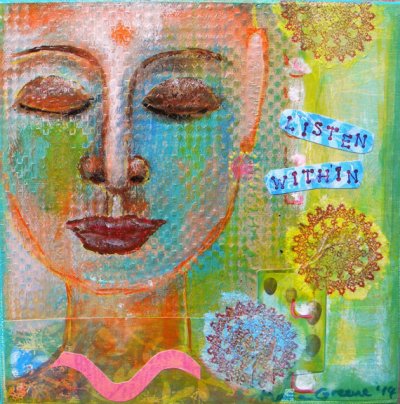
Meditating on Oneness by Amy Wright Glenn

Utah native Amy Wright Glenn will talk about her book: "Birth, Breath, & Death: Meditations on Motherhood, Chaplaincy, and Life as a Doula." Courtesy Amy Wright GlennAt the age of fourteen, I began to question the Mormon faith of my family. I embarked on a life long personal and scholarly quest for truth. While teaching comparative religion and philosophy, I was drawn to the work of supporting women through labor and holding compassionate space for the dying.

In my book, “Birth, Breath, and Death,” I share moving tales of birth and death while drawing on my work as a doula, hospital chaplain, and mother. I weave together these stories with philosophical reflections on truth, meaning, and Spirit.

This is an excerpt taken from the first chapter entitled “Search.”

I spent much of my early twenties traveling throughout The Middle East and India. I lost track of time gazing at an ancient copy of Homer’s Iliad at a museum in Cairo. I remember sleeping through a freezing cold night on Mt. Sinai and awakening to a brilliant sunrise over the Arabian Peninsula. I climbed the pyramids in Egypt and protested the Israeli occupation of the West Bank with Arab and Jewish women peace activists. For a year, I studied in Jerusalem. Later, I dedicated myself to the practice of meditation at an ashram in the Himalayas.

A lively mix of debate and discussion characterized my Hebrew University days. In the evenings, I worked illegally as a waitress in the Jewish Quarter of the Old City. Adorned in Roman attire, I served fantastic platters of Middle Eastern cuisine and performed folk songs and dance routines for photo-snapping tourists. I was nineteen and living in Jerusalem, a place saturated in religious symbolism. Known as Al-Quds in Arabic and Yerushalim in Hebrew, Jerusalem is a city renewed and ravaged due to contested paradigms of poetry and politics. Continue reading “Meditating on Oneness by Amy Wright Glenn”

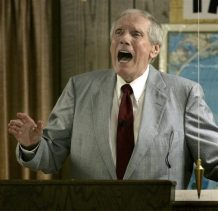
In Memoriam – God Hates Fags

Phelps didn’t just live a life filled with hate but he also embodied the very reasoning why so many communities cannot cross that proverbial bridge to work together to see past their differences and maybe never will. In the case of Phelps, sticks and stones may break our bones, but words really do hurt.

Fred Phelps, an American PasFred Phelpstor who headed the Westboro Baptist Church in Topeka, Kansas died at the age of 84 on March 19, 2014.  While some individuals leave behind legacies of their good deeds and loving memories, the only thing Phelps left behind was a family and church founded on the principle of hate.

A frequent eyesore at various events ranging from military funerals and gay pride gatherings to mainstream events that captured the attention of our pop-culture obsessed society, Fred Phelps and his clan believed it was their sacred duty to warn others of God’s anger over the growing acceptance of not only modernity in general but also issues like gay rights and abortion.  From slogans and signs such as ‘God Hates Fags’ to ‘Thank God for IEDs (Improvised Explosive Devices), Phelps has caused many controversies both during his lifetime and after his death.

Continue reading “In Memoriam – God Hates Fags”

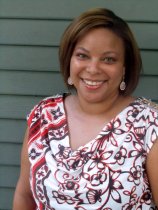
Gendered Imagery of God (Part 1) by Elise M. Edwards

Elise Edwards

I have been doing a lot of thinking about gendered imagery and language for God over the past few months. Honestly, a lot of this reflection was provoked by hostile comments I got from my college students at the end of the fall semester because I require gender-neutral language for God and gender-inclusive language when referring to people. The policy in my syllabus is this:

For academic discourse, spoken and written, students are expected to use gender-inclusive language for human beings, and gender-neutral language for God. (e.g. “God” instead of “He;” “God’s” instead of “His;” etc.) This is to prepare students to communicate to the world beyond the Christian university setting. I want to equip you to succeed in graduate school, in the corporate world, and in public communication, all settings in which gender inclusive language for is increasingly expected.

I provide links to websites that discuss the issue, and we talk about it more when we discuss 20th century feminist issues in my course on the Christian Heritage and when we discuss prejudice and sexism in my ethics class.  Some students have thanked me for the policy. But many students are perplexed by it, and I’m perplexed by their confusion. It shocks my system when I hear people refer to “man” for all people; I first became aware of the issue when I was in 2nd or 3rd grade and the Girl Scouts changed their pledge because it referred to “mankind.” That was over 30 years ago!

While I’m confused as to why replacing “man” with “people” is such a difficult task, I am more empathetic to the reorientation required to replace “He” with “God.”  (And I also acknowledge that the term “God” is not completely genderless either.) I recognize that for many of my students, I might be the first one to challenge their gendered conceptions of God.  So I am empathetic, but insistent.

The way discussions about the “gender” of God and Savior are often dismissed as irrelevant, unimportant, silly, or the remote concern of “those feminists” bothers me. Traditional Christian theology asserts that God is a different kind of being than humans are.  Therefore, God (the first person of the Trinity) and the Holy Spirit do not have a sex or gender, as sex is a characteristic associated with physical creature-ness and gender is (to simplify) a social construction related to sex. The second person of the Trinity, Jesus, is thought to be male.  In the Incarnation, the eternal God became human while also divine, and therefore has a sex and gender in the person of Jesus.  But the Trinity as a whole is without sex and has characteristics that we would associate with femininity, masculinity, and genders in between.  According to this logic, references to the maleness of God should only be understood metaphoricall,y not literally, and therefore replacing that language with genderless/sexless language should not be inherently problematic.

I’m not saying that the use of any language in reference to God is appropriate or acceptable within the bounds of traditional theology.  We (traditionals and non-traditionals alike) should be concerned with how we refer to God, because as Sallie McFague and others remind us, these metaphors/models of God have consequences in the world beyond language.  Maleness becomes deified or closer to godliness than femaleness, maleness becomes the model for the priesthood, maleness is the true form of authority, etc.  I believe that many of the concerns about feminine imagery for God are based in this same concern: that by associating God with one sex or gender, we claim God’s preference for that sex or gender.  In a patriarchal system, this correlation between God and the feminine simply will not do.  Feminists who assert feminine qualities of God are merely making projections of themselves, critics claim.

How we conceptualize the being we worship matters. It matters to me, at least. While I acknowledge that there is a danger of simply projecting an image of myself as a deity that I worship, I also think there is great harm in loving and worshiping the divine imaged as those who are at times hostile to me, and historically have been so to my ancestors and kin. So although I know and have good relationships with older, white males, I see no reason why I should image and worship God “the Father” who looks like an old white man. How would that benefit my spiritual practice?

Thank you Carol Christ, for asking me to state my views about this in the comments to my last post. I look forward to more discussions with you and the members of this community.  When I read your work years ago, I was convinced about the validity and rightness of affirming feminine forms of divinity. Although the Christian (patriarchal) tradition does not have much room for Goddess language, I am comfortable with it, at least for the first and third persons of the Trinity. In my next post, I’ll talk more about the ways I am considering the gender of the Christ.

Elise M. Edwards, PhD is a Lecturer in Christian Ethics at Baylor University and a graduate of Claremont Graduate University. She is also a registered architect in the State of Florida. Her interdisciplinary work examines issues of civic engagement and how beliefs and commitments are expressed publicly. As a black feminist, she primarily focuses on cultural expressions by, for, and about women and marginalized communities. Follow her on twitter, google+ or academia.edu.

Religion: Trapped in Love Through Shame by Andreea Nica

Andreea Nica, pentecostalismI was first introduced to shame in the church. Shame paradoxically drew me closer to God, prevented me from committing sins, and helped me repress certain natural urges. The church I grew up in indoctrinated its congregation to believe that shame would transform us into true and wholehearted believers – that as carnal beings, we needed to feel both guilt and shame in order to be saved and transformed into spiritual entities.

One question that permeated my mind growing up, but I’d never dare to publicly ask:

Why would Jesus die for me when I never asked Him to? Continue reading “Religion: Trapped in Love Through Shame by Andreea Nica”

Sex, Religion, and Discourse: An Interview with Judith Butler

One of my academic joys is interviewing people I find particularly interesting (see most of my posts here). This time I am honored to present a recent interview I did with Judith Butler.

Image from The European Graduate School

Many wonder how gender performance relates to chromosomes, phenotypes, genitalia, and other scientific “evidence” for innate sexual differences. Continue reading “Sex, Religion, and Discourse: An Interview with Judith Butler”

A Not So Ideal Deal: Perspectives On Sexism In “Islamic Marriage” by Vanessa Rivera de la Fuente

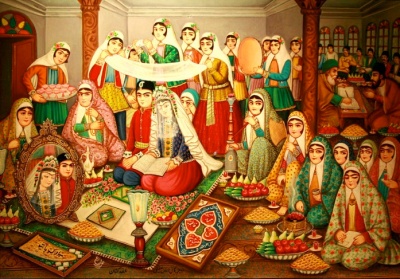
Vanessa Rivera de la Fuente. Marriage in IslamOne topic that emerges from the discussions I have with other Muslims and people in general relates to marriage. Starting with, I don’t agree with marriage. Not because I think married life is negative but because, under the prevailing patriarchal logic, marriage is not conducive to full relationships. Patriarchy has also polluted Islam and, therefore, the way in which gender relations are understood as part of a Muslim’s life including the concept of marriage.

Since I converted to Islam, I have received 11 marriage proposals. I have refused them all. Many people have seen in my attitude a sign of pride and rebellion. They are wrong. I do not rebel against married life, but against the terms in which it is presented to me and the role I am supposed to have because I am a woman in it. Manly-man-male ideas about women, prejudices related to the fact that I am not “pure Muslim, but converted,” “not Arab,” and stereotypes about Hispanic-Latina women, have all played a major role in the deep indignation and disgust with which I have rejected each prospect. Continue reading “A Not So Ideal Deal: Perspectives On Sexism In “Islamic Marriage” by Vanessa Rivera de la Fuente”

Why I Don’t Believe in Female Pastors by Andreea Nica

Andreea Nica, pentecostalismIt may come as a surprise to those who identify as both feminists and religious practitioners that I don’t believe women should be pastors of any dominant religious congregation. This includes most religions which, I assert, are rooted in and structured by the tenets of patriarchy. Does that mean I think women should be congregants of a patriarchal-originated religious system? You guessed it – no. While this may seem like a radical notion to some, it took me quite some time to come to terms with my own conflict in being both feminist and a believer.

My transition from the Pentecostal sect was a long, intricate process that involved life-altering decisions. The notion of leaving the church was driven by my immersion in women’s studies during my undergraduate degree. There were many difficult questions I simply didn’t have an answer for, as the church didn’t provide me with them.

One of them being: Can women instruct an entire congregation of believers?

For those who are female pastors, I’m sure you’ve heard this one a million times, but somehow it never fades from religious and secular discourse. Whether it’s the Islamic, Jewish, Christian, or Mormon faith, women have had to constantly fight for their right to preach religious doctrine. In the beginning of my transition, I was on the side of: Preach it ladies! Continue reading “Why I Don’t Believe in Female Pastors by Andreea Nica”

Evangelical Missionaries Preach Death in Uganda by Andreea Nica

Andreea Nica, pentecostalismA former evangelical Christian friend of mine sent me information on the intriguing documentary God Loves Uganda. The newly released documentary addresses how the American evangelical movement has prompted a political and social shockwave in the country of Uganda. While missionaries are typically associated with delivering aid and improving the conditions of third world countries, the spreading of Christian values and ideals has inflicted suffering upon ethnic communities through evangelical indoctrination.

The intent of the film is to raise awareness of the political and social brutality that the evangelical missionaries are instigating; specifically through their teaching that homosexuality is a sin and should be dealt with accordingly. In Uganda this means death. Given the rise of globalization, transnational religious actors have been more enabled to engender other nations with their respective religious beliefs, often with minimal regard for the cultural and political landscape of the nation they wish to transform. Continue reading “Evangelical Missionaries Preach Death in Uganda by Andreea Nica”

Remember the Sabbath Day: The Cost of Difference by Linn Marie Tonstad

Linn Marie TonstadI grew up Seventh-day Adventist and was educated at Seventh-day Adventist schools all the way through college. I can tell endless quirky stories about growing up – about the time my parents gave me The Lion, the Witch, and the Wardrobe to read at the age of seven and I was certain, certain, that they had no idea what devilish literature they had given me (all those horrible hags and werewolves), so I promised myself never to tell them because they would feel so bad for having led me astray. (I figured it out when I reread the story at the age of nine.) About my joy in meeting missionaries from the Church of Jesus Christ of Latter-day Saints, or Jehovah’s Witnesses, at the train station on my way to and from school, so that we could proof text against each other. I was always certain that my marked Bible (marked with Sabbath texts, carefully traced with different colored pens, based on a pamphlet I had picked up somewhere) would eventually lead someone to the truth. (Again, I was nine.) As I entered adolescence, I became increasingly worried about the early Adventist dictum that the degree of responsibility you have as a believer is proportional to the degree of light you have been given – after all, I had a lot of light! In fact, I knew the truth.

But no stories like this will tell the truth of my relationship with the church. Yes, I grew up in ways that seem strange to many people: keeping Saturday holy starting Friday at sundown, without TV or movies until about the age of eleven, as a life-long vegetarian (although I became a pescetarian in my twenties), believing that Jesus Christ will return soon, having read the Bible cover to cover by the age of nine (do you see a pattern emerging?), and so on. Having spent the last decade plus outside Adventist institutions, I know much more than I did then about the ways in which my upbringing and beliefs were unusual by mainstream standards. Yet unlike many people who become theologians, and unlike many women who become feminist theologians, I never experienced the church as a particularly repressive site, even though the external forms of my life look very different now. I loved the church, and despite some unfortunate experiences with authority during my high school and college years, the church gave me gifts that I have valued ever since. Continue reading “Remember the Sabbath Day: The Cost of Difference by Linn Marie Tonstad”