The Dignified Life of Magdalene Rose: A Pro-Life Story? by Michele Stopera Freyhauf

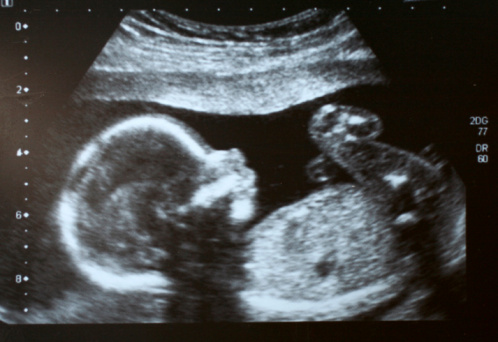
As I enter this world, I know that I am so very blessed. My life will be one of worth.  As hard as people fought to see me take my first breath, they will fight for my life to be one of dignity and worth.  I am protected in a world that is pro-life – or so I thought.

My mother was raped, but the law did not recognize this violent act as rape because she became pregnant with me.  The law only recognizes legitimate rape as one that does not result in pregnancy.  I entered the world amidst controversy.  I was named Magdalene Rose. Magdalene because of the shroud of controversy that surrounded her – the false accusations of prostitution, the stigma that history assigned to her, and the hope of those who have tried to reclaim her as the first witness to the resurrection, a faithful disciple, and devoted minister.  Rose was chosen for the flower that can bloom even in the face of adversity; one that can push through the snow to reach the sun and spread its petals.
My mother is a single mom  She does the best she can – trying to keep us clothed and fed.  She works so much and I stay many nights with my grandmother or a neighbor.  She seems so tired, so worried, but yet always has a smile to share with me.  I am her blessing, a miracle born out of darkness.

We go to church every Sunday, but strangely, no one will sit by us.  We have to sit in the back.  I wonder why.  Certainly our clothes are a little worn – we rely on hand-me-downs and the thrift shop.  My mother dresses me in the finest dresses she can find, I feel so special. In God’s house, we are shunned.  People refuse to shake our hand even during the sign of peace.  This is the place where we should be welcomed.  This is where they proclaim the Gospel and teachings of Jesus.  Yet, the only sign of Jesus that seems to exist in this community is symbolized on the cross.
Continue reading “The Dignified Life of Magdalene Rose: A Pro-Life Story? by Michele Stopera Freyhauf”

LGBT Activism and the Holy Spirit By Dawn DiPrince

Last Sunday before Mass, I was in the sacristy preparing for the First Reading that I would later be sharing with the congregation. The music director and Monsignor were there too, discussing Church-related matters. When they saw that I was there, the music director (who is really informally in charge of all operations) says: “Oh, Dawn, I saw you on TV the other night.” I responded with a smile and a subtle nod of my head. Monsignor asked: “Oh really, what for?” And, she answered for me: “She was at the City Council meeting talking about same sex partners.” Monsignor quickly walked away without further comment. And, I just sheepishly shrugged my shoulders. Continue reading “LGBT Activism and the Holy Spirit By Dawn DiPrince”

Hitting the Trifecta in Women’s Issues by Michele Stopera Freyhauf

One did not have to watch the debate between Barack Obama and Mitt Romney this past Tuesday to know that Romney hit the trifecta in the area of women’s issues.  It was all over social media within minutes of statements being made that marginalized or treated women as “less than.”

The issue of contraception and rape is still a topic of debate.  Church’s post signs to “Vote for Religious Freedom” and hand out voting guides that help you gauge the moral candidate.  Bulletin boards stating that “Obama believes in abortion and gay marriage – do you? vote Republican” appear by the highway.  This issue will not be settled during the election.

If people in power set an example of bullying and/or oppressive behavior, this behavior becomes acceptable.  If women are treated “less than,” then their dignity as well as their humanity is compromised.

An extreme example of this de-humanizing treatment of women in American society appeared October 13th in Cincinnati.com.  A story was published about a flyer found in the men’s restroom of a co-ed freshmen dorm at Miami University.  The title of this flyer – “Top Ten Ways to Get Away With Rape:” Continue reading “Hitting the Trifecta in Women’s Issues by Michele Stopera Freyhauf”

Visions of My Grandmother by John Erickson

“I never told my grandmother I was gay. I’ve often wanted to visit her grave, clench my hands together, and pray that she forgive me for betraying the trust she instilled upon me long ago. However, even today, I cannot bring myself to make that trek, up the hill into the countryside where her ashes lay below the ground.”

I haven’t dreamt of my grandmother since her passing one hot summer July evening.

The night, and the days that followed, continue to be a blur.  However, as my family members continue to see her in their nightly visions, I, go on unabatedly longing to see and hear the voice of a woman who made me feel the presence of the divine with each passing story.

My sister saw her in a dream when she was buying shoes, my mother has seen her multiple times when she would be undergoing a particularly stressful situation, and I, left alone and oftentimes wondering through an abyss of loneliness and disarray, wake up each morning wondering why, I am left all alone. Continue reading “Visions of My Grandmother by John Erickson”

Lucy Burns, A Look at a Catholic American Suffragette by Michele Stopera Freyhauf

As we approach the election period infused with controversy, saturated by television commercials, as well as endless advertisements on the radio, Internet, and yes, even Facebook, we must remember the sacrifices made by our foremothers during the suffrage movement, which gave women the right to vote.  While all elections are important, this one has targeted issues involving women in a way that could negatively impact our rights – to the point of rewinding the clock on progress made in women’s equality during the last 40+ years.  This election needs the voice of all informed voters.  However,  it is imperative for all women to make their voices heard this year by casting a vote.  To turn a blind eye to these issues diminishes the sacrifices our foremothers made for us. To not cast a vote takes away your voice, makes you a silent bystander – something that was tried by the government and patriarchal system during the suffrage movement.

To illustrate this, I would like to highlight Lucy Burns and the Night of Terror endured at the Occoquan Workhouse by her and many of her friends.   Of all Suffragettes, Lucy Burns spent more time in jail then any other protesters.  Born 1879 in Brooklyn, Lucy was raised in the Roman Catholic tradition by a father who believed that his sons and daughters should be educated equally.  Burns gradated from Vassar College in 1902, then attended Yale Graduate School studying linguistics.  She eventually went to Oxford University in England to resume her studies.  It was at Oxford that she became involved with activism and the suffrage movement. Continue reading “Lucy Burns, A Look at a Catholic American Suffragette by Michele Stopera Freyhauf”

Working to Bring about the End by Elise M. Edwards

I was reminded that the idea of eschatological reversal can be a powerful image in the promotion of justice if we believe that we already are, or that we should be moving towards the ultimate end that remedies current injustices.

I started teaching a course in Introduction to Christian Ethics a couple weeks ago for a class of graduate students who are pursuing their M.Div. and other Masters in religion degrees.  We are spending some time talking about the use of Scripture in ethics, so I reviewed Richard Hays’ 1996 text The Moral Vision of the New Testament: A Contemporary Introduction to New Testament Ethics.  It got me thinking a lot about the role of eschatology in ethics. (Eschatology is the area of theology concerned with “last things,” like the end of the world, heaven, hell, death and eternal judgment.)

Continue reading “Working to Bring about the End by Elise M. Edwards”

Is the Republican Party Platform Truly Pro-Life? by Michele Stopera Freyhauf

As many feminists invest their life fighting for women’s rights to be the center of attention – no one could predict the occurrences of this election year.  In my previous post “Rape is Not a Political Platform – Rape is a Violent Crime!” Carol P. Christ made a comment about women’s issues and politics:

 “I have been waiting all my life for women’s issues to become central in an election campaign, but I guess I should have been more specific in my wish: this is not the format I imagined…”

Christ’s reaction is like so many others in the election; no one could have imagined such a bizarre and backwards slide being lobbied against women’s rights.   Issues being bantered around continue to be rooted in a purported pro-life stance.  This ranges from trans-vaginal ultrasounds, definitions of “legitimate” rape, and now using an Ob/Gyn’s “best guess” to define the gestational age of a baby from the time of a woman’s last period.  This is not a game – this is semantics, this is politics, this rhetoric, and frankly, this needs to stop. Continue reading “Is the Republican Party Platform Truly Pro-Life? by Michele Stopera Freyhauf”

Happiness is a Warm Space: Enchantment as Feminist Virtue by Amy Levin

Art can provide a balm for the modern soul – Claude Monet

Living in New York has its vices, and anxiety-triggering space is one of many. Though the city offers ailments just the same, whether they are in the form of meditation or medication, I’m beginning to believe the statistics delineating just how much more anxious us city-dwellers have become. But once in a while you catch a break.

This past Friday, for me, it was the free admission to the Museum of Modern Art. My favorite exhibition room of the MoMA is neither original nor surprising – Monet’s water lilies. The cool hues of greens, blues, and purples that spread across the triptych canvases so effortlessly interrupt the chaotic bodies roaming about the room, evoking a calm, liberating energy. My lungs expand, my shoulders relax. It is my opinion that more people sit down in this room more than any other in the museum.  These ameliorating spaces, which, using Monet’s words, provide a “balm for the modern soul,” not only lift us emotionally and physically, but they offer us something a bit more. . .metaphysical. The water lilies are just one example of the way that art can offer us a sort of spiritual uplift in, what most of us would consider, a secular space. Continue reading “Happiness is a Warm Space: Enchantment as Feminist Virtue by Amy Levin”

Christian Responses to Akin? by Kathryn House

Where are the virtual facepalms, open letters, memes, ironic but heartfelt Tumblrs, and You Tube counter-protests from Christians who found Akin’s views unfathomable?

With gratitude for Michele’s astute and moving blog on Thursday, I have also wrestled with Rep. Akin’s statements last week. Michele’s passionate post is one of several that have helped me to understand how these comments provide a window into a more disturbing and dangerous framework for evaluating women’s experiences, intelligence, and well being. In addition to the incredible piece from Eve Ensler that Michele referenced, I will not soon forget Shauna Prewitt’s brutal honesty and courage in recounting her experience of rape, the child she chose to have, and of her activism now as an attorney. Nor will I forget the considerations of race and class raised by the Women of Color Activists. The recent outcry and counter-protest from Christians horrified by revelations about Chick-fil-A’s investments gave me hope for a plethora of theologically framed responses.

Continue reading “Christian Responses to Akin? by Kathryn House”

Rape is Not a Political Platform – Rape is a Violent Crime! By Michele Stopera Freyhauf

Just when you think you have heard it all, here we go again – another politician with “open mouth-insert foot” syndrome.  Discussing his zero-tolerance policy for abortion, Missouri Representative Todd Akin made the following statement last Sunday about pregnancies that result from rape:

“from what I understand from doctors, that’s really rare.  If it’s a legitimate rape, the female body has ways to try to shut that whole thing down.  But let’s assume that maybe that didn’t work or something.  I think there should be some punishment, but the punishment ought to be on the rapist and not attacking the child.”

In an inadequate attempt to apologize and clarify his words, Akin stated that he meant to say “forcible rape.” This clarification fares no better nor does the fact that he later acknowledges that women “do become pregnant” during a “forcible rape.”  It is interesting to note what Akin considers to be “rare.”  According to the Washington Post, approximately 5% of rape victims become pregnant.  Akin reduced this to a statistic – 1 out of 32,000 women.  This, for Akin, is a rare occurrence.

Stating that a woman’s body is capable of preventing pregnancy in the case of “legitimate rape” demonstrates how out of touch politicians are and further (re)affirms the bigotry that exists within our political system.  The same politicians who have waived a “war against women” this year, try to promote policies that exercise control over what a woman can and cannot do with her body; policies that are  based on ill-advised misinformation.  Decisions politicians make for a woman – what she can and cannot do with her body – are rooted in personal faith beliefs, party-line agendas, and supporters (campaign financing dollars and lobbyists).  This year, a woman’s body has become a platform for votes.

Inasmuch as I would like to think Akin’s statement is an isolated event, Garance Franke-Ruta points out that this is not the first time a politician made a statement about rape victims and pregnancies: Continue reading “Rape is Not a Political Platform – Rape is a Violent Crime! By Michele Stopera Freyhauf”