The trappings of motherhood are all too powerful reminders that, as Catherine Keller reminds us in her book From a Broken Web, mother goddesses have to be continually slain for patriarchal heroes to be born. Indeed, she suggests that conceptions of Western selfhood are based upon this symbolic matricide—so it is no wonder that breast milk might be considered abject…
Once upon time formula companies and complicit medical experts launched a serious campaign to sell more formula, telling a generation of mothers that this product was both superior to breast milk and far better for baby and mother. Some were convinced, others found formula a good alternative to breast milk given their employment status, hormonal changes, their particular baby’s needs,personal choice, difficulty producing their own milk, or the like; and still others chose to breastfeed despite criticism, like my mother-in-law, who received scorn and derision from medical personnel as the only breastfeeding mother in the hospital in which she gave birth in 1970.
Despite this effort, science has finally “proven” that breast milk, when it is possible to give it, is better for your child than synthesized alternatives. Wow. Well, the politics of believability aside, women in the U.S. are now encouraged to trust their own bodies to feed their babies and give the breast a try. In fact, every new book, article, website and internet forum, birthing class teacher and hospital nurse will tell you that “breast is best,” repeatedly, for months, asking you about your breastfeeding plan, and urging you to keep trying until you and baby get it right. A counter-campaign, this vigorous encouragement is working to undo the attitudinal changes within popular culture that placed a stigma on the breastfeeding woman. Continue reading “Breastfeeding and the Abject? by Sara Frykenberg”
Remembering to be thankful may just be a privileged illusion that individuals in positions of power get to write about in the December of each year to self-congratulate themselves about being actually able to be able to be thankful. It may just seem like people who write about being thankful are complaining or pontificating that being thankful is in itself a chore.
With the holidays just around the corner and the frazzled, crisp ping of anxiety, rush, and panic take over the air around us, it is easy to forget to stop and “smell the roses.” In times where teaching positions continue to shrink and more universities switch to adjunct labor, fees and class costs continue to rise, or just simply life becomes a little more complicated, due to the nature of balancing life, activism, work, friendships, or relationships, remembering to remind myself to be thankful is another task, I find adding to the never-ending list of stuff I always seem I have to do.
However, remembering to be thankful, scheduling it into one’s daily schedule are vital to our success as new and emerging faculty or activists or just in general because being thankful reminds us that we have aspects of our lives that are worth being thankful for. Remembering to be thankful proves that we are in some way, connected to a larger sense of life that, at times, grants our wishes, wants, or desires, brings us despair, and then allows us to get through it, or even makes us feel alive.
As I sit back and look at the personal and professional landscape around me I understand that I have a lot to be thankful for both consciously and unconsciously. Most recently at AAR, I participated on a panel in response to Bernadette Barton’s Pray the Gay Away. During the course of our panel, the conversation of chosen vs. biological families came up. Most recently, my mentor and panel moderator, Dr. Marie Cartier, talked about the same topic here on FAR and the difficulties many of us experience in regards to our chosen families vs. our biological families. With the holiday season all around us, and regardless of what or if, you celebrate it or not, it is quite hard to get away from it all without realizing who your “family” is and whether or not you’re close or connected with them can be traumatizing during these times where we’re taught or expected to be with them.
After our discussion on the panel and then at the hotel bar, people discussed the pains and traumas in relation to not having a biological family to go home to during the holidays. Sitting there and listening to the conversations, I realized that, for once in my life, I had nothing to say. Continue reading “Remembering to Be Thankful by John Erickson”
As a maternal health advocate, I cherish the season of Advent as an opportunity to connect a beloved Christian story to the lives of women today who struggle to bring new life into the world under horrific circumstances. Every year I write something about Mary’s pregnancy and birth. In many ways she is no different from the “Marys” around the world who are young, poor, and unexpectedly pregnant, and who go on to give birth in unclean environments. I often pose the question to communities of faith, wasn’t the Christmas miracle equally that Mary survived the birth? How different would Jesus’s life have been if he’d never known his mother?
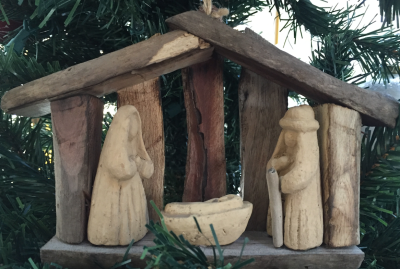
I continue asking these questions, but after my daughter was born last October, I have found my Advent reflections shifting to mirror my own parenting experiences. I began to think beyond Mary’s birth and into her early months of motherhood. One morning last December, after a particularly awful night’s sleep, I came downstairs to hear “Away in a Manger” playing on the radio. When it got to the line “But little Lord Jesus/No crying he makes,” I rolled my eyes dramatically and pictured Mary doing the same as she bounced a screaming baby Jesus in her arms. Continue reading “What If Jesus Had Gone to Daycare? by Katey Zeh”
“I was born in a strange little country town that may be like all other country towns, but I do not know. It was the world I was born to. The world is such a place that you need special things to understand it. I do not think I am a fool, but I do not understand life. It is like I am always standing in the dark somewhere. It could be on the edge of a cliff by a deep ravine… Or on a flat piece of all the land in the world… and I would not know. I would not know whether to step stand still. Either one could be a danger… When I am alone. Some lives are like that. Depending on the kindness of everybody.”
-from “Feeling for Life “ in Some Soul to Keep by J. California Cooper
In my previous post, I wrote about the truths we learn from black women’s literary tradition and from listening to the stories of those we too often ignore. Continuing that reflection over the next few months, I’d like to share some of the lessons from J. California Cooper’s short stories. The quote above is taken from the opening paragraph of one of her works.
“The tools are unimportant; we have all we need to make magic: our bodies, our breath, our voices, each other.”
–Starhawk
As November drew to a rainy close, we had a small family full moon ritual on our back deck and incorporated a simple gratitude ritual into it. The sky was overcast so we couldn’t actually see the moon, but my four-year-old daughter wanted to get out glow sticks left over from Halloween. We had so much fun dancing around with them and making patterns together in the dark night. We sang a chant I recently made up:
Hallowed evening
Hallowed night
We dance in the shadows
We offer our light.
We did a simple gratitude practice by placing corn kernels in a jar, one for each thing we are grateful for from the past month. We started out slowly and taking turns and then we sped up and the gratitude offerings came tumbling out, over one another. Even the one-year-old added corn, rapidly yet with great concentration to make it actually go in the jar. We drummed and called out, “We are ALIVE! We are GRATEFUL! We are POWERFUL! We are CREATIVE!” When we finally decided to close our ritual and go back inside, the moon peeked out from behind the clouds to briefly say hello and it felt like a blessing on the magic we’d just created together.
As we went back inside, I felt relaxed, happy, and connected. For being something very simple, not particularly pre-planned, and semi-chaotic, it felt like one of our deepest and most connected personal family rituals. The quote above from Starhawk floated back into my mind and I reflected that when I try “too hard” to get things ready for a perfect ritual, I often end up feeling a disappointed. Sometimes I feel like giving up on holding ceremonies with my children entirely. Last year, as we prepared to walk our Winter Solstice Spiral, the baby had a poopy diaper that extended up his back. I often end up snapping critically at whomever isn’t doing it “right.” My boys make fart jokes. My husband gives long-suffering sighs. Our circle looks more like a lopsided peanut. Our humming together discordant and off-key. As we lie on the ground together on the Spring Equinox to do our “Earth Listening” practice together, the kids wiggle and fight, pushing one another off the blanket and exclaiming in loud voices so no one can hear what we’re listening for. We listen to a shamanic drumming CD, but the only one to reach a trance state is the baby as I pace back and forth with him in a baby carrier. The four year old ends up crying because she doesn’t see anything and she wanted to see something cool. Martyrpriestess emerges to complain that she doesn’t know why she even bothers trying to do nice things for anyone if this is how you’re all going to act.
I recently finished reading Under Her Wings: The Making of a Magdalene, by Nicole Christine. A theme running through the book was the concept of “As Above, So Below and As Within, So Without.” I read this book as part of my research for my dissertation about contemporary priestessing and as I read, I kept thinking, I want to hear from the Mamapriestesses, from the Hearth Priestesses! Where are the other practicing priestesses with children at home? I noticed in Christine’s book that the bulk of her work took place after her children were grown and, to my mind, she also had to distance or separate from her children and her relationships in order to fully embrace her priestess self. I notice in my reading and my research group that many women seem to come to priestess work when the intensive stage of motherhood has passed, or they do not have children. Is there a very good reason why temple priestesses were “virgins” and village wise women were crones? Where does the Mamapriestess fit?
As I read Christine’s book and witnessed her intensive self-exploration, discovery, and personal ceremonies and journeys, I realized that in many ways personal exploration feels like a luxury I don’t have at this point in my parenting life. How do we balance our inner journeys with our outer processes? Christine references having to step aside and be somewhat aloof or unavailable to let inner processes and understandings develop, since our inner journeys may become significantly bogged down in groups by interpersonal relationships, dramas, venting, chatting, and so forth. For me, this distance for inner process exploration isn’t possible in the immersive stage of life as a mother. And, yet, I also know in my bones that I’m not meant to give it up. How does the As Within and the So Without actually work?
I return to our Full Moon gratitude ritual. My oldest son, 12, whose height is rapidly extending into manhood, totes his tiny brother on one hip with practiced ease, offering his own glow stick and helping my little one hold his into the air. He expresses gratitude for the fun he’s been having this month with his new video game and, “I’m grateful for you for doing things like this with us, Mom.”
My second son, 9, my bravest child, crawls willingly into the darkness under the deck to retrieve lost glow sticks, poked purposefully down porch cracks by the one year old. He returns, triumphant, holding the bundle of sticks aloft.
My daughter, nearly five, tips her face back, looking up at me with eyes alight, “I’m glad to be a Goddess Girl!” she calls out…
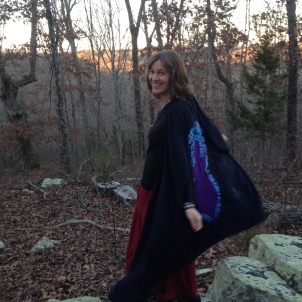
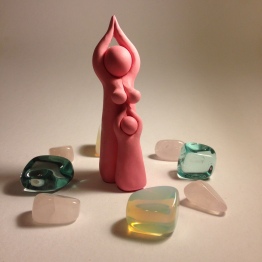
Molly has been “gathering the women” to circle, sing, celebrate, and share since 2008. She plans and facilitates women’s circles, seasonal retreats and rituals, mother-daughter circles, family ceremonies, and red tent circles in rural Missouri. She is an ordained priestess who holds MSW and M.Div degrees and she is currently writing her dissertation about contemporary priestessing in the U.S. Molly’s roots are in birth work and in domestic violence activism. She has worked with groups of women since 1996 and teaches college courses in group dynamics and human services. Molly is the author of Womanrunes: a guide to their use and interpretation, Earthprayer, Birthprayer, Lifeprayer, Womanprayer, and The Red Tent Resource Kit. She has maintained her Talk Birth blog since 2007 and writes about thealogy, nature, practical priestessing, and the goddess at her Woodspriestess blog. Molly and her husband Mark co-create original birth art jewelry, figurines, and goddess pendants at Brigid’s Grove.
Note: If you have children at home, I’d love to hear from you about the Mamapriestess topic! If you do not have children by choice, how does this play into your spiritual work? If you do not have children and that is not by choice, how does this play into your spiritual work?
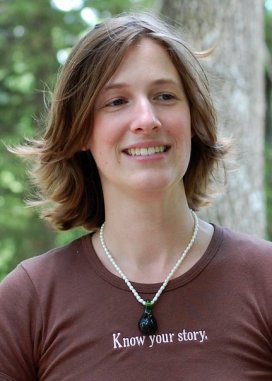
“Human connections are deeply nurtured in the field of shared story.” –Jean Houston
“The universe of made of stories, not of atoms.” –Muriel Rukeyser
This month I went searching for a quote for one of my Red Tent Initiation students. She had shared some powerful reflections about the vulnerability required to reveal our personal stories—there can be a lot of risk, sometimes shame, and more, bound up in our ability to uncover ourselves and speak our truth. What I wanted to communicate with her was the idea that in sharing our stories, including the painful pieces, we free other women to do the same. Our courage to be vulnerable, to be naked, to be flawed, to experiment with ideas, concepts, or ways of being gives permission for other people to do the same.
In 2012, I went to a dancing workshop at Gaea Goddess Gathering. The facilitator mentioned that when facilitating ritual, you have to be willing to look a little ridiculous yourself, have to be willing to risk going a little “over the top” yourself, because in so doing you liberate the other participants—“if she can take that risk and look a little goofy doing so, maybe it is okay for me to do it too.”
After a lot of digging around, I found the quote! I should have known it was from one of my favorite authors and sister FAR blogger, Carol Christ, who said:
“When one woman puts her experiences into words, another woman who has kept silent, afraid of what others will think, can find validation. And when the second woman says aloud, ‘yes, that was my experience too,’ the first woman loses some of her fear.”
This is part of what makes Red Tent Circles so powerful. When women are willing to dig into the questions, activities, and processes, to turn them over, to explore how they work in their own lives…they lose some of the fear and they encourage others to lose their fear too. Continue reading “Story Woman by Molly”
When I was growing up in the 1950s in my Egyptian Jewish immigrant home, each of the High Holidays was imbued with sacredness, thanks largely to my mother’s commitment to a creating a harmonious and memorable gathering of family and friends. Around a long table, covered with an embroidered white cloth and set with sparkling silver and delicately fluted china, she served at each season the festive meal that made manifest for us the presence of the Divine.
My father, an Orthodox man who prayed each morning and went regularly to the local Sephardic synagogue in Brooklyn, privately followed the tenets of his faith. But it was my mother, unconsciously devout, who brought the public rituals of our religion to life. As a child, I longed to be at prayer with my father and was envious of the men and boys who studied and recited the sonorous ancient Hebrew; I did not want to be confined to polishing the silver and setting the table. But today, as an adult, I am grateful for the silent teachings bequeathed to me by my mother. Continue reading “Rosh Hashanah and the Goddess by Joyce Zonana”
In my home, in my journals and notebooks, and in my office, I display proverbs and quotes of all kinds around me to inspire me to live meaningfully. Proverbs and fables from around the world are stacked on my bookshelves and bedside tables. I love reading what is called “wisdom literature” in the Christian Scriptures. But when I get to those final lines of the Book of Proverbs in the Bible, Proverbs 31 sets me on edge.
Proverbs 31 is a poem that begins with sayings of King Lemuel described as “an inspired utterance his mother taught him.” Lemuel’s mother instructs him to not spend his strength on women, to refrain from drinking and to defend the rights of the poor and needy. Verses 10-31, the ones I’ve heard most often read in church settings, follow that advice. They are an acrostic poem of verses that begin with the successive letters of the Hebrew alphabet to describe a noble wife. Instead of reciting the entire A-Z list (A is for adoring, B is for busy, C is for caring, D is for dutiful…), Christians will frequently read aloud only the verses selected below.
Epilogue: The Wife of Noble Character
10 A wife of noble character who can find?
She is worth far more than rubies. 11 Her husband has full confidence in her
and lacks nothing of value. 12 She brings him good, not harm,
all the days of her life.
25 She is clothed with strength and dignity;
she can laugh at the days to come. 26 She speaks with wisdom,
and faithful instruction is on her tongue. 27 She watches over the affairs of her household
and does not eat the bread of idleness. 28 Her children arise and call her blessed;
her husband also, and he praises her: 29 “Many women do noble things,
but you surpass them all.” 30 Charm is deceptive, and beauty is fleeting;
but a woman who fears the Lord is to be praised. 31 Honor her for all that her hands have done,
and let her works bring her praise at the city gate.
I’ll admit it–the woman described here does sound honorable and praiseworthy. My problem with this poem has more to do with the way I’ve heard it used than its content. In all but one setting, I’ve heard these verses proclaimed as a model for the ideal woman or as a guide to virtuous living for young women.
My first concern about that is a common feminist criticism: Not all women aspire to be wives and mothers. Some of the poem’s statements could apply to all women, like verse 21: “She opens her arms to the poor and extends her hands to the needy.” But others are specific to marital domestic life, like verse 28 (above) and verse 15: “She gets up while it is still night; she provides food for her family.” Women without husbands and children cannot meet all Proverbs 31’s standards. And while family is of primary importance to many women, it is not the only area of a woman’s life that can provide her value and meaning.
I am also concerned that defining Proverbs 31 as a standard of womanhood communicates the idea that it is about women only. While there are references to tasks that have been traditionally gendered (women cook and sew, men take leadership roles outside the home), many of the qualities extolled here are commendable for adults of all genders. Strength, dignity, wisdom, and care are not gender-specific virtues. So why haven’t I heard this proverb set as an example for men, too?
My third concern about making this a guide to womanhood is that it seems to reinforce a standard of perfection. The Proverbs 31 woman is certainly industrious—no one can call her idle! But she also sounds exhausted. By my count, this woman does 23 things surpassingly, including buying fields, planting vineyards, making clothes and selling them. I’m concerned that when emphasizing the Proverbs 31 woman tells Christian women that they are not good, are not lovable, or are not enough until they meet this standard. For me, the message of the Christian gospel is about God’s radical, all-encompassing love for humanity in the face of our imperfection. While I do know some women with a healthy self-image, many are painfully aware that they do not meet some standard set for them. They could stand to be told more often that they are loved simply because they exist, not for what they do.
When I heard Proverbs 31 read at my Aunt Ruby’s funeral , I began to see something more meaningful in these words than an impossible standard for women to attain. The preacher quoted “She is worth far more than rubies” noting my beloved aunt’s name and her character. However, the message he preached that day wasn’t to set a standard of a good wife. It was to honor a woman who had lived a noble life. She was strong, dignified and wise. Her family knew she was blessed and that they were blessed by having her in their lives. She worshiped God and communicated her love of the Lord to successive generations.
When I heard Proverbs 31 spoken about my aunt, I began to find resolution to my concerns. In that setting, the poem was an affirmation of a life lived well, not an exhortation to perfection. Honoring someone is primarily about demonstrating love or respect to that person, not a list of qualities or accomplishments. Certainly, the person we admire may have qualities we seek to adopt to our own lives, but following their model involves more creativity and agency than reducing a poem like Proverbs 31 into a list of standards allows. Integrating those qualities into our own lives requires adapting their traits to our own circumstances and even rejecting some of our model’s qualities that don’t fit the unique vision of our lives that we (or God) have. While I admire the Proverbs 31 woman’s work ethic, I strive for a life with regular periods of rest and renewal.
Elise M. Edwards, PhD is a Lecturer in Christian Ethics at Baylor University and a graduate of Claremont Graduate University. She is also a registered architect in the State of Florida. Her interdisciplinary work examines issues of civic engagement and how beliefs and commitments are expressed publicly. As a black feminist, she primarily focuses on cultural expressions by, for, and about women and marginalized communities. Follow her on twitter, google+ or academia.edu.
I’m not particularly fond of my periods – they’re painful, full of cramps. But they are a part of who I am, and I’m not going to apologize for them. We women, especially those of us belonging to the sub-continent, have been shamed or embarrassed into silence, while being reminded that motherhood is the most exalted position a woman could ever hope for. I mean, isn’t that paradoxical – if it weren’t for the bloody nemesis (pardon the pun), we would never get to experience motherhood.
I grew up in a Western environment (in southern Africa) where “period” wasn’t necessarily synonymous with repulsion. But when I moved to India, the land of my birth, soon after my “life-altering” experience, things began to look different. I came to realize that I ought not to be like the neighbour girl who was so besharam, or shameless, that she insisted on announcing her monthly ignominy to the world by refusing to conceal the fact that she had indeed been at the pharmacist’s to buy sanitary pads. Why, the pack of pads, sealed in newspaper and carried in a little black plastic bag was right there for the entire world to see on her ten minute walk back home! I gradually came to understand that “those four days” were taboo – do not speak of “it,” do not make it obvious even if you are writhing in unbearable pain, do not contaminate sacred space with your womanly profanity. Continue reading “Four Days of Bliss (or How I used The System to beat The System) by Vibha Shetiya”
In a repetitive culture of abuse and silence, is it really shocking to find out that an individual who preached such hate and discontent for others actually perpetuated other forms of heinous abuse against others?
In 2013, I wrote an article about the then latest reality TV scandal featuring A&E’s Duck Dynasty’s Phil Robertson and his rampant foot-in-mouth disease that caused him to express, in the pages of GQ, his true distaste for the LGBT community and specifically for the sexual proclivities of gay men.
Now, two years later in another reality TV show, TLC’s ’19 Kids and Counting’, it isn’t star Josh Duggar’s anti-LGBT statements getting him into trouble but rather his sexual assault and molestation of 5 girls, including two of his sisters. However, while the Internet explodes with attacks against Josh Duggar and his Quiverfull background, it is vital to remember that the silence that he and his family inflicted upon his victims since 2006 has not only been ongoing since then but is also being reemphasized today with each keystroke focusing on the assailant rather than the victims. Continue reading “The Religiosity of Silence by John Erickson”


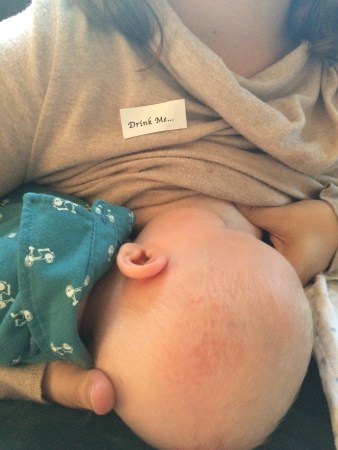 Once upon time formula companies and complicit medical experts launched a serious campaign to sell more formula, telling a generation of mothers that this product was both superior to breast milk and far better for baby and mother. Some were convinced, others found formula a good alternative to breast milk given their employment status, hormonal changes, their particular baby’s needs,personal choice, difficulty producing their own milk, or the like; and still others chose to breastfeed despite criticism, like my mother-in-law, who received scorn and derision from medical personnel as the only breastfeeding mother in the hospital in which she gave birth in 1970.

 “Human connections are deeply nurtured in the field of shared story.” –Jean Houston
 When I was growing up in the 1950s in my Egyptian Jewish immigrant home, each of the High Holidays was imbued with sacredness, thanks largely to my mother’s commitment to a creating a harmonious and memorable gathering of family and friends. Around a long table, covered with an embroidered white cloth and set with sparkling silver and delicately fluted china, she served at each season the festive meal that made manifest for us the presence of the Divine.
 I’m not particularly fond of my periods – they’re painful, full of cramps. But they are a part of who I am, and I’m not going to apologize for them. We women, especially those of us belonging to the sub-continent, have been shamed or embarrassed into silence, while being reminded that motherhood is the most exalted position a woman could ever hope for. I mean, isn’t that paradoxical – if it weren’t for the bloody nemesis (pardon the pun), we would never get to experience motherhood.
 In 2013, I wrote an
  Feminism and Religion