The End is Nigh by John Erickson

How will the world end? No, it isn’t Lucifer himself coming from hell to bring in the end times, it is someone far worse, and his name is Donald Trump.

John Erickson, sports, coming out.When I was a little boy I was terrified that I would live to experience the end of the world.  Whether it was by an asteroid, Y2K, or a zombie plague, I would make myself sick by picturing these horrible things that could befall me and my family.  Although I was a precocious child, the crippling fear that would lurch its way up my stomach and into my head would sometimes make it impossible to sleep at night.  While I like to think I grew out of that phase, I now sit here feeling that way again.  I’m crippled with fear that the end of the world is at hand and there may be nothing we can do to stop it.   How will the world end? No, it isn’t Lucifer himself coming from hell to bring in the end times, it is someone far worse, and his name is Donald Trump.

By the time you’re reading this post, the first Presidential debate between Hillary Clinton and Donald Trump will have occurred and, no matter where you look, the aftermath will haunt us for weeks to come.  We will either be sitting here, coaxing in the sunlight that Clinton has, in proper fashion, just goaded Trump into revealing to the 100 or so million viewers that will have chimed in to viewing how completely dangerous he truly is, or will we be scurrying to uncover decade old bunkers that were used during the 1950s and the Cold War to take shelter from the fallout to come should, Donald Trump become the next President of the United States. Continue reading “The End is Nigh by John Erickson”

The Collateral Damage of Addiction by Cynthia Garrity-Bond

cynthia garrity bondI am the mother of three adult children.  I am also the mother of an addict living the nightmare of denial and the consequence of said addiction.  Like many, my family of origin is riddled with alcoholics and addicts.  I learned to “detach” (not always in love) from their demons, drawing clear lines in the sand for my own future.  I thought a geographical relocation in another state would give me the distance and perspective needed to live my own life absent the insanity substance abuse can bring. When I discovered my spouse of then seven years was an addict my world fell apart.  For the life of me I could not understand how this could happen—again.  What did I miss?
I began attending Al-Anon in the hopes of self-discovery and the necessary tools required to live with a recovering addict.  Placing a healthy focus back on myself and away from the addict was liberating and healing.  After a few years I drifted away from meetings, digging in to my marriage and the raising of our children. Continue reading “The Collateral Damage of Addiction by Cynthia Garrity-Bond”

Dandelion Warriors, Incest Survival and An Artist Statement on That Christmas Morning Feeling by Marie Cartier

MarieCartierforKCETa-thumb-300x448-72405I have blogged excerpts from my novel That Christmas Morning Feeling in progress previously—the first excerpt here and additional ones here and here. This blog serves as an “artist statement” regarding the novel in progress.

I want to discuss in this blog thoughts on my own creative process—how a project can percolate for years (this one for well over ten years) and be in pieces in several places (handwritten, hard drives, on a laptop, here in FAR) and then some magical “tipping point” comes that creates the necessary conditions to put other things aside and work on that project, birthing it forward.

Certainly the death of both my parents in one year, and the resulting fallout in the last two years, complicated relationship struggles both to be sure, prompted me to want to write this novel and put it out into the world in a finished form, which is what I’m trying to accomplish now.

This book is not an autobiography…it’s not “my story.” But, to be sure, I am a survivor of childhood sexual abuse and the feelings and experiences from that time have been published in autobiographical form in my poetry book, I Am Your Daughter, Not Your Lover,  a play (of the same title, while much of this dramatic work is out of print, my work is catalogued at UCLA; here is the finding aid) based on the book produced in Los Angeles, and a one woman show I did entitled Blessed Virgin. I also created the activism project, Dandelion Warrior, which awarded medals to survivors who came to my numerous readings in the nineties who were willing to give up the option of suicide. To date I awarded well over a thousand buttons/medals to survivors in the States and internationally. When the buttons ran out I simply shook hands with the survivors who were willing to stand shoulder to shoulder with me and make the commitment to stay on the planet.  

dan_but

I was the first artist the state of California awarded an Artist in Residence grant to, to work specifically with incest survivors, and I worked also with women from forced marriages, and also prostitutes, creating dialogues with them and with survivors of childhood sexual abuse and created projects that showcased their voices coming together in the struggle for survival. I performed slam poetry about incest survival when it was just called reading poetry in bars; I did one woman shows and got flack in my reviews, as well as praise. For instance, one reviewer simply said “Speak Repressed Memory,” as he went on to say he didn’t believe survivors’ stories coming forward and did not at all review my play or performance except to say I was an “accomplished actress.” The rest of his review was about how he hated incest survival stories, and therefore the reader was to assume also my play.

I continued with my work. Continue reading “Dandelion Warriors, Incest Survival and An Artist Statement on That Christmas Morning Feeling by Marie Cartier”

Priestess as Shamanic Path – Part 2 by Molly Remer

This is a continuation of Molly’s piece from Wednesday, 10 August 2016. You can read Part 1 here.

After explaining that the homebirth of her second son was her, “first initiation into the Goddess…even though at that time I didn’t consciously know of Her,” Monica Sjoo writing in an anthology of priestess essays called Voices of the 567bGoddess, explains:

The Birthing Woman is the original shaman. She brings the ancestral spirit being into this realm while risking her life doing so. No wonder that the most ancient temples were the sacred birth places and that the priestesses of the Mother were also midwives, healers, astrologers and guides to the souls of the dying. Women bridge the borderline realms between life and death and in the past have therefore always been the oracles, sibyls, mediums and wise women…

…the power of original creation thinking is connected to the power of mothering. Motherhood is ritually powerful and of great spiritual and occult competence because bearing, like bleeding, is a transformative magical act. It is the power of ritual magic, the power of thought or mind, that gives rise to biological organisms as well as to social organizations, cultures and transformations of all kinds… (page unknown).

I have been a childbirth educator since 2006 and I have given birth five times. Each birth brought me the gift of a profound sense of my own inherent worth and value. It was the shamanic journey through the death-birth of my tiny third child, however, that ushered in a new sense of my own spirituality and that involved a profound almost near-death experience for me. After passing through this intense, initiatory crisis, the direction and focus of my life and work changed and deepened. Shortly after the death-birth of my third son, I wrote: Continue reading “Priestess as Shamanic Path – Part 2 by Molly Remer”

Priestess as Shamanic Path – Part 1 by Molly Remer

It is late autumn, 2009. I am 30 years old and pregnant with my third baby. He dies during the early Mollyblessingway 045part of my second trimester and I give birth to him in my bathroom, on my own with only my husband as witness. The blood comes, welling up over my fingers and spilling from my body in clots the size of grapefruits. I feel myself losing consciousness and am unable to distinguish whether I am fainting or dying. As my mom drives me to the emergency room, I lie on the back seat, humming: “Woman am I. spirit am I. I am the infinite within my soul. I have no beginning and I have no end. All this I am,” so that my husband and mother will know I am still alive.
I do not die.

This crisis in my life and the complicated and dark walk through grief is a spiritual catalyst for me. A turning point in my understanding of myself, my purpose, my identity, and my spirituality.

It is my 31st birthday. May 3rd. My baby’s due date. I go to the labyrinth in my front yard alone and walk through my labor with him, remembering, releasing, letting go of the stored up body memory of his pregnancy. I am not pregnant with him anymore. I have given birth. This pregnancy is over. I walk the labyrinth singing and when I emerge, I make a formal pledge, a dedication of service and commitment to the Goddess. I do not yet identify myself verbally as a priestess, but this is where the vow of my heart begins.

I do not know at the time, but less than two weeks later, I discover I am in fact pregnant with my daughter, my precious treasure of a rainbow baby girl who is born into my own hands on my living room floor the next winter. As I greet her, I cry, “you’re alive! You’re alive! There’s nothing wrong with me!” and feel a wild, sweet relief and painful joy like I have never experienced before.

Continue reading “Priestess as Shamanic Path – Part 1 by Molly Remer”

Remember by John Erickson

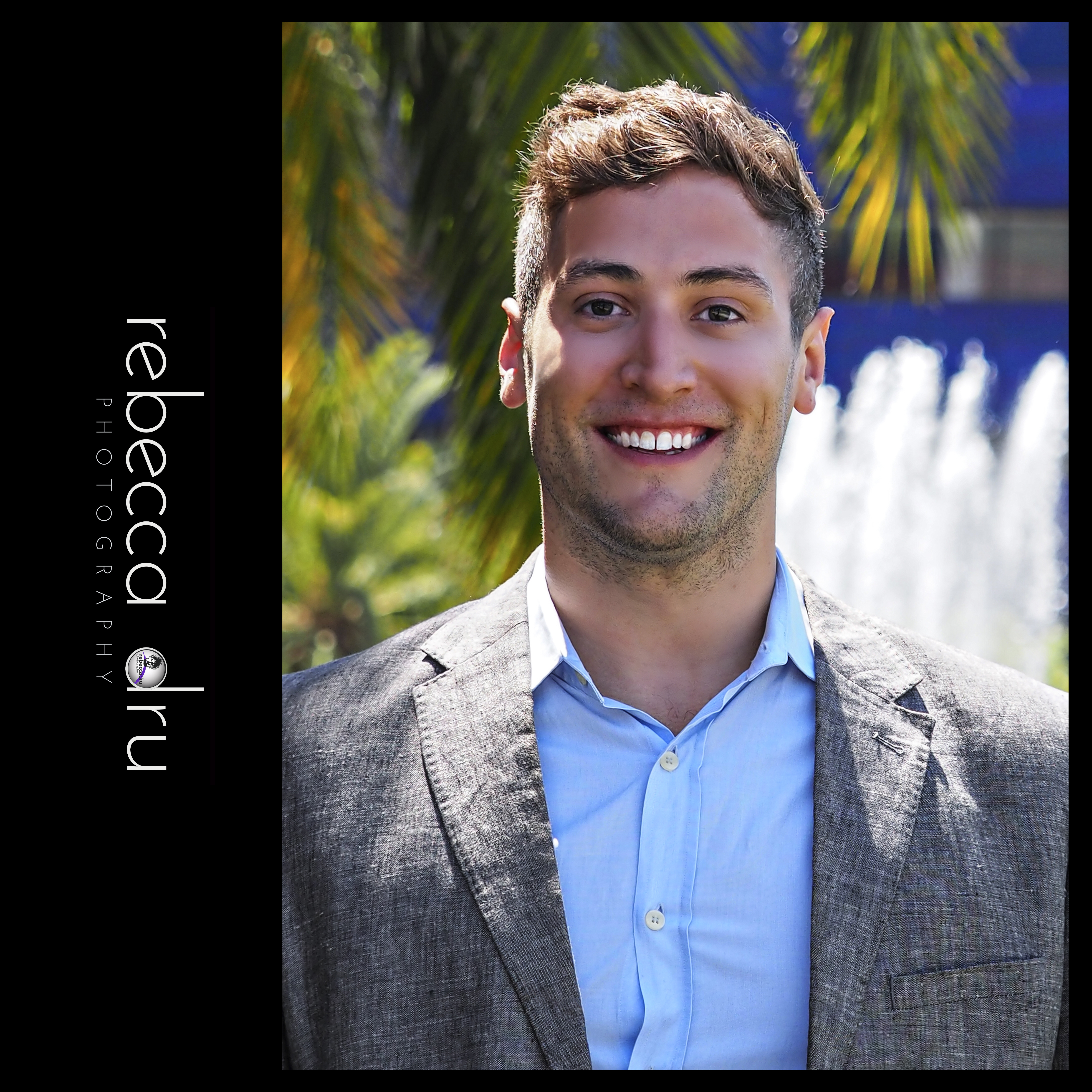
Remember the loss, because we’re going to need it for the tomorrows to come and for those that need our protection the most: the next generation. Remember, we are Orlando; now, tomorrow, and always.

WEHO CA (June 7, 2015)©2015 Rebecca Dru Photography All Rights Reserved http://www.rebeccadru.com

I want to tell you a short story about the small town of Ripon, WI. On May 19, the local newspaper, The Ripon Commonwealth, which has served as the town’s paper since 1864, published a story regarding the political right’s uproar concerning President Barack Obama’s executive order that all public schools must allow transgender individuals to use the bathroom which matches that of their gender identity. Angry and upset, the paper’s education reporter wrote an article expressing his clear disdain for the President and also expressing a clear lack of empathy, understanding and sheer bigotry towards the transgender community.

Growing up in Ripon, I always read the paper when it came out on Wednesday evenings. Those of you who grew up in a small town can attest to the luxury of seeing friends, family members, and even the smallest ongoings in one’s town in print for the entire town to see and talk about. However, one thing I never saw in the paper was the clear hate I read in Mr. Becker’s article (the author of said piece). Enraged, I immediately asked myself: what can I do? Having connections back in Wisconsin, I immediately turned to friends who owned businesses, a friend who is the Director of a vocal and important group in the town, and community organizations and friends to begin to write letters. Continue reading “Remember by John Erickson”

Parenting with the ‘Same Words’ by Sara Frykenberg

Teaching and talking with my daughter, I find myself revisiting the subtle and not so subtle kyriarchial language in my own upbringing in ways that I do not when speaking to other adults with my very intentional and well-trained adult language. Parenting sometimes feels like a trip back in time where I remember and more readily feel my joy of singing particular songs or reading particular stories, simultaneously feeling my inner feminist and adult self cringe at the messages in too many of these stories.

Sara FrykenbergLast month I shared a lesson a student of mine taught me about subjugated knowledge and the colonized mind. This month, I would like to continue in a similar grain and consider how we share the practice of oppression through language, and particularly, as we teach language to our children. Working to counter kyriarchy in my parenting, I often find myself asking, what I am really saying, reading, or singing to my daughter?

I walk with my daughter almost every morning, and as new parents are often encouraged to do, I try to talk to her continuously about a variety of topics. While I do talk to Hazel about meaningful things, like my hopes for her, stories about her family, the joys of reading, etc.; most days my monologues are inspired by whatever we happen to walk by at the moment.

One morning we talked about the differences between fences, gates and walls, their purposes, and the different materials from which they are constructed—I was really reaching on this day. We repeatedly talk about the flora and fauna. I have discovered that there is what feels like an inordinate number of avocado trees in the say, six square blocks surrounding our apartment. How do the people who live here eat all of these avocados? Do they eat them? Do they let them rot on the tree? This seems like a terrible waste of avocados, though there is one home with a bin in the front yard with a sign that says “free avocados,” in which the homeowners leave the fruit for neighbors and passers by like Hazel and myself.

This may seem silly and often, the discussions are silly, but taking to heart what I have learned from liberative feminists, post colonial scholars, and semiotics, I also critically observe how and what I say. One day, trying to make it fun to point out different plants and bushes, I pretended to be an announcer for kind of a nature show. Somewhere in-between introducing the “the deadly oleander,” and “a lovely variety of cacti,” it occurred to me that I was actually engaging in a kind of trope for a travel narrative. It wasn’t that I was saying anything particularly oppressive or colonial; rather, I realized my tone, my ‘how,’ came from the stories of my own youth—it was a kind of cross between stories related to  “Dr. Livingston, I presume,” and Crocodile Dundee. Continue reading “Parenting with the ‘Same Words’ by Sara Frykenberg”

Women Keepers of Ritual and the Caloian by Lori Tiron-Pandit

LTPPortrait10_15As a child, I learned all about my religion from my grandmother, in her small and remote Romanian village. She told me many Bible stories from our Christian Orthodox tradition, often disguised as bedtime fairytales, but it was not doctrine that I learned from her, as much as ritual. She taught me the prayers to say at night so I don’t have nightmares, the candles to light in church for luck, the list of dead and living to give the priest for blessings, the making and delivering of food as offerings in memory of the recently deceased.

So many of the spiritual rituals I learned from my grandmother involved food. She taught me when and how to fast, as well as how to prepare the ritual Christmas and Easter feasts: kneading and baking the traditional sweet bread filled with cocoa and walnuts or sweet cheese, cooking the celebratory pork or lamb-based dishes.

In my family, my grandmother was the keeper of rituals, many of them Christian, and many carried from a “primitive”, pagan, pre-Christian time. After growing up, as I distanced myself from my rigid Christian roots, I began to look with more appreciation back at these older traditions, some almost extinct, that had been passed down to me. Continue reading “Women Keepers of Ritual and the Caloian by Lori Tiron-Pandit”

Two Lives, a Marriage and a Plate of Samosas by Vibha Shetiya

VibahRecently, a commercial made by the clothing line, BIBA, hit the Indian market. Its significance lay in its “Change the Convention, Change is Beautiful” tag. The message was straightforward – we need to change Indian attitudes regarding gender roles. At the outset, let me say there are many things wrong with the ad, especially when one stops to think how it could possibly bring about a change when the young woman in question is voiceless. In fact, when I first watched it, my own reaction was: “And just what change are we talking about here?” Upon deeper reflection, however, I realized why the commercial may indeed be a step forward, albeit a tiny one. Continue reading “Two Lives, a Marriage and a Plate of Samosas by Vibha Shetiya”
Moving Away from Normative Maternal Roles in the Catholic Church by Michele Stopera Freyhauf

FreyhaufEarlier this week, social media was all abuzz about the Pope’s investigation into restoring women to the diaconate. In the complete transcript of the Pope’s comments,  the traditional notion of women’s maternal role in the church is mentioned in relation to the Church.  Certainly this is nothing new.  Here the Pope describes important “maternal” work such as working with the marginalized, catechesis, and caring for the sick – once again, nothing new.

However, in the next sentence, a very subtle shift is seen when it comes to normative gender roles:

…. there are men who do the same [work as consecrated women], and it is good…..and this is important.

What does this mean – a change in language?  a laying of groundwork? or nothing at all?

imgres

It is no secret that cultural constructs of women as maternal and how a mother is defined as or even does has radically changed in today’s society; but, the Church continues to remain steadfast in normative roles between the priesthood and the “motherhood” of the Church (and therefore “motherhood” in general).

Continue reading “Moving Away from Normative Maternal Roles in the Catholic Church by Michele Stopera Freyhauf”