Glimpsing La Vièio ié Danso – “The Untouchable Wild Goddess” – in Jóusè d’Arbaud’s Beast of Vacarés by Joyce Zonana

Nearly a century later, d’Arbaud’s words still have the power to startle and delight, vividly evoking Earth’s sacredness.


Early in Jóusè d’Arbaud’s 1926 Provençal novella, The Beast of Vacarés, the narrator, a 15th century gardian or bull herder, describes how in summer la Vièio ié danso—the Old Dancer— “can be glimpsed on the dazzling salt flats” that surround the Vacarés lagoon in the Camargue region of Southern France.

In a note, d’Arbaud explains that la Vièio is how locals refer to mirages in this liminal landscape where earth, sea, and sky merge. “Mirages are common in the Camargue,” he tells us:

They begin with a vibration in the air, a trembling that runs along the ground and seems to make the images dance; it spreads into the distance in great waves that reflect the dark thickets. How not to see in this mysterious Vièio, dancing in the desert sun, a folk memory of the untouchable wild goddess, ancient power, spirit of solitude, once considered divine, that remains the soul of this great wild land?

“The untouchable wild goddess . . . once considered divine . . .”

Nearly a century later, d’Arbaud’s words still have the power to startle and move us, vividly evoking Earth’s sacredness. Here is a man, himself a bull herder in the region he so lovingly describes, who seems to have been a devotee of the Goddess, the “ancient power” he venerates and bring to life for his readers. Indeed, in an early poem, “Esperit de la Terro” — “Spirit of the Earth”— d’Arbaud explicitly dedicates himself to the old gods sleeping below the earth, vowing to “defend” and “aid” them. How extraordinary to discover this writer making such a commitment, well before the rise of our recent feminist spirituality and ecofeminist movements. D’Arbaud speaks directly to our current environmental, theological, social, and political concerns.

Continue reading “Glimpsing La Vièio ié Danso – “The Untouchable Wild Goddess” – in Jóusè d’Arbaud’s Beast of Vacarés by Joyce Zonana”

A Story to Inspire Hope by Elizabeth Chloe Erdmann

These days deep emotions seem to burst forth at unexpected moments.

While in the car between visiting a pumpkin farm owned by friends and the local cider mill, I decided to pull out a crumpled paper with my brief presentation on the history of Crete.  “Does anybody want to hear a story?” I asked my captive audience of one of my best friends and her three boys. “Yes!” As the fall foliage whirled by, I started reading, thinking that attention would wander soon, and I’d put it away. To my surprise the boys wanted me to keep reading and even asked that I continue the story when we returned to the car after a break to feed ducks.

When I finished, the youngest boy exclaimed “that was the best story I’ve ever heard!” I was thrilled I had related it in a way that he enjoyed so much and recognized in his giddy exclamation that mysterious emotional pull of the story of Crete that seemed to reach into his soul.  Later he said to me as we watched the moon together, “you have to finish that story and add more about hope and the positive.” I told him, “The hope is in those who hear this story and others like it and strive to create a better world.”

So would you like to hear a story? Continue reading “A Story to Inspire Hope by Elizabeth Chloe Erdmann”

Matriarchal Manifesta by Heide Goettner-Abendroth

What is the STATUS of WOMEN today?

To cite a brief summary of the 1980 UN Report:

 WOMEN make up half of the world population, work nearly two thirds of all hours worked, receive one tenth of worldwide income, and own less than one hundredth of worldwide property.                             (United Nations Report 1980)

What a SCANDAL that is! Yet no one seems to get worked up about it.

But if we women believe a lot has changed in the meantime, then we are mistaken.

In 2010, the President of the UN Economic and Social Council cited the following figures:

WOMEN work 66% of all hours worked worldwide and produce 50% of the  food.  But they get 10% of the world income, own 1% of the property and represent 60% of the world’s poorest.” (Hamidon Ali, UN Press Conference on June 25, 2010)

This was the sitaution in 2000, in 2010, in 2018. The U.N.report is published annually, but nothing changes.  The SCANDAL continues, and we are outraged! Continue reading “Matriarchal Manifesta by Heide Goettner-Abendroth”

Yes, there are Goddesses in the Bible, Part 5 by Janet Maika’i Rudolph


As I wrote my last blog post, the Great Goddess of the Canaanites, Ashera was honored and worshipped (according to the bible) within and through groves of trees. Ashera and El, the “great bull god” were deeply connected. In fact, in Canaanite mythology, El and Ashera were married.

But before delving into their relationship, I would like to start in a different (but connected) direction – the lovely archetype of the morning star and the evening star. The planet Venus, named for her namesake Goddess (or vice versa), is both the planetary vision of the morning star and the evening star. Whether She be Goddess, planet or evening/morning star, when She appears in one form, She embodies them all. Continue reading “Yes, there are Goddesses in the Bible, Part 5 by Janet Maika’i Rudolph”

“Fertility” and the Regeneration of Life by Carol P. Christ

Prehistoric and indigenous religious traditions are often disparagingly mischaracterized as primitive fertility religions, concerned not with higher morality, but rather with the processes of reproduction of humans, animals, and plants. When these religions feature a Great Mother Goddess, it may be assumed that these religions are primarily focused on birthing human babies. Nothing could be farther from the truth.

Indeed, archaeologist Marija Gimbutas discovered that in the symbol systems of Old Europe, the Goddess is only rarely imaged as pregnant or giving birth. Nor is She portrayed solely in human form. Rather, She is portrayed with a bird head, wings, and a plethora of other animal and plant features. If She is a Great Mother Goddess, She is revered as the Source of Life, not simply as a mother of human babies. Gimbutas states that in Old Europe the Goddess was worshiped in as a symbol of the powers of birth, death, and regeneration in all of life. Gimbutas said these societies were matrilineal and probably matrilocal. Continue reading ““Fertility” and the Regeneration of Life by Carol P. Christ”

Patriarchy as a System of Male Dominance Created at the Intersection of the Control of Women, Private Property, and War by Carol P. Christ


Recently feminist scholar Vicki Noble said this is the best definition of patriarchy she has read–but she hadn’t known of it earlier! I am am republishing it now in hopes that all of you will share it on your social media so that it becomes more widely known. Thanks!

Patriarchy is often defined as a system of male dominance. This definition does not illuminate, but rather obscures, the complex set of factors that function together in the patriarchal system.  We need more complex definition if we are to understand and challenge the the patriarchal system in all of its aspects.

Patriarchy is a system of male dominance, rooted in the ethos of war which legitimates violence, sanctified by religious symbols, in which men dominate women through the control of female sexuality, with the intent of passing property to male heirs, and in which men who are heroes of war are told to kill men, and are permitted to rape women, to seize land and treasures, to exploit resources, and to own or otherwise dominate conquered people.* Continue reading “Patriarchy as a System of Male Dominance Created at the Intersection of the Control of Women, Private Property, and War by Carol P. Christ”

Masculine: Aggressive/Feminine: Passive: Can We Imagine Alternatives? by Carol P. Christ

Today a couple of friends and I were discussing egalitarian matriarchal values. I stated that in these societies there is no great difference in male and female personalities because both males and females are expected to be as kind and loving and generous as their own mothers. “Oh no I would not want that,” the other woman responded. “I want my man to be masculine–not wishy washy or namby pamby.” This woman soon acknowledged that she did not want her man to be dominant or aggressive. Yet her first reaction was to reject the idea that men might do well to emulate the values of their mothers.

This conversation illustrates the difficulty we have in conceiving alternatives to the way we assign gender roles. Masculine: assertive and aggressive. Feminine: weak and passive.

In fact. being as kind, loving, and generous as mothers in egalitarian matriarchies has nothing to do with these familiar gender binaries. Mothers in egalitarian matriarchies are assertive, but not aggressive, and there is nothing weak or passive about them. Love, kindness, and generosity are not about standing back and letting others walk over you. Instead they are active values that require intelligence, reflection, and strength. Continue reading “Masculine: Aggressive/Feminine: Passive: Can We Imagine Alternatives? by Carol P. Christ”

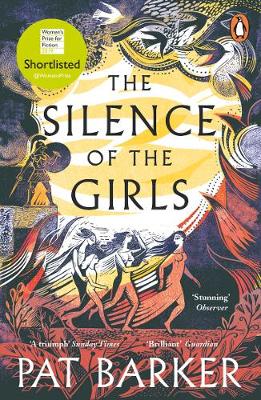
The Silence of the Girls: A Reflection on War by Carol P. Christ

Suppose, suppose just once, once in all these centuries, the slippery gods keep their word and Achilles is granted eternal glory for his early death under the walls of Troy. . .? What will they make of us, the people of those unimaginably distant times? One thing I do know: they won’t want the brutal reality of conquest and slavery. They won’t want to be told about the massacres of men and boys, the enslavement of women and girls. They won’t want to know that we were living in a rape camp. (324)

In The Silence of the Girls Pat Barker retells the story of the siege of Troy from the perspective of Breseis, a captured Trojan princess who became the slave and concubine of Achilles and Agamemnon. She was among the “spoils of war” allotted to the “great heroes” to “honor” their success as killers in war. Breseis does not tell her story of terror in The Iliad, but despite her not speaking, her story and that of the other captured and raped women—many of whom fared much worse that she did–is there is plain sight.

The problem is not that we who have read The Iliad don’t know these women were living in a rape camp. The problem is not that we have read The Iliad do not know that the heroes of the Trojan war were awarded women and loot as a reward for good fighting. Nor is the problem that we do not know that in the times of the Trojan war a man’s “honor” was everything to him and that it was defined by the prizes (women and loot) that he commanded, as well as by the respect of other men his deeds and property inspired.

When I first taught The Iliad in 1972, I was appalled by the women’s story. While my colleagues spoke of the “spear captive” who was the focus of the conflict between Achilles and Agamemnon, I urged them to call her a “rape victim.” Needless to say, I was summarily silenced. “That is not the point of the story,” I was told. “This is a story about men, their glorious deeds, and the honor due to warriors. This story speaks of the origin of culture.” A few guffaws signaling agreement followed. And that was the end of the discussion.

Although I enjoyed reading The Silence of the Girls, it did not provide me with any new insights into the horrors of war or the pervasiveness of rape in war. These were stories I already imagined. Indeed, rape, looting, slavery, and the spoils of war are at the heart of my “A New Definition of Patriarchy.”

The question I ask after reading The Silence of the Girls is how western culture managed to “silence” the women whose stories were there in plain sight for anyone who read The Iliad to see. Breseis was forced to have sex with and wait upon the man who killed her four brothers and her husband and who treated her as a possession not as a person. (283) She learned that when Achilles tired of her, she would probably be offered to his favorite men, and when they had their fill of her, she would be sent to live with the women who were at the mercy of the foot soldiers. “But that’s war,” (284) the Trojan king Priam replied when she asked him to help her escape.
There is more than one “conspiracy of silence” at play here. The conspiracy was compounded when the first person who questioned euphemisms such as “spear captive” was ridiculed and when every man or woman who recognized that rape is an ordinary part of war was told to keep silent about that. It was justified by the phrase “that’s war.”

If The Iliad is the origin of western culture, then western culture originated in a rape camp. Let’s not keep silent about that any longer! We must name the atrocities at the origins of so-called “culture” if we wish to create a more just world. These atrocities did not end with the Trojan war. They continue up to the present day. Ask any woman who has been in the path of invading armies. Ask the soldiers what they did and were permitted to do.

Refuse to accept the aeons-old cover-up: “that’s war.” If that is war, it is time to end war.

Carol P. Christ is an internationally known feminist and ecofeminist writer, activist, and educator who lives in Heraklion, Crete. Carol’s recent book is Goddess and God in the World: Conversations in Embodied Theology. Carol has been leading Goddess Pilgrimage to Crete for over twenty years: join her in Crete. Carol’s photo by Michael Honneger.

Listen to Carol’s a-mazing interview with Mary Hynes on CBC’s Tapestry recorded in conjunction with her keynote address to the Parliament of World’s Religions.

Yes, there are Goddesses in the Bible, Part 4 by Janet MaiKa’i Rudolph

This is the 4th in a series of blog posts about finding goddesses in the bible who had been hidden away through translation or denigration or other means. In my last blog post I discussed Lilith as a Great Goddess symbolized by both tree and bird. You can see it here. 

Today I continue with the topic of trees along with an examination of reversals and how many of beautiful, female pagan symbols were changed or removed from the texts. Perhaps the most obvious and pernicious has been that Eve “caused the fall” of humankind through a sinful act. Thus, the logic goes, it was Her action that has created the “grand curse” that we have labored under ever since. As I wrote in my last blog post, Lilith is another example, being portrayed as a demon in order to denigrate her Great Goddess roots. Lilith originally embodied both bird and tree energies. In my last blog post I showed one image of the Goddess in the tree which was a common theme in ancient Levantine cultures. The image today shows the goddess breast in the tree, which is identified as Isis suckling the future pharaoh Tutmose III. These images show the “Goddess in the Tree” as freely bestowing Her gifts and nurturing (not cursing) humankind. Continue reading “Yes, there are Goddesses in the Bible, Part 4 by Janet MaiKa’i Rudolph”

Mysticism as a Female Path by Mary Sharratt


Women have been sidelined and marginalized in every established institutional religion in the world. Even in alternative spiritual movements, male teachers and leaders abuse their authority toward their female students and followers. This is why women’s circles and spiritual groups are as relevant and necessary in 2020 as they ever were. Those women who can’t find spiritual community often chose to go it alone on a solitary path. But they are not entirely alone–they follow in the footsteps of a long ancestral line of female seekers and mystics, who rejected a life of slavish obedience to male authority figures in order to contemplate the deep mysteries of the soul on a path of inner revelation.

The Cambridge Dictionary defines mysticism as the belief that there is hidden meaning in our existence, that every human being can unite with the divine. The American Dictionary states that mysticism is the belief that it is possible to directly receive truth or achieve communication with the divine through prayer and contemplation. Continue reading “Mysticism as a Female Path by Mary Sharratt”