According to Barbara Alice Mann, author of Iroquoian Women, women were at the center of a matrilineal Iroquoian society that could be called (though she does not call it that) an “egalitarian matriarchy.” As in other egalitarian matriarchies, including those of the Mosuo and the Minangkabau, women both hold power and share it with men. According to Peggy Reeves Sanday who studied many societies in the anthropological records, female power does not mean female domination.
In attempting to reconstruct the role of women in Iroquois society, Mann first had to engage in a painstaking deconstruction of the scholarly consensus that men ruled among the Iroquois. Believing that male dominance is universal, scholars ignored or explained away a great deal of evidence that Iroquoian women were and are at the center of Iroquoian society. Those who believe that academic scholarship is objective or relatively objective may have to revise their opinions after reading the masses of evidence of witting and unwitting distortion of Iroquois society that Mann uncovers. In order to reconstruct the role of women in Iroquoian society, Mann also had to deal with the fact that the American government destroyed much of Iroquoian oral tradition through policies of forced assimilation that removed children to government schools and forbade the speaking of native languages. Continue reading “Iroquoian Women: Power Held and Shared by Carol P. Christ”


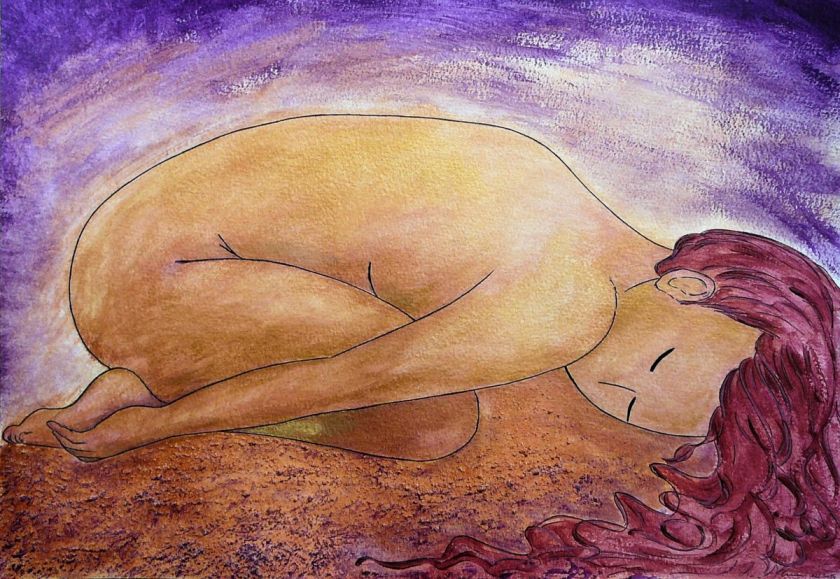
 I often share that what I’ve learned about strength, perseverance, and responsibility, I learned from my grandmother and namesake, Gina. In November we celebrated her life and said goodbye to the pioneering woman who overcame the greatest of obstacles to lead a life of dissent.
  I can’t even save myself. I make bad decisions just like the ones in the world – bombs and wars and the industrial revolution with chains of greed. But then I go on and, without even knowing any part of the story, want to save others.
  Warning: this blog discusses spanking and bodily violence
 When European scholars began to study Sanskrit they were surprised to discover linguistic similarities between Sanskrit and Greek and Latin. Old Persian was found to be even closer to Sanskrit. Scholars thus began to speak of related groups of Indo-European languages stemming from an earlier language they called Proto-Indo-European.