Remembering Ginny by Esther Nelson

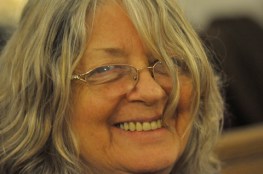
My husband’s stepmother, Ginny, died last week.  She lived several months past her 97th birthday.  Here is her obituary.

Ginny shared her life with three husbands, outliving each one.  Three sons were born from her first union.  She then married John, my husband’s father, and warmly welcomed us (John’s family) into her life.  When John died, Ginny married Fred.  After Fred’s death, Ginny told me, “Of all my husbands, Fred was my favorite. He was fun.”

Ginny lived at the Brethren Village Retirement Community in Lancaster, Pennsylvania—a home with several levels of care—for over 30 years, moving there a few years after marrying my father-in-law.  She said, “We made a good decision.  I never wanted to be a financial burden on my children.”  And she wasn’t.

Throughout her life, Ginny attended a fundamental, evangelical church.  Had she been able to vote in the 2016 national election, she would no doubt have voted Republican.  She had no use for feminism (women who rail against God’s ordained order), liberalism (the Devil’s message), homosexuality (perversion of God’s perfect creation) and immigrants (they siphon resources from hard-working Americans).

Yet, at the same time, Ginny was generous, giving to causes that fit with her ideological worldview such as missions.  It was important to her that people come to understand the “truth” as seen through the prism of the theology she embraced.  Within her community, she was loving, actively engaged, and caring, helping people in practical ways—donating food and other necessities to organizations sponsored by her church.

Continue reading “Remembering Ginny by Esther Nelson”

Mamma Mia and the Mother-Daughter Connection by Katie M. Deaver

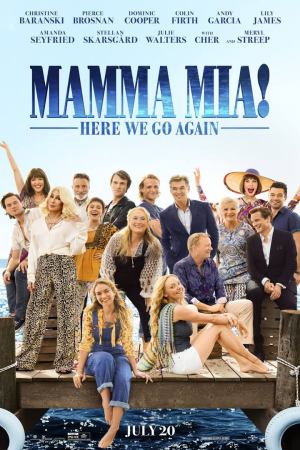
A couple of weeks ago I went to see the new Mamma Mia: Here We Go Again! movie.  In addition to being a fan of movies inspired by musicals I also loved the emphasis that was placed on the mother/daughter relationship in the first Mamma Mia and had heard that this new installment would continue to focus on that relationship.  It definitely didn’t disappoint!

This second movie takes place five years after the original Mamma Mia, and roughly a year after the death of Donna Sheridan, with Donna’s daughter Sophie preparing for the grand reopening of the Hotel Bella Donna.  This second movie also features lots of flashbacks where we are able to see a young Donna arrive at the island of Kalokairi as well as see how she first meets Sam, Bill, and Harry, her daughter Sophie’s three possible fathers.

As one might imagine, even if you aren’t familiar with the movie there is a lot going on, but the part that I found most intriguing was the very end of the movie.  At this point Sophie has given birth to her own baby and is bringing the child to the church to be baptized.  During the ceremony Donna’s spirit is there at the font with her daughter and new grandchild and you could feel this amazing sense of connection and love between not only three generations but across the lines of physical and spiritual presence and space.

Continue reading “Mamma Mia and the Mother-Daughter Connection by Katie M. Deaver”

“Do the Work Your Soul Must Have”: In Remembrance of Rev. Dr. Katie Geneva Cannon by Elise M. Edwards

One of the things I love most about being an educator is introducing my students to the thinkers who have inspired me.  I am especially delighted when I can share things I’ve learned from meeting and hearing these scholars speak.  One of the joys of “coming of age” as a religious scholar in the early 21st century is that I have been able to meet some of my heroes.  I’ve conversed with scholars whose writings about justice, liberation, hope, love, and religion’s potential to be a moral force in a hurting world inspire me.  I’ve been able to hear them speak at conferences and workshops where I’ve felt the truth and power of their words in my body.  One of the most inspiring women I’ve met in my academic journey was Dr. Katie Geneva Cannon.  She passed away on August 8, and although I was not one of her students, I grieve and mourn this recent loss.  I remember her and honor her for her spirit, her scholarship, and her soul’s work.
Katie Cannon was a pioneer.  Her scholarly work was integral for defining the womanism in religion and theology.  She took black women’s lives, their writings, and their struggles seriously.  She challenged the presumed universality of the dominant ethical systems to identify moral resources and Christian teachings that could address the challenges of people oppressed by their race, sex, and class.  Dr. Cannon’s vocational journey demonstrated her willingness to transgress racial, gender, and class boundaries.  She was the first African-American woman to be ordained in the Presbyterian Church (U.S.A).  She grew up in a North Carolina town she described as “a modern-day plantation,” but excelled in elite academic spaces, earning her Ph.D. and then leading many others in their academic pursuits. Continue reading ““Do the Work Your Soul Must Have”: In Remembrance of Rev. Dr. Katie Geneva Cannon by Elise M. Edwards”

Did You Have to Make Her a Prostitute? by Elizabeth Cunningham

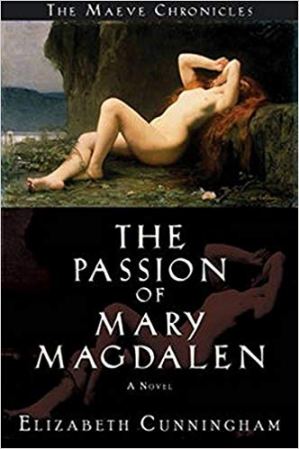
When I toured with The Passion of Mary Magdalen, opening by belting out the first paragraphs of the novel’s prologue in song, (ending with the line “when only a whore is awake!”) that question almost always came up.  In celebration of Mary Magdalen’s feast day, I’d like to offer answers that continue to evolve.

There is no scriptural evidence that Mary Magdalen was a prostitute. In a sermon, 6th century Pope Gregory I gave as his opinion: “This woman, whom Luke calls a sinner and John calls Mary, I think is the Mary from whom Mark reports that seven demons were cast out.” (This confusion and proliferation of Marys inspired me to make a joke. Q: How many holy Marys does it take to change a lightbulb? A: I don’t know. I keep losing count.)

In fact, very little is known about Mary Magdalen. There are fourteen references to her in the Gospels, then she disappears from the New Testament. The possibly Gnostic gospel of Mary dates to the 2nd century CE, and there is no scholarly consensus as to which Mary is the source of the tradition. Early on Mary Magdalen gave history the slip and took on an extended life in legends, which take her to Ephesus as well as to France where her alleged fingernails, bones, and skull reside and continue to be venerated.

Continue reading “Did You Have to Make Her a Prostitute? by Elizabeth Cunningham”

Knowing my Voice through Writing by Elise M. Edwards

elise-edwardsOver the summer, I’ve been writing more than I do during the traditional academic year when other tasks consume the bulk of my workday.  I have spent more time experiencing the joy of creative discovery and production, but I’ve also had more time confronting the difficulties of creative work as I’ve wrestled with some of its unique challenges.  One of those challenges has been to refine my academic writing voice. I’ve approaches the challenge of developing my voice as both a spiritual and feminist practice and this has helped me find confidence in my work.

Continue reading “Knowing my Voice through Writing by Elise M. Edwards”

Thus Saith Eve BOOK REVIEW by Katie M. Deaver

“I am the Queen of Sheba and I am not impressed.”  This is the first line of one of the monologues from chris wind’s book Thus Saith Eve.  This book features 18 stories of biblical women, and a 19th, Lilith, from Jewish mythology.  Each monologue offers a new interpretation and gives a voice to the women that we think we know.

In this book the voices and personalities of women such as Noah’s wife, Mary of Bethany, Zipporah, and Vashti are reimagined in an exciting and empowering way.  Each of the stories also features an appendix where the reader can learn more about the biblical or mythological context of the woman who is telling her story.

As in her other works, wind uses historical people, events, and understandings to build a truly wonderful source of feminist fiction.  In addition to being an extremely enjoyable and thought provoking read, the monologues can also be used for audition and performance pieces.  On her website wind explains that two of the monologues, “I am Eve” and “I am Mary” can be performed with specific musical selections in the background.  You can find those selections linked to her website above.


Continue reading “Thus Saith Eve BOOK REVIEW by Katie M. Deaver”

Four Worlds Poem by Sara Wright

They came from

Life giving Waters,

emerging from a Lake

at the Beginning of time.

Avanyu –

Serpent,

Spirit of the River

pecked into stone

or painted

on canyon walls

embodies their story.


The Tewa settled above

the Great River Banks.

Roaring water flowed

through tributaries

mountain gorges.

The People gave thanks.

  Water meant Life.

Each village was the center

of the Tewa’s First world.


Bound together by

Women who tended

holy household shrines,

prayed for rain,

created fires,

gathered seed,

ground food,

grew babies,

dug clay to shape

earthen pots.

This was the Second world

of the Tewa.

Continue reading “Four Worlds Poem by Sara Wright”

My Grandmother is a Gangster… a Spiritual Gangster by Valentina Khan

My grandmother is a gangster… a spiritual gangster

I recently attended a funeral for a relative-in-law. The grassy patch at the cemetery was filled with many familiar faces as well as unfamiliar. My side of the family was asked to come. My father, mother and even teeny tiny little 4 foot 9 grandmother showed up. I emphasize her height because it has nothing to do with her stature… and this is where my story begins.

My grandmother aka “Mama Shamsey” is from my maternal side. She grew up in Tehran, Iran. She was a young bride to a handsome intellectual who was French educated but a deeply spiritual and passionately religious Iranian Shia Muslim. He truly believed people should never discuss politics or religion. He knew how to be open and compassionate with people of differing opinions than his. They married, had 5 children, my mother was the eldest. When she was just entering her tender teenage years, many of her peers were flocking to Europe to be educated in Germany or France. She however had the dream of going to school in America, so in the 70’s this family of 7 made the great migration over to America.

Continue reading “My Grandmother is a Gangster… a Spiritual Gangster by Valentina Khan”

Meeting my Disr by Deanne Quarrie

Deanne Quarrie, D.Min.Who are the Dsir?

Freyja, known as “Ancestor Spirit”, is viewed as the timeless, self-renewing energy in the universe. She witnesses and shapes the direction of creation and undoing. She is not the originating, creating Goddess, but rather a conduit for energy and life. Women who learn Seidr become like her, living conduits. Continue reading “Meeting my Disr by Deanne Quarrie”

The Three Mothers: Feminine Elements and the Early Kabbalah by Jill Hammer

For over ten years, I’ve been teaching a work of early Jewish mysticism known as Sefer Yetzirah, or the Book of Creation.  There are widely differing opinions on the book’s origin and dating, but many scholars date it to the sixth century.  Its core concept can be described simply: the Divine used the Hebrew letters as metaphysical channels to create the different aspects of reality: the directions, the elements, the planets, the months of the year, and so forth.  Each letter is a channel by which God creates a unique form or entity, and meditating on the letters provides us with a connection to divine creative power. In its discussion of the letters, Sefer Yetzirah shows a strong connection to feminine imagery, and thus helps the later kabbalah develop its own link to the feminine.

Sefer Yetzirah shows influences from Aristotle to Gnosticism, and is often viewed as a work of Jewish philosophy.  However, it is also a work of meditation, giving the reader instruction on how to focus and connect to the divine. Scholars such as Richard Hayman and Marla Segol have noted that the book’s structure and content connect it to magical literature: for example, the book has a deep concern with “sealing” the space of the world: letters of the Divine Name are used to seal the six directions of the universe.  In a similar way, ceremonial magicians of the ancient world used sealing ritual, including the incantation bowls that were buried in the corners of a home to keep out evil forces.  The book, like much ceremonial magic of the region, also discusses the elements.  However, Sefer Yetzirah has a three-element system rather than a four or five-element system.  The three formative elements are air, water, and fire.

Continue reading “The Three Mothers: Feminine Elements and the Early Kabbalah by Jill Hammer”