An Open Letter to Mom by Natalie Weaver

Dear Mom,

I want to take this opportunity to tell you I have learned so much from you over these years that I have been privileged to call you “mom.” I watch you, as you get older, as I also get older, and I continue to learn from you.  You are always telling me that a person cannot know something truly until they get there; that every decade of life is different; and that life becomes, in the end-game, a process of letting go.  I see you, and I know by watching you that this is true.

I remembered you today, from when I was just a child, getting ready to go out for the evening with Dad.  You were spraying your hair into an impressive beehive, pulling on stockings, and fragrancing your wrists with Fabergé cologne.  You were beautiful then, and you taught me that life should be beautiful, our home should be a place of refuge, and every day was worth celebrating.  You used to sing about loving your home, and you maintained it so elegantly.  It was lovely to be your child in that home.  Thank you. Continue reading “An Open Letter to Mom by Natalie Weaver”
“The Burning Lava of a Song” by Joyce Zonana

Aurora’s autobiographical narrative is a passionate paean to poets as the “only truth-tellers, now left to God”; she celebrates them as agents for personal and social transformation. As we come to the end of this National Poetry Month in the U.S., where truth is under siege, it’s worth recalling Aurora Leigh and its daring exploration of poetry, gender, divinity, and social justice.

jz-headshotI was in graduate school when I first read Aurora Leigh, Elizabeth Barrett Browning’s fiery 1856 epic about a young woman claiming her vocation as a poet despite Victorian society’s patriarchal strictures. The poem was not on any assigned reading-list; I’d simply stumbled across it while doing research for my dissertation. The opening lines brazenly assert the speaker’s authority and ambition:
OF writing many books there is no end;
And I who have written much in prose and verse
For others’ uses, will write now for mine,–
Will write my story for my better self . . .

Encountering those words, I was immediately possessed by Aurora’s voice and vision, a welcome change from all the male poets and critics I’d been reading. I devoured the verse novel’s nine books in one night. The poem became the centerpiece of my dissertation, and I studied and enthusiastically taught it for years.

Continue reading ““The Burning Lava of a Song” by Joyce Zonana”

The Doubt of the Empty Tomb and the Hope for Tomorrow by Katie M. Deaver

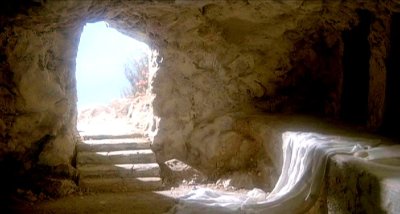
I recently had the opportunity to travel to my undergrad institution on a student recruitment trip.  During this trip I was able to preach during the college’s weekday chapel service.  Despite the fact that I have lived, studied, and worked within a seminary community for the last seven years I had not actually written (not to mention preached!) a sermon since I was a senior at this very college… to say the least I was a bit nervous.  As it turned out the sermon writing went well, and I also felt positively about the preaching experience.  But even though the writing and preaching are over I can’t stop thinking about the topics I choose to speak about.

The scripture lesson I used was Luke chapter 24 verses 22-24 “Moreover, some women of our group astounded us.  They were at the tomb early this morning, and when they did not find his body there, they came back and told us that they had indeed seen a vision of angels who said that he was alive.  Some of those who were with us went to the tomb and found it just as the women had said; but they did not see him.”

These verses offer a quick recap of the Easter story that comes earlier in chapter 24 of Luke.  The women go to the tomb with the spices that they have prepared, but when they arrive they discover that the stone has been rolled away and the body of their friend and teacher is not there.  Instead, there are two men in dazzling clothes who ask the women “Why do you look for the living among the dead?”

Continue reading “The Doubt of the Empty Tomb and the Hope for Tomorrow by Katie M. Deaver”

Sophia from The Goddess Project: Made in Her Image by Colette Numajiri

“Happy are those who find wisdom. . . . She is more precious than jewels, and nothing you desire can compare with her. . . Her ways are ways of pleasantness, and all her paths are peace. She is a tree of life to those who lay hold of her; those who hold her fast are called happy” (Proverbs 3: 13, 15, 17-18).

Sophia is DIVINE WISDOM, Her name comes from the feminine Greek word meaning Holy Wisdom. She is found all over the Bible (Proverbs, Sirach and the Wisdom of Solomon..) and in the Gnostic Gospels (unearthed at Nag Hammadi in 1947.) She has been called the MOTHER OF THE UNIVERSE, Mother of Yahweh and HOLY SPIRIT. The words: “Philosophy, theosophy and sophiology” all come from Sophia. The Bible links her to Christ: “Christ is the Wisdom (Sophia)” (1 Corinthians 1:24, 30). There is some evidence that Mary Magdalene was also called “Mary Sophia.”

Because She did not help advance the patriarchal scheme, Sophia was all but deleted from history. Hidden throughout the Bible and the Dead Sea Scrolls, knowledge of the DIVINE FEMININE all but went up in flames. Even a great cathedral build in Her honor in Constantinopole, Hagia Sophia (Holy Wisdom), was burned to the ground twice. It’s newest rebuild was a mosque and is now a museum. NOTRE DAME (Our Lady) has survived but they eventually claimed it was named after the Virgin Mary. (The famous Notre Dame rose windows are a common symbol of the Divine Feminine!). Some say there are secret societies that still exist to keep knowledge of Her alive.

Continue reading “Sophia from The Goddess Project: Made in Her Image by Colette Numajiri”

The Power of Black Panther by Xochitl Alvizo

Note: Black Panther movie spoiler alert.

I attended my friend’s dinner party (now my beautiful partner) recently in honor of her birthday. It was an intimate gathering of nine, mostly her immediate family, so I felt privileged to be included. At one point during the dinner, her sister-in-law initiated a ritual in which we went around the table taking turns to share words of wisdom in honor of the birthday woman. Her words in particular stayed with me. And looking back, I see how the ritual she initiated was in itself an embodiment of the words she spoke:

Stand in your power. We got you. We have your back.

She said more, but the gist of it all was summed up in those three short sentences. Looking my friend in the eye as she raised her glass in her honor, her sister-in-law’s words meant something. I could feel the truth of them – I have seen the truth of them in her relationship with her. She, along with her wife (who is my friend’s sister), really do have her back and truly do want to see her “stand in her power.”   Continue reading “The Power of Black Panther by Xochitl Alvizo”

Women’s History Month: Painting and Empowering Adolescent Girls by Angela Yarber

In celebration of Women’s History Month, the Holy Women Icons Project is excited to launch Revolutionary Girls, a new program seeking to empower marginalized adolescent girls by telling the stories of revolutionary women through art, writing, and discussion. Partnering with local schools and other non-profit organizations in the Puna District of Hawai’i County, we are creating a curriculum that features often overlooked historical and mythological women whose lives, legends, and legacies embody empowerment, resilience, and emotional intelligence that can embolden adolescent girls to become socially aware revolutionary leaders.

Research shows that girls’ self-esteem plummets in early adolescence, due in part to unrealistic body images in media and casual (or even overt) sexism from parents, teachers, and peers. Our Revolutionary Girls project aims to counter these negative influences by offering girls aged 11-15 a space of empowerment. Prior to adolescence, many girls believe they are as smart, strong, and capable of leadership as boys. At the onset of puberty, girls are often taught that their only value is in their appearance, and that they are not as capable or valuable as men and boys. Simultaneously, girls are exposed primarily to the histories and myths of men in power while in the classroom, the revolutionary lives, legends, and legacies of countless revolutionary women altogether absent from their textbooks and lessons. Continue reading “Women’s History Month: Painting and Empowering Adolescent Girls by Angela Yarber”

“Womenspiration” for International Women’s Day by Elise M. Edwards

elise-edwardsHappy International Women’s Day!  I hope it is a happy day for you as we recognize women’s achievements throughout the world.  Our FAR community is not only for or about women, but as feminists in some form or another, collectively we support women, their growth, their health, and their contributions to the world.  On a day like today, we should take note of what still needs to be done and recommit ourselves to our work.  But let’s not rush past an opportunity for joy and celebration. Many generations of women have fought for equal rights and participation in all sectors of society, and we have made progress. To commemorate that legacy today, I am highlighting just a few of the women who inspire me with their lives and with their work. They are my “womenspiration.”  My hope is that you join me in recognizing them and that as you read about them, you reflect on the women who inspire you.

Continue reading ““Womenspiration” for International Women’s Day by Elise M. Edwards”

Toil and Trouble (Part 1) by Barbara Ardinger

…and Ella can’t remember the last real meal she had. After supper with the refugees in the witch’s house, she and the witch put their heads together to begin making significant plans. She’s also been meeting all the refugees who now live on the witch’s farm. She knows first-hand why these people fled the capital and the other cities. “Oh, lordy, yes,” she says. “I used to know all the important people. My dear sisters and I went to all the big events, ate the finest cuisine—” suddenly remembering where she is, she looks down at the table “—oh, dear, but I don’t mean to criticize your cuisine.”
The ravens, all perched on the backs of chairs look straight at her. “Good food, this,” says Kahlil, “except these girls don’t serve eyeballs.” “Stop that,” Domina whispers (if ravens can be said to whisper). “Don’t be so picky. Everybody here gets enough to eat.”

Ella, who is more used to cats and dogs and the occasional parakeet than to ravens, blinks and continues. “I wish I knew where my sisters are now. Thanks to our ‘relationships’ with the princes, we were High Society and—”

Continue reading “Toil and Trouble (Part 1) by Barbara Ardinger”

A Feminist Retelling of Cain and Abel by Trelawney Grenfell-Muir

Eve and Adam had many children. Two of them, the sisters Cain and Abel, were best friends. When they grew up, Cain became a farmer, and Abel became a shepherd. In their community, people shared what they had with each other. They shared this way in order to help the community be strong, and to practice gratitude. They shared with each other in sacred, holy ceremonies, in which they put their communal offerings onto an altar for Sister God/ess, to be blessed. One day, both Cain and Abel brought an offering to their community. Cain brought some food she had grown, and Abel brought a sheep. The community gathered for the ceremony. They prayed prayers of gratitude and blessing, and thanked the Earth for its abundance. They each laid hands on the sheep and thanked her for her life, blessed her spirit that it might journey peacefully and joyfully to reunite with Sister God/ess, and praised her for giving her body to feed the community.  Then they killed the sheep, as quickly and carefully as they could, and set the meat in the sacred fire to cook. Abel was glad that she could help her community be fed and healthy with the sheep she had given.

Continue reading “A Feminist Retelling of Cain and Abel by Trelawney Grenfell-Muir”

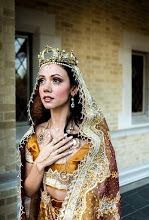
Queen Esther from The Goddess Project: Made in Her Image by Colette Numajiri

Queen Esther
An orphan child,
who became
a well respected queen,
Esther, the Queen of Persia,
was a woman of integrity,
Wisdom and courage,
a beautiful woman, truly supreme,
favored by God,
She had a awareness of dependability,
steady strong, long-suffering faithfulness, with vision foreseen
in courage to stand in times of trouble
with true self esteem,
wise above measure,
Esther, Queen of Persia.
Like many Goddess tales, Esther (from the Old Testament “Book of Esther” or the “Megillah”) took full control of a dangerous situation and against all odds created a miracle, saving the lives of ALL OF HER PEOPLE.
There is a yearly Jewish celebration because of Her called PURIM (today, March 1st this year) where people wear costumes, re-read the Megillah, feast and give gifts of food and money to the needy.

Continue reading “Queen Esther from The Goddess Project: Made in Her Image by Colette Numajiri”