 As a college professor I taught Children’s Literature. Mythology, stories about humanity’s relationship with the gods, always raised a few eyebrows. Students tended to feel uncomfortable when this term was applied to their own faith traditions since it generally connotes “untrue.” So I found it helpful to note up front that myths are not necessarily literally or historically true, but they’re always psychologically and spiritually true.
From his extensive study of myths, psychologist Carl Jung concluded that we are all born with a “religious function,” an inherent sense of awe about, and longing to connect with the Sacred Mystery of life. He saw it as a faculty of our central archetype, the Self: our core and circumference, our god-image. Myths, rituals and religious symbols are our attempts to incarnate the Self so that we can be infused with love, hope and holy wonder. Some myths are helpful in this endeavor. Others are dysfunctional; for example, myths which justify the dominance, exclusion or destruction of others considered less worthy or entitled.
When our primitive ancestors reflected on the miracle of life, the Self prompted the thought that because humanity is gendered, the Mystery must be as well. Since Earth was the foundation of existence and had an inexhaustible fruitfulness, it felt like a Mother. This shaped our earliest images of God. Mircea Eliade noted: “In some cases, the sex of this earth divinity, this universal procreatrix—does not even have to be defined. A great many earth divinities…are bisexual. In such cases the divinity contains all the forces of creation—and this formula of polarity, of the coexistence of opposites, was to be taken up again in the loftiest of later speculation.” Continue reading “Incarnating the Mystery with Psychological Awareness by Jean Benedict Raffa”


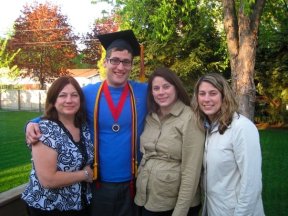 The first question I always get asked when I’m in feminist spaces is: “What inspired you to become a feminist?” Although I could go into the various histories revolving around men’s involvement in the early stages of the women’s movement to the similarities between the LGBTQ and women’s movements, my simple answer has always relied on one person: my mother.
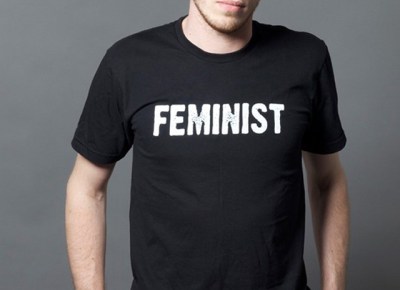 I’ve been thinking a lot about what it means to be a male feminist lately. As the only man to be a permanent blogger on this very site until my colleague and friend





 Feminism and Religion