


Every year on Shavuot, the story of the giving of the Torah at Mount Sinai is read in synagogues around the world. It’s a dramatic story, with thunder and lightning and mysterious ram’s horns blasting, and Moses disappearing into a thick cloud. It’s a powerful story. It’s also a problematic story, for me. As a feminist, ascribing divinity to an ancient text with a vision of women/gender that is very far from my own doesn’t work for me. And yet, as a scholar and midrashist who often plays with the words of the biblical text, I do meet God/dess and my ancestors there. I’m moved by the ancient legend that all Jewish souls, of every time and place, were present to receive Torah at Sinai. How to express this layered and complex relationship with Torah?
The Kohenet Hebrew Priestess Institute has been holding Shabbat prayer online since the pandemic began, and we gathered on Shavuot morning to pray. As a community committed to the liberation of all genders, I felt we couldn’t read the Torah portion the way it was—but I also felt we couldn’t not read it. So I created an aliyah—a Torah reading—composed of fragments of the text. Three of us read it together; I chanted the Hebrew, and Kohenet Ketzirah Lesser and Kohenet Harriette Wimms and I read the English. I picked fragments of the text that spoke to me in some way.
Continue reading “Fragments of Sinai by Jill Hammer”
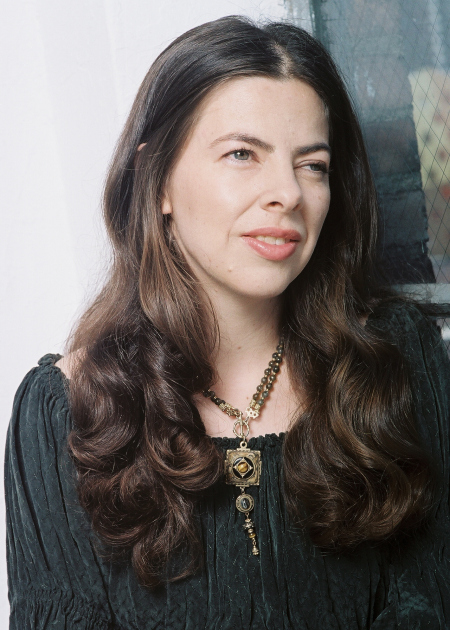

 The Torah reading for the first day of Rosh haShanah, the Jewish new year, is not, as one might expect, the creation of the world (Rosh haShanah was Friday night, Saturday and Sunday, 9/18-9/20). Instead, the set reading is Genesis 21, the story of how Sarah, wife of Abraham, gives birth to Isaac—a joyous occasion indeed, given that she is ninety years old. But then Sarah becomes anxious that her husband’s other wife, Hagar, also has a son, Ishmael, who could inherit from Abraham, and demands that Hagar and Ishmael be expelled from the household. This year, reading this tale, I am seeing a story that shows how when we think about success, abundance, and consequences, we include some people in our consideration but not others. In this tale, the Divine includes the perspectives of the unwitnessed even when we do not.
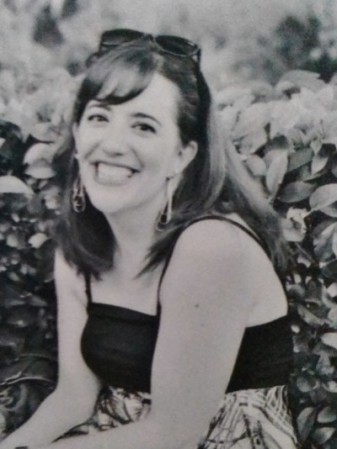 On the eve of the Jewish Sabbath and the start of Rosh Hashanah, Supreme Court Justice Ruth Bader Ginsburg breathed her last breath. She was 87. She fought so hard for so long. She is an American patriot, hero, champion for women’s rights, and for many she was the stalwart bastion of justice and ‘liberal’ rulings. She was a Supreme Court Justice for 27 years. Her life has been put into books, a movie, and the most notorious memes around. She became known for elaborate collars over her Justice robes. We mourn the lost of her, we celebrate her memory, and we must pull up our boots and continue the fight.
