Stopping to Smell the Flowers by Marie Cartier

Photo by: Kimberly Esslinger

There is a saying, “Take time to smell the flowers.” Attributed to many different sources, it means among other things–  take time and be grateful. Take time and relax. Take time.


Photo by: Kimberly Esslinger

In that spirit I am sending along pictures from the amazing “super bloom” California is experiencing this spring. It is the most magnificent we have ever had, I think. It happens once a decade, but we are lucky to have had a super bloom in 2017 and now this year as well.  California had an extreme drought last year and then extreme rain this past winter. And now we have flowers…and flowers. Poppies are the state flower of California and they are being celebrated—all over. And people dropping in by helicopter and influencers ruining some of the poppy beds by laying in them for Instagram pics. Yes, it’s been crazy. But, when we were there (my wife and I) on a past Sunday, it felt so magical that so much of Los Angeles it seemed was out to smell the flowers. You can see a picture of folks lined up (my wife at the end in the picture below) photographing the flowers. Flowers suddenly are the new super star!

Continue reading “Stopping to Smell the Flowers by Marie Cartier”

Devotion by Molly Remer

There are things that ask
50237778_2257311164481093_3090053013251817472_oto be remembered
or, is it that I ask to remember?
The everyday enchantments
of our living
words forming slices of
memory.
A white squirrel watching
from a sycamore tree
the sounds of black
crows calling
from within the secret
passages
between oak tree
and neighborhood
footprints of a shy orange
coastal fox in the sand.
Rays of sunlight
forming individual white rainbows
stretching from cloud
to water.
I no longer feel like I have anything
to teach
I just want to tell you about the
shell I found today
the sandy pink color
of its wave-shaped spiral
the way the pine needles
form a canopy under
which orange monarchs dance
the surprising softness and bright
green hue of thin fingers of grass
the pretty purple pollen cones
of a longleaf pine.
The colors of a morning woven
into a tapestry of devotion.
That is the word for this feeling
in my chest.
Devotion
to noticing.

Devotion is not a word that I have previously felt particularly inspired by or connected to. Perhaps it is too heavy, too responsible, or even “too religious”—carrying connotations of dogma or roteness. However, in the last month or so, something has opened up for me to consider the word, and the process, in a different way. Continue reading “Devotion by Molly Remer”

A Ritual to Bless Our Children by Barbara Ardinger

It was maybe twenty-five years ago that I first got addicted to the Sunday morning news/talk shows. I’d turn on the TV at 7 a.m., watch an hour of local news, then Stephanopoulos at 8 a.m., then MSNBC until noon or later. Not anymore. This morning, I turned the TV off at 10:00 and immediately got into the shower to wash off what I’d been hearing. I’m worn out by the news!

Now don’t get me wrong. I am totally against any “normalizing” of the Troll-in-Chief. In fact, I’m convinced we ought to pack him into capsule with about a hundred cheeseburgers and without his phone and fire him off to one of the outer planets. Maybe Saturn, which astrologically forces us to face ourselves and to get to work and learn our life lessons.

Continue reading “A Ritual to Bless Our Children by Barbara Ardinger”

A Silhouette of a Woman, the Menorah, and a Pillar of Light: Discovering the Origins of the Goddess in Judaism by Alaya A. Dannu

2.24.2017

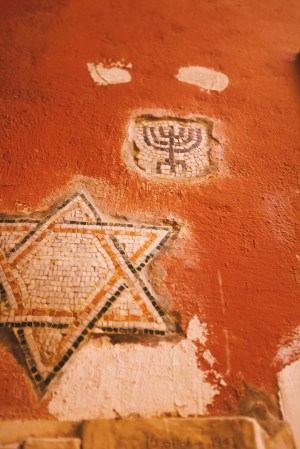
During a meditation before bed, I saw an image of a candelabra similar to what Jewish people use for Hanukkah. It was yellow/gold in color, engraved/etched onto a surface. All at once I saw the imagery of a star, a silhouette of a woman, and a beam of light move from the base of the candelabra through the top and beyond.

In these moments, I did not understand the significance of or the relationship between these images. What did a feminine figure have to do with the Jewish candelabra? What is the name of their candelabra? I could not even recall the name of it. It was something I grew up knowing the name of, as it was an image that I frequently saw beside the kinara of Kwanzaa in my school-aged years.

Because I was sheltered from the Abrahamic religions, my mother opted for participating in Kwanzaa as a means to shield me from any potential bullying from my classmates, and to celebrate a part of my diverse heritage. It was already a problem for my peers and the adult staff at school that I chose to identify as a Jamaican-American or a mixed person, as opposed to African-American. To tell a group of African-American Christians or those with an Afro-centric view that I didn’t celebrate Christmas or Kwanzaa, or that my mother taught me to listen to my dreams and intuition, would only serve as a means to further isolate myself; and by extension, my little sister. So celebrate Kwanzaa we did, until I began high school.

Continue reading “A Silhouette of a Woman, the Menorah, and a Pillar of Light: Discovering the Origins of the Goddess in Judaism by Alaya A. Dannu”

Emergence: Poem to a Plant Goddess by Sara Wright


Her name is Datura.

Delicate fluted deep-throated trumpets open to

humming honey bees and summer rains.

She communicates through scent.


 In the fall I collect her sharp-needled pods.

They rattle like dry bones.

I chill them.

In the spring I coax seeds to sprout

wrapping each in papery white cloth,

sing love songs  –  siren calls

to rouse each root from winter’s sleep.


I am patient…

 a woman in waiting for the heat of the sun

to unfurl the mystery of becoming

 that is re-acted in spring.


Only seeds know when to swell and burst.

Continue reading “Emergence: Poem to a Plant Goddess by Sara Wright”

Nichos Embody Natural Grace by Sara Wright

A ‘Nicho‘, is a three-dimensional or recessed area used to honor an important figure, saint, or loved one. Nichos originated as an adaptation of the Roman Catholic ‘retablo‘, painting of a patron saint on wood or tin.

When I was a little girl my parents spent a year in Europe and my mother brought me home a small Greek Orthodox retablo of the Virgin and Child made of silver. It had two small arched doors with tiny nobs that opened onto an etched picture of the Madonna and Child. I placed the retablo on a table next to my bed where it remained throughout my childhood. I opened and closed ornate silvery doors frequently drawn in by something that at the time I couldn’t name. When I became an adult this small silver story moved from night table to table in each house I lived in for about 45 years. Continue reading “Nichos Embody Natural Grace by Sara Wright”

“The Burning Lava of a Song” by Joyce Zonana

Aurora’s autobiographical narrative is a passionate paean to poets as the “only truth-tellers, now left to God”; she celebrates them as agents for personal and social transformation. As we come to the end of this National Poetry Month in the U.S., where truth is under siege, it’s worth recalling Aurora Leigh and its daring exploration of poetry, gender, divinity, and social justice.

jz-headshotI was in graduate school when I first read Aurora Leigh, Elizabeth Barrett Browning’s fiery 1856 epic about a young woman claiming her vocation as a poet despite Victorian society’s patriarchal strictures. The poem was not on any assigned reading-list; I’d simply stumbled across it while doing research for my dissertation. The opening lines brazenly assert the speaker’s authority and ambition:

OF writing many books there is no end;
And I who have written much in prose and verse
For others’ uses, will write now for mine,–
Will write my story for my better self . . .

Encountering those words, I was immediately possessed by Aurora’s voice and vision, a welcome change from all the male poets and critics I’d been reading. I devoured the verse novel’s nine books in one night. The poem became the centerpiece of my dissertation, and I studied and enthusiastically taught it for years.

Continue reading ““The Burning Lava of a Song” by Joyce Zonana”

Gifts from the Sea by Molly Remer

“Island living has been a lens through which to examine my own life…I must keep my lens when I go back… I must remember to see with island eyes. The shells will remind me; they must be my island eyes.”

–Anne Morrow Lindbergh, Gift from the Sea

Each winter, we travel with our family to a small island in the Gulf Coast outside of Alabama and spend a month living on the beach. There is something about being on an island that quite literally transports you into another world. The sensation of stepping out, stepping off, and stepping into is palpable as we cross the bridge to the island and settle into the slow, quiet rhythm of island life, guided by the tides, the moon, and the rising and setting of the sun. Our sleep and waking schedules change. Our priorities shift. Our to-do lists become very short. While we enjoy a creative, home-based life and business at home in Missouri, there is something incredibly freeing, and clarifying, about laying everything aside and having the biggest item on the schedule be a long walk on the beach (we walk from two to five hours each day). We actually bring our business along with us in a travel trailer, so we aren’t truly “off work” during this month, but instead of making everything as we go, we only sell the inventory we’ve already completed and brought with us, which leaves us with many extra hours a day compared to our work at home.

As I shed layers of myself at the beach, watching dolphins, running with my children, picking up shells, walking hand in hand with my husband into the setting sun, life feels simple, and what I need and want feels very clean and very clear. My intense self-motivation and drive softens, my itch to get more done and to make more lists fades away, and I am left with the core of myself and discover, anew, how very much I like her.

This year, the morning after we arrived at the island, my husband and I headed to our favorite part of the beach where the beachcombing is the best and the shells are the biggest. We were stopped on the road at a little guard tower and told we could not continue. When we inquired why, the sour-faced man told us with the smirk that the beach was “gone” and it had been destroyed in a hurricane last fall. He clearly took delight in breaking the news to us and very much enjoyed the act of turning us away.

We returned to our beach house in a state of confusion and shock. Our long walks on the beach, our hopes for the new treasures we would discover, the part of the island we so love and have so many happy memories of, all swept away. We walked on a different part of the island feeling a genuine sense of distress and grief. How could the beach just be gone? Does the island now just abruptly drop away into the sea? We feel a sensation that something had died. As we walk, we decide that the “gift” in this disappointment is that we will now explore and learn from different parts of the island than we are used to and that we can find new things to do and love while here, that we need to release our attachment to past visits and the ways things used to be and enjoy discovering what is right here, right now. But, then I say that I do not want to rush to “make it all better,” but instead I would like to just sit with and acknowledge the grief, and loss, and disappointment, rather than hurrying to turn everything into a lesson.

We walk in silence for a time and then realization dawns. There is no way the beach we long for can actually be “gone.” There is still a road visible headed in that direction and many dump trucks and earth-moving equipment driving back and forth. That part of the beach is damaged, we realize, but the facts we can see with our own eyes do not point to the total erasure of it as suggested by our power hungry little friend in his road blocking shed.

Back in the beach house we google to discover that yes, the beach sustained significant hurricane damage in the fall and restoration efforts are underway. The correct description from the guard should have been that the beach is “closed for restoration” and not “gone.” We continue to try to accept our “gift” of making new discoveries in the face of disappointment, but a few days later we decide to ask at the rental company if there is a way we can still go to the closed part of the island. They are able to give us a pass to enter it, and so, in fact, we are able to walk on our favorite part of the beach after all. The parking lot is damaged, but the beach itself is still very much there and very much alive.

This is a new gift, I muse. Rather than accepting our initial grief and disappointment, we tried again. Sometimes, you do not actually need to accept no for an answer, but you can push a little more and get what you want. What if we had just turned away in grim acceptance and “gone with the flow” instead of twisting a little harder and asking for what we want? I try to reconcile the two lessons—the letting go and the pushing, our refusal to let go. And then, a third lesson: not everything has to be a lesson, sometimes things just are.

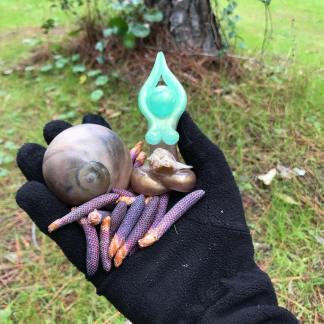
My favorite shell in the world is from a moon snail. Round, smooth, and beautiful, curling in a wave to a perfect tiny spiral in the center, with colors ranging from brown to pale blue, many of the moon shells we find are small, the size of a quarter or smaller. My holy grail (holy snail) is a palm-sized moon shell that will fill my hand. In the morning as we walk on the previously forbidden part of the beach, I stop to take a photo of one of my goddesses on a piece of faded green driftwood. I am in that state of total presence that I experience often in our island walks, the complete immersion in the moment, stripped of all other purpose or task, but simply myself, walking on the beach. It is a type of what I call: “stepping through,” like I have stepped out of myself, out of reality, and into a different plane of relationship with the natural world. We find several fighting conch shells fairly close together and I say to my husband: “what we really need to do is find where the moon snails come up.” I turn away from the driftwood to continue walking and just as his foot begins to come down on the sand I see it…right below where his foot is poised to step, the distinctive curve of a huge moon snail shell, half-buried in the sand. I grab his arm and pull him back, making an indistinct babbling sort of squeal in my throat. I dig it up and there it is, a sun-bleached moon snail shell that exactly fills the palm of my hand. I laugh with joy and exhilaration and nearly cry in my delight. I tell my husband I feel as excited and happy and full of wild euphoria as if I’ve just given birth to another child. This is one of the best moments of my life! I crow, laughing semi-hysterically, this ranks right up there with the time we saw the otters at the river!

Then, realizing what I have said, I laugh some more. Is it sad, perhaps even pathetic, that some of the best moments of my life have been seeing wild otters and finding perfect shells? No, I decide, I adore being the kind of person who sees with island eyes and who discovers the best moments of her life simply by paying attention to what is happening on the shore. 


Molly has been “gathering the women” to circle, sing, celebrate, and share since 2008. She plans and facilitates women’s circles, seasonal retreats and rituals, mother-daughter circles, family ceremonies, and red tent circles in rural Missouri and teaches online courses in Red Tent facilitation and Practical Priestessing. She is a priestess who holds MSW, M.Div, and D.Min degrees and finished her dissertation about contemporary priestessing in the U.S. Molly and her husband Mark co-create Story Goddesses, original goddess sculptures, ceremony kits, and jewelry at Brigid’s Grove. Molly is the author of WomanrunesEarthprayer, and The Red Tent Resource Kit and she writes about thealogy, nature, practical priestessing, and the goddess at Brigid’s Grove

Sheep, Goats, and a Donkey Named Balthazar by Joyce Zonana

JZ HEADSHOTA few days ago, at the New York State Sheep and Wool Festival in Rhinebeck, NY, I purchased a six-ounce skein of fine, reddish-pink mohair bouclé, directly from the woman who’d dyed it using the natural pigments cochineal and logwood. My plan is to make a soft, long winter scarf with it.

I recently started knitting again, lured by some thick, heathered purple wool yarn I’d glimpsed in a farm store in upstate New York. “Is this wool from your sheep?” I asked the farmer. “No, but it’s from a farm down the road,” she assured me. “Her sheep and mine are related, and I know those sheep well.”

I was delighted to be knitting an afghan with wool carded and spun from the fleece of Continue reading “Sheep, Goats, and a Donkey Named Balthazar by Joyce Zonana”

Notes from A Goddess Pilgrimage by Joyce Zonana

JZ HEADSHOT

The solar eclipse has had me sensing deep alignment with earth, sea, and sky, with my sisters and brothers and Self. This, then, from my 1995 journal of my first Goddess Pilgrimage to Crete with Carol Christ, a trip still engraved in my heart:

June 3  – Yesterday, anointing us with rose, lavender, or olive oil, Jana said, “Your journey has begun.” But for me it is this morning, with the purchase of this journal at the biblio on the square across from the hotel, where I sit now in the lobby, traffic noise outside, our group gathering, preparing for our journey . . . happy to be here . . .

Bleeding at the home of the Panagia, the all holy, the sacred mother, sacred myrtle, ancient tree of Aphrodite, Mary, black-bent nuns: we tie ribbons to the tree, sing, “all manner of things shall be well. Blessed be, walk in beauty.” And I am utterly in tears as I walk on the grounds of this ancient place, the birds singing everywhere, yet there is quiet, stillness, an ancient peace . . . A pilgrimage, a shrine, a very holy place.

Continue reading “Notes from A Goddess Pilgrimage by Joyce Zonana”