If I am The Mother* by Rebecca Rogerson

If I am The Mother

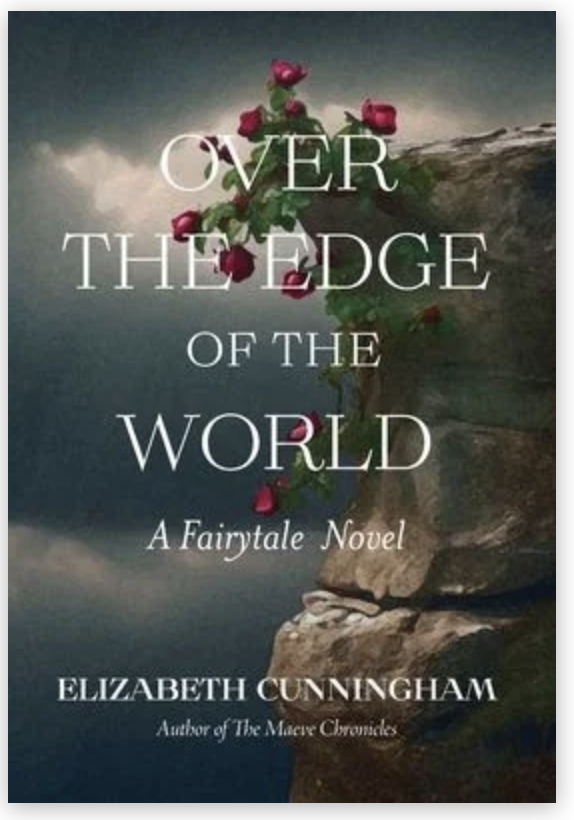
then I am holy. Made of moonbeams and shadows, darkness and light, questioned and answered, lost and retrieved;

discovered remains

If I am The Mother

then I am a reflection, a depiction, an inflexion of a cosmos in bliss and chaos, birth and destitution; a primordial sound unleashed to form planet, life, and

  you and me

If I am The Mother

then I am fermented in humanity, and sour the illusions of precipices we’re told that

we cannot cross

Cross the trinity of three’s and return to

the magic of all

Continue reading “If I am The Mother* by Rebecca Rogerson”

Hopscotch Spells by Annelinde Metzner

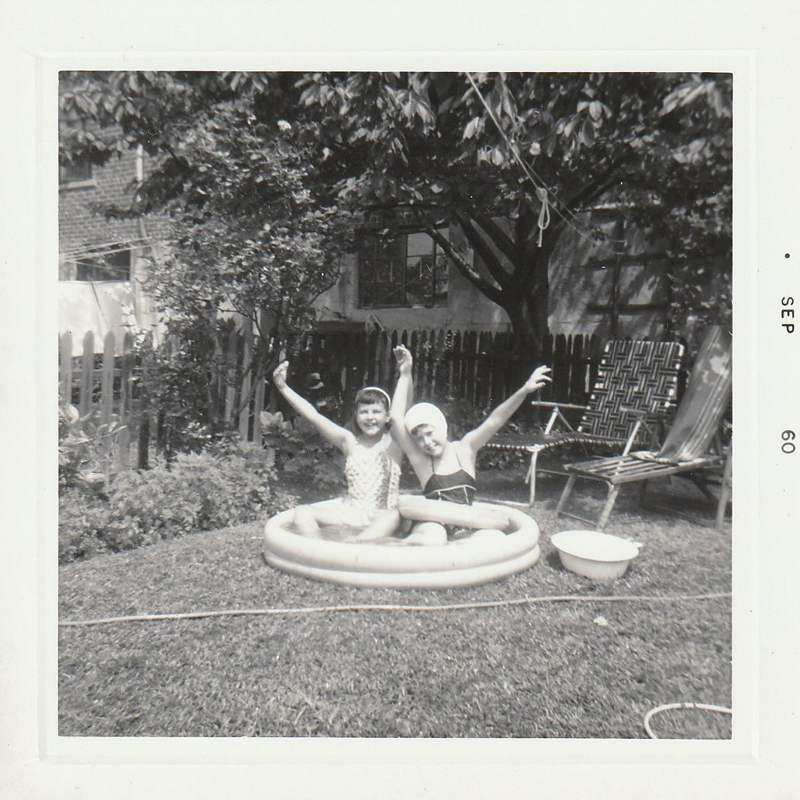
Two girls swimming

  In my work with the folklore and music of children’s games and circles, I’m enchanted by how many bits of magic are interwoven into everyday children’s games from many, many years ago. Our childhood closely intersects with the deep, witchy, magic world of spells, talking animals and whispering spirits.

POEM: “Hopscotch Spells”

One, two, three, O’lary,
four, five, six, O’lary….

I’m pulled like a slingshot’s band
   back to those childhood, everyday spells.

Ally, ally, in-come-free!

Each day, we’d open the screen door
   and hurry to our witches’ college,
   pursuing a degree in the Child’s School of Magic.

One potato, two potato, three potato, four!

What drew us to each other this way?
The circle of street kids, our pals,
   our fists beating out the rhythms,
   our jumps and our skips conjuring powers.

Continue reading “Hopscotch Spells by Annelinde Metzner”

Offerings to the Labyrinth on Papoura Hill, excerpt from the novel by Sylvia V. Linsteadt

Sylvia’s discussion of Papoura Hill was posted yesterday; read it here.

I have so many words I want to pour out of my vessel of milk and honey upon Papoura Hill, on the big scar in Crete’s earth where the airport is being carved, on all the places slated for the construction of electricity pylons, and into so many other scars left by millennia of conquest and occupation, but for today what follows is just one song to her. These words are not full of fighting rage or defiance, but of praise, and softness, and memory. Of motherlines that cannot die, and fatherlines almost lost, but not quite. These words come from the beginning of a novel that I began writing during my first season living in Crete almost seven years ago now, a novel that has metamorphosed with me across these many years, shedding skins and growing new ones— both me, and the novel. The book is still in process, close to being born, but here is one of her many skins, laid at the center of the labyrinth on Papoura Hill with my love.

Moonrise Over Old Crete
an excerpt

The earth tilted toward dusk.
Along the shores of Crete, the Aegean turned for a moment to gold.

Women flocked down to the sea like dark birds to pour jugs of oil and wine into the water. Amphitrite of the cockle crown, they murmured, Aphrodite mother of vessels, mother of the foam and deep, bring our men home safe. The sun lowered under the edge of the world, leaving the last light along the coast. Threads of it pooled in sea-caves and in the inlets where fishermen kept their summer boats. The old storytellers said that in lost times, when the queen was called the Ariadne and her king the Bull, the women of Crete could gather up the last light from the sea onto their distaffs and take it home to spin golden thread for their skirt hems and finest vests.

Continue reading “Offerings to the Labyrinth on Papoura Hill, excerpt from the novel by Sylvia V. Linsteadt”

Offerings to the Labyrinth on Papoura Hill by Sylvia V. Linsteadt

Rhea, mother of Demeter, is coming down upon the seven mountain ranges of her Crete. Ariadne, granddaughter of Rhea, is coming up from her ten thousand perfect caverns inside those mountains with clear water in her arms. They have been quiet a long time, but they are not quiet now. Between them comes Demeter across the wide plateaus where her stones and soil are being stripped for profit, where her bees are dying from pesticide use in their hives, where her grain and oil are sold out from under her, the farmers who grew them cheated by countries with fatter economies and shinier marketing schemes.

They are gathering on Mt. Juktas and Mt. Dikti and Mt. Ida and on Papoura Hill, on all the old holy mountain places where nereids and kouretes were born, where midwives danced, and the dead were buried, and the priests and queens held night-long vigils to take divinations from the procession of the stars. From those divinations they turned the wheel of Crete’s festivals so that they continued year by year as precisely as Earth turned around her axis, so that Earth knew that she and her gifts were respectfully received, and truly loved.

Continue reading “Offerings to the Labyrinth on Papoura Hill by Sylvia V. Linsteadt”

Legacy of Carol P. Christ: Susan B. Anthony’s Bargain with the Devil

Moderator’s Note: Some of Carol’s pieces are so important that we are reposting them for a 2nd time. This was first posted in November 2019 and reposted in November 2021

Matilda Joslyn Gage


[T]he most grievous wrong ever inflicted on woman has been in the Christian teaching that she was not created equal to man, and the consequent denial of her rightful place in Church and State. –Matilda Joslyn Gage, Woman, Church, and State, 1893, page 1

I do not approve of their [referring to Gage and Stanton] system of fighting the religious dogmas of people I am trying to convert to my doctrine of equal rights to women. –Susan B. Anthony to Olympia Brown, following the disputed merger of the radical National Women’s Suffrage Association with the conservative American Women’s Suffrage Association in 1889

Most readers of Feminism and Religion know that Susan B. Anthony and Elizabeth Cady Stanton were leaders in the nineteenth century struggle for women’s rights. Fewer will know that Matilda Joslyn Gage was widely understood to be Stanton’s equal as a theorist and Anthony’s equal as an organizer. The fact that Gage’s contributions have been lost to history can be attributed to Susan B. Anthony’s bargain with the devil.

If Anthony’s bargain had affected only the reputation of Matilda Joslyn Gage, that would be bad enough. But Anthony’s decision to merge the NWSA with the AWSA signaled that the women’s rights movement would cease and desist from its policy of naming and indicting Christian dogma as the source and cause of women’s subordination in the law in Christian countries. This decision meant that feminists would no longer have a clear understanding of the forces they were reckoning with. Continue reading “Legacy of Carol P. Christ: Susan B. Anthony’s Bargain with the Devil”

Mother Blues II: Interfaith Womanist Reflections on Nurturing a Resilient Bloom, part 1 by Chaz J

Even before her life unfurled beneath my heart, a quiet vow took root: to parent with purposeful grace. My unwavering compass points to this: to nurture an emotionally vibrant, confident, kind, compassionate, gentle, yet fiercely bold chocolate warrior queen, a child wholly devoted to her own radiant self. For in her spirit, I long to mend the broken echoes of my past, to see her soar where I once faltered, especially in the intricate landscape of the soul. She will possess a richness I only dreamed of; she will transcend.

Seven years, a fertile ground before her birth, from youth’s edge at twenty-two to twenty-nine, I dreamt of motherhood, shaping it idealistically. My spirit yearned to reweave the tapestry of mothering, to cast aside the heavy cloak of predetermined expectation: no longer would Black motherhood be synonymous with weariness, with anger’s sharp embrace, with bitterness, or a spirit held distorted and captive. I craved for her a vision unobstructed, a path where she could shatter the assigned roles that shadowed a Black girl’s journey into Black womanhood in this land. Above all, I wanted her to be FREE.

Continue reading “Mother Blues II: Interfaith Womanist Reflections on Nurturing a Resilient Bloom, part 1 by Chaz J”

The Erotic as Power, Notes on Audre Lorde by Janet Maika’i Rudolph

I’ve long kept a tract of Audre Lorde’s seminal piece The Uses of the Erotic near my computer. “The Erotic as Power” is her subtitle. If you haven’t read it, please do.  It is in her book Sister Outsider. And you can find it as a stand-alone here. It was written in 1978.

Lorde points out how the erotic is the opposite of pornography, in fact pornography is ultimately a denial of the erotic because it emphasizes sensation without feeling. “The erotic is a resource within each of us that lies in a deeply female and spiritual plane . . .” She goes on to note how it is through our bodies that we recognize and access this power. But she goes on, “We have been taught to suspect this resource, vilified, abused and devalued within Western society.”  In the hands of patriarchy this amazing and important resource often lies out of reach because it has become a source of shame and a sense of inferiority for women.[1]

I would add to the definition of patriarchy that one of its main goals is to damp down, even destroy, the erotic. We have seen this play out over thousands of years of history. Women are often viewed as either saints or sinners. Saints are denuded of this deep earthy power and sinners are those who flaunt it, or at least in the eyes of patriarchy.

Continue reading “The Erotic as Power, Notes on Audre Lorde by Janet Maika’i Rudolph”

Mother Blues: Interfaith Somatic Reflections on Support Systems, Chronic Pain, Tension Relief, and Supporting Oneself by Chaz J

I have had a weird relationship with my stomach or core BEFORE birth. 

My back has been hurting since giving birth.

I’ve carried fragments of my birth story like heirlooms,
passed down in murmurs from my mother and family.
They say she went into labor at home,
a warm plate of food in her hands,
My aunt Akami recalls she refused to leave for the hospital
until every bite was finished.

I came into the world under sudden urgency—
an emergency C-section,
my first act a quiet rebellion:
I had soiled the waters before taking my first breath.

My mother remembers it in a haze,
“I was pregnant, went to sleep…
when I woke up, there was a baby in the corner.”

I do not know if every detail is true,
but the outline fits—
the origin of a loneliness that has followed me
like a shadow that never unhooks from the heel.

Continue reading “Mother Blues: Interfaith Somatic Reflections on Support Systems, Chronic Pain, Tension Relief, and Supporting Oneself by Chaz J”

Honeysuckle Jewels and Women with Wings by Sara Wright

Female Hummingbird in Maine, April 26

Initially I wrote this article for publication at a plant site but was forcibly struck by the reality that what we are doing to plants is exactly the same thing we are doing to humans, women in particular. Separating, Othering, Judging, Dismissing, Eradicating. I could go on here. When you read this article about invasives think about how we are being treated as women. It alarms me that no matter I turn I see the same story played out with humans (women and children suffer most overall), trees, plants, and the animals we are so busy annihilating if not physically then in some other monstrous way. Fill in the blank with your own story.  Then imagine yourself as a bird with wings who carries the seeds of new life into unexpected places.

When I first moved to this area many years ago, I used to spend most of the time in the forests that surrounded my house except in the spring. Then I walked along what used to be a country road to see the wild trilliums, arbutus, lady slippers, bunch berry, violets and columbine that peppered the road edges. 

All the trees and flowers were so plentiful and so beautiful that it took me a few years to pay closer attention to the bushes like the various pussy willows and wild cherries, beaked hazelnut, witch hazel and hobblebush that I also came to love. 

Continue reading “Honeysuckle Jewels and Women with Wings by Sara Wright”

We Don’t Have to Live Like This by Trista Hendren

A Tribute to Carol P. Christ’s Legacy of Peace

Rawan Anani, The Melody of Freedom, Gaza Palestine

Carol P. Christ was a feminist scholar and thealogian I deeply admired from afar for many years. That changed when I read her post in Feminism and Religion describing “washing wet clothes cast off by refugees who crossed the Sea of Death.”[1]

In that moment, she became a woman I connected with on a soul level. What could be more profound than washing and folding the clothing of tiny dead children? What other metaphor could be more vivid for how desperately we need to change the world?

“A tiny pink long-sleeved shirt with a boat neck, for a girl, size 3 months. 

A pair of leggings with feet, grey with pink, orange, brown, white, and blue polka-dots, to be worn over diapers.” 

The week before, she asserted that “the only ‘solution’ to the problem of people leaving their homes in fear for their lives is TO END WAR.” She continued, “No one takes this suggestion seriously enough to engage it.”[2]

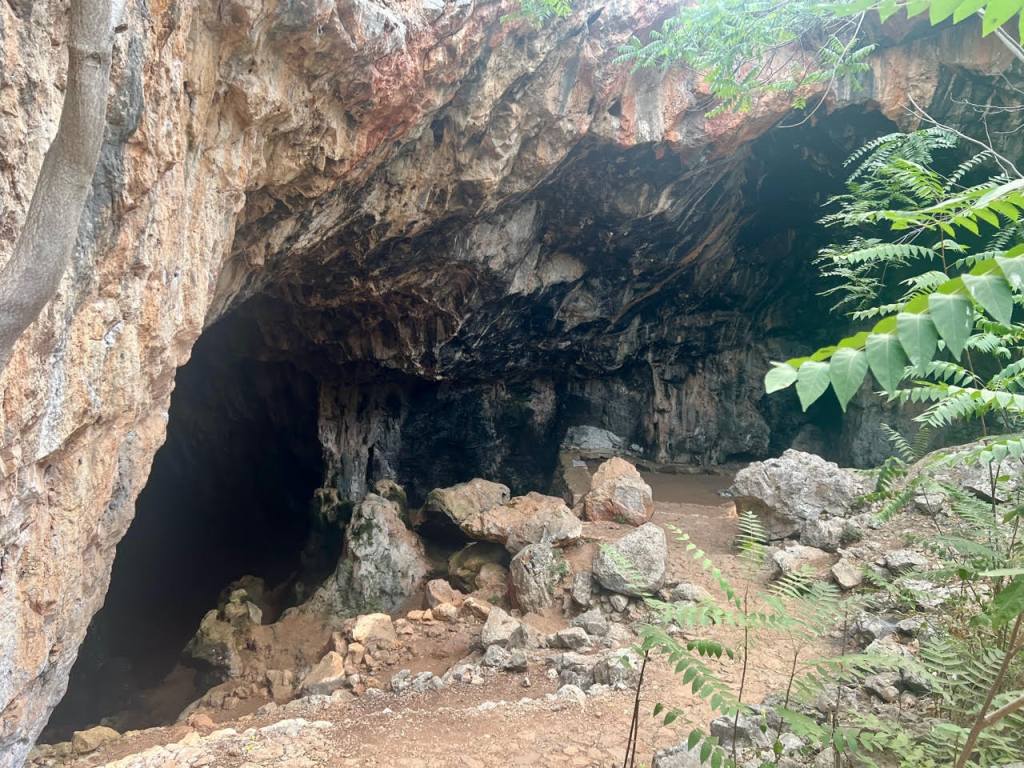
I remember sitting inside the Idean cave with our Goddess Pilgrimage group when Carol read, “We Need a God Who Bleeds Now” by Ntozake Shange. I knew the poem well, but hearing Carolina read it so forcefully shook something deep inside me.

While I have had the privilege of having several wonderful female pastors, they were never particularly affirming of my womanhood—or my divinity. They certainly never celebrated my period.

Continue reading “We Don’t Have to Live Like This by Trista Hendren”