An Omer Calendar of Biblical Women by Jill Hammer

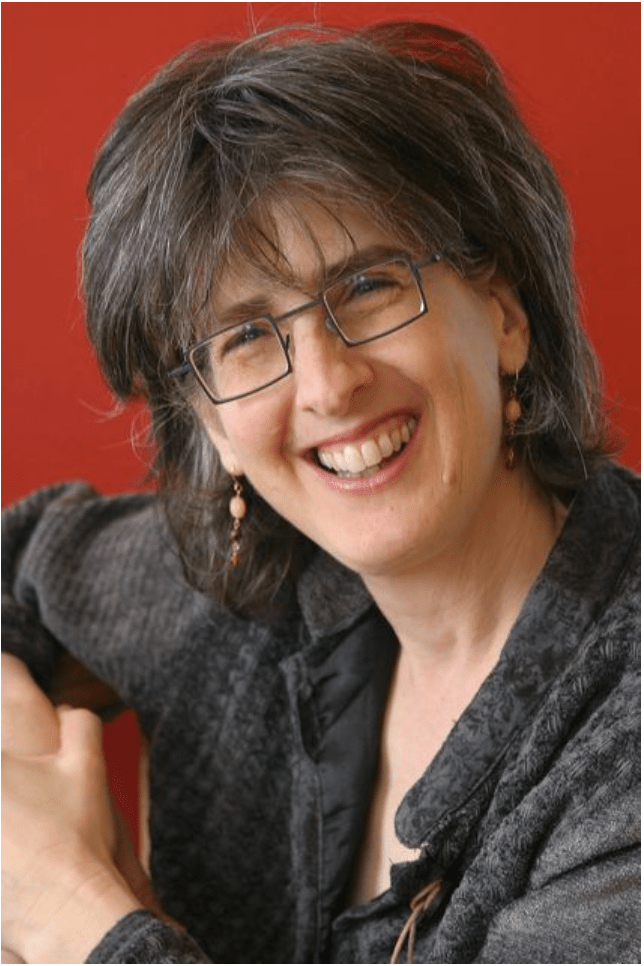
Jill as the prophetess Huldah

Right before Passover every year, my wife and I visit a botanical garden to look at the spring flowers: daffodils, tulips, cherry and apple blossoms, magnolia.   One year, in 2004 or so, we were on our way there when I had an idea. I grabbed a pen and started scribbling long lists of biblical women.

“What are you doing?” my wife asked.

“Making an Omer Calendar,” I said. 

Since biblical times, there is a Jewish practice of counting the forty-nine days between the holiday of Passover (the barley harvest and festival of freedom) and the holiday of Shavuot (the first fruits festival and the season of receiving Torah).  These forty-nine days were the time of the barley and wheat harvest and were a fraught time for biblical farmers.  According to the Talmud, each day of the Omer must be counted along with a blessing.  One must count consecutively each day (usually in the evening) and one loses the right to say the blessing if one misses a full day of the count.  The Omer is often understood as a time of semi-mourning because of plagues said to occur during this time, but it is also a joyful season when nature’s abundance is at the forefront.  This seven-week period embodies both fear that the harvest will be damaged and gratitude for the harvest.

Continue reading “An Omer Calendar of Biblical Women by Jill Hammer”

Uprising! by Beth Bartlett

“ . . . the uprising of [our] nature is but the effort to give to [our] whole being the opportunity to expand into all [our] essential nobility.” – Sarah Grimké [i]

It wasn’t the first time I had stood in protest on that street corner.  I’m sure it won’t be the last. But the gathered crowd was by far the largest I’d been a part of there, covering not just the plaza on the western corner of Lake Avenue and Superior Street, but all the other corners as well, and up and down the sidewalks for half a block.  We were a motley crew, from young people perhaps at their first protest to the many well-seasoned grey-haired. Though I met a few indigenous friends there, I was struck by the overwhelming perceived whiteness of the crowd.  I imagine Black and Brown people were more reluctant to join a street protest where they might be targeted. Indeed, on my way home I heard a report that the number of “driving while Black and Brown” traffic stops has increased in recent days.

Standing in the wet snow, chanting, “This is what democracy looks like!” and “What do we want? Democracy! When do we want it? Now!,” the atmosphere was more of a party than of a wake.[ii]  Yet, when the chants began, I found myself near tears, wanting to sob rather than shout.  As some report seeing their lives flash before their eyes when facing imminent death, I saw my protest life flashing before my eyes – all the anti-war marches – from Vietnam to Iraq to the recent Israeli attacks on Gaza, the marches for the ERA, the Take Back the Night marches, the MMIW marches, the Standing Rock and Line 3 protests, the Women’s Marches, the march for science, the vigils after school shootings and nightclub shootings and the murder of George Floyd, the rallies to protect trans rights,  . . . the list goes on and on. And I felt like weeping, for all these efforts to bring peace and justice and equality to this land were being trampled on and were under threat of being destroyed.

Continue reading “Uprising! by Beth Bartlett”

Blodeuwedd; The Flower that Does Not Bloom and the Transhuman Death Spiral by Kelle Ban Dea

Blodeuwedd is often viewed as a Spring goddess, a personification of flower and bud and bloom. And why not; she is made of flowers after all; flowers and magic. It’s only when you read her original myth in the Fourth Branch of the Mabinogi that you realise how dark it is.

Of all the famous women – now seen as goddesses by many – in these ancient Celtic legends, Blodeuwedd is the only one who is not a mother, and therefore not seen as an aspect of the mother goddess, Modron. Bloduwedd cannot be a mother, because although she is made of flowers, she is a flower that will never bloom, that cannot reproduce.

In both ancient mythology and in the neopatriarchy we live in today, women who either cannot or will not be mothers (despite these being very different things; one a choice, one a lack of choice) are viewed with suspicion. As the opposite of the nurturing, fecund Mother, Bloduwedd instead brings betrayal and death to the hero of the tale. Yet, it was never Blodeuwedd at fault. She is created by the rapist magician Gwydion and given without her consent to be the wife of Lleu, the king, and our shining ‘hero’ of the story. Lleu has been cursed by his own mother to never have a human wife or children, so Bloduwedd is the best that Gwydion can conjure up, and he is celebrated for this marvellous feat of magic.

No-one, of course, bothers to ask Blodeuwedd what she might want.

Continue reading “Blodeuwedd; The Flower that Does Not Bloom and the Transhuman Death Spiral by Kelle Ban Dea”

Journey to Freedom: Harriet Tubman Still on the Move, part 2 by Maria Dintino

Part 1 appeared yesterday

Additional Developments

Although there’s a significant dearth of statues depicting real women in our country, Tubman’s image and legacy have done much to address this gap and put a serious dent in the bronze ceiling.

There are said to be at least 9 full-figure sculptures of Tubman with others in the works, along with plaques, busts,  parks and museums named in her honor. Also, three commemorative coins have been released, each depicting a particular phase in Tubman’s life.

Speaking of currency, the plan to replace President Andrew Jackson’s image with that of Harriet Tubman’s on the twenty-dollar bill is still in the works. It’s an important endeavor that’s taking far too long. Annie Linskey with The Philadelphia Tribune explains:

“There has never been a Black person on the U.S. currency, nor has there been a woman on a bill in the modern era, despite repeated attempts to diversify the currency.”

Continue reading “Journey to Freedom: Harriet Tubman Still on the Move, part 2 by Maria Dintino”

Journey to Freedom: Harriet Tubman Still on the Move, part 1 by Maria Dintino

Moderator’s Note: This post is brought to you by a collaboration by FAR and Nasty Women Writers written and hosted by Maria and Theresa Dintino. This post originally appeared on their website on Feb. 20,2024. It has been updated to reflect recent events. the post is subtitled: Nasty Women Writers: Breaking the Bronze Ceiling – Statues of Real Women in Public Spaces

It’s quite fitting that the 9-foot bronze statue of Harriet Tubman, named Journey to Freedom is still on the move, as was Tubman for much of her life.

Since 2020, the statue has traveled around the country. It’s currently on Hilton Head Island, South Carolina, in Historic Mitcheville Freedom Park. The monument will remain on Hilton Head through April 2025 and from there be transported to Vienna, Virginia.

Continue reading “Journey to Freedom: Harriet Tubman Still on the Move, part 1 by Maria Dintino”

Sacred Secrets: The Legacy of Women’s Wisdom Across Generations by Rabbi Nadya Gross

From my earliest memories, I saw things that others didn’t see and knew things I had no business knowing. But at the time, I didn’t realize that others didn’t witness the dance of light around their bodies or the life forms at the base of trees. I didn’t know that the insights I had into people’s emotions were not universally shared. My curiosity led me to ask questions about these things… until my grandmother, Savta (Heb), took me into the kitchen (where everything important happened), closed the doors, and told me never to talk about these things with anyone except her. And so, my training began.

Savta was gifted in ways different from mine. She had grown up in a circle of women and their daughters, a circle where women educated each other, shared their unique gifts and insights, and passed down a legacy of wisdom.

The wisdom she shared with me was as ancient as the land on which we lived. We began with reverence for the Earth and all her elements—pre-patriarchal Goddess wisdom. We explored what it means to be intimately connected to all aspects of Creation, understanding that we are interdependent. Harm to a tree, an insect, or the water harms us. We learned that the respect we wish to receive from others must first be shown by us. I learned to never pick up a beautiful stone that caught my attention without first asking permission to remove it from its resting place. When harvesting fruit from one of the many trees in my grandparent’ yard, I expressed deep gratitude to the mother-tree whose body nurtured that fruit to ripeness.

Continue reading “Sacred Secrets: The Legacy of Women’s Wisdom Across Generations by Rabbi Nadya Gross”

Practicing Mistakes in Karate by Xochitl Alvizo

One of my earliest lessons from karate, which I am still working to integrate, is about the necessity of making mistakes. I used to apologize every time I make a mistake, “I’m sorry,” I’d immediately say to my instructor. She would smile at me and at the end of class would say, “You don’t have to apologize for making a mistake; your body is just learning to do this for the first time, so of course you’re going to make mistakes. Mistakes are part of the process.”   

The necessity of making mistakes was something I needed to learn to embrace. As with other areas of life, making mistakes in karate made me feel like a fool. I would get frustrated with myself and would feel embarrassed, and would feel like my teachers were disappointed in me too. But one of the things that has helped me embrace my mistakes is seeing how I have indeed improved in my practice. The mistakes I now make are new ones and are about higher level forms and techniques—things that used to absolutely seem impossible for me. 

Continue reading “Practicing Mistakes in Karate by Xochitl Alvizo”

WHEN I SAY THAT I MISS MY MOTHER (THIRTY YEARS AFTER HER DEATH), WHAT PRECISELY AM I MISSING? by Rebe Huntman

photo credit: Lac Hoang

On the eve of my 50th birthday, I found myself longing for my mother. She’d been dead thirty years—so long that I’d forgotten the sound of her voice or the temperature of her skin. And yet I missed her. Desperately. Shamefully.

The shape of that missing had something to do with the fact that I was nearing the age she’d been when she died. As a child, I’d watched my mother dress for a night of dancing with my father, lining her lips with red and stringing her neck with beads—sure signs she knew the secrets of being a woman: self-possessed; striding through the world with confidence and self-assurance; a real badass!

By now, I’d expected to feel that same sense of largesse. But the truth was that I still felt like the nineteen-year-old version of myself who had lost her mother, a child still waiting for someone to show me the way.

~*~

I wasn’t alone. My whole country seemed to have lost our way. We were surrounded by images of the feminine—pop icons and underwear models, feminists and porn stars, soccer moms and saints—all of them flashing large but pointing in different directions, unglued from whatever architecture might give them a coherent narrative: A blueprint that might hold us through the waters of our deepest anxieties. A guide who might answer our deepest questions: Who am I? Am I part of something larger than my own life? And if so, how do I fit within it?

~*~

Continue reading “WHEN I SAY THAT I MISS MY MOTHER (THIRTY YEARS AFTER HER DEATH), WHAT PRECISELY AM I MISSING? by Rebe Huntman”

The Gift of Enduring Friendship by Sara Wright

Mathias Klang from Göteborg, Sweden, Wikimedia Commons

After I experienced a sudden shattering break in a friendship with a woman writer/editor that I loved (that I believed would endure any personal difficulty) I was unable to process the event. I wrote a short poem to express my disbelief in which I likened this betrayal to the cutting down of this woman’s tree and left it at that. Silence is a killer of soul. There is no place to go.

The profound rupture of this woman thread felt catastrophic (I have never had a woman friend like her), and in retrospect I still see and experience our friendship in this light. At the time my life was in crisis. I had other consuming worries. Because I had learned at my mother’s knee that silence is literally the end of the road the bottomless chasm that separated us did not lessen in intensity, but I lived on.

Six years later that rupture has been healed. How did this happen? My friend, who happens to be something of a genius, intellectual, professional editor writer/poet wrote a book that she offered to anyone who wanted to read it for free. This act of great generosity was so typical of this woman’s behavior that it galvanized me into action. I took the risk and contacted her directly asking for a copy. I don’t recall just what I said except that I wished we could be friends again, never believing the impossible would happen but it did.

Continue reading “The Gift of Enduring Friendship by Sara Wright”

Three Women by Beth Bartlett

In the first ten days of the Trump administration, when his sycophants are purring and praising, private corporate execs are rolling over and doing his bidding, and even many of his opponents in Congress have been somewhat muted in their response to his actions, three women – Phyllis Fong, Judge Loren AliKhan, and Bishop Mariann Edgar Budde — have been audacious in their visible and vocal resistance.

Phyllis Fong

On Friday, January 24th, just four days after taking office, Trump fired seventeen Inspector Generals, the federal watchdogs over government agencies.  Among these was Phyllis Fong, the Inspector General of the US Department of Agriculture.  But Ms. Fong refused the firing, citing the position of the Council of the Inspectors General on Integrity and Efficiency that these firings “’did not comply with the requirements set out in law and therefore are ineffective at this time.’”[i]  Having served in the USDA for twenty-two years under four presidents, she returned defiantly to her office on Monday morning, only to be escorted out by federal security agents. 

Continue reading “Three Women by Beth Bartlett”