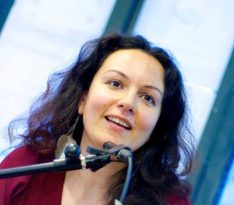
A Time for Reflection by Gina Messina

We are experiencing much grief and fear in this moment. Many of our loved ones have become ill, or passed on. We struggle with theodicy questions; why would God allow such devastation to occur? However, instead of asking why, as our eyes are being opened to the realities of our world, this is a moment that calls for deep reflection.

This Easter was a challenging time for many of us. I could never have imagined that my daughter Sarah and I would end up spending the holiday at home alone — or that we would have hot dogs and tater tots for Easter dinner  (I let Sarah pick – I should have seen that coming!). Although we were physically separated from family, we connected in other ways. I am grateful for the many suggestions on opportunities to remain engaged with each other even though we are not sharing the same physical space. 

Easter is a celebration of Resurrection; it is a time of new beginnings and I can’t think of a more relevant theme for this moment. We’ve been told to stay home, to rethink the ways we live our daily lives, and to do so knowing that our individual actions have life and death consequences. We’ve found that much of what we thought we couldn’t live without is actually insignificant and that our choices do matter beyond our own purview. 

Continue reading “A Time for Reflection by Gina Messina”

I Am a Progressive because of Not in spite of My Feminist Spirituality by Carol P. Christ

Feminist spirituality is often disparaged in academic feminist and progressive communities. Many of the strongest critics are Marxists, but there is a general agreement that religion is the opiate of the people, a false belief system that diverts energy from the difficult work of creating justice in this world. This view is rooted in the habit of thought known as classical dualism in which spirit and nature, spirit and body, and this world and the next are viewed as antithetical. From this, it would seem to follow, feminist spirituality focuses attention on an imagined spiritual world as opposed to the material world in which real people live and interact with each other. Nothing could be farther from the truth.
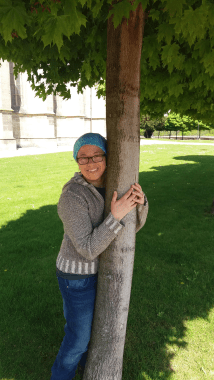
Feminist spirituality is rooted in a strong critique of classical dualism, which sets mind above body, spirit above nature, and male above female. Feminist Goddess spirituality asserts that the female body has been especially disparaged in traditional theologies rooted in classical dualism. This can be seen in the image of the naked Eve as the source of evil, sin, and temptation. In contrast, Goddess spirituality is inspired by images of the female body of the Goddess as a symbol of the Source of Life. Goddess spirituality understands nature (or the world) to be the body of the Goddess and affirms this world as our true home. This world is understood to be an interconnected web of life shared by humans and other than human beings. Continue reading “I Am a Progressive because of Not in spite of My Feminist Spirituality by Carol P. Christ”

Monotheism and the Shema: Lessons on Oneness and Unity by Ivy Helman

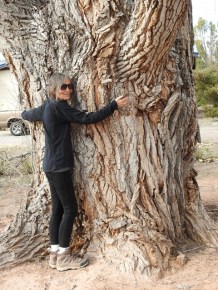
ivy tree huggingIn my last blog post, I explained what we lost when the Israelites became monotheists.  That post looked at the move to monotheism from a more historical, feminist perspective.  In this post, I want to understand monotheism from a more modern, feminist lens.  Using the Shema as a starting point for modern Jewish monotheistic thinking, my question is: how do we honor the deity based on who we understand that deity to be?  In my opinion, Jewish monotheism requires we honor G-d by moving away from one-sided gendered depictions of the deity and think about how we act in light of the interconnectedness of life.

Judaism highlights the Shema as the description of the divine.  It reads, “Hear, O Israel! The L-rd is Our G-d, The L-rd is One!,” (Deut. 6:4).  The key aspect of this verse is twofold. First, we have a relationship with the deity hence the description of the deity as “our,” and, second, this deity is one. 

Oneness used to imply that no other deities count, and perhaps also that no other deities literally exist.  For example, if one were to read the Torah, one would understand the deity differently.  On the one hand, the deity is one of many possible deities one could worship. On the other, it is quite clear that no matter what the deity is called, there is one specific deity that chose to help the Israelites.  In the Torah, the divine is always referred to as he, using only masculine pronouns for the deity. In addition, he is often called king, lord, and master. G-d is depicted as powerful, wrathful, jealous, and even scary.   Continue reading “Monotheism and the Shema: Lessons on Oneness and Unity by Ivy Helman”

Corona: Reclaiming Sovereignty in a Culture of Addiction by Eirini Delaki

The moment we live right now is one of its kind in the history of humanity. There´s an expansive wave of uncertainty, fear of death, panic and, at the same time, an expansive wave of creativity, hope, compassion and unity. We´ve never been so isolated from each other and yet so close…

I believe that there´s a great opportunity in what is happening right now. The opportunity that the fear of death will awake us in realizing that we’ve already been living our lives “infected” by all sorts of habits that were taking life away from us.

There´s a symbolic frequency in the word Corona, like in Corona virus, that holds the key to transformation through this experience. Corona means crown. It also refers to the aura of plasma that surrounds the sun and other stars. When a baby is born, we call that “crowning”, since its head comes out first, if all goes well. This pandemia is a radical wake up call to recuperate our sovereignty, to shine, to be reborn into our authenticity. The seventh chakra, that is the vortex of our energy system, situated at the top of our head, is called Crown Chakra. When that vortex is balanced, we experience unity, the knowledge that there´s an intrinsic law underlying all of existence, serenity, joy, and deep peace about life, beyond intellectual knowledge. Continue reading “Corona: Reclaiming Sovereignty in a Culture of Addiction by Eirini Delaki”

Fierce Grace in Frightening Times by Mary Sharratt


The Covid 19 pandemic had turned our lives upside down on a global scale. What we as a collective could not possibly have anticipated ever happening to privileged Western people has become our new normal as we are forced into lockdown and social isolation.

Ironically, apart from travel plans being canceled, my day-to-day life hasn’t changed that much. As a freelance writer, I’ve always worked from home and my workload and deadlines remain unchanged. In fact, many freelancers and remote workers feel pressured into greater productivity now that they are “stuck at home” with few other diversions. To me, this pressure to carry on business as usual amid a news stream of ever increasing infection and deaths feels sickeningly schizoid. Jocelyn K. Glei, in her brilliant podcast series Hurry Slowly, discusses this phenomenon of productivity shame. Continue reading “Fierce Grace in Frightening Times by Mary Sharratt”

Persistent Beauty by Molly Remer

I knelt beside a sprinkling
of deer fur
dotted with delicate snowflakes.
Don’t take a picture of that,
my husband said,
people will think it is gross.
I don’t find it gross.
I find it curious.
I find it surprising.
I find a story.
Sometimes I feel like
I have to battle a horde
of demonic trolls
before I can take care of myself,
I tell him,
and yet somehow,
I say,
always,
always,
I find my life is still a poem,
in the quietude,
in the battling,
on my knees in brown gravel
to better see this spray of fur
and how the frost
glows like white stars.


I sit on a stone in the pines and let the winds come, sweeping my hair back and lifting my lamentations from my forehead, where they have settled like a black cloud.

I let the air soften my shoulders and my sorrows, sunshine bright on thick brown pine needles, slickly strewn across the steep hill. Continue reading “Persistent Beauty by Molly Remer”

“Tree of Life” Dream by Sara Wright

Full Seed Moon 3/9/20

I see a beautiful fruit tree that is in full bloom with delicate pink blossoms and a man comes and attacks it violently – Oh, all the blossoms fall away, drifting tears cover the ground. Before this the little tree had bloomed “forever,” but man brought death to the blossoming tree and to the tree of life itself.

Little interpretation is necessary to understand this dream on a collective level. The Tree Holocaust is upon us. The Anthropocene is destroying more forests every second.  Billions of trees. The lungs of the earth. The Beings that gift us with rain. We have less than three percent of intact forest left on this planet.

“Man” represents the age of the Anthropocene – each one of us – male or female. Every human being on this earth is complicit in tree obliteration and the terrifying violence associated with this slaughter. It’s important to note that the tree is weeping. (My sense is that the tree isn’t just weeping for being murdered but that s/he is weeping for those who would annihilate her/him). Continue reading ““Tree of Life” Dream by Sara Wright”

Coronavirus: The Villain Is Not Mother Nature: It Is Ourselves by  Carol P. Christ

Over the past few weeks of lockdown in Greece, I have asked myself numerous times: if we can shut down the world economy because of a virus, why don’t we shut everything down until we end war or find real solutions to global climate change? In my mind the horrors of war are much worse than the horrors of disease and dying and the threat and reality of global extinctions pose a much greater threat to humanity (not to mention nature) than the Coronavirus.
Why is it that we are willing to take extreme measures to defeat the Coronavirus but we are not willing to take extreme measures to end war or to stop global climate change? A thought keeps creeping into the back of my mind: the fight against disease and death is (understood to be) a fight against Mother Nature and (sadly) we are well used to fighting against Her. If we recognized that human beings have brought the Coronavirus upon ourselves, we would have to face up to our responsibility for it. Continue reading “Coronavirus: The Villain Is Not Mother Nature: It Is Ourselves by  Carol P. Christ”

“Not If But When” by Barbara Ardinger

As I’m writing this early in March, the CDC has recently said of the outbreak of the coronavirus (Covid-19) that it’s a question of “not if but when” the epidemic will strike the U.S. As we know, it started in China, where it was underreported. Some U.S. cities are setting up quarantine centers, the Faux New Channel is now proclaiming conspiracy theories about the origin of the virus, and Mr. Trump has appointed Mr. Pence to be Coronavirus Czar. Which would be fine if either man believed in science.

We’ve seen epidemics and pandemics before—the post-World War I Spanish Flu, HIV/AIDS, Ebola, SARS, the avian and swine flus, and many more. This new disease as already killed people on six continents. My purpose here is to briefly review two books in which a pandemic is a major plot driver. You know those books you read and keep and go back to again and again? Two of my go-to novels are Station Eleven (2014) by Emily St. John Mandel and Doomsday Book (1992) by Connie Willis. Continue reading ““Not If But When” by Barbara Ardinger”

Are Your Shackles Showing? Hyperbole, Metaphor or Shades of Reality? by Karen Tate

Note: These Comments Might Trigger You
You’ve been held in a windowless room for a long time.  So long, you can’t remember how long it’s been.  You have shackles on your ankles.  Sometimes you can see beyond your sleeping pad, sometimes not so much.  You’re instructed to perform tasks assigned to you according to the will of your captor.   Most days you work so long you feel as if you’ll drop.  Sometimes you have enough food to eat, other times not.  It’s cold and damp in this holding cell where you’ve lived most of your life.  You’ve been sick here, but you have no access to a doctor.  You’ve been beaten regularly, physically and verbally,  for infractions perceived by your captor.   You still have the bruises.  You’ve not been outside this place for so long you’ve stopped scraping the number of days you’ve been held captive onto the walls. 
But, sometimes, you can faintly hear a voice whispering to you from the outside.  It’s a voice that calls to you in quiet moments when the usual crushing noise more easily heard doesn’t drown it out.  It’s hard to understand the words the voice is speaking.  They sound so foreign to you.   The voice suggests there is something else outside this cell.  When you ask your captor about it, the reply is always the same…laughter, mocking, anger.  So you become afraid to listen.


Then one day your captor gets careless.  Or maybe you’re listening closer.  The incessant noise seems less.  Your captor forgot to lock the shackles on your ankles and bolt the door.  You hear the voice outside.  It offers you something else.  It sounds too good to be true.   You’ve heard your captor say as much.   You’d been told that the voice offers empty promises that will never become reality.   But you ask yourself how much longer you can go on here?  So, you stand up at your sleeping pad.  Your legs are shaking.  The hair is standing up on the back of your neck  and carefully, timidly, you walk toward the unbolted door.   You reach out.  Your hand is shaking as you place it on the knob.  You see the red marks from old bruises on your wrists.  Something inside you knows you no longer can tolerate this cell.  Only, it’s all you’ve ever known, or it’s all you remember.

It’s your moment of truth.  You might not get this chance again in your lifetime.  Do you turn the knob?  Do you step across the threshold and move toward the voice?  Or do you shrink back, fearfully choosing the familiar, the devil you know?  Do you choose the somewhat reliable crumbs  laced with indifference and resentment your abuser has been dishing out for years?  Can this really be all there is?  Or can you find it in yourself to take a leap of faith?  Are you going to continue a life of institutionalized abuse and exploitation or are you going to walk across the threshold into a different  life?

Continue reading “Are Your Shackles Showing? Hyperbole, Metaphor or Shades of Reality? by Karen Tate”