Star Tree – Star Goddess by Judith Shaw

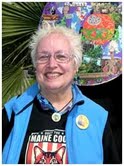
judith shaw photo

In a world where humans were small and nature was big, surrounded by forests of trees of immense size and stature, it’s not surprising that the ancient Celts came to hold trees as sacred. Like many others, the Celts revered the World Tree or the Tree of Life as the mythic bridge between heaven and earth. The roots reach down and ground with the Earth while the branches spread their canopy up to the heavens.

Continue reading “Star Tree – Star Goddess by Judith Shaw”

Pride by John Erickson

When we come together, we are the Divine.  I didn’t think I could experience that twice in one year; clearly, I was wrong. 

If you’re anything like me you not only hate opening up your Twitter feed each morning but also feel compelled to in order to make sure you didn’t miss whatever new atrocity to come out of 1600 Pennsylvania Ave. After the Women’s March, I felt charged. I felt that whatever this administration threw at the proverbial “us,” I knew we could and would overcome it. Although that charge kept me going for a few months, there came a time where I just couldn’t go on anymore and that I was completely drained; then walked in a man named Brian Pendleton.

After the Women’s March on January 21, I didn’t know what to expect. The event was truly so successful that many of the organizers and coordinators were on an activist high as a result of what was a truly magical and divine moment. A few months came and went and the 45th President of the United States continued (much to our surprise) to be as awful as we all knew and expected. However, while I am able to exist in a world, no matter how oppressive, as a cisgendered white male and the full on privilege and power that comes along with that territory, many of the individuals and communities being attacked did not have those same freedoms; and like with the Women’s March and how that all took shape, in walked Brian Pendleton to my life to talk to me about the #ResistMarch.

Cover PhotoAlthough my involvement during the 120 days or more that led up to the #ResistMarch happened in a flash, one thing is for certain: miracles exist not because of divine intervention but because G-d places people on this Earth to make positive impacts. The beauty of the #ResistMarch was not just the passion of the organizers but the beauty of the rainbow that came out in full force on June 11

The strength shown by our community was one that, for all intensive purposes, proves that love does conquer all. RuPaul couldn’t have expressed the common and conquering theme better than when he said: “It’s all about love; giving love and being able to receive love. That’s our secret weapon; that’s the one thing they don’t have: our love and our music. That is our activism. That is what we use and what we always use to fight the ugliness.”

That is the one experience that I took most out of the #ResistMarch: the power of love and friendship; the beauty in the unexpected conversation that leads to changing the world, again.  Thank you, Brian. Thank you, for bringing us all together to resist, recharge, and love.

19055531_10158898620590385_6920780108892374453_o

When we come together, we are the Divine.  I didn’t think I could experience that twice in one year; clearly, I was wrong.

John Erickson is the President of the Hollywood Chapter of the National Organization for Women. John is a Ph.D. Candidate in American Religious History at Claremont Graduate University where he is finishing up his dissertation tentatively titled “Step Sons and Step Daughter”: Chosen Communities, Religion, and LGBT Liberation.” John holds a MA in Women’s Studies in Religion; an MA in Applied Women’s Studies; and a BA in English and Women’s Studies. He is the Founding and Past President of the University of Wisconsin Oshkosh’s LGBTQA+ Alumni Association and currently serves as the Chair of the Legislative Committee for the Stonewall Democratic Club, a Diversity and Inclusion Fellow at Claremont Graduate University. He is a permanent contributor to the blog Feminism and Religion, a Co-Founder of the blog The Engaged Gaze, and the Co-Chair of the Queer Studies in Religion Section of the American Academy of Religion’s Western Region, the only regional section of the American Academy of Religion that is dedicated to the exploration of queer studies in religion and other relevant fields in the nation. In April 2017, he was the first openly gay athlete to be inducted into the Wisconsin Volleyball Conference Hall of Fame. Most recently, John was one of the coordinators of the Women’s March Los Angeles, which brought together 750,000 people in downtown Los Angeles on January 21, 2017, and a Committee Member for the #ResistMarch, which brought together 100,000 people from Hollywood to West Hollywood in honor of LA Pride on June 11, 2017.


Woman and Nature: Our Bodies Are Ourselves by Carol P. Christ

This earth is my sister; I love her daily grace, her silent daring, and how loved I am how we admire the strength in each other, all that we have suffered, all that we have lost, all that we know. We are stunned by this beauty, and I do not forget: what she is to me, what I am to her.

These words are from Susan Griffin’s Woman and Nature which I often recommend as one of my favorite books. Over the years I have read this passage and others from Woman and Nature aloud with my students, and we have always been moved, most  of us to tears. More recently these words have become the center of the “Morning Blessing” on the Goddess Pilgrimage to Crete.

In the epigraph to the book Griffin writes,

These words are written for those of us whose language is not heard, whose words have been stolen or erased, those robbed of language, who are called voiceless or mute, even the earthworms, even the shellfish and the sponges, for those of us who speak our own language . . .

Continue reading “Woman and Nature: Our Bodies Are Ourselves by Carol P. Christ”

Saving Tomorrow: Wonder Woman and Her Elevated Role in Shaping Our World by Anjeanette LeBoeuf

June 2, 2017 saw a boost in the revolution led by a former Israeli soldier turned model and actor in the iconic role of Wonder Woman, a role that has been around for over 76 years. The movie has shattered projections of first weekend profits as well as the notion that no female directed, female super hero movie could bring in as much as its male counterparts. This movie has created a fervor of positive female representation on the big screen and more importantly a resurgence for continuing the fight against oppression, racism, and sexism.

Continue reading “Saving Tomorrow: Wonder Woman and Her Elevated Role in Shaping Our World by Anjeanette LeBoeuf”

Medusa and Athena: Ancient Allies in Healing Women’s Trauma by Laura Shannon

‘Rather than being a bleeding image of female disempowerment, Medusa may be read as…one of the most ancient European symbols of women’s spiritual abilities… [and] an empowering image of feminine potential.’

–Patricia Monaghan, O Mother Sun! (1994:244)

The name Medusa means ‘sovereign female wisdom,’ ‘guardian / protrectress,’ ‘the one who knows’ or ‘the one who rules.’ It derives from the same Indo-European root as the Sanskrit Medha and the Greek Metis, meaning ‘wisdom’ and ‘intelligence.’ (1) Metis, ‘the clever one’, is Athena’s mother. Corretti identifies Athena, Metis, and Medusa as aspects of an ancient triple Goddess corresponding respectively to the new, full, and dark phases of the moon. (2) All three are Goddesses of wisdom, protection, and healing.

Athena with Gorgoneion in her heart. 5th C BCE.

Athena and Medusa are particularly linked: indeed, one may have been an aspect of the other, ‘two indissociable aspects of the same sacred power.’ (3) Their many common elements include snakes, wings, a formidable appearance, fierce eyes and powerful gaze. The serpent, like the Goddess, has been cast as an embodiment of evil in patriarchal retellings; yet as Merlin Stone points out, serpents were ‘generally linked to wisdom and prophetic counsel’, associated with ‘the female deity’ and ‘entwined about accounts of oracular revelation…throughout the Near and Middle East.’ (4) According to Ovid, the poisonous vipers of the Sahara ‘arose from spilt drops of Medusa’s blood.’ (5) Although this is presented as a further sign of Medusa’s horrifying character, the original Berber inhabitants of North Africa – where Herodotus reports that the Medusa myth began – viewed snakes as bringers of luck and portents of joy. (6)

Despite Medusa’s fearsome appearance, she herself does not personify evil or demonic forces. According to Miriam Robbins Dexter, Medusa is a manifestation of the Neolithic serpent/bird Goddess of life, death, and regeneration. (7) Jane Harrison explains that the ancient Goddess wore the Gorgon mask to warn the uninitiated away from her rites (8), most likely mysteries of the great cosmic cycles of heaven and earth. Patricia Monaghan sees the snakelike rays streaming out from Medusa’s countenance as a sign of a solar Goddess (9), while Joan Marler, citing her connection with Hecate, identifies Medusa more with the moon than the sun (10); either way, Medusa is a heavenly deity ruling over the powers of the cosmos and the rhythms of time. Continue reading “Medusa and Athena: Ancient Allies in Healing Women’s Trauma by Laura Shannon”

#RESIST is the new #FABULOUS by Marie Cartier

As promised in my blog last month, in which  I sent photos from the Long Beach 2017 Dyke March,  here is a photo essay from this year’s Los Angeles  #RESIST March. This was the first year in Los Angeles Pride history that the pride month was not celebrated in LA with a parade—but with a March.

This year we had an intersectional #RESIST MARCH for the first time in LA Pride history—since 1970 we Angelinos have paraded—but not this year. This year we marched.

In fact, I marched with Carolyn Weathers, the first lesbian on television, and one of the original marchers in the first LA pride parade in 1970. She is also featured on the cover of my book in front of a San Antonio gay bar in 1961.

It was so moving to march with her on the original route –since then the parade has moved to West Hollywood. This year we returned to the roots of gay resistance—by marching the 3.5-mile original route that started in Hollywood.

And what a march—100,000 strong!

Take a look, and I’ll see you in the streets, at a meeting, in private conversations and also on social media –as we continue to #RESIST.

(All photos by the author unless otherwise noted in the captions.)


The author with Carolyn Weathers — photo by Kimberly Esslinger


Marie Cartier has a Ph.D. in Religion with an emphasis on Women and Religion from Claremont Graduate University.  She is the author of the critically acclaimed book Baby, You Are My Religion: Women, Gay Bars, and Theology Before Stonewall (Routledge 2013). She is a senior lecturer in Gender and Women’s Studies and Queer Studies at California State University Northridge, and in Film Studies at Univ. of CA Irvine. She is also a published poet and playwright, accomplished performance artist, scholar, and social change activist. She holds a BA in Communications from the University of New Hampshire; an MA in English/Poetry from Colorado State University; an MFA in Theatre Arts (Playwriting) and an MFA in Film and TV (Screenwriting), both from UCLA; and an MFA in Visual Art (Painting/Sculpture) from Claremont Graduate University.  She is co-chair of the Lesbian-Feminisms and Religion session of the national American Academy of Religion and co-chair at the regional level of the Queer Studies in Religion session, founder of the western region Queer Caucus, and a perma-blogger for Feminism and Religion. She is also a first degree black belt in karate, Shorin-Ryu Shi-Do-Kan Kobayashi style, and a 500 hour Yoga Alliance certified Hatha Yoga teacher.

Resistance and the Religious Left by Gina Messina

Gina Messina-Dysert CGUFor the last forty years, the Christian Right has influenced the conversation in American politics. Where is the Religious Left and how are they impacting our nation’s moral agenda? It is an important question, and now, more than ever, we need a progressive religious viewpoint in the conversation.

We are living in an era where the morality of our society is at stake and the soul of our nation is being bought by billionaires who have an insatiable appetite for money, power, and control. With an alt-right movement growing and nationalism becoming the Trump Administration theme, we are in danger of losing our humanity. Continue reading “Resistance and the Religious Left by Gina Messina”

Anti-Muslim Demonstrations Demand Our Response by Katey Zeh

kamesh-vedula-208292

On June 10th anti-Muslim demonstrations were held in 28 cities across the United States, including one a few miles down the road from me at the North Carolina Capitol grounds in Raleigh. Organized by ACT for America, identified by the Southern Poverty Law Center as the largest Anti-Muslim hate group in the country, these “anti-Sharia” gatherings were advertised with propagandist messaging like “If you stand for human rights, please join us to march against Sharia” and “Sharia is incompatible with our Constitution and our American values.”

It’s no coincidence that these anti-Muslim demonstrations were organized during LGBTQ Pride month, specifically the weekend before the one year mark of the massacre at the Pulse nightclub in Orlando that left forty-nine people dead and fifty-three others wounded, nearly all of whom were young members of the Latinx community. The shooter Omar Mateen had pledged allegiance to the Islamic State before opening fire at the gay club. Scott Pressler, one of the major organizers of the anti-Muslim gatherings, claims that the Orlando massacre was a wake-up call that led him to do two things: to come out as a gay man, and to join ACT for America “to fight for my community, my country.”

ACT for America operates under the guise of human rights and women’s liberation to justify its anti-Muslim, white Supremacist agenda. The organization’s founder, Brigitte Gabriel, cited acts of violence against women including female genital mutilation and honor killings as the basis of organizing these anti-sharia demonstrations. She criticized U.S. feminists, claiming (falsely) that they have we have been silent on these issues. In an interview Scott Pressler also tried to appeal to feminists in joining his anti-Muslim crusade when he said, “ We [the LGBTQ community] are under attack simply because of our sexuality. Just like women, just for being born a female you are already under attack, and I think that’s demonstrative of how extreme radical Islam really is.”

Continue reading “Anti-Muslim Demonstrations Demand Our Response by Katey Zeh”

Is This How Patriarchy Began? by Carol P Christ

In my widely read blog and academic essay offering a new definition of patriarchy, I argued that patriarchy is a system of male dominance that arose at the intersection of the control of female sexuality, private property, and war. In it, bracketed the question of how patriarchy began. Today I want to share some thoughts provoked by a short paragraph in Harald Haarmann’s ground-breaking Roots of Ancient Greek Civilization. Haarmann briefly mentions (but does not discuss) the hypothesis that patriarchy arose among the steppe pastoralists as a result of conflicts over grazing lands. As these conflicts became increasingly violent, patriarchal warriors assumed clan leadership in order to protect animal herds, grazing lands, and the women and children of the clan. Continue reading “Is This How Patriarchy Began? by Carol P Christ”

A Beginning: Atonement Theology and the Feminist Critique by Katie M. Deaver

Since many of the comments on my last post expressed interest in my dissertation topic I will use my next couple of posts to talk a little bit more about my work and research in that area.  When we talk about theories of the atonement we are trying to describe a narrative structure of what took place within the Christian cross event.  Generally speaking, Christians believe that atonement serves at the reconciliation between God and humanity and that this reconciliation is realized through the person of Jesus Christ.  The three primary theories that try to explain this event are Substitutionary/Satisfaction, Moral Influence, and Christus Victor.

The Substitutionary/Satisfaction theory of atonement suggests that Christ takes on the guilt and punishment that humanity deserves because of our sinfulness and so becomes our substitute, paying the debt we owe for our sins.  Because of humanity’s sinfulness we deserve death, but instead of giving us what we deserve God instead offers God’s son as a sacrifice to pay our debt, to atone for our sinfulness, and to save us from the eternal punishment of death.

The Moral Influence theory of the atonement focuses primarily on the life and ministry of Christ rather than on his suffering and death.  This theory is centered on the belief that God loves God’s creation so much that God would hold back nothing from us, God would even give God’s own Son in order to save us and remain in relationship with us.  As a result this theory encourages Christians to live as Christ lived and focuses on imitating his life and ministry in order to bring about justice in our own world.

Continue reading “A Beginning: Atonement Theology and the Feminist Critique by Katie M. Deaver”