Rituals for Our Sons, by Molly Remer

“…There, he found a piece of glass and began to tell a story. He was telling one of his tribe’s men’s stories. It was a story for boys to become men, and it was not shared with women. The women had their own stories, not for men to know. I read that and thought, no one took me out into the desert; no one told me stories. That’s what I needed, a passing of history and the ways of living, from one man to another.”

–Christopher Penczak, Sons of the Goddess, p. 51

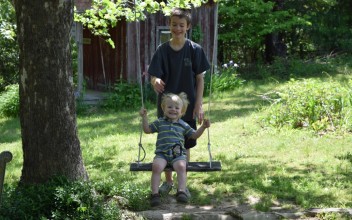
Our oldest son is rapidly sliding into manhood. Creaky voice. Height stretching on a near-daily basis. Fuzz on upper lip. I am finding it hard to hold august-2016-096-768x768

space for his transition as a teenager while still caring for a not-quite-two year old small boy as well, one who reminds me regularly of my first baby boy and what it was like to be a mother to only one, focused on each stage of development, each new word, each successful identification of a new color. Now that first baby boy swings that last baby boy onto one hip with practiced ease, washes dishes, helps to cook, pours milk for his sister.

Several years ago, I was asked to work on a coming of age/manhood ceremony for a friend’s son. It never quite came together—I didn’t feel like I could do it and I still feel regret about having let that boy down. At the time though, and still now, I felt that I’m not “qualified” for the job—I don’t know the men’s stories either. The council of men needs to prepare his ceremony. Where is the men’s council, the circle of men? I think we have them around us, but that there is much less cultural permission for them to gather in groups to honor transitions in sacred ways. Much as women’s circle work feels radical and transformative and even threatening to patriarchal culture, men gathering in circle to honor and guide one another, that is perhaps even more so. I see Red Tents around the world. I see women’s circles springing up with a glorious passion and far flung expression. I am guiding other priestesses in circle work, and Red Tents and Pink Tents, and holding ceremoniesjuly-2016-822-1080x675 for our daughters coming of age. What about our sons? Where are their ceremonies and welcomes into manhood? Where are their stories in the desert? Is it a mother’s job to provide the container for those stories? Can I call the circle for my son and then step back? I know what it means to be a girl reaching into womanhood. I know what it means to circle with other women. Does it have to be different for boys and men?
When I was reading books, looking for ideas for my friend’s son, I noticed that most pagan rituals described for boys include the element of the son being “kidnapped” from the mother, women, and girls and being taken away by the men and left alone. I hate these rituals. Every time I read one like it, my heart screams, “NO, we want more than that for our sons.” Despite being promoted as part of an alternative spiritual framework, how does this type of ceremony support and honor the type of world we wish our children to grow up in? Why do boys need to be kidnapped from their mothers and left alone in order to be men? Isn’t that the very root of patriarchy on this earth? No thank you.

I bought another book specifically because it mentioned including a rite of passage ceremony for boys. I read it with eagerness and was dismayed at august-2016-073-300x300what I found. The circle was called, held at dusk, and each person was instructed to bring a rock for the newly fledgling boy. They were to go around the circle and share what they learned, what they were imbuing into the stone…so far, so good, right?…and then, throw it into the darkness and say, “find it for yourself.” When I read this, I had an epiphany. If this was a ceremony for girls, we each would have handed her the stone and welcomed her into the circle with our wisdom, we would have made sure she knew that she was strong, powerful, and capable, but also that part of that power meant that we were standing with her and offering our wisdom in support. She would not have to crawl in the darkness alone looking for rocks, because we’re there. And, that is the core message of most women’s circles and ceremonies for girls. We’re there. You are not alone. So, then I knew…a ceremony for a boy need look no different. Maybe I do not know the stories from the men’s desert, but I do know what it is like to celebrate someone for their unique gifts and strengths, look them in the eye and affirm their power, and sing to them with love of my support of their dreams. This is not a gendered thing, this is humanity. How do we want to welcome boys into the world of adults? By casting away our wisdom and telling them to search in the darkness for themselves? Or by standing next to them, shoulder to shoulder, hand in hand, and offering all that we have, all that we are, in support, and trust, and honor of their evolving selves?

july-2016-829-768x512

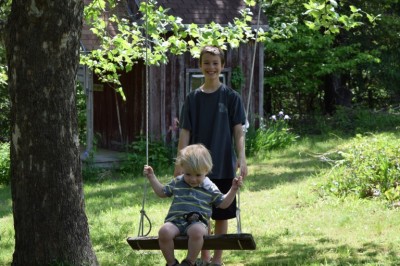
This summer, we gathered in sacred circle for a chanting workshop and a summer ceremony. The men at the chanting workshop sang just as wonderfully together as the women do in the Red Tent. The boys in the summer circle joined hands just like anyone else.

We do know how to do this.

This song below was recorded during the chanting workshop and feels appropriate for this occasion…
picture1

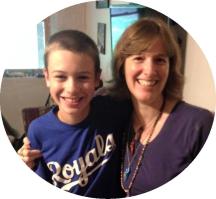
Molly has been “gathering the women” to circle, sing, celebrate, and share since 2008. She plans and facilitates women’s circles, seasonal retreats and rituals, mother-daughter circles, family ceremonies, and red tent circles in rural Missouri and teaches online courses in Red Tent facilitation and Practical Priestessing. She is a priestess who holds MSW, M.Div, and D.Min degrees and finished her dissertation about contemporary priestessing in the U.S. Molly and her husband Mark co-create original goddess sculptures, ceremony kits, and jewelry at Brigid’s Grove. Molly is the author of Womanrunes, Earthprayer, and The Red Tent Resource Kit and she writes about thealogy, nature, practical priestessing, and the goddess at Brigid’s Grove. 

Rocks, Flowers, Circles: Sustenance During Troubling Times by Elizabeth Cunningham

Elizabeth_Author Photo 2I had planned to write my October post about the election. Out of respect for everyone’s election fatigue, I’ll give the subject one paragraph only. I voted for Bernie Sanders in the primary. Like Bernie himself, I will vote for Hillary Clinton in November. To Bernie supporters who intend to vote for a third party candidate or abstain, because they cannot in good conscience vote for Hillary, my own conscience prompts me to make one appeal. Forget Hillary. Vote for the people and the principles she is pledged to represent. Flawed as the two party system may be, there are stark differences between the Democratic and Republican platforms in this election. Reproductive rights hang in the balance as well as whether this nation will address or deny climate change, just to name two of a host of critical issues. Enough said.

No matter what happens on November 8th, we will still face the challenges of climate change, global strife, populations displaced by war and catastrophe, the clash of cultures.  The rest of this post may be irrelevant to someone who is struggling for survival. I know I am lucky to have a relatively peaceful place to live and the means to sustain myself. But for what it’s worth here are three sources I turn to for comfort, strength, and perspective in troubling times. Continue reading “Rocks, Flowers, Circles: Sustenance During Troubling Times by Elizabeth Cunningham”

The Heart of the Labyrinth: BOOK REVIEW by Mary Petiet

the-heart-of-the-labyrinth_cover_front_72What if it really is as simple as changing our minds?
This is the central question of Nicole Schwab’s book, The Heart of the Labyrinth (Womancraft Publishing, 2014). This question paves the way for her eco-feminist approach to balancing the self and the environment. Schwab’s book is a parable as multilayered and complex as human nature, and it moves through the ages to probe the pure core of the self and the sustaining energy that connects all. Continue reading “The Heart of the Labyrinth: BOOK REVIEW by Mary Petiet”

Dystopian Fiction Inspiration and Religious Lessons by Ivy Helman

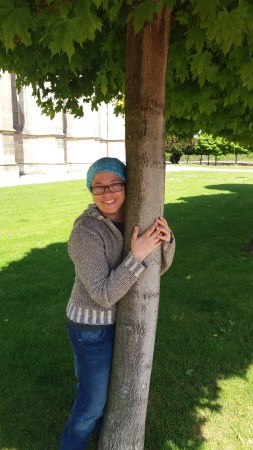
me-hugging-treeWe live in a dystopia.  This world is filled to the brim in dichotomies: poverty and extreme excess, hunger and mountains of food, disease and cutting-edge medicine, materialism and an immense environmental crisis, and hour-long walks for water and hour-long luxurious baths.  There are so many parts of our world that are not just unfair, unequal, broken and undesirable, but violent, traumatic and deadly.  And, sometimes it feels like it is only getting worse, or at least, again teetering on the edge of yet another catastrophe.

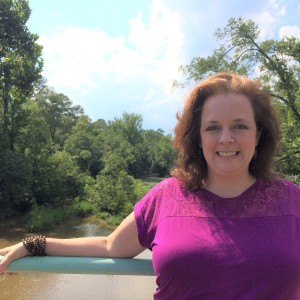
Most of the world’s religious traditions agree that this is not the way the world should be.  My own religious tradition, Judaism, traces this separation between the Creator’s utopia, the Garden of Eden, and our current situation all the way back to the beginning of humankind.  The actions of the first two humans resulted in exile from the Garden: enter the world diametrically opposed: dystopia.  Nonetheless, the Jewish religious tradition’s call for tikkun olam (repairing the world) suggests that it is possible to lift the veil between the Divine and us and consequently recreate the utopian Eden once again.  One could say it is why we are here.

That being said, while the dystopian genre has been around for many decades, I have noticed a recent rise in the popularity of dystopian fiction.  While I have always had a keen interest in science fiction, from Star Trek to FireFly and beyond, I myself have, as of late, become an avid reader of dystopian novels.  I blasted through the Divergent series by Veronica Roth, have reread The Fifth Sacred Thing by Starhawk more times than I can count and just began my dip (25 pages) into The Mandibles by Lionel Shriver – not so action-packed as the others.  I’ve also been, one could say, addicted to dystopian films (yes many were books first) like The Hunger Games, Maze Runner, Gattaca, The Fifth Element and Serenity to name just a few.

Continue reading “Dystopian Fiction Inspiration and Religious Lessons by Ivy Helman”

Nominating Holy Women Icons by Angela Yarber

Who is your Holy Woman Icon?

When I began the academic study of religion in 1999, I was struck by the pantheon of male saints, venerated, honored, painted, adored, perhaps even worshipped. From virtually every tradition, men reigned supreme—in leadership, iconography, decision-making, worship—which is one of the myriad reasons groups like Feminism and Religion must exist. To combat this oppressive supremacy.

In 2010, I decided to put my wonder and this patriarchal dis-ease on canvas. I painted a triptych of Sophia, the feminine Greek word for wisdom often understood as the feminine face of Jesus, for a group triptych exhibition. Inspired stylistically by the art of Shiloh Sophia McCloud and He Qi, I endeavored to give traditional iconography a folk twist in an attempt to make it more accessible, perhaps a bit less brooding and intimidating. Emboldened by the works of womanist and feminist scholars in religion, my icons aim to subvert traditional—and often patriarchal—depictions of a virtually all-male sainthood. Though there are surely some women depicted Catholic and Orthodox iconography, and a robust number of women and goddesses in Hindu iconography, I found myself at a loss when it came to positive, affirming, and empowering icons of women across the vast spectrum of religious and spiritual traditions. Continue reading “Nominating Holy Women Icons by Angela Yarber”

Atonement, Forgiveness, and Feminism by Debra Guckenheimer

Photo by Michael Stepansky

As Rosh Hashana and Yom Kippur approach, I am in the midst of my annual process of asking forgiveness to everyone I have knowingly wronged in the last year. During this time, Jews atone for our wrong-doings. We are tasked with not only asking for forgiveness, but making things right with those we have wronged.

This year, I’m realizing that I have been missing out on so many aspects of forgiving. What about the forgiveness I am not aware I need? I need to learn to forgive us and to invite others to call me out on the ways I have inflicted harm on them. Continue reading “Atonement, Forgiveness, and Feminism by Debra Guckenheimer”

Touch and Presence as Intimate Communion by Chris Ash

Christy CroftOver the past 20 years, I’ve been blessed with many moments in which fully aware or embodied presence has intersected spiritual transformation, both in my own life and in the lives of others. In my work on a crisis hotline, I’ve held space for strangers to open up and speak freely about pain, grief, and despair.  In my work as a minister, I’ve held a couple’s hands as I blessed their marriage, and I’ve held space with the dying and their loved ones.

In my work as a doula, I’ve supported women draped over my arms as they pushed new life into being; I’ve also held crying fathers in hospital hallways while their lovers were being prepped for emergency surgeries. In my rape crisis work, I’ve held the hands of women in hospitals through fear and sorrow, and I’ve facilitated support groups for survivors to reconnect with their own embodied sexuality and the fullness of its complexity as they worked toward greater compassion for themselves and their processes.

I’ve worked to build a practice of presence and compassion in my life that extends beyond my family, even beyond people. Last spring, I was late to a party because I’d stopped to help a stumbling fawn out of the highway. Seeing that it was unable to move, I sat with it at the edge of the woods and sang it to its sleep.

Each of these experiences has transformed me, my way of viewing the world, and how I see the role of touch and presence in friendship, service, and worship. Continue reading “Touch and Presence as Intimate Communion by Chris Ash”

Prayers to Black Madonna and Kali Rising by Natalie Weaver

Natalie Weaver editedThis past Saturday, I had an opportunity to sweat in a traditional Lakota sweat lodge for the first time.  It was, above all, an interesting cognitive experience for me.  I found myself sort of shaking hands with the ritual, the heat, the stones, the songs, and so on, saying, “Hi, I’m Natalie.  I have an open mind.  I am excited to know about you.  Thanks for letting me see what you are all about.”  I didn’t know whether I would pass out, have visions, or learn something new and wonderful about myself or the others.  I was curious, still, and grateful for the opportunity. I was gifted by generous people, good fellowship, and new ideas.  I will go back, even though I didn’t exactly find some thing… or maybe I did.  Maybe, I found someone, or, better, maybe someone found me.
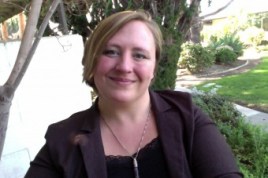
Two days before the sweat, I received an email from one of my companions on the journey, saying something I still do not understand about the Constellation Sagittarius, the Galactic Center, and the Rising of the Black Madonna.  Although I did not understand the astronomy, I was intrigued by the call to recognize and confirm the Black Madonna.  For, without particular reason or impetus that I could identify in myself, I had been dreaming of a Black Madonna statue for some time.  After trying to find out what it was, I was able to identify it as the Black Madonna of Prague.  I have never been to Prague and was basically unaware of the rich tradition of Black Madonnas in Europe, despite four semesters of art history in college.  So, I made note of my dreams, with a promise to myself to seek them out whenever and wherever I travel.  I also purchased little trinket at a Canadian gift shop, which sits on my desk as a guide and companion.
Continue reading “Prayers to Black Madonna and Kali Rising by Natalie Weaver”

Debating a “Winning” Personality by Sara Frykenberg

Sara FrykenbergI wasn’t sure I wanted to watch the debate between presidential candidates last Tuesday. As John Erikson discussed in his post “The End is Nigh,” one could easily predict Trump’s sexism and misogyny, it was just a question of how his hatred would surface and whether or not he would tip his hat to “how truly dangerous he really is.” So, I compromised: I watched some of the debate, able to shirk part of what I felt was my responsibility to history for a more pressing responsibility, the need to put my daughter to bed. And, of course, Donald Trump delivered what his ‘brand’ promises… (poor) mis/re-direction, lies, bullying and incompetency.
Continue reading “Debating a “Winning” Personality by Sara Frykenberg”

Religion, Dissent and Decolonial Approach in Latin America by Vanessa Rivera de la Fuente and Juan F. Caraballo Resto

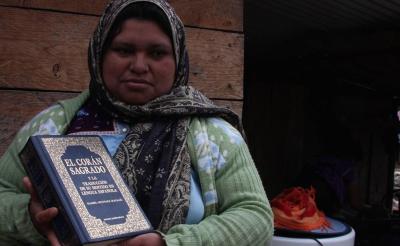
womanwithquran

Talking of decoloniality in religion and theology is today a fashionable stance that has been adopted even by the academic and political mainstream. As Latin Americans, decolonial perspectives affect us firsthandedly. For the last 500 years, our continent has nurtured resistance struggles against the racial, sexual, economic, ethnic and religious violences that emerge from the numerous process of colonization we have endured. With this in mind, in this article we contribute to the debate on decolonization of our religious phenomena.

Decolonizing is to Assume that all Religion can Operate as a Colonizing Agent

The expansion of European colonialism in Latin America transpired through all aspects of social existence and gave rise to new social and geocultural identifications (e.g. “European”, “American”, “Indian”, “African”, etc). The consequences of this domination reverberate to this day.

In this regard, we should not loose track of the fact that all abrahamic religions had their genesis within Latin America in the form of colonial presence. In other words, most of our religious expressions are the product of colonial forms of governance, which benefited from an exclusionary instrumentalization of the religious narratives as a tool to ‘dignify’ and ‘enhance’ the population as ‘colonial subjects’.

This was the case of Christianity. The mission carried out by the first European conquistadores in the Americas was characterized by the drawing of exclusionary theological lines that legitimized some, questioned others, and condemned many. Colonization thus manifested itself in part through spiritual violence on native populations. Evangelization, in this regard, was biopolitical in nature; it entailed the pushing of non-European bodies (and souls) into ‘Otherness’.

This illuminates unto why, for example, nowadays interfaith relations have become a problem, rather than a resource for many Latin American Christian congregations. It is often assumed that to establish lasting links of solidarity with religious ‘Others’ puts at risk the core elements which have been taught to enhance our population by the different metropoles that have governed and preached in our midst.

It is well established that for too long the bases of Christianity in the Americas were built upon imposed and/or conditioned conversions which constantly demanded and reminded people that in order to have ‘goodness’ reside in them, they had to be someone essentially different to who they were; they had to be Christian (Rivera Pagán 2013, 2014; Silva Gotay 1998, 2005). In this regard, long established religions such as Judaism, Islam, Spiritism, and Afro-Atlantic religions such as Santería or Palo have been relegated to inferior statuses in some still colonial contexts, such as Puerto Rico (Caraballo-Resto 2016; Román 2007).

A similar case, can be found within Islam. As mentioned in a previous article, many Muslim congregations in the Americas have done well in mirroring the colonial practices of Christianity. Despite common assumptions, some contemporary Muslim groups have come to our lands with the clear aim of Arabization and, again, through spiritual violence they categorize locals as “others” and, thus “subordinate” them as perpetual ‘underage believers’, who seem to need the Arab tutorial aid relentlessly. At times, their theologies are reminiscent of those expressed by Catholicism 500 years ago: A call to abandon local trajectories and spiritualities, in favor of adopting Middle Eastern names, language, arts and aesthetics, social manners, political causes and even diet. Only then, are us Latin American to be considered by some of these communities as “Noble Savages”.

Although some scholars linked to decolonial studies within Islam have difficulty accepting this, Islam has historically been instrumentalized as a colonizing agent in the Middle East, West Africa, Asia and the Indian Subcontinent.

If we talk about Islam and decoloniality in the same sentence, there should be honesty on these facts.

Colonization occurs not only through the sword and war, also through trade, culture and social discourses that become hegemonic and religion. In this regard, the ‘jihad of the soul’ is seldom devoid of politics. The absence of blood is not tantamount to a lessening of colonial violence. There are many and different ways to curtail, cancel and oppress a people without resorting to their physical extermination.

Religion and the Heterosexual Regime

Colonial religions in Latin America have been characterized by an hegemonic discourse based on heterosexuality as a compulsory scheme, androcentrism, ableism and speciesism. Historically, this has entailed the exercise of a new religious taxonomy (eg. ‘Moro’, ‘Marranos’, ‘noble souls’, etc.). Yet, this also corresponded to an encompassing system of power that intersected all control of collective authority, labor, racial relations, the production of knowledge, as well as sexual access and meaning.

It is well known that many indigenous peoples of the Americas were matriarchal, recognized more than two genders, recognized homosexuality and “third” gendering positively and understood gender in much more problematized terms rather than in the binary terms of subordination monotheistic system imposed.

Such dichotomy not only found its way in Latin America. It also transpired in parts of Africa, which were later linked to our Latin-American contexts by way of slavery. This has been dealt at lengths by Nigerian feminist scholar Oyéronké Oyewùmí, in her work The Invention of Women (1997). In it she states that gender was not an organizing principle in Yoruba society prior to European colonization (idem: 31). Instead, she argues that gender has “become important in Yoruba studies not as an artifact of Yoruba life but because Yoruba life, past and present, has been translated into English to fit the Western pattern of body-reasoning” (idem: 30).

So, it becomes all the more important to consider the changes that religious colonizers have brought, as well as the lip service we’ve paid to it, in order to understand the scope of our Latin American organizations of sex and gender under colonialism.

Theology of Dissent in Response to Religious Heteropatriarchy

A decolonial theology must be one of dissidence if it is to have any liberating character. ‘Dissidence’, here, is not used as a mere label of disagreement, but rather as a situational stance from which the very bases of our legitimization as colonial subjects are constantly contested. And just as the expansion of religious colonialism in Latin America transpired through all aspects of social existence and gave rise to new social and geocultural identifications, a decolonial theology of dissidence must do the same—starting from our own gendered bodies.

In sexual terms, Latin American women and non-heterosexual people have been historically defined in relation to heterosexual men as the norm. In other words, women are those who do not have a penis, and non-heterosexual men are those who do not use their penis according to the norm (Lugones 2003). From a decolonial theology of dissidence this must be contested—placed in a situation of uncomfortable political transactions perennially.

From this point of view, a decolonial theology of dissent is much more than a body of intellectual writings. It is a daily practice—a quotidian mode of resistance—that involves people at the grassroots where the challenges of exclusion are negotiated. Yet, something is to be said for the epistemological zones of privilege where colonialism is also instantiated. There is no decoloniality without resistance, and there can be no resistance against the traditional hegemonic enclaves where colonialism is legitimized, as long as the centers where knowledge is produced conceive people in resistance as “objects of study”, rather than “fellows in knowledge-building”.

Up to this day, ‘Otherness’ is one of the most deeply rooted archaeological legacies left by our colonial religiosities. Upon its finding, some people of faith in Latin America are now left to determine how best to deal with religion(s) in an inclusive, liberating and welcoming way, so that our social contexts become ones where religious, gendered, ethnic, linguistic, racial, and able diversities are not thought of as problems, but a resources to strengthen ties. Only then can we help truly shift this time of instability for our region.

Decolonizing religion in Latin America entails understanding that the religious question is always political, and as such must be contested. If there is any liberating potential in the religious phenomena, this is due to a lucid dissidence that eludes colonial privilege and embraces an ethical compromise beyond religious labels.


Vanessa Rivera de la Fuente is a social communicator, writer, mentor in digital activism and community educator in gender and capacity development. She has led initiatives for grass roots female leaders’s empowerment in Latin America and Africa. She is an intersectional latin muslim feminist in the crossroads between Religion, Power and Sexuality. Her academic work addresses Feminist Hermeneutics in Islam, Muslim Women Representations, Queer Identities and Movement Building. Vanessa is the founder of Mezquita de Mujeres (A Mosque for Women), a social media and educational project based in ICT that aims to explore the links between feminism, knowledge and activism and highlights the voices and perspectives of women from the global south as change makers in their communities.

Juan F. Caraballo Resto is professor of Sociology and Anthropology of University of Puerto Rico Reinto Cayey. PhD in Social Anthropology from University of Aberdeen, Scotland.

Featured Image: Indigenous woman in Chiapas, Mexico, part of the Islamic mission of Dawa in the area, wearing a hiyab and showing a Qur’an in Spanish,