Sorrow Filled Solidarity by Anjeanette LeBoeuf

AnjeanetteOn an unexpected weekend in June, the city of Orlando was rocked with a string of violent attacks that created an earthquake of shock, grief, fear, hurt, and a sadness too terrible to name, that all ends of our globe have felt. It started with the shocking shooting of the young YouTube celebrity, The Voice reality contestant and established musician 22-year-old Christina Grimmie, gunned down by a deranged young man before he in turn killed himself. It ended with the horrific mass shooting at the gay bar Pulse, where 49 men and women lost their lives, and countless more saw their lives forever altered, shaken, and shattered.

Continue reading “Sorrow Filled Solidarity by Anjeanette LeBoeuf”

Our Ladies of Sea, Earth, and Sky by Joyce Zonana

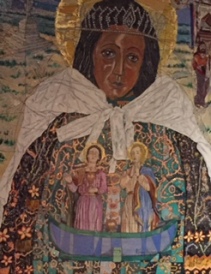
Sara and the Marys
Sainte Sara encompassing Sainte Marie-Salome and Sainte Marie-Jacobe

O Sainte Marie-Jacobe, priez pour nous.

O Sainte Marie-Salome, priez pour nous.

O gardeures de la Provence, priez pour nous.

The priest intoned the words in deep, liquid accents, his voice echoing from the ancient stone church in the remote village of Les Saintes-Maries-de-la-Mer, in the Camargue region of Southern France, where the waters of the Rhone River meet the Mediterranean Sea in a wild, wide, flat expanse populated by black bulls, pink flamingos, and white horses.

“O, Saint Mary-Jacobe, pray for us.”
“O, Saint Mary-Salome, pray for us.”
“O, guardians of the gates of Provence, pray for us.”

I could feel the words resonating through me, bringing sudden, hot tears. The people gathered in the small village square repeated the priest’s chant, their voices rising above the low, white-washed houses into the sunlit sky, out towards the shimmering sea where legend tells us the two Marys had drifted two thousand years ago in a boat without rudder or sail.

Continue reading “Our Ladies of Sea, Earth, and Sky by Joyce Zonana”

#OrlandoStrong: Yes, Baby, the Gay Bar is Still Our Church – Still Our Religion by Marie Cartier

Marie Cartier photo by: Greg Zabilski

The worst gun massacre in United States history happened in a gay bar, PULSE, Sunday, June 12, 2016 in Orlando, CA.

It happened during the United States Pride month of June which commemorates the Stonewall riots of June 1969. The Stonewall riot was the first televised riot over a period of time (approximately one week) allowing members and supporters of the LGBTQ community to join the protests against police violence and harassment.

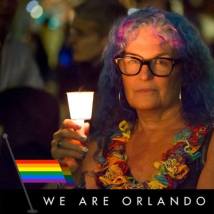
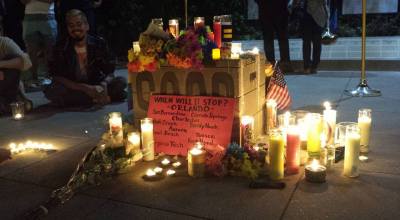
Today’s many social media platforms allow us to respond more quickly than they were able to in 1969. By the eve of June 12, 2016 memorials and vigils were happening around the country. I attended one in Long Beach, CA, at which a couple hundred folks lit candles, sang and mourned. By the following evening I was at a vigil for Orlando in Los Angeles attended by many thousands at which, in Los Angeles style, the reading of the victims’ names began with an emotional tribute to the victims by Lady Gaga. I have included here a video of the reading of the names.

Long Beach vigil
Long Beach vigil

Continue reading “#OrlandoStrong: Yes, Baby, the Gay Bar is Still Our Church – Still Our Religion by Marie Cartier”

Gratitude by Esther Nelson

esther-nelsonI’ve been in the midst of moving for almost a year, yet am still not finished with that onerous task.  My youngest son and family recently moved into the place I’ve called home since 1980.  I bought a small house in the vicinity and have just settled in after spending four months painting, cleaning, and hauling box after box to my new dwelling.  At the same time, I’ve been traveling back and forth to New Mexico busy with painting, cleaning, and remodeling my “retirement house.”

I’m tired.  Am also experiencing emotions that I thought I was impervious to.  I never perceived myself as somebody having an attachment to place, but a month or so before moving out of my old home, I began to feel nostalgic.  There was so much I didn’t want to leave behind–the woods, birds nesting in bushes around the property as well as on top of the front porch light, the wildlife (deer, opossum, rabbits), and neighbors far enough away so I didn’t have to hang curtains at the windows.

Just days before the agreed-upon date to turn the old home over to my son and family, I became emotionally distraught.  A friend suggested I read Oliver Sacks’ book, Gratitude.  Oliver Sacks (1933-2015) was a British neurologist who spent his professional life in the United States caring for people with brain “disorders” such as aphasia, Tourette Syndrome, amnesia, autism, and a host of other neurological diagnoses.

Gratitude is a slim volume featuring four essays written during the last few months of Dr. Sacks’ life.  In the second essay, “My Own Life,” he writes: “I cannot pretend I am without fear.  But my predominant feeling is one of gratitude.  I have loved and been loved; I have been given much and I have given something in return; I have read and traveled and thought and written.  I have had an intercourse with the world, the special intercourse of writers and readers.”

I wanted to know more about Dr. Sacks’ life and promptly procured his memoir, On The Move  A Life, published just before he died in 2015.  I was struck by the apparent comfort he felt in his own skin as he went about living in the world.  He came from a fairly Orthodox Jewish family and realized during his teen years that he was gay.  When his mother discovered his homosexuality, she said, “You are an abomination. I wish you had never been born.”  He writes that she undoubtedly was referring to a text in Leviticus (Hebrew Bible) and although she never mentioned the incident again,” …her harsh words made me hate religion’s capacity for bigotry and cruelty.”

His mother’s view regarding his homosexuality didn’t seem to affect Dr. Sacks’ ability to get on with his adventures living on, what he calls, “this beautiful planet.”  He focused on his passions–medicine, literature, traveling, observing the natural world, swimming, lifting weights, and riding his motorcycle.  Along the way he met a wide variety of people (patients, colleagues, authors, and characters in books).  He squeezed gallons of nectar from those meaningful encounters.  Yet, I think his mother’s disgust regarding his sexual orientation must have cut him to the quick.  He included the incident in his last book, Gratitude.   Continue reading “Gratitude by Esther Nelson”

Olwen, Welsh Flower and Sun Goddess by Judith Shaw

Judith Shaw photoOlwen (pronounced OHL-wen ), Welsh Flower and Sun Goddess is most probably an ancient Goddess whose original stories and power have been lost to us. Her name means “Golden Wheel,” making Her the opposite of the powerful Sky Goddess, Arianrhod who was known as “Silver Wheel.”  Wherever Olwen walked four white trefoil clover flowers sprung up with each step, thus earning Her the nickname “Lady of the White Tracks.” She was known as the “White Lady of the Day” or “Flower-bringing Golden Wheel of Summer.”

Continue reading “Olwen, Welsh Flower and Sun Goddess by Judith Shaw”

What Will the Faith Response to Zika Be? by Katey Zeh

tiger-mosquito-49141_640

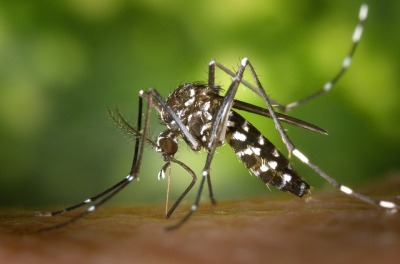
In the face of the Zika epidemic the World Health Organization (WHO) has issued new recommendations for individuals at risk of contracting the virus either through mosquito bites or through sexual contact with an infected person. If someone has traveled to an area where Zika is present, the WHO recommends abstinence or consistent condom use for at least eight weeks or up to six months if a partner shows symptoms. (Only 20% of people infected with the virus are symptomatic.) But for women of childbearing age living in areas affected by the virus, the WHO urges them to speak with their health providers about possibly delaying pregnancy, presumably indefinitely. The Zika virus has been linked to devastating birth defects including microcephaly.

After issuing the revised guidelines Nyka Alexander, spokesperson for the WHO, clarified that the purpose of them was not to discourage all at-risk couples from conceiving, but rather to ensure that they consider the Zika virus and its potential impacts on the timing of pregnancy. “Whether and when to become pregnant should be a personal choice made on the basis of information and access to affordable, quality health services,” said Alexander.

For pregnancy to be a personal choice, women and men must have access to the tools, information, and resources they need to prevent, delay, or plan it. Worldwide more than 220 million women want to avoid pregnancy but have an unmet need for reliable, safe contraceptive methods. The Zika virus has brought significant attention to what has been a public health crisis and an ethical tragedy for decades: that despite modern medical advances 85 million women experience unintended pregnancies each year. Continue reading “What Will the Faith Response to Zika Be? by Katey Zeh”

Toxic Masculinity: “Masculinity Must Be Killed” by Carol P. Christ

Carol Molivos by Andrea Sarris 2A few days ago I watched the movie An Unfinished Life starring Morgan Freeman, Robert Redford, and Jennifer Lopez. Though it was recommended as a sensitive psychological drama, and though on the surface level it criticizes (male) violence against women and animals, on a deeper level, it confirms the association of masculinity with violence, suggesting that violence is the way men resolve their problems with each other.

At the beginning of the film, Robert Redford, who lives on a ranch in Montana, picks up his rifle with the intention of shooting a bear who mauled his friend Morgan Freeman. This act of violence is stopped by local authorities who arrive to capture the bear. However, the bear is not removed to a more remote area, but rather is given to a local make-shift zoo where it is kept in a small cage. At the end of the movie, Redford frees the bear after Freeman realizes that it should not be punished for injuring him. The bear is last seen crossing a mountain ridge in the distance.

Redford is grieving the death of his only son who died in an automobile accident while his son’s wife (played by Jennifer Lopez) was driving. After being beaten by her current boyfriend, Jennifer Lopez escapes with her daughter and ends up on Redford’s doorstep, announcing that her daughter is Redford’s granddaughter.  Redford, who believes Lopez is responsible for his son’s death, grudgingly allows them to stay.

When Lopez’s boyfriend tracks her down in Montana, Redford drives him out of town, threatening to kill him with his rifle. When the boyfriend comes back, Redford shoots out the tires of his car, smashes the car’s windows with his rifle, and beats the boyfriend bloody before putting him on a bus out of town.

The movie asks us to condemn the boyfriend’s violence against Lopez and Redford’s desire to kill the bear, but it also asks us to condone and even to celebrate Redford’s violent acts against the boyfriend. After all, in this case, justice is done. Right?  Continue reading “Toxic Masculinity: “Masculinity Must Be Killed” by Carol P. Christ”

Education as Resistance by Dawn Morais Webster

Dawn Morais Webster, the Pope off to his summer palace, Castel Gandolfo. He tells the world he will now become just a “humble pilgrim.”Ivy Helman’s recent commentary (((Israel))) criticizes what she sees as “a new form of anti-Semitism” from organizations such as Jewish Voices for Peace in their advocacy of the Boycott, Divest and Sanction (BDS) movement. So I begin this account of a recent visit by two Palestinian students to Hawaii with a reminder that the BDS movement is simply using the tools of nonviolent resistance to pressure Israel into giving Arab-Palestinians what Israel insists on for itself: equality, freedom, peace, justice and access to their homes and properties as stipulated by UN Resolution 194. Israel’s continuing  land grabs speak to Israel’s sense of impunity. The two Birzeit University students provided a first hand account of what life under Israeli control means to them and their families. It was the kind of  opportunity “to share and learn” that Helman says is necessary. And it only reinforced the importance of the BDS effort.

Mai Hasan and Noor Daghlas, students participating in Birzeit University’s Right to Education (R2E) Tour of American universities have stories to tell that are chilling. Stories that make you wonder why you are still in your seat, instead of running out screaming for someone to do something. To stop the madness that is the Israeli occupation of Palestine. Yet both students speak of their experiences with the matter-of-fact intensity of activists who have come to terms with the fact that their journey is long, and that they have survived, while many have not.

“I am here, not to speak about myself, but to speak for those who are no longer with us,” said Mai Hasan when asked whether she herself might face “administrative detention” after the tour. Since the year 2000, the Israeli government has imprisoned over 7,000 Palestinian youth, many for asserting their right to education. Mai, who graduated shortly after her return home, said without hesitation: “If I am arrested because of the truths I tell about the occupation, I will accept it proudly.”

Both students bear witness to the truth that Freedom is a Constant Struggle, the title of Angela Davis’ latest book. They were at the University of Hawaiʻi at Mānoa recently, with the renowned scholar at the same table, speaking to a packed room. The panel discussion took place just a few hours before Davis delivered her keynote address as the spring 2016 Dan and Maggie Inouye Distinguished Chair in Democratic Ideals to an overflow crowd at the Kennedy Theater. The two young Palestinian undergraduates talking about their life under siege in their own homeland, in conversation with the lifelong activist in front of an audience in Hawaiʻi, one of the places made American by occupation, was a statement of what Davis calls the “intersectionality of struggles.” As Cynthia Franklin, professor in the English department at UH Mānoa and organizer of the visit, said in introducing the panel, the event could be viewed through the lens of Davis’ own words that “It is in collectivities that we find reservoirs of hope and optimism.” Continue reading “Education as Resistance by Dawn Morais Webster”

Khutba “A Call to Radical and Angry Women of Faith” by Vanessa Rivera de la Fuente

Sacred+Circle+home+page+image+oneI am grateful to the Interfaith Group of Feminist Theologians and Women of Faith for remembering my spiritual affiliation and giving me the opportunity to lead this service in this fully of blessings month of Ramadan and share with you a reflection in the form of a sermon or khutba. Perhaps you know that in orthodox Islam, tradition, without any theological basis, still forbids women to speak or lead rituals. So, this is a joyful occasion for me and I want to start with my usual invocation:

I thank God for this day. I praise Allah for the paths I had to walk that led me to its light and the present day. I ask the protection of the Divine that lives in the essence of everything. and I invite my female ancestors to walk with me in this journey.

A Call to Radical and Angry Women of Faith

My dear sisters, I want to invite you this evening to reflect on what it means to be a radical woman of faith, in a context of extreme upsurge of violence against women and minoritized groups we live in. What does mean being a radical woman? As we know, radical women are feared even by their activist and feminists peers. For the mainstream of society, a radical woman is a little crazy, a little witch, a little ugly, and especially, a very angry woman.

Well, they are right about anger. To be radical is to be as outraged enough to, fearlessly and tirelessly, claim and work for the total end of all kinds of oppression. You heard it right, the total end of all kinds of oppression. For women of faith, like us, who believe in social justice as the prior duty and principle of living in the creation, the current status of abuse, violence and exploitation to which a part of humankind is subjected must provoke us to rage, anger and outrage.

Aren`t you upset? Because I am. Religious patriarchy has historically exercised and endorsed, until today, violence against women and those group defined as “minority.” This religious patriarchy, composed for priests, imams, lamas and rabbis legitimize multiple forms of exclusion of women, sexism, control of our bodies, misogyny and rape culture.

This week we mourn the death of about 50 of our Latino siblings in Orlando. We have to add to this list the hate crimes against queer people in Veracruz, México, as well the slaughtering of women in thousands of gendercides that have become the standard cover of newspapers every day, and the violence against lesbians and trans women, crimes that fail to capture the visibility and solidarity of a homophobic and androcentric society.

Without denying the misogyny and homophobia existing in my community, I want to say that the specific religion of those criminals doesn´t matter, you know why? The pernicious influence of religious patriarchy extends beyond the limits of our assemblies. People blame misogyny and LGTBQphobia on religions as if this is something external to their lives. But each day, at the school, workplace and media our society reproduces all that hetero-sexist, colonial, racist, elitist violence. Heterosexuality as a political regime, validated by hegemonic religious narratives, present in all belief systems, is a source of violence and a form of terrorism itself. Continue reading “Khutba “A Call to Radical and Angry Women of Faith” by Vanessa Rivera de la Fuente”

Religion and the #StateofWomen by Gina Messina

Pledge PhotoThe White House Summit on Women was held this week on Tuesday, June 14, 2016 and it was a great privilege to be among those invited to participate in this inaugural event.  There was an incredible line up of speakers and so much was shared. It proved to be an overwhelming day – in a very good way.  Topics addressed included violence against women, economic empowerment, and education.  In addition to the main event, there were breakout sessions on a myriad of topics presented by the most preeminent authorities in their fields.  I walked away from the day with a sense of urgency to find news ways to engage gender issues and social policy.  However, I also wondered how to bring religion into the dialogue and give greater attention to its impact on women’s issues in the US. Continue reading “Religion and the #StateofWomen by Gina Messina”