

“Great art is not a matter of presenting one side or another,
but presenting a picture so full of the contradictions, tragedies, [and] insights of the period
that the impact is at once disturbing and satisfying.” – Pauli Murray
 My spirituality is inherently creative. Deep in the creative process, I open more fully to awareness of what is flowing around and in and through me. When I can get there – to that place of fully giving myself over to Spirit as a channel, vessel, and embodiment – creation itself becomes an act of prayer, of devotion, of intense ecstatic ritual to honor, grieve with, or celebrate the Ground of Being behind all expression. I craft, dig, carve, build, dance, drum, and sing. Mostly, my art involves words – spoken and written – to create moments, spark feelings, paint pictures, or shape ideas. Words carry tremendous meaning, unconsciously as well as when we use them consciously, with intention.
My spirituality is inherently personal. While I’m a mystical thinker prone to the kind of abstraction that finds beauty in universal connections and layers of thought and cosmos, the questions that always draw me back into Self are these: How does this grow me? What am I learning that helps me be a better person for myself, my family, my community? How does this enhance my well-being, bring me contentment, or give me tools or strength to expand beyond the trauma, grief, and sadness of paying attention – really paying attention – to the world around me? Does this fill me with more to spill out into the world? More love, more beauty, more passion and fight and solidarity?

My spirituality is also inherently political. Continue reading “Living Out the Tension: Spirituality, Self-Care, & Activism in Action by Chris Ash”
 One of my goals for the summer is to paint more. I find I can often say or think by a picture something that I am trying to work through in a formal, discursive way. Art functions as a methodological tool for my theology insofar as it helps me to articulate in one language something that I am trying to say in another. As my teaching career has lengthened, I’ve become more confident using images I have created to communicate my ideas. This no doubt has something to do with the liberty one gains in teaching as a performance exercise, combined with avoidance of repetition, and the desire to engage as well as to be entertained in one’s own right. Even more than just working out an idea, sometimes I also find making images to be a therapeutic tool. I can laugh, mourn, gripe, or celebrate through an image, and sometimes, I can even protest by one.
 I love reading fiction, particularly science fiction and fantasy literature. However, since the birth of my daughter
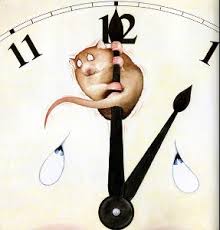 You all know my story, at least the popular version of it. I was an only daughter, the princess (so to speak) of the house until Mama died. Then Papa, who couldn’t seem to manage anything, much less a busy household, went out and got married again and brought Stepmother and her two ugly daughters into the house…and the princess was promptly reduced to servitude.
 There is no shortage of men in power. No shortage of men who are ready to issue warnings and threaten punishment for straying from the party line. No shortage of men ready to hold forth in front of cameras. And yet, and yet….It took a woman with a lot of guts, a lawyer, and a person of faith to champion healthcare for all. It took a woman to criss-cross the country, standing in solidarity with those in need, ministering to those with “broken hearts” who stand on the margins.
 This week I bought a pendant that caught my attention. It is Celtic knot work of horses, meant to represent Epona. This triggered my interest in Epona and off I went to learn more.
 Thus through an enormous network of mythological narrative, every aspect of culture is cloaked in the relationship of ruler and ruled, creator and created. . . . [Sumerian] legend endows the Sumerian ruler-gods with creative power; their subjects are recreated as servants. . . . [This new narrative was] deployed with the purpose of conditioning the mind anew.(20, italics added)
 Feminism and Religion