

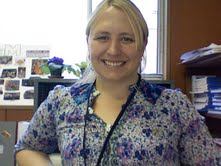
 Can we think of the voting place as an altar where we hole-punch a prayer to the honored dead?
This past Sunday, Barbara Adinger wrote a beautiful blog entitled “November, a Silent Month?” While welcoming the November darkness and a “delicious melancholy composed of silence and rest” settling over her home, Adinger reminds us that: no, we are not silent.
As human beings protesting invisibility and the erasure of the history of the marginalized, we are not silent. Given special command(ment)s to be silent in far too many patriarchal and kyriarchal religions, we cannot silently accept the violence, abuse and invisibility forced upon us or upon those whose struggle is different than our own.
At times, silence is a survival strategy. But this year and last, I am striving to thrive instead.
At times, silence is an important place of meditation: a spiritual necessity, an oasis and praxis in the creation of peace. But, today, my meditations lead me to speak.
When first reading “a silent month,” in the title above, I thought to myself: “I hope not.” I am glad that Barbara agrees. Today—November 4th, aka, “voting day”—those of us living with the privilege of citizenship in the United States have a responsibility to speak. As a woman, I also have a responsibility to my feminist sisters and brothers who won me this right—an inheritance that has become increasingly important to me. Continue reading “Voting Day by Sara Frykenberg”

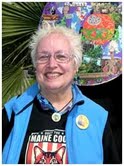 November, which begins with All Saints Day (yesterday) and All Souls Day (today), gives us a quiet, welcome break between the loud make-believe of Halloween and the incessant caroling of the winter solstice season with its popular holidays. In the Northern Hemisphere, the days are noticeably shorter and darker now. Where I grew up, it’s gray, cloudy, and often rainy. It has always seemed to me that people are turning inward and the month is closing in on itself. Even today in southern California, I feel a delicious melancholy composed of silence and rest from hard work.
 Originally, in ancient Greek, ‘sphere’ simply meant ‘ball.’ Though its grammatical gender varied, it was primarily a feminine noun. It is in that sense and with that gender that it bounces into Western literature in the episode of the Odyssey where Nausicaa and her companions are playing catch on a beach (
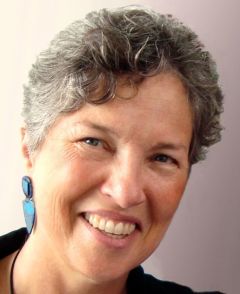 In contrast to the linearity of our time concept in the West, Indians view life as infinite and cyclical. Although Hindus, like ancient Greeks, believe in four ages of humanity (the so-called yugas), these occur not just once, but repeat cyclically every several million years. Similarly, the creator god Brahma is said to have a daily cycle which has recurring effects on the existence of the world. When Brahma awakes the world is created anew, and when he falls asleep it dissolves once again into the primal waters of eternity. Fortunately for us, Brahma’s day lasts 4,320,000,000 human years.


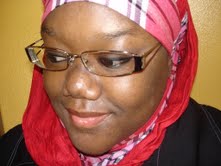 The events in this world begin with the individual. The world’s occupations trace back to the individuals who create them and those who ignore or support them. The world’s genocides trace back to the individuals who create them and those who ignore or support them. The world’s offensive wars trace back to those who create them and those who support them through action or inaction. Daring to exclude Divine Decree from this discussion, the events that take place in the world are due to the malice within mankind. This malice can be direct and intentional, or it may be malice by default due to the absence of benevolence. These atrocious events begin with the individual because unjust rulers, dictators, invaders, executioners and occupiers, only have the power to rule, dictate to, invade, execute and occupy because they have subordinates who give their obedience and acquiescence. We are those subordinates as a group and as individuals. The question is: Why do we obey and acquiesce?
 Feminism and Religion