

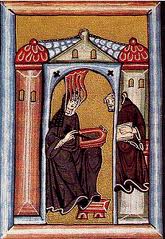
The visionary abbess Hildegard von Bingen (1098-1179) has long been regarded as a saint, with her feast day of September 17, yet she was only officially canonized in May 2012. Why did it take the Vatican over eight centuries to canonize this great polymath, composer, and theologian?
The first attempt to canonize Hildegard began in 1233, but failed as over fifty years had passed since her death and most of the witnesses and beneficiaries of her reported miracles were deceased. Her theological writings were deemed too dense and difficult for subsequent generations to understand and soon fell into obscurity, as did her music. According to Barbara Newman, Hildegard was remembered mainly as an apocalyptic prophet. But in the age of Enlightenment, prophets and mystics went out of fashion. Hildegard was dismissed as a hysteric. Even the authorship of her own work was disputed as pundits began to suggest her books had been written by a man.
Newman states that Hildegard’s contemporary rehabilitation and resurgence was due mainly to the tireless efforts of the nuns at Saint Hildegard Abbey in Eibingen, Germany. In 1956 Marianna Schrader and Adelgundis Führkötter, OSB, published a carefully documented study that proved the authenticity of Hildegard’s authorship. Their research provides the foundation of all subsequent Hildegard scholarship.
In the 1980s, in the wake of a wider women’s spirituality movement, Hildegard’s star rose as seekers from diverse faith backgrounds embraced her as a foremother and role model. The artist Judy Chicago showcased Hildegard at her iconic feminist Dinner Party installation.

Medievalists and theologians rediscovered Hildegard’s writings. New recordings of her sacred music hit the popular charts. The radical theologian Matthew Fox adopted Hildegard as the figurehead of his creation-centered spirituality. Fox’s book Illuminations of Hildegard of Bingen remains one of the most accessible and popular books on the 12th-century visionary. In 2009, German director Margarethe von Trotta made Hildegard the subject of her luminous film, Vision. And all the while, the sisters at Saint Hildegard Abbey were exerting their quiet pressure on Rome to get Hildegard the official endorsement they believed she deserved.
Pope John Paul II, who had canonized more saints than any previous pontiff, steadfastly ignored Hildegard’s burgeoning cult, possibly because he was repelled by her status as a feminist icon. Ironically it was his successor, Benedict XVI, one of the most conservative popes in recent history—who, as Cardinal Ratzinger, expelled Matthew Fox from the Dominican Order where Fox had served for thirty-four years—finally gave Hildegard her due. Reportedly Joseph Ratzinger, a German, had long admired Hildegard. He not only canonized her but elevated her to Doctor of the Church, a rare and solemn title given to only the most distinguished theologians.
But I believe the true credit for Hildegard’s triumph is due to the Benedictine Sisters at Saint Hildegard Abbey for keeping Hildegard’s flame burning.
Meditation:
This is drawn from Ann K. Gebuhr’s book, Hildegard!
Take some time to listen to and contemplate Hildegard’s beautiful musical meditation on the Holy Spirit, O ignis spiritus paracliti:
O spirit of fire, bringer of comfort,
Life of the life of every creature,
You are holy, anointing those perilously broken;
You are holy, cleansing festering wounds.
O breath of loveliness,
O fire of love,
O sweet savour in our breasts,
Infusing heart with the scent of virtue.
O clearest fountain,
In which we see
How God gathers the alienated
And finds the lost.
O breastplate of life
And hope of the whole human body,
O belt of honour, save the fortunate.
Guard those imprisoned by the enemy
And free those who are bound,
Whom the divine power wishes to save.
O mightiest course
That has penetrated all things
In the heavens and on earth
And in every abyss–
You reconcile and draw all humanity together.
From you clouds flow, wind flies,
Stones produce moisture,
Water flows in streams,
And the earth exudes living greenness.
You are always teaching the learned,
Who, through wisdom’s inspiration,
Are made joyful.
Thence praise be to you who are the sound of praise,
And joy of life,
And hope and greatest honour,
Granting the gift of light.
(This is Susan Hellauer’s translation from the insert booklet of Anonymous 4’s CD, The Origin of Fire: Music and Visions of Hildegard von Bingen.)
Read Hildegard’s poem slowly as a prayer, contemplating how the Sacred Flame, however you envision it in your own spiritual tradition, relates to your life.
Mary Sharratt’s Illuminations: A Novel of Hildegard von Bingen won the Nautilus Gold Award and was a 2012 Kirkus Book of the Year. Visit her website: www.marysharratt.com.
 There is never a reason for physical violence. There is never a reason to hit your partner or child to the point where they are unconscious or bruised. There is never a reason to inflict violence against someone else, but apparently there are exceptions to these rules if you’re an NFL football player.



 Ramakrishna was one of the major poets who popularized Kali’s worship in Bengal, the northeasternmost province of India. Born in the early part of the 19th century, he was a Hindu saint in a tradition known as bhakti, where devotees lovingly surrender their hearts, minds and spirits to their chosen deity in a practice which leads to ecstatic union with the divine. Such devotion is easier for us in the West to imagine when the beloved is the playful Krishna with his sublime flute-playing and sacred lovemaking. But in Ramakrishna’s case, the object of his devotion was the fierce Kali, the wild and uncontrollable aspects of the sacred, to whom he devoted himself as a child would to its mother.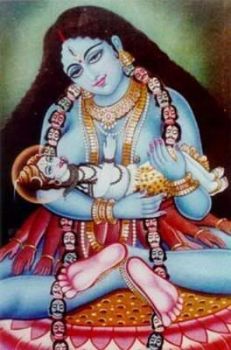
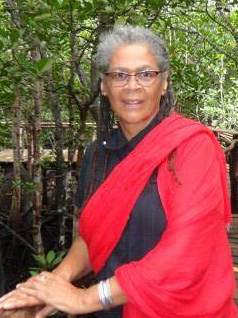 I am currently in Cape Town South Africa at a Queer Muslim International Retreat. Next month I will go to Jakarta Indonesia for a workshop focused on the same agenda: reform in Muslim communities towards the lives of dignity for lesbian, gay, bi-sexual, transgender, Queer and Intersex Muslims. It has been a long road and the end of the struggle is nowhere in sight. Still, there are important developments worth noting.
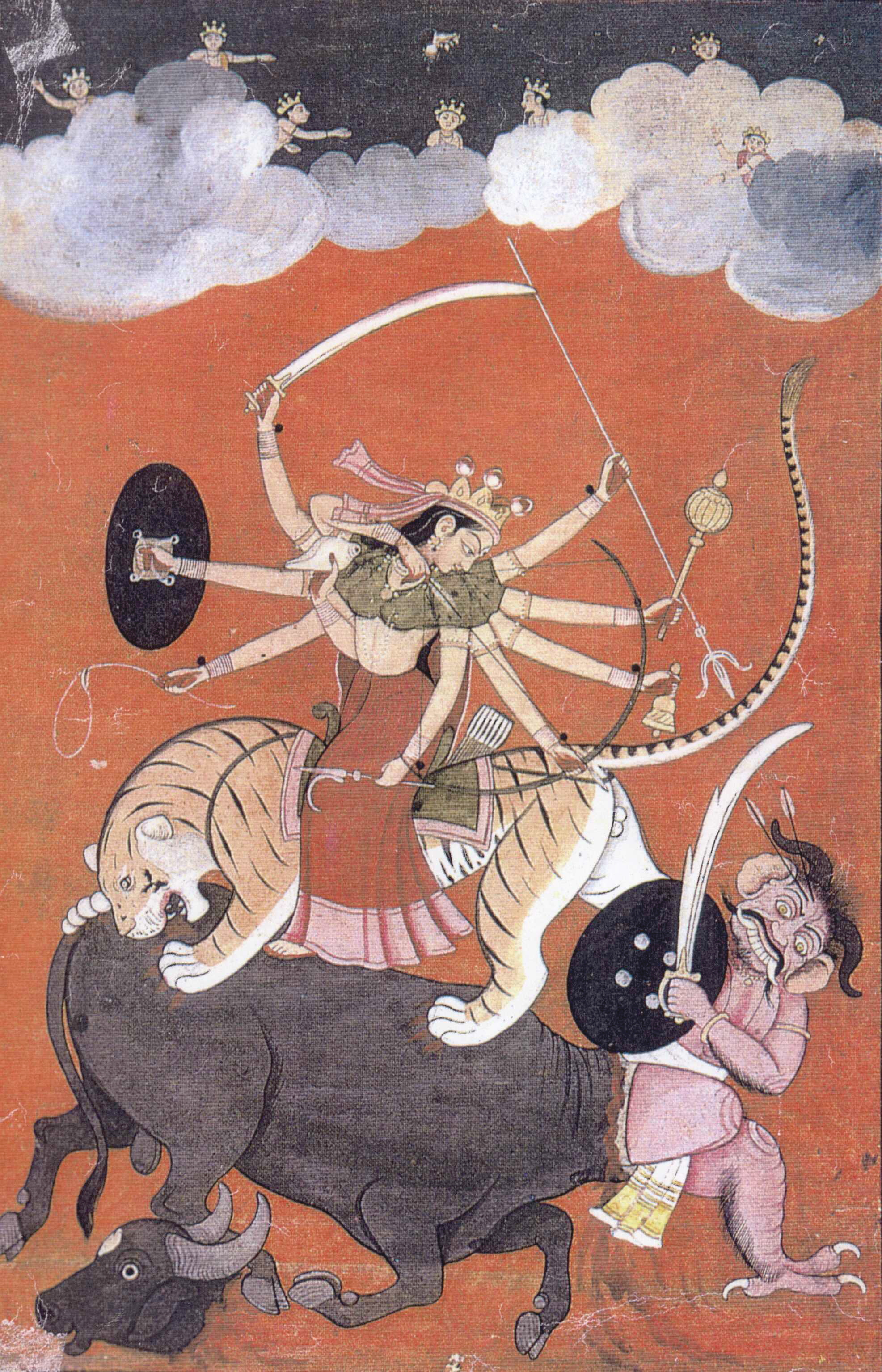

 In these last several weeks, the horror that one out of four women will encounter domestic violence- sometimes referred to as “intimate partner” violence- in their life time has come to the national forefront. Indeed, women are more likely than men to be killed by their “intimate partner:” one in three women who is a victim of homicide is killed by an intimate partner. While
  Feminism and Religion