Getting Tenure, Part II: On Being the First of My Kind by Grace Yia-Hei Kao

“I am honored to be the first person of Taiwanese heritage, and first Asian American woman, to have earned tenure at CST.”

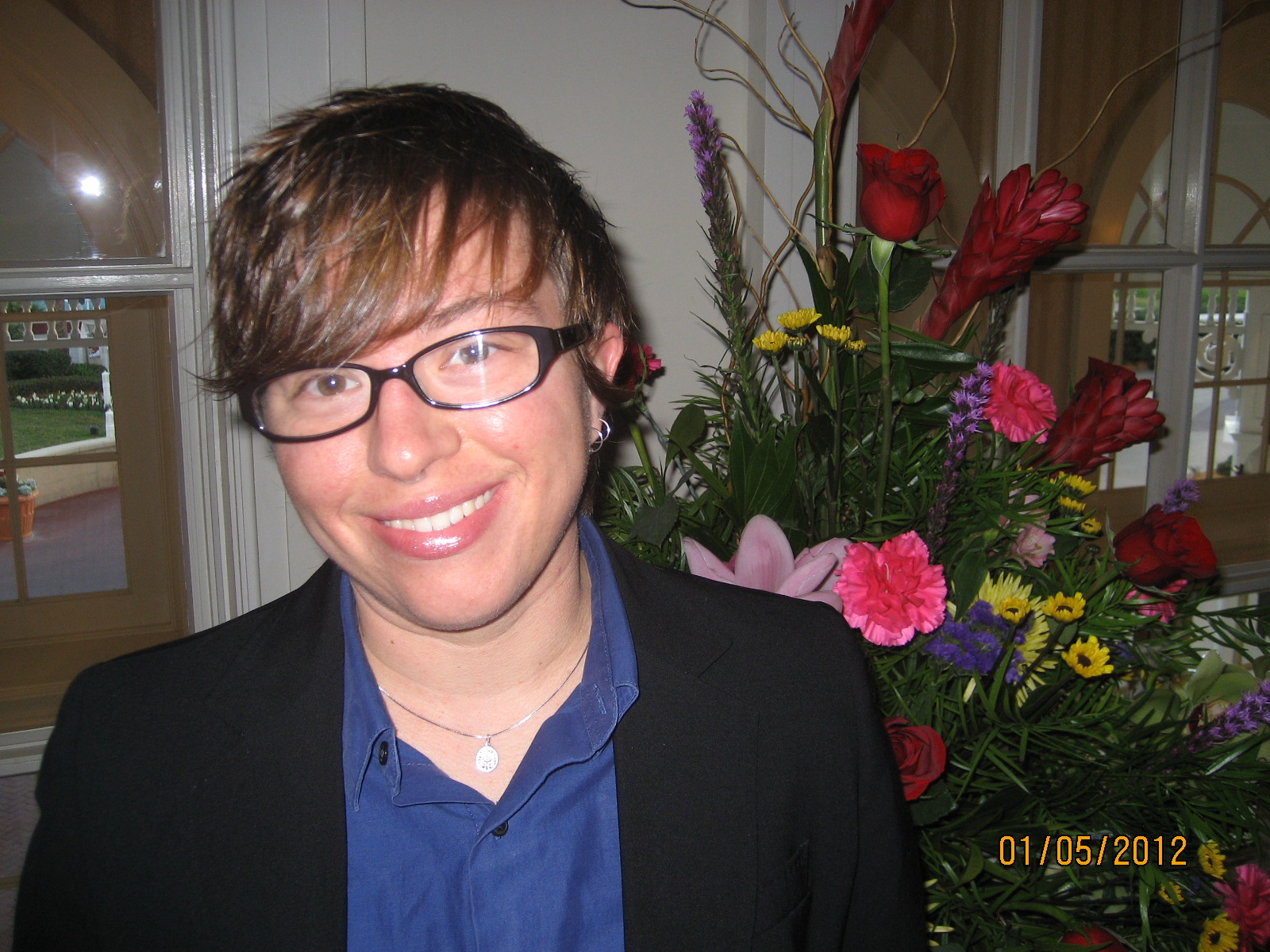
I’ve recently recounted how it took a village for me to complete the rite of passage known as tenure review. I want to reflect now on the significance of my having become the first Asian American woman (n.b., third Asian American of any gender), and first person of Taiwanese descent to have earned tenure at my institution.

My first thought upon realizing those statistics was something like:  “Wow−what an honor!”

But my second thought has been more like:  “Really?  How is it possible that simply being a newly tenured Asian American who is neither Korean nor male would be enough for me to make institutional history?”   Continue reading “Getting Tenure, Part II: On Being the First of My Kind by Grace Yia-Hei Kao”

THE “G” WORD By Carol P. Christ

Recently, I saw the following line in a promotion for a book to which I contributed: “This volume includes voices from Christianity, Judaism, goddess religion, the Black church, and indigenous religions.” The editors of this book are to be strongly commended for expanding the dialogue in feminism and religion beyond the confines of the Christian hegemony in which it is still all too often framed.  Nonetheless, I felt hurt and offended.  I immediately wrote to the editors asking how they would feel if a book were promoted using the words:  “This volume includes voices from Goddess religion and god traditions such as judaism and christianity.”

I am well aware that the conventions of English grammar dictate that the word “God” is to be capitalized when referring to the deity of the Bible and the Koran and in some other cases where a monotheistic deity is intended.  I have been fighting this battle with editors of my work for years.  Usually they automatically change “Goddess” to “goddess.” When I gained the courage to question this, an exception would usually be made for me, but the grammatical convention remained in force for other works by the publisher.   Continue reading “THE “G” WORD By Carol P. Christ”

Getting Tenure, Part I: It Took a Village by Grace Yia-Hei Kao

 “[T]he many sacrifices made for my career have not been borne by me alone….Here are some of the ‘villagers’ to whom I owe a debt of gratitude.”

On December 1, 2011, the full professors at Claremont School of Theology unanimously recommended two of my colleagues and me for tenure. Provided that the Board of Trustees approves their recommendation and two extremes never come to pass (either “financial exigency” compels my institution to start laying off people willy-nilly or I do something professionally or morally egregious enough to be dismissed “for cause”), I now have a job for life! :)  Continue reading “Getting Tenure, Part I: It Took a Village by Grace Yia-Hei Kao”

A Room of One’s Own: Sacred Women’s Space by Amy Levin

I normally don’t get too personal in my blog posts. I figure if I’m going to take up space on the blog I might as well offer up something other than me, my voice, my body, and instead some good old fashioned commentary on those categories of feminism and religion “out there.”

I’ve been thinking a lot about sacred space over the past year (occupy wall street, Durkheim, the public sphere, Park51) and only recently have I begun to really think about personal sacred space. This week, I haven’t been able to avoid it. My long-time boyfriend and I recently broke up not-so-amicably. In the past few days he has contacted all of my friends and relatives in order to say “goodbye.” I began receiving a swarm of confused questions from close friends, who informed me of the texts, messages, and phone calls they were receiving. While I won’t dwell on the details, as you can imagine, these acts have intruded on my mental and physical space to the point where space in my immediate world has been temporarily possessed by someone else. As dated as first wave feminism is, Virginia Woolf’s salient message in A Room of One’s Own is exactly what I need. I realize that though my affective, physical, emotional, and mental spaces are conjoined and cajoled by my cultural and material surroundings, it’s vital that I feel that, in some way, these spaces are mine. This is what agency is for me. And I would call it sacred. Continue reading “A Room of One’s Own: Sacred Women’s Space by Amy Levin”

Conversation on Leadership Continues…By Xochitl Alvizo

In a recent post on leadership I proposed that facilitating open dialogue is a central aspect of leadership. That if we are to move into new horizons – that is, feminist horizons of mutual communal empowerment and liberation – we must be willing to both risk and dialogue, and a leader is one who helps facilitate those practices.

Dialogue and the practice of making room for one another’s voices and contributions do not come easily to us however. Humans have a tendency to stifle and squelch one another especially if we sense that our privileges and comforts, our truths and our convictions, are being challenged or threatened. And so the breakdown in dialogue can result in the literal prevention of change and possibility – the possibility and actuality of entering into a more divine reality and way of relating. A leader then must be someone who can recognize and be aware of change-stifling powers, be willing to name and resist them, and help facilitate the creation of a literal time/place space for open participation and dialogue. This new open space has the potential and literally becomes the womb from which something new may be birthed…it is a fluid, messy, mysterious place, and not one necessarily easy to exists within, but absolutely necessary if seek to contribute toward a more just and beautiful existence. Open dialogue is a necessary part of helping create this new womb space where differences (of perspective, voices, people) can come together to interact and spark with one another in order to morph and change and thus birth something new together. Continue reading “Conversation on Leadership Continues…By Xochitl Alvizo”

Reformer, Revolutionary, or Rationalist? Three Types of Feminism By Kile Jones

What do Martin Luther and Mary Daly have in common? They both realized that they could not reform the Roman Catholic Church from “the inside-out.”  They came to believe that some institutions, even those dear to the heart, are not worth saving.  One of the most significant differences between Luther and Daly—aside from the obvious differences in time, culture, race, class, and sex—is that Luther’s faith in God remained intact whereas Daly’s did not.  Mary Daly, due to her positions on Catholic thought, came to represent what is now referred to as Post-Christian Feminism (or Post-Religious Feminism).  Post-Christian feminism, as seen in the writings of Mary Daly, Daphne Hampson, and Sarah Sentilles (each with differing takes), argues that there are certain incompatible values between Christianity and feminism, and as a result of this, Christian feminists ought to consider how to respond to this incompatibility.  As Rita M. Gross states in Feminism and Religion, “The most difficult question facing a feminist who discovers her traditional religion to be patriarchal and sexist is what to do next” (107).

So the question remains: should feminists reform Christianity from the Inside-out or abandon the Church altogether?  Continue reading “Reformer, Revolutionary, or Rationalist? Three Types of Feminism By Kile Jones”

Feminist Films by Caroline Kline

My semester is nearly over, my papers will be done in a couple of weeks, and my Netflix account has been sorely underused for the last four months. It’s time for me to find some good feminist movies to watch during the holiday break.

Some of my favorite feminist films deal overtly with gender roles and pushing up against patriarchal norms.

Women Blogging Thealogy By Gina Messina-Dysert

In Rebirth of the Goddess: Finding Meaning in Feminist Spirituality, Carol Christ offers a thealogy that is grounded in embodied thinking and begins with personal experience. She explains that experience is “embodied, relational, communal, social, and historical” (p. 37),  and that experiences of the Goddess are shaped and inspired by the experiences of others. Consequently her thealogy, in addition to being personal, is also communal.

According to Christ, the “voices of women are a lifeline” (Rebirth of the Goddess, p. 41), a sentiment that has been loudly echoed by women in blogging communities. Although some may claim that a blog is nothing more than an online diary, it is a powerful tool that offers individuals the opportunity to express their thoughts and experiences in a public forum; blogging gives a voice to anyone who wants it. Recent statistics have Continue reading “Women Blogging Thealogy By Gina Messina-Dysert”

Progressive Religion to the Rescue By Mary E. Hunt

The happy hoopla surrounding the lifting of Don’t Ask, Don’t Tell had a shadow side. Close inspection revealed a lot of partners and spouses of LGBTIQ military people who had been cloaked in secrecy and euphemism (“Meet my cousin”) for years. Now they, too, can come out. But they remain second-class citizens whose marriages don’t count because of the Defense of Marriage Act. They are not eligible for health care and other benefits routinely provided for dependents of military members. This injustice is a new and important front in the struggle for full human rights, one that has a unique religious twist that bears watching.

In late September, I attended a moving celebration hosted by the Military Partners and Families Coalition called “Beyond 61.” It was a celebration of the new lease on life that these folks experienced after the 60-day waiting period following the repeal of DADT. It took place at Arlington Cemetery, fittingly at the Women in Military Service Memorial, since women have a long history of unequal treatment in the military, as well.

Unaccustomed as I am to military anything (I continue to serve my country in the peace movement), I was impressed by the diversity among the participants and their singular commitment to justice. I was alarmed by the fact that, after decades of struggle, today’s young people are still subject to indignities due to their sexuality even when they enlist for military service. Given the current economic situation, their options for education and other kinds of work are limited. This only makes discrimination against the queer ones nastier. Continue reading “Progressive Religion to the Rescue By Mary E. Hunt”

In the Web of Life — No Exceptions By Carol P. Christ

Carol P. Christ is a founding mother in the study of women and religion, feminist theology, women’s spirituality, and the Goddess movement.  She teaches in the Women’s Spirituality program at CIIS and through Ariadne Institute offers Goddess Pilgrimages to Crete. Her books include She Who Changes and Rebirth of the Goddess and the widely used anthologies Womanspirit Rising and Weaving the Visions.

Does God love me more than She loves my doggies? Does She love animals more than She loves trees and flowers? Does She love trees and flowers more than She loved the first cells that formed in the waters of our planet? Did She not also love the atoms and particles of atoms that coalesced to form the earth?

In her books Sacred Gaia and Gaia’s Gift Anne Primavesi questions the notion that the dialogue between God and the world began with “our entry onto the scene.”  Primavesi argues that “human exceptionalism,” the view that the world exists for us, and that we are an “exception” to the world, has been and is the predominant Christian view.  In the stories of Adam and Noah, God gives dominion over the creatures of the earth to man.  Theologians asserted that of all the creatures that inhabit the earth, only man is in the image of God, and the image of God in man is found in his rational intelligence, which is shared with no other creature.  Because he is in the image of God, man will escape death, which is the lot of every other living thing.  Rather than challenging human exceptionalism, modern science furthered it, asserting that “matter” was “dead,” and that therefore it was right and just for man to subdue “nature” through technology and to harness it for his needs.   Continue reading “In the Web of Life — No Exceptions By Carol P. Christ”