On Believability, Oppression and Ferguson by Sara Frykenberg

Sara FrykenbergLast week, Amina Wadud wrote an important post,Justice for Mike Brown,” discussing Mike Brown’s death in light of Brown vs. The Board of Education, Plessy vs. Ferguson and the injustice faced by African American Communities, particularly in the US legal/ criminal justice system. She highlights the dehumanizing practices that lead us to criminalize black bodies, beginning in childhood.

Considering her post and many, many other articles and news reports over the past several months, and particularly this last week, since the Grand Jury failed to indict Darren Wilson, I felt compelled to speak about a certain quality of kyriarchal oppression: that of rendering the oppressed “unbelievable.” I will not recount the details of the case here (please see the link above for links to court documents through NPR), nor will I try to “speak for” African American communities– nor can I. However, I think it is important that we bloggers and readers at feminismandreligion.com continue to consider the recent verdict and the critical justice issues it raises, as well as remember the tragedy of Mike Brown’s death, and so many men and women like him.

Actor and activist Jessie Williams, who many know from the popular TV show Grey’s Anatomy, gave a passionate and salient interview on CNN’s “State of the Union,” back in August after Michael Brown was killed. You can watch most of the interview with Williams, LZ Granderson and Tara Wall here; you can watch here for the clip I mention below.  Like Wadud, he too discusses the criminalization of black bodies, drawing from the everyday experience of Black men in the United States to make his case. At the end of the interview, Williams powerfully asserts, “We’re not making this up.” Continue reading “On Believability, Oppression and Ferguson by Sara Frykenberg”

Writing: Changing the World and Ourselves. By Ivy Helman

I still remember the first tim20140903_180423e I read Mary Daly’s Gyn/Ecology. It awoke something within me. Her use of language, the power of her writing and the ease with which she created new words taught me so much about the world around me and about the way the language, and subsequently its use in writing, shapes lives, choices, abilities and destinies. She also taught me about myself.

I was hooked, but not just on Mary Daly. Shortly after I finished her book, I moved onto other feminists writing about religion like Katie Cannon, Judith Plaskow, Alice Walker, Carol Christ, Rita Gross, Gloria Anzaldua, Audre Lorde, Adrienne Rich, Margaret Farley and Starhawk to name just a few. All of them, in fact every feminist I’ve ever read, has shown me the way in which words have power and how words speak truth to power. Ever since, I’ve wanted to be the kind of writer whose words carry a power that not only affects people but also inspires a more just, more equal, more compassionate and more humane world. In other words, I wanted to be a writer activist.

Yet, I’ve always carried around with me a sneaky suspicion that people don’t consider writers true activists. If you aren’t holding a sign, screaming or participating in some sort of public demonstration or civil disobedience, then you have no right to call yourself an activist. Is that really true? Continue reading “Writing: Changing the World and Ourselves. By Ivy Helman”

Social Responsibility of the Artist by Jassy Watson

JassyAn artist’s place in society is ambiguous and one not often discussed. Artist’s often have difficulty claiming themselves as ‘artist’ for fear of criticism and rejection both inside and outside the art world and from within. Historically, artists have had their work labeled as narcissistic, sexist, racist, classist, elitist, indulgent, hermetic…and the list goes on.

I have been on the end of some harsh criticism. Comments made by the board of Queensland’s most prestigious art school have stayed with me for over 15 years. “Impressive folio” they said, however, using images of indigenous persons is ‘cultural appropriation’ and ‘unacceptable’. They were referring to a series of pieces I had been encouraged to create under the mentorship of a fine, accredited artist Wim De Vos. Continue reading “Social Responsibility of the Artist by Jassy Watson”

Right to Life vs Right to A Life: Abortion & The Death Penalty by Marie Cartier

MarieCartierforKCETa-thumb-300x448-72405Earlier this week I went to hear Sr. Helen Prejean speak about the death penalty. You will remember, if the name does not immediately ring a bell, that the amazing movie Dead Man Walking (dir. Tim Robbins, 1995) was about her and her ministry to provide solace and closure with God to those inmates on Death Row. In the film, Sr. Prejean was played by Susan Sarandon. Dead Man Walking, a phenomenal hit, chronicled her first attempt at this ministry—her trials and limited success—in helping Matthew Poncelet come to grips with what he had done, ask forgiveness of the victims’ parents (because he was complicit in the murder of two teenagers) and face his death with dignity.

dead man walkingIn addition to teaching Gender and Women’s Studies, I have also been the screenwriting professor at University of California Irvine since 1992. I have used the screenplay for this movie (adapted from Prejean’s book and direct interviews) almost since it was published. It’s a great example of how research, interview, and authenticity can make a movie work—rather than “making it up.” Even the title was new to most of America- “Dead man walking!” refers to the last walk an inmate makes as he (or she) walks to his (or her) death.
So, I was enthusiastic when I heard that Sr. Helen was speaking at a local church very close to my house. Although I’ve used the screenplay for well over a decade, I had never met her or read the actual memoir she wrote. It seemed the perfect opportunity to meet her and get a signed copy—and also something my students would love to hear about when we discuss the film in the winter. Continue reading “Right to Life vs Right to A Life: Abortion & The Death Penalty by Marie Cartier”

Apathy by Deanne Quarrie

DeanneWhen I sat down to write my article this month, I browsed through my computer for ideas.  As I did, I found this article that I wrote about 18 years ago for a newsletter I prepared for my workplace.  Because it is still a very relevant topic to me today, I thought I would share it here. ( food for thought – I am an introvert,  a triple Aries and a Myers Briggs INFJ)

I have spent a lot of my life sorting through very strong feelings in order to decide to express them or not. Of course, there are those that erupt before given the opportunity for that kind of sorting!  Just ask my friends and family!  I have often wondered if everyone has this going on inside their heads.  It is part and parcel of being an introvert to ponder such things. I have even wondered if perhaps some just  don’t have that experience of heavy duty “feeling”!  Of course, that’s a ridiculous idea.  We all have feelings.  We all just have varying levels of willingness to share them.  Continue reading “Apathy by Deanne Quarrie”

Rebranding Feminism by Linn Marie Tonstad

Linn Marie TonstadFeminism has a “brand”? A recent contest – still running, if you want to get in on it! – asks for suggestions about how to “rebrand feminism.” The contest has corporate sponsors. Saying that although feminism “has brought us the right to vote, drive and have our own bank accounts,” it is nonetheless the case that “Feminism has been given a bad rap, and gotten a bad rep.” Elle UK’s November issue does the same, claiming to rebrand “a term that many feel has become burdened with complications and negativity.”

I suspect that most readers here at Feminism and Religion will have similar reactions to this development: disgust and distaste. Why do feminists need to overcome the negative stereotypes and reactions that are used to dismiss them by anti-feminists? Most of us have heard the usual derisive responses, I suspect, and are tired of being instructed that it is our responsibility to overcome stereotypes we have done nothing to earn. I once wrote the words “feminist” and “Christian” on the board in an introductory theology class, and asked students what the first word that came to mind was in each case. Predictably, the first response for “feminist” was “femi-Nazi.” The student wasn’t intending to imply that such a designation was fair, but the immediacy of the reaction was telling. So why should feminists subordinate our political and social aims to corporate self-promotion? And is feminism really just about getting the vote, being able to drive, and having bank accounts? This list of issues brings together the trivial (when were women unable to drive in the UK or USA?), the liberal status quo (voting), and the assumption that feminism means the full ability to participate in the capitalist system. That’s not to suggest that these concerns are unimportant. But all of them involve acceding to an already-constituted public, financial, political, and social space. Is feminism simply about, as so many popular invocations have it these days, equality and giving women the same opportunities as men? Continue reading “Rebranding Feminism by Linn Marie Tonstad”

The Hot Seat by John Erickson

Being a man in feminism isn’t easy and that’s how it is supposed to be.

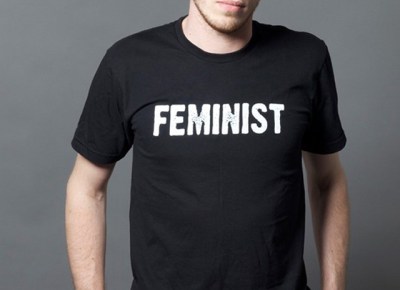
men_feminist_mainI’ve been thinking a lot about what it means to be a male feminist lately.  As the only man to be a permanent blogger on this very site until my colleague and friend Kile Jones came on board, I took my role, as a man in a traditional feminist (online) space very seriously.  Although the ongoing struggle to be a male feminist is one continually wrought with dialogues about power and positionality (amongst a host of many other topics), I am often conflicted when I see male feminists take advantage and destroy the hard work that many, specifically on this site and beyond, worked hard to build and defend.

Not wanting to reopen old wounds or start new online battles, men have been involved in feminism for quite some time.  From James Mott chairing the first women’s rights convention, to radical feminist Andrea Dworkin’s life partner John Stoltenberg, to Michael Kimmel and Michael Kaufman’s life long work to legitimize not only men in feminism but also what it means to be a man who works for gender equality, being a man in feminism isn’t easy and that’s how it is supposed to be. Continue reading “The Hot Seat by John Erickson”

Public Depression and Feminist Spirituality by Linn Marie Tonstad

Linn Marie TonstadIn her recent book Depression: A Public Feeling, Ann Cvetkovich examines the experience of depression through the genre of memoir as well as by the construction of an archive of depression. Her archive includes sources ranging from John Cassian’s discussion of the way monks experience acedia to analyses of depression as the result of racism and colonialism, to suggestions for spiritual practices of transcendence – daily habituated actions of repetition and physical wellbeing – that might contribute to rendering depression manageable if not curable. The book, part of the Public Feelings project, is fascinating for the scholar of religion on multiple levels.

First, in terms of teaching and mentoring, Cvetkovich’s analysis of depression as reflective of real states of affairs in the world, rather than as a (mere) biological fact, speaks to an experience that I, and no doubt many others, have every year. At some point, an activist student (usually but not always female) will either email me or ask for an appointment to talk about struggles she’s been having. These students are usually heavily engaged in struggles for queer causes, in learning about intersectionality, reading critical race theory or Karl Marx for the first time, or discovering feminist theology, and trying to live into such modes of analysis in their personal relationships as well as in their ‘public’ lives as activists, members of churches, future clergy members, or the like. And unsurprisingly – and very familiarly – such students get to a point where they ask questions about how to remain engaged in such struggles when the opposition – personal and structural – feels so overwhelming. What do I do when I’m at a party and one of my friends says something heterosexist? How do I remain committed to the cause to which I’ve devoted my energies when I see so many other causes needing support? I’m worried that I’m alienating my family by the ways in which I’m changing. How ought I to relate to parishioners who think that opening a soup kitchen constitutes the pinnacle of meaningful service to God and neighbor? Continue reading “Public Depression and Feminist Spirituality by Linn Marie Tonstad”

Thanks for Coming (Out): Sexuality, Sports, and Spirituality by John Erickson

I have to be honest, Jason Collins’ admission that he was a homosexual, albeit brave, upset me. While coming out is an completely unique experience to every individual that does it, Jason Collins’ story was just another example of the rampant sexist and heteropatriarachal world that privileges male bodies and sexualities over women’s similar experiences. While I applaud Jason’s story and it’s timing, the first thing I asked to my colleagues was: Where was the hubbub over Sheryl Swoopes or Martina Navratilova?

John Erickson, sports, coming out. Like marking off items on a proverbial checklist, closeted LGBTQ individuals who exist within and outside of the world of professional sports, can recount the numerous things they struggle with in terms of their sexuality.  From fearing of the actual coming out process, dressing in their car or at home to avoid the subtle glances and whispers of individuals in the locker room, to wondering what coming out would mean not only for their game but also for their social and, if they choose, spiritual lives, closeted and out LGBTQ individuals within the multi-billion dollar professional sports industry must grapple with that age old question: what does it mean to be gay and open about it?

The Locker Room

I have to be honest, Jason Collins’ admission that he is a homosexual, albeit brave, upset me.  While I understand that coming out is an completely unique experience to every individual who does it, for me Jason Collins’ story was also an example of the rampant sexist and heteropatriarachal world that privileges male bodies and sexualities over those of women.  While I applaud Jason’s story and the timing, the first thing I asked to my colleagues was: where was the same hubbub over Sheryl Swoopes or Martina Navratilova? Continue reading “Thanks for Coming (Out): Sexuality, Sports, and Spirituality by John Erickson”

Speaking Up for Animals by Grace Yia-Hei Kao

I hope that readers will rethink their consumer choices, monies that have long been offered at the expense of nonhuman animals–overwhelmingly female and exploited because of their female biology. We choose where our money goes, and in the process, we choose whether to boycott cruelty and support change, or melt ambiguously back into the masses.”  

Continue reading “Speaking Up for Animals by Grace Yia-Hei Kao”