
Noah’s Garden by Sara Stein, book review by Janet Rudolph

“People spend so much time mocking Trump or waiting for him to be impeached. And the danger with that kind of obsession with a single person is that you don’t see the system that produced him.”
Arundhati Roy

Here at FAR, along with many other venues, we have borne witness to the depravities of this administration. This is important work as it is a main component of the mop-up that will eventually and hopefully lead to accountability and meaningful change. This post and the following one looks at the route of how we got here. I have long pursued this theme using the Bible as the foundational belief system underlying our culture. I love to explore how typical translations undermined older beliefs that connected traditions and peoples. In this post and the next I will look at some of the stops we’ve made along with way here in the US to get here to the present day.  I will do this by looking at two books I read many years ago that have stayed with me for their poignance and revelations.
Amazon purchase here

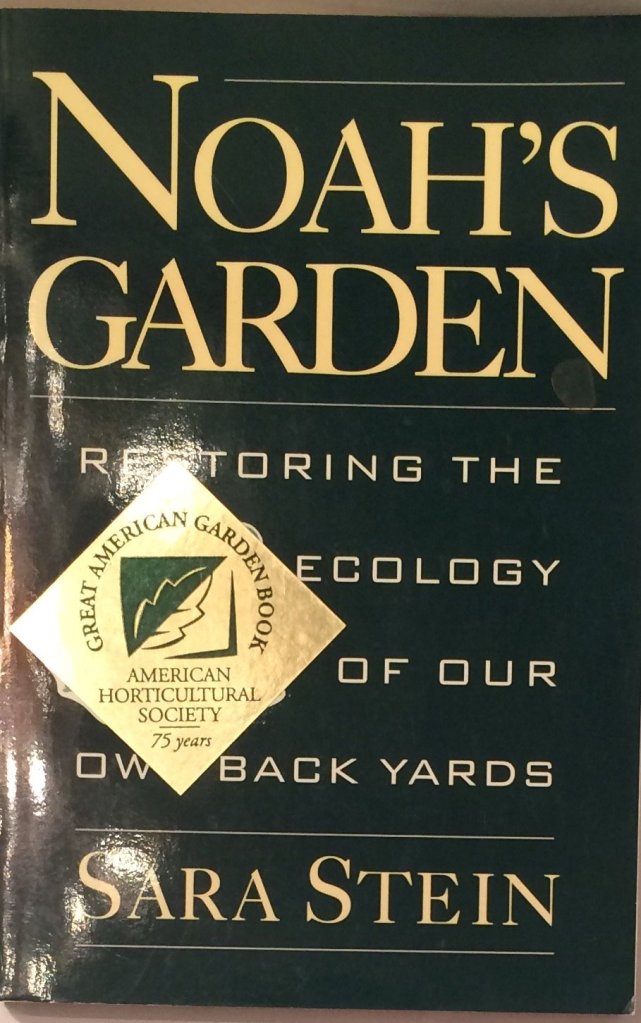
The first is Noah’s Garden by Sara Stein. The subtitle is “Restoring the Ecology of Our Own Backyards.” It was published in 1993.

This book really hits home for me because I live in ecologically sterile suburbs which are satellite to New York City. It pains me to see the lawns in my community which are not only all the same but lay outside the fronts doors like they were indoor carpeting. In other words, LIFELESS! Stein writes, “We spend $25 billion a year coddling this carpet that on an August day lies sprawled over 30 million acres of America, stupefied in the sun.”(151). As these figures are from over 30 years ago, I can say with confidence that the numbers of money and acreage are vastly larger today.

Continue reading “Noah’s Garden by Sara Stein, book review by Janet Rudolph”

The Legacy of Carol P. Christ: The Spirit of Capitalism vs. the Spirit of Traditional Rural Life

This was originally posted on Dec 29, 2014

marika's raki

In this picture, Marika from Skoteino Crete toasts our group and downs a glass of her homemade raki. Marika, who is best friends with Christina who makes lunch for us, has just returned from her home next door with her gift of a glass of raki for each of us.

Marika, who has little, is eager to give to us. Hers is but one of many gifts from the heart we receive on the Goddess Pilgrimage to Crete. Why is it that we who have so much do not give as spontaneously?

One answer is that capitalist individualism has taught us to count our worth by how much we have and to fear for the day when we will have nothing.

These words may be a cliché, but they hold a profound truth nonetheless.

Heide Goettner-Abendroth tells us that in matriarchal societies with small-scale sustainable agricultural economies, people did not hoard or save for a rainy day. With the labors of their bodies and minds, they took only what they needed from the land. When there was a surplus, they gave parties, sharing what they had with others. Even with the coming of patriarchy, ancient matriarchal customs of generosity survived among rural farmers.

Continue reading “The Legacy of Carol P. Christ: The Spirit of Capitalism vs. the Spirit of Traditional Rural Life”

The Spirit of Capitalism vs. the Spirit of Traditional Rural Life by Carol P. Christ

marika's rakiIn this picture, Marika from Skoteino Crete toasts our group and downs a glass of her homemade raki. Marika, who is best friends with Christina who makes lunch for us, has just returned from her home next door with her gift of a glass of raki for each of us.

Marika, who has little, is eager to give to us. Hers is but one of many gifts from the heart we receive on the Goddess Pilgrimage to Crete. Why is it that we who have so much do not give as spontaneously?

One answer is that capitalist individualism has taught us to count our worth by how much we have and to fear for the day when we will have nothing.

These words may be a cliché, but they hold a profound truth nonetheless.

Heide Goettner-Abendroth tells us that in matriarchal societies with small-scale sustainable agricultural economies, people did not hoard or save for a rainy day. With the labors of their bodies and minds, they took only what they needed from the land. When there was a surplus, they gave parties, sharing what they had with others. Even with the coming of patriarchy, ancient matriarchal customs of generosity survived among rural farmers. Continue reading “The Spirit of Capitalism vs. the Spirit of Traditional Rural Life by Carol P. Christ”