No Longer Moved … by Symbols that Once Moved Me Profoundly by Carol P. Christ

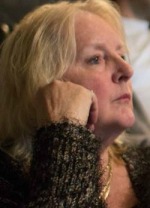
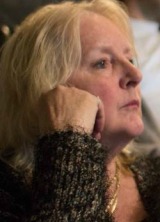
Carol in Crete croppedThis week Judith Plaskow and I submitted the final version of our new book Goddess and God in the World to our publisher at Fortress Press. Just before completion, I added a shorter version of the following passage to my final chapter. In it I tried to describe the odd feeling of not being moved any longer by a religion that once moved me profoundly. Our book, which explores an embodied theological method, will be out in the summer of 2016.

I have never regretted my decision to leave Christianity. Although I have a sentimental attachment to Christmas trees, Christmas dinners, Christmas carols, and some hymns, I miss little else about Christianity. At a distance of several decades, I find that I quite simply have no feeling for the Christian edifice of doctrines and rituals based on the life and death of a single individual. Jesus was a visionary, but there have been many others like him—including Martin Luther King, Elizabeth Cady Stanton, and Gandhi, all of them flawed, as Jesus must have been as well.

A few years ago, I decided to participate in the Greek Orthodox Easter week services, because they are attended by so many of my neighbors. But while enjoying the company of the women who decorated the epitaphios (tomb for Jesus), the procession through the streets of our town on Friday night, and the lighting of candles at midnight on Saturday, I came to a clear understanding that the Easter drama is no longer my drama. During the Thursday night services, I realized that many of the women were openly grieving the death of Jesus. Though intellectually I could understand that the Easter drama allowed my friends to release pent-up and repressed feelings, I found their deeply emotional response to the re-enactment of the death of Jesus bizarre.

P6115475
Idean Cave

In leaving Christianity, I had gained the freedom to name the sacred in my own experience, confirmed my deep inner knowing about the human connection to nature, and found the power to create and participate in rituals that have meaning in my life. For me now, the rituals on the Goddess Pilgrimage to Crete are at the center of my spiritual life. To listen to Alice Walker’s words, “We have a beautiful/mother/Her green lap/immense/Her brown embrace/eternal/Her blue body/everything we know”* on a mountaintop or to repeat Ntozake Shange’s cry, “we need a god who bleeds now/whose wounds are not the end of anything”** at the mouth of a cave, moves me more than any passage from the Bible.

Singing “Light and Darkness” in the depths of caves is an embodied act of reclaiming the womb as a symbol of creation and the darkness as a place of transformation. I still enjoy singing the Doxology (Hymn of Praise)—and doing so connects me to my history. But I now sing it in front of altars laden with summer fruits or winter vegetables and with words that express my spirituality: “Praise Her from whom all blessings flow/Praise Her all creatures here below/Praise Her above in wings of flight/Praise Her in darkness and in light.”***

*Alice Walker, “We Have a Beautiful Mother,” Her Blue Body Everything We Know: Earthling Poems 1965-1990 (New York City and Orlando, FL: Harcourt Books, 1991), 459-460.
**Ntozake Shange, “we need a god who bleeds now,” A Daughter’s Geography (New York: St. Martin’s, 1983), 51.
***See Carol P. Christ, She Who Changes: Re-imagining God in the World (New York: Palgrave Macmillian, 2003), 238, for a discussion of the meaning of the new words.

Carol P. Christ leads the life-transforming Goddess Pilgrimage to Crete (facebook and twitter).  Carol’s books include She Who Changes and and Rebirth of the Goddess; with Judith Plaskow, the widely-used anthologies Womanspirit Rising and Weaving the Visions and forthcoming in 2016 from Fortress Press, Goddess and God in the World: Conversations in Embodied Theology. Explore Carol’s writing. Photo of Carol by Maureen Murphy. Photo of Idean Cave by PJ Livingstone.

The Guessing Game by Vibha Shetiya

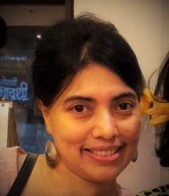
VibaMy husband, who is American, first introduced me to the word “negging.” Although I hadn’t come across it before setting foot in America, I soon came to realize it was a concept that knew few cultural bounds. The Urban Dictionary (UD) defines negging as “[when] you use remarks to tap into female insecurity; shake their confidence…neg is a negative remark wrapped in a back-handed compliment.” In the West, as I have learned, negging tends to target a woman’s physical attributes, often as a pick up line. Thus, as the UD again illustrates: “You are nearly as tall as me. I like tall girls (LIFT). Are those heels 4 or 5 inches (DROP)?”[1]

I’m from India and thought I’d provide an example of negging to illustrate its varied and glorious forms. Back when I was growing up, dating wasn’t socially acceptable in my culture – it often had to be done on the sly which probably explains why negging as a pick up line wasn’t the smartest choice. But we South Asians had and continue to have our own cultural equivalents of underhand methods specifically designed to erode a woman’s sense of self.   Continue reading “The Guessing Game by Vibha Shetiya”

ALTERNATIVE IMAGES OF GOD BY CAROL CHRIST AND EMMA TROUT

Carol P. Christ at Alverno College 1
Carol Christ at the Conference of Women Theologians

Today I am publishing an early work on female language for God that I wrote with Emma Trout at the first Conference of Women Theologians in 1971. Highly contested at the conference, this essay is a foreshadowing of my subsequent work on the need for female imagery for divinity.

Rereading this essay more than four decades later, I am gratified to see that though we began our essay with the image of God giving birth (which I still view as an important image), Emma and I were aware of the danger that female imagery for God could reinforce “a false sexual polarity.” We insisted then that female imagery for God must not repeat sex role stereotypes, but rather must shatter them. Continue reading “ALTERNATIVE IMAGES OF GOD BY CAROL CHRIST AND EMMA TROUT”

If You Don’t Believe Women Are Fully Human, Can You Be a Great Pope? by Carol P. Christ

In recent weeks I have felt compelled to respond to a series of “Great Pope” photos and stories praising Pope Francis for his stands on poverty and climate change appearing on my facebook page. In every case I added something like: “Let’s not go overboard about a pope who does not believe women are fully human.”

I am referring of course to Pope Francis’s reiteration of the Church’s prohibition of women in the priesthood. But just as important–and perhaps more important–is the role the Roman Catholic Church has played and continues to play to prevent women from having access to contraception and abortion.

Control over our own bodies is a fundamental right that undergirds every struggle for women’s equality and liberation. But the pope does not want women to have the right to use contraception to prevent unwanted pregnancies, nor does he want us to have the right to abortion if contraception is unavailable or fails—not even in cases of rape or incest. Continue reading “If You Don’t Believe Women Are Fully Human, Can You Be a Great Pope? by Carol P. Christ”

Who Sits at the Center of this Story? By Elise M. Edwards

Elise EdwardsHave you ever heard of the Vitruvian Man? It’s an image from 1490 inked by Leonardo da Vinci that came to symbolize the centrality of the individual in the Renaissance. It is quite clearly a depiction of a muscular, European male. His body is perfectly proportionate and thus simultaneously represents ideal humanity and a microcosm of the universe. The Vitruvian Man is so named after the ancient Roman architect Vitruvius who describes the proportions and symmetry of a temple as being analogous to the proportions of a man.

As an architect and scholar in the humanities, I’ve been acquainted with the Vitruvian Man for many years now. I even had a da Vinci theme on my PC’s Windows software about 15 years ago, meaning that the image of the Vitruvian Man appeared regularly on my desktop and screen saver. There was nothing problematic to me about his presence until a few days ago, when I took part in a discussion about teaching philosophies with some new friends and academic colleagues.

I was listening to Tamara Lewis, an assistant professor in religion whose research and teaching addresses the medieval and Renaissance periods. When she described a metaphor for her teaching philosophy, she discussed replacing the symbol of Vitruvian Man with the “woman at the well.” The woman at the well is a figure in Christian stories about Jesus and his teachings. Her narrative in the Bible is placed in chapter 4 of the Gospel according to John. Int eh story, Jesus encounters a Samaritan woman at a well. He asks her for a drink, which begins a meaningful exchange about spiritual teachings. Jesus’ male disciples and surprised to witness this exchange, presumably because she is a woman and a Samaritan, as the text tells us that Jews do not associate with Samaritans. The woman goes back to her town, tells people about her encounter with Jesus, whom she believes is the Messiah, which prompts many of them to come to him and also believe.

Dr. Lewis described how her presence in the historical study of medieval or Renaissance periods is sometimes questioned and how the woman at the well represents this presumed misplacement. Her metaphor caught my attention not just because of its profound coherence within her own career trajectory and narrative, but its coherence within mine. As a black feminist, religion scholar, and practicing Christian, I often wrestle with questions of belonging and being in or out of place.

This summer, I’m taking the time to think about broad questions and do some vision casting. This past December, Grace Kao wrote about using sabbatical time differently, and I’ve connected this to my own practice of Sabbath keeping as a ritual. I dedicate specific times to cease work.  I am engaging in some productive activity this summer, but I’m also honoring one of the truest blessings and privileges of full-time employment in my profession, which is break time to rest, reflect, and plan for the seasons ahead.  The metaphor of woman at the well who intentionally replaces the Vitruvian Man provokes these questions in my reflection:

Who is the default person around which the places we inhabit are constructed? Who sits at the center of our stories about the places we will go? 

As the little bio that follows my posts says, in my professional career I examine issues of civic engagement and how beliefs and commitments are expressed publicly through aesthetic and artistic practices. I’m currently writing a book-length project about theological ethics and architectural design. So these days I’m thinking a lot about the way public spaces and built environments communicate the values of those who build them and inhabit them. One of the questions I’m wrestling with is the way “common” spaces are defined by the narratives of only some people in the community. What does it mean to be literally “out of place”? What exists as a “safe space” in a public park for a man may not feel safe at all for me as a black woman. A public bench upon which I can rest in the middle of an afternoon jog may not be so uncontested for a homeless man at night.

As I think about my future, I have to ask who sits at the center of my story.   I’m approaching a milestone birthday, and I don’t want to fall victim to someone else’s vision of what a 40 year old woman should be. What does the story look like with me at the center? What happens when I replace an idealized image of perfection, vitality, and beauty with an imperfect but gloriously alive and wonderfully formed vision of who I already am?

As I plan for a new academic year, who do I imagine in my classes? As I engage students in discourse about the history of Christianity, the development of its theology, and the ethical issues of today’s world, who do I place at the center? As the US becomes enmeshed in presidential election politics and ongoing racial tensions, what image to we present as the archetypal American?

I’m so grateful that I was brought to see the woman at the well as a metaphor of intentional displacement. Even in a religion that places a male Savior (Jesus) at its center, there are women who sit with him. Although they confound some of Jesus’ other followers by their presence, they remain meaningful conversation partners and witnesses to their faith.

Elise M. Edwards, PhD is a Lecturer in Christian Ethics at Baylor University and a graduate of Claremont Graduate University. She is also a registered architect in the State of Florida. Her interdisciplinary work examines issues of civic engagement and how beliefs and commitments are expressed publicly. As a black feminist, she primarily focuses on cultural expressions by, for, and about women and marginalized communities. Follow her on twitter, google+ or academia.edu.

Referendum in Greece: One Small Victory for the 99% by Carol P. Christ

Yesterday the Greek people voted by an unexpectedly large margin of 6l.31% against the austerity programs insisted upon by the European creditors–despite threats from the creditors that Greece would be expelled from the European Union. This was a victory for democracy and for the 99% against the 1%. The blog I wrote on the eve of the referendum explains the situation.

Here in Greece, we are in a state of suspended animation and have been for the past 5 ½ months, since the new government of Alexis Tsipras began to negotiate with the European Commission, the European Central Bank, and the International Monetary Fund, popularly known as the Troika, regarding the Greek national debt. Each week we have heard: “a few days more and the crisis will be resolved.” We hold our breath and wait. Holding your breath for that long takes a toll on your health. Right now our banks are closed, and no one knows what the future will be.

Prime Minister Alexis Tsipras and Minister of Finance Yiannis Varoufakis have been negotiating on the assumption that representatives of the Troika are rational and moral actors—or can be convinced to be. Continue reading “Referendum in Greece: One Small Victory for the 99% by Carol P. Christ”

Texts of Terror in the Humanities Curriculum by Carol P. Christ

Carol in Crete croppedWhen I began to study Latin in my freshman year in high school, one of the first texts we were asked to translate concerned the “rape” of the Sabine women. Even though the Latin text used a word that looked and sounded like it should be translated as “rape,” we were told that the Romans “abducted” the Sabine women and that the word should be translated as “seized.” Not long afterward, we read a story from Ovid in which a nymph named Daphne was turned into a tree in order to escape being raped by a God. I found both of these stories puzzling.

I had not heard the term “rape culture” which was coined much later, but the fact that I can still visualize the words “virgines” and “raptae sunt,” as well as the pictures that accompanied both stories, suggests that I was aware that something was wrong in these texts and in the way they were being taught.

When, as part of my first full-time teaching job, I was asked to teach the Iliad as the foundational text in the required Humanities course at Columbia University, I was able to find words to criticize it. I understood that even if Homer mourned the “tragedy” of war, he also celebrated it, and seemed to view war as an inevitable part of “heroic” culture.

I was also able to see that the central human drama of the epic, Achilles’s “metaphysical dilemma “ of whether to choose to stay and fight in a war in which he would be killed yet immortalized in memory, or to choose to return home and live a long, yet uneventful life, was set in the context of his quarrel with Agamemnon over a woman my colleagues referred to as a “spear captive.” In fact, Briseis, like the Sabine women, was a “spoil” of war, a captured and captive woman, who might more accurately have been called a “raped captive.”

When I tried to discuss the moral failings of a work that celebrated rape and war in the seminar for teachers of the course, I was told that I had missed the point of a beautiful and complex text that was at the heart of “civilization.”

This spring at Columbia University, student members of the Multicultural Affairs Advisory Board posted an op-ed titled “Our Identities Matter in Core Classrooms” in the campus newspaper Columbia Spectator stating that: Continue reading “Texts of Terror in the Humanities Curriculum by Carol P. Christ”

Aine and the Giant Leap by Deanne Quarrie

Deanne Quarrie, D.Min.For our full moon rites coming up on the first of July we will be honoring Aine, Goddess of Love, Light, and Fertility who is also Queen of the Faeries. Aine’s name means “Bright” and She is typically honored at the Summer Solstice when the sun is at its peak of power.  The next full moon falls just after the Summer Solstice. The Solstice is associated with abundance, beauty and bounty.  It is not necessarily about the harvest season, as that is yet to come.  However, everywhere we look we can see the abundance of the Mother and so it is when we first acknowledge, with joy, what is before us.

In my Tradition, the Summer Solstice falls within the Oak Moon, the Moon in which we “court the lightning bolt.”  What that means to us is that with our roots planted firmly in the ground, as does the Oak tree, now is the time to take all of our plans and put them into action.  “Go for it” is what we are saying to ourselves and to the world. Continue reading “Aine and the Giant Leap by Deanne Quarrie”

Caitlyn Jenner is a Friend of Mine

To speak ones truth is oftentimes a difficult and nearly impossible act. However, to live one’s truth, on a day-to-day basis, is an aspect of life that has become so foreign to individuals who have become so comfortable in their own skin that I fear the activist and social justice roots that we all claim to hail from have fallen at the wayside and been replaced by complacency and reductionism.

caitlyn-jenner-transformation-high-cost-surgery-clothes-house-5I’m deeply troubled by some of the anti-trans and anti-queer commentary that has been taking place on some of the comments on this blog in recent months. I’ll never forget when this project first began—talking with the founders about its original purpose: to bring the “F” word back into the mainstream religious discourse and more importantly, to be a place where scholars, young and old, senior or junior, could write, collaborate and eventually converse with across cyberspace.

However, in recent months, I’ve found myself being more of a watchdog rather than a frequent commentator on issues pertaining to feminist religious discourse. I’ve found myself reading comments about issues I may not frankly identify or agree with just to make sure that the cisgendering or anti-trans narratives do not become symbolic of what this blog is now rather than what was supposed to be at the beginning.

When I sat down to write my very first post I was scared. I was terrified that feminists from all communities would see me only as I appeared and not for whom I actually was. I was afraid that all I had worked for throughout my life would be moot with the first bad comment on one of my posts. While all of those fears were real and valid they quickly faded away as I was embraced by this community and many others for my passion rather than my gender; my life’s work rather than my privilege; and more importantly, the personal mission to make the world a safer and better place for women and girls everywhere.

To speak ones truth is oftentimes a difficult and nearly impossible act. However, to live one’s truth, on a day-to-day basis, is an aspect of life that has become so foreign to individuals who have become so comfortable in their own skin that I fear the activist and social justice roots that we all claim to hail from have fallen at the wayside and been replaced by complacency and reductionism.

Caitlyn Jenner’s story is one that many individuals, often not highlighted on this blog, know all too well. Caitlyn Jenner’s story and personal experiences are valid and for members of the feminist community to refer to her as not “feminist” or merely as a man “masquerading” as a woman while still utilizing his privilege from being biologically born as a man is troubling and the root of the problem facing many trans individuals today when they’re negotiating coming out as their true selves.

Trans individuals face a cadre of other horrible social, physical and mental statistics that oftentimes lead them to be more likely to self-harm.   However, as feminists, isn’t it our job to make sure that all groups have access to the same freedoms rather than working towards denying it for certain groups while trolling the comments sections of posts?

Shakespeare said: “To thine own self be true” and for those of us who identify with the Golden Rule, if we no longer treat others as we would like to treat ourselves, then we really have failed as feminists; and if the comments on recent blogs are any indication, we still have a long way to go before all voices can feel welcomed not only on FAR but also in the world at-large.

John Erickson is a Ph.D. Candidate in American Religious History at Claremont Graduate University. He holds a MA in Women’s Studies in Religion; an MA in Applied Women’s Studies; and a BA in Women’s Literature and Women’s Studies. He is a Permanent Contributor to the blog Feminism and Religion, a Non-Fiction Reviewer for Lambda Literary, the leader in LGBT reviews, author interviews, opinions and news since 1989 and the Co-Chair of the Queer Studies in Religion section of the American Academy of Religion’s Western Region, the only regional section of the American Academy of Religion that is dedicated to the exploration of queer studies in religion and other relevant fields in the nation and the President of the University of Wisconsin Oshkosh’s LGBTQA+ Alumni Association. When he is not working on his dissertation, he can be found at West Hollywood City Hall where he is the Community Events Technician and works on policies and special events relating to women, gender, sexuality, and human rights issues that are sponsored or co-sponsored by the City of West Hollywood. He is the author of the blog From Wisconsin, with Love and can be followed on Twitter @JErickson85

What’s Wrong with this Picture? by Elise M. Edwards

Elise EdwardsOn Monday, the picture was on my Facebook feed again: The picture of a girl lying face down in the grass under a police officer pressing his knee in her back. It was from the video of an African-American teenager being pinned to the ground by Eric Casebolt, the police officer in McKinney, Texas who was responding to calls about a pool party. When I saw the picture this time, it was in a screenshot with these words below it:

“Funny how a 14 year old bikini-clad black girl being publicly assaulted by an adult male does not accrue mainstream feminist outrage.” – Yohanna

The screenshot was taken of a post to Yohanna’s Twitter account (@maarnayeri). I don’t know her, but she troubled me.

If you haven’t seen the images we’re talking about, you can view the video here with a description of what is concurring or below from YouTube. I was reluctant to watch the video. It seems voyeuristic to view this young woman’s suffering and screaming. And, if I am honest with myself, it also seems useless. Viewing this from my computer screen, I’m in no position to help her. I hear her cries and it make me cry too. But I can’t push him off of her. When other teens tried to come to her defense, Casebolt pulled a gun on them and chased them. I don’t even have the power to get him fired from his position of authority immediately. No, we must have the investigations and inquiries and due process that seems so indiscriminately afforded to the privileged. Casebolt was put on administrative leave on Friday, and on Tuesday June 9, he resigned.

So how should I respond?

I had a conversation with one of my closest friends a couple days ago that provoked me to reflect on what to do when I’m conflicted about how to respond. Her background is in acting and theatre, and now she is a pastor and artistic director of a Christian church and arts initiative who believes in supporting arts, imagination and creativity. In our conversation about discerning the next steps in our lives, she was reminded of a book by Samuel Wells that proposes “theatrical improvisation as a model for Christian ethics.” That reminded me of books I’ve read that talk about musical improvisation or call-and-response as model for living, and some pieces I’ve written about that. Inspired by ethicists and theologians including Emilie M. Townes and H. Richard Niebuhr, I believe that to answer the question of how I should respond, I must first answer ‘What’s going on?” An improvised response or a fitting response is the response to what is already occurring. We must look at the situation critically to respond appropriately.

What’s going on in this video and the controversy surrounding it? I am certainly not an impartial or all-knowing observer, but here’s what I see:

  • A white man forcibly throws an unarmed, African-American teenager to the ground yelling “On your face!” We can see that she is unarmed because she is wearing a bikini.
  • The man is a police officer. He is upset that his authority is being challenged. Other officers are present and seem to be asking questions, but the violent one seems out of control and frantic, running around and yelling. He escalates the situation when he throws the girl to the sidewalk, which causes an outcry in the crowd.
  • As the video went viral, there were many protests and online statements against this violent event, but also statements of support for the officer. And sadly, I agree with Yohanna’s assessment. I may have missed it (and I hope I did), but I didn’t see a broad, mainstream feminist response against this violence.

I’m a feminist. I’m a black feminist. I’m a Christian feminist. I may not be a mainstream feminist (depending on your definition), but I’ll express my outrage anyway. It is sickening to watch his treatment of this teenage girl. This man’s mistreatment of a young black girl’s body is chilling. It is wrong and he should be held accountable for it.

I don’t think outrage is enough. But outrage does express that our moral sensibilities have been awakened and that we recognize that something profoundly wrong has occurred. In the face of comments that say she deserved this treatment, we as feminists must insist on the officer’s wrongdoing. “She had it coming.” “She incited him.” As feminists, we know that these kinds of statements are used in cases of rape and intimate partner violence to explain away violent actions and to shift the guilt from perpetrator to victim. The backlash against feminists and others who oppose these explanations argues that we ignore the victim’s responsibility or agency.

Bloggers and social media users know all too well the horrific statements that often appear in the comments section of online posts, videos, and articles. One comment I saw about the McKinney video says that the girl was “sassing back” at the police and that “if she wants to talk like adult then she’s going to be treated like an adult.” This kind of justification makes my blood boil! Sassing back is speaking up and saying something to an authority figure when you are expected to be silent.  While the term sassing back doesn’t exclusively apply to women and girls, it is nonetheless a phrase with gendered connotations. How many boys are called “sassy”? Is it that no one had the right to say anything to this officer running around yelling at black teen boys to sit on the ground, or is it that this black female should have kept quiet? Regardless, throwing an unarmed person to the sidewalk for supposedly saying something disrespectful is not justifiable behavior to adults or children.

I wish I knew more about what’s going on and how to respond to the violence I see in the world. I know these perennial questions subvert easy answers. I only have a partial response. I am responding with outrage and questioning and take this to my feminist community and into my spiritual practice. “What’s going on?” and “How should I respond?” are questions I ask God. I pray for justice. I pray for God’s presence in the outrage and in the investigations, and in the lives of those children who were violated.

Elise M. Edwards, PhD is a Lecturer in Christian Ethics at Baylor University and a graduate of Claremont Graduate University. She is also a registered architect in the State of Florida. Her interdisciplinary work examines issues of civic engagement and how beliefs and commitments are expressed publicly. As a black feminist, she primarily focuses on cultural expressions by, for, and about women and marginalized communities. Follow her on twitter, google+ or academia.edu.