Legacy of Carol P. Christ: The Kitten Who Came For The Holidays

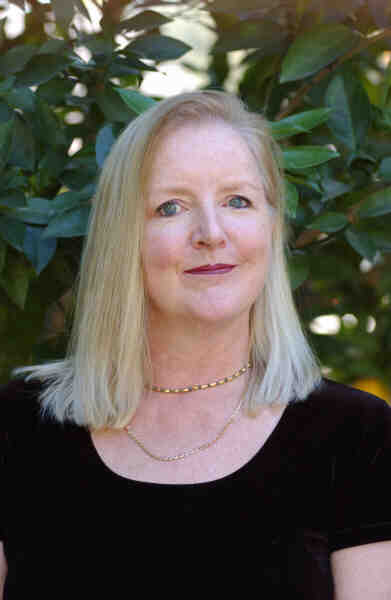
carol p. christ 2002 color

This post was originally created on Dec. 24th, 2012

This holiday season I have something warm and fuzzy to be thankful for—Goldilocks, the kitten who came for the holidays. 

As I was preparing for Thanksgiving, I opened my front door to the sound of really loud really pitiful crying.  A tiny grey kitten with a large golden spot on nape of her neck was howling in the middle of the street just a few feet from my door.  Living as I do in a town where there are many homeless cats and kittens, I do not usually respond to such cries.  My dogs maintain “cat patrol” in my back garden and quickly chase strays away.

However, the cries of this little kitten were so insistent that I picked her up. She was smaller than my hand.  My neighbor who was sweeping his porch offered to take her in.  A few hours later he returned her.  She was still mewing loudly, and, he said, she had not stopped crying all day long.  I found a syringe and fed her some milk.  Soon the crying stopped and she began purring in my lap.  Continue reading “Legacy of Carol P. Christ: The Kitten Who Came For The Holidays”

From the Archives: I Sing Asherah Exalted! by Janet Maika’i Rudolph

This was originally posted Dec. 16th, 2021

With this season of the festivals of light upon us (Hanukkah, Christmas, Solstice, Kwanzaa), I wanted to focus on the more joyful aspects of our lives. For that, I have been diving into passages about joy and singing in the bible.

Sometimes when I write these posts, they take me in directions I never thought to go. This post is one of them. The surprise direction I found is in the Psalm below:

Sing unto him, sing psalms unto him: talk ye of all his wondrous works.
Glory ye in his holy name: let the heart of them rejoice that seek the LORD.
Psalm 105:2-3 KJV

Continue reading “From the Archives: I Sing Asherah Exalted! by Janet Maika’i Rudolph”

Legacy of Carol P. Christ: Is ‘Having To Have’ One Of The Roots Of Suffering?

Carol P. ChristThis post was originally published on Aug. 6th, 2012

There is a strong thread of fatalism in modern Greek culture that has been a powerfully healing antidote to my American upbringing in the culture of “I think I can, I can.”  When confronted with an obstacle, many Greeks throw up their hands, raise their eyebrows, and say, “What can we do?” This phrase is not an opening toward change, but a closing–an acknowledgment that there are many things in life that are not under our control.

In American culture we are taught that if we work hard enough, we can achieve our goals. This view can bring a light of possibility into fatalistic cultures. The truth, however, lies somewhere in the middle–between fatalism and belief in the power of individual or collective will.

In American culture the belief that we can “have it all” if only we work hard enough is the root of much personal suffering.  If things don’t turn out as we imagined they should have, we often blame ourselves. Continue reading “Legacy of Carol P. Christ: Is ‘Having To Have’ One Of The Roots Of Suffering?”

Hydrangea Lessons, by Molly Remer

How to create a ritual:
Look at the sky.
Touch your skin.
Breathe deep in your belly.
Feel your heart beat.
Stand on the earth.
Let life carry you.

How to create a ritual:
Look at the sky.
Touch your skin.
Breathe deep in your belly.
Feel your heart beat.
Stand on the earth.
Let life carry you.

September 2024:

It is now that slender bush clover makes flower crowns along the roadside and coreopsis lifts its yellow faces to the sky. There is change in the air, whispering on cooling winds and shrieking by above the field on the feathers of broad-winged hawks. The last cicadas continue to drone and the apples hang rosy on the trees. The deck bears a sprinkling of yellow walnut leaves, and I picked up a brown and green patterned oak leaf to press into the pages of my prayers. It is now that I pause to steep, to listen to myself before pressing onward into the final part of the year. There is both an invitation and a summons here, to evaluate and renew, to consider the pace of life and whether to ease off or push onward. It is now that I remember that restoration is the antidote to depletion and I gather myself up, tenderly calling the fragments home, recollecting myself and taking time to look at where I am and what I have and what I’ve chosen. There are crows calling at the end of the driveway. I keep my eyes open for any passing monarchs. There is a slight hint of spiced pumpkin on the wind. The Virginia creeper has darkened to rusty red. 

Continue reading “Hydrangea Lessons, by Molly Remer”

Legacy of Carol P. Christ: LOVING LIFE*

This post was originally published on June 11th, 2012

My religious views have changed over time, but the spirituality I learned from my grandmothers has remained constant. I have been Protestant, Catholic, a lover of Judaism, an admirer of Christian Science, and a Goddess feminist.  I have always loved life.

I was born in Huntington Hospital just before Christmas in 1945 and brought to my grandmother’s home on Old Ranch Road in Arcadia, California.  Peacocks from the adjacent Los Angeles County Arboretum screeched on the roof. There was another baby in the house, my cousin Dee, born a few months earlier.  My mother and her sister were living with their mother. The war was over, and they were anticipating the return of their husbands from the Pacific Front.  My earliest memory, recovered during healing energy work, is visual and visceral. I am lying crossways in a crib next to the other baby. There is a soft breeze. The other baby is kicking its legs, and I am trying to do the same.  I look up and see three faces looking down at us.  Although the faces are blurry in the vision I see, I feel them as female and loving.  I got off to a good start. Continue reading “Legacy of Carol P. Christ: LOVING LIFE*”

Herstory Profiles: The Season of the Witch by Anjeanette LeBoeuf

Throughout the modern ages there have been stories, legends, myths, and historical accounts of threatening people, mainly women, who have been linked with the supernatural, with containing powers, engaging with elements that go beyond the natural world, and who decentralize, shake up, and counter mainstream patriarchal systems and groups. And the predominate word which can be translated and transcend languages is that of WITCH. And since we are in the month of October, when it becomes somewhat acceptable for people to deck their houses with items long been associated with witchcraft, this month’s herstory profiles is diving into all things witchy.

So, lets deconstruct what witches do and how they function in history and in modern times. When we look at the origins of magic – at the very core- is the manipulation of the natural world for supernatural outcomings. Those outcomes can be a range – from conversing with supernatural beings, healings, prophecy, alchemy, transformation, and to even holding secret knowledge. The word magic has origins in Ancient Persian and Proto-Indo-European languages with concepts of “being able to” and to “have power.” If we look at ancient cultures, civilizations, and religions we found multiple variations of people and roles being able to contain, control, and weld magic.

Continue reading “Herstory Profiles: The Season of the Witch by Anjeanette LeBoeuf”

Listen to the wise women by Molly Remer

In 2012, shortly after I finished my priestess ordination process and I’d been facilitating women’s retreats for two years, I got a wild idea to go to a goddess festival of some kind. I did a google search and found one that sounded great—Gaea Goddess Gathering–and it was happening in just two weeks. Imagine my surprise to then look at the bottom of the screen and see that it was located only a five-hour drive from me, just over the border into Kansas. I decided it was “meant to be.” My mom and a friend signed up with me (and my then 18 month old daughter) and we packed up my van and went! The night before we left on our adventure, I sat down at the kitchen table and felt a knife-like stinging pain on the back of my leg. I’d accidentally sat on a European giant hornet (these are not regular hornets, they are literally giant hornets about two inches long).

Continue reading “Listen to the wise women by Molly Remer”

Legacy of Carol P. Christ: The Turtle Goddess from Myrtos in Ancient Crete

This was originally posted on October 15, 2012

“As we bless the Source of Life, so we are blessed.” Song by Faith Rogow

The strange and cheerful figure portrayed in this ancient Cretan vessel comes from the site known as Fournou Korifi near Myrtos, in Crete.  Dated before 2000 BCE, she was called the “Goddess of Myrtos” by the excavator, Peter Warren.  This little Goddess was found on an altar in a small room in the ritual area of a complex of small rooms on a hill above the sea that was home to up to 120 people.  The Goddess of Myrtos is a vessel holding a vessel.  In ritual libations, liquid would have been poured from the pitcher she holds onto an altar.

.She is obviously female, with breasts and a sacred triangle.

The cross-hatching on her sacred triangle and on the squares drawn on her body perhaps symbolize woven cloth and the important roles of women as weavers in the community that created her.  A side view shows that she is “stitched together” along her sides.  The many spindle whorls and loom weights recovered from the site provide material proof of the importance of weaving at Myrtos.

Continue reading “Legacy of Carol P. Christ: The Turtle Goddess from Myrtos in Ancient Crete”

Legacy of Carol P Christ: WAR, WAR, WHAT ARE WE FIGHTING FOR?

This was originally posted Sept 16, 2013. It is sadly pertinent today

“They used chemical weapons, we must do something to stop them.”  A justification widely used in support of President Obama’s decision to launch a military strike against Syria.

We fought the Civil War to end slavery and racism. We fought the Second World War to end fascism. Did we end racism? Did we end fascism? Howard Zinn

At the time of the Revolutionary War, “a not inconsiderable Quaker element was on principle opposed to war, as itself a greater evil than any it might seek to right.”

Michelle Obama is against military intervention in Syria. Does the President dismiss Michelle’s dissent as “womanish”?

Continue reading “Legacy of Carol P Christ: WAR, WAR, WHAT ARE WE FIGHTING FOR?”

Queering Herstory Profiles by Anjeanette LeBoeuf

We are back with a new volume of uncovering and focusing on extraordinary persons. We start our first post of Volume II with 4 figures who in many ways throw history, narrative, and the status quo off their axis. All 4, if alive in 2024, would find solidarity and kinship with the Queer Community. So let us being.

Hatshepsut (1508-1458 BCE) Egyptian Pharaoh.

Hatshepsut was the daughter of Thutmose I, wife to Thutmose II, and stepmother to Thutmose III. Her husband died while his heir was too young to ascend the throne. Hatshepsut became not only the acting regent but full fledge ruler. She would reign for 21 years as the 5th Ruler of the 18th Dynasty of Egypt. Her reign was prosperous including funding for art, statues, and monuments that have stood the test of time and active destruction. Deir –el-Bahari became a significant temple for Hatshepsut.

Continue reading “Queering Herstory Profiles by Anjeanette LeBoeuf”