

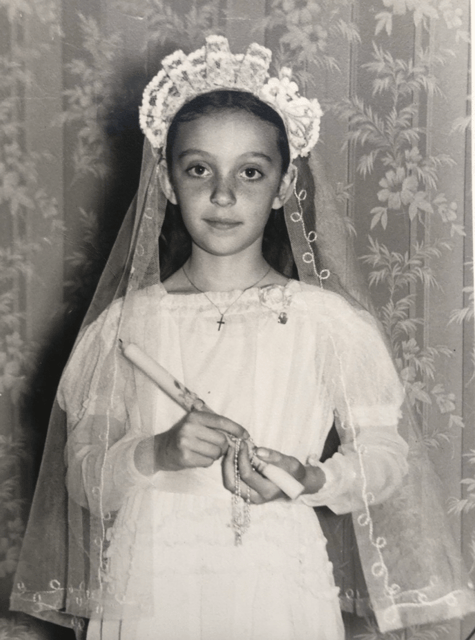
My name is Claire Taylor. I’m seventeen, and I was named after my maternal grandmother’s confirmation name, the Catholic tradition of giving someone a saint’s name at first communion. Her full name was Bernadette Mary Claire Szafranski, so you can tell religion was a big deal in her life. I was raised in an agnostic family with basically no spiritual life, but for the last six years I’ve gone to Immaculate Heart, an all-girls Catholic school in Los Angeles. And I love Catholicism.
I love the singing and the psalms, the traditions, the Bible stories, and how my teachers push me to actually think and argue about things. But something bothers me: my grandmother grew up Catholic and then left it, raising my mom with no religion at all, and my own school was founded by sisters who, in 1968, had to choose between staying under the archdiocese or keeping their values: social activism, feminism, progressive theology.
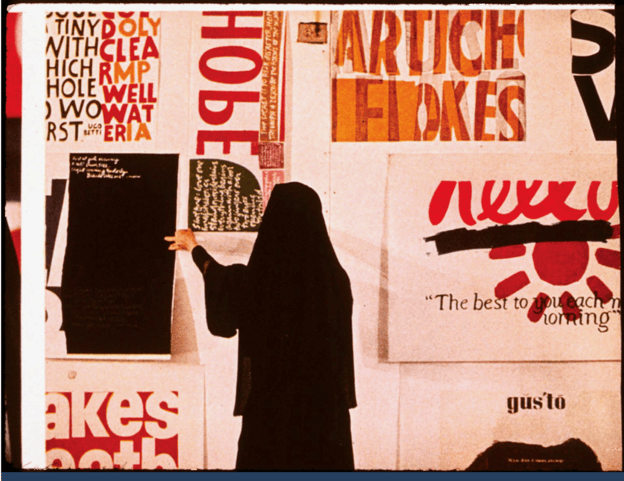
One of those sisters was Corita Kent, the artist famous for turning scripture and protest slogans into bright, political serigraph prints. Her departure from the order was part of what fed the pressure that came to a head two years later.
“The Church gave the sisters a final choice: conform to traditional religious life or seek dispensation from their vows. A Vatican official at the time remarked, ‘When it became obvious that these ladies no longer wanted to operate within the framework of the religious community, there was nothing else to do but permit them to get out.'” (Time Magazine, Feb. 15, 1970)
In the end, 90% of the sisters walked away from their vows and reorganized the school as a non-canonical, independent lay community.
The question in my heart is: why do women leave Catholicism? Are feminism and theology antithetical?
I started asking smart women I know what keeps them inside and outside of Christianity, and what it’s like living in the in-between, kind of making up their own version of religion to stay engaged. That’s Lips Sealed, my podcast on the feminine experience in a Christian nationalist America. I picked that name because of the old wax seals people used on private letters — back when “sealed” meant only the one person it was meant for got to open it. I’m kind of doing the opposite: using the podcast to actually say out loud the parts of women’s inner lives that usually stay sealed shut. I’ve interviewed three women so far, of different ages and backgrounds, and here’s what I found:
Smart feminist women discover the depth of their intelligence, in part,
through grappling with the tensions within religion.
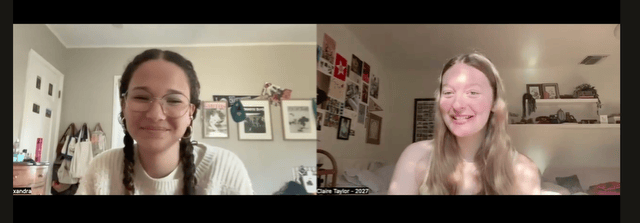
Xandra
In middle school, Xandra read the Bible every night, trying to build the kind of relationship with it her devout Catholic parents had. Then she stopped, just as deliberately, and for a while had no relationship with religion at all. This was not really a rejection, more like a blank space where something used to be. What eventually filled that space in high school wasn’t her parents’ framework, but a choice she had to make on her own: believing in a higher power outside of life, or believing in the people right in front of her. Not a small thing for a teenager to decide!
Xandra’s resolution was she now sees God within people instead of above them. She didn’t inherit an answer, or just drop the question. She built her own theology out of the one she was handed, which honestly seems harder than staying with the faith or walking away.
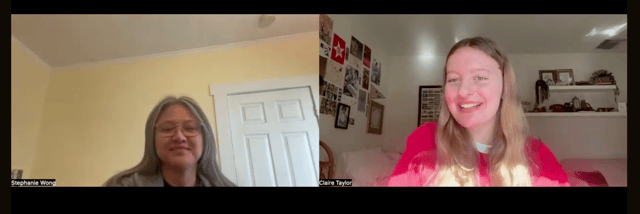
Mrs. Wong
Mrs. Wong grew up Catholic in 1970s Malaysia, a Muslim-majority country, so she was a religious minority from the start. She knew early, in a way a lot of Americans never have to, that the world holds more than one true religion. That gave her a kind of double vision: in Malaysia, Christians were seen as the progressive ones, up against a conservative Muslim majority, so moving to the U.S. and meeting conservative Christians for the first time genuinely shocked her. Religion flipped its politics depending on which country she was standing in.
Through all of it, including real suffering she’s witnessed, she says she never lost her faith in God. But she’s also landed on a clear distinction: spirituality and religion aren’t the same thing to her. That’s the part that took her the longest to figure out. After watching the same religion mean different things in different places, she had to decide what she actually believed.
Paige
Paige was raised Catholic and is now an MA student at Harvard Divinity School, training to become an interfaith chaplain. She sits with people across a lot of different faiths, not just her own. This feels like its own kind of answer to the question I keep circling back to: instead of picking a side, she built a career around holding a bunch of them at once. Buddhism moved her enough that she went to India and lived among Buddhist nuns, learning it from the inside instead of just reading about it. That openness isn’t indecision. It’s curiosity as a discipline, the same rigor my teachers push me toward, just pointed at belief instead of a classroom text.
Paige ends up in the same place Mrs. Wong does, from a totally different path: spirituality and religion aren’t the same thing. For her, being welcoming isn’t about following a religion’s rules. It’s a spiritual thing, not a doctrinal one. She considers herself spiritual, not religious. That mattered this summer, when she provided spiritual care to people experiencing homelessness in San Francisco through San Francisco Night Ministry. It makes me think the in-between space isn’t just where smart feminist women get stuck — it’s also where some of them build something.
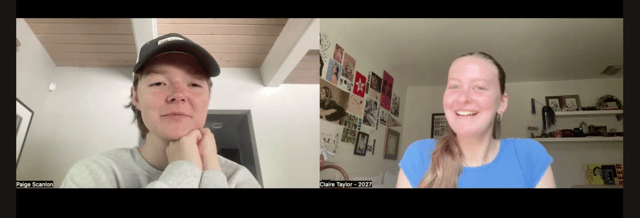
Another thing that surprised me is that I got off every single interview and felt stupid.
Not because Xandra, Mrs. Wong, or Paige said anything to make me feel dumb. But I’d been expecting an actual answer: stay or go, feminism or faith, pick one. Instead, all three of them had spent years building something in between that nobody handed them and no textbook prepared them for.
None of that is confusion, though. It’s the same work my grandmother did when she gave up a religion that had given her a name for me, and the same work the Immaculate Heart sisters did in 1968, when nuns decided their vows and values couldn’t both be true anymore. It’s basically the thing this whole FAR community is about — not rejecting religion, not just accepting it either, but refusing a version of God, or of themselves, that doesn’t leave room for being smart and faithful and doubting and whole, all at once.
Lips Sealed is barely a podcast yet. I’m only three interviews in and I still have questions I can’t answer. But I recognize this community now. It’s the same one Xandra, Mrs. Wong, and Paige are quietly building, mostly without each other, mostly without knowing they’re part of anything at all. I still love Catholicism, singing and psalms and all, and I’m still agnostic, and I don’t think those two things cancel each other out anymore. I think they’re just where I’m starting — and apparently, I’m not starting alone.
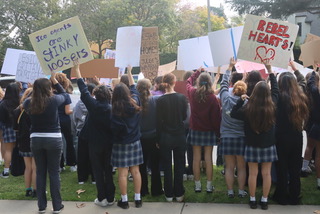
Afternote: The story of the nuns was told in a 2021 move entitled Rebel Hearts. You can see more information here.
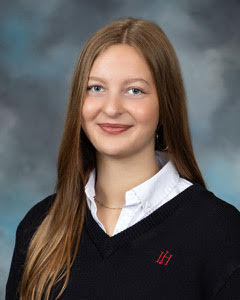
Author Bio: Claire Taylor is a senior at Immaculate Heart High School in Los Angeles, CA. She is Commissioner of Media Productions in the Associated Student Body. In June 2026, she received a Commendation from the Mayor of Glendale, where she lives, for her leadership of Assisteens®, a program of the National Assistance League run entirely by teenagers. She hopes to become a journalist to bring the stories of powerful, unrecognized women into the light.
Discover more from Feminism and Religion
Subscribe to get the latest posts sent to your email.


Claire, you’re really onto something important here – the liminal immanence of the divine feminine. We have the capacity to hold the light an the dark – and to make something powerful out of that alchemy.
LikeLike
Good wishes on your search for spirituality that fits your worldview. Many women join you in the quest.
LikeLike
The space in between is where things happen…
LikeLike