

This was originally posted on June 15, 2015

Katharine (Kate) Bushnell (1855-1946) was by any measure a remarkable figure in the history of Christian feminism. A global anti-trafficking activist and author of God’s Word to Women, a fascinating feminist theology that recasts the entire biblical narrative as a story of liberation for women, Bushnell was once widely known throughout the late-nineteenth-century Protestant world.
A Midwestern Methodist, Bushnell came of age in Evanston, IL. After a brief stint as a medical missionary to China, she helped launch the American “social purity” movement by leading a dramatic exposé of the trafficking of women in Wisconsin lumber camps. Drawing attention to the injustices women faced under the Victorian sexual double standard, Bushnell helped break the “conspiracy of silence” that inhibited discussion of sexuality among “respectable” women and men. She then took her activism overseas, where she exposed the abusive practices of the British army in colonial India, particularly when it came to the confinement and abuse of local women in military brothels.
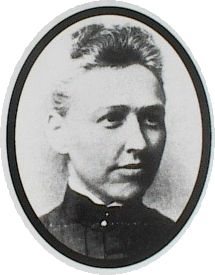
While campaigning against prostitution and the trafficking of women, Bushnell was shocked to discover that the men guilty of abusing women were more often than not Christian men. Ultimately, she concluded that patriarchal theology must be to blame.
Rather than abandoning Christianity in its entirety, she drew on her background in classical languages and began retranslating the Scriptures in an effort to undo a centuries-long tradition of male bias that had distorted the biblical text.
In her hands, the Scriptures told a very different story. Woman had been created equal (if not superior) to man. It was not Eve’s sin that had led to the Fall of humanity, but Adam’s (Eve rightly blamed the Serpent, but Adam blamed God). Eve had, however, sinned in turning away from God to follow Adam out of Eden. Thus, women sinned when they submitted to men, rather than to God, and men sinned in usurping God’s authority, and in dominating women.
Bushnell identified a number of gendered patterns of mistranslation, particularly when it came to concepts like courage, chastity, and modesty. She discovered new meanings for obscure Old Testament passages, as well as for familiar New Testament passages on wifely submission and female authority. Indeed, she presented the Apostle Paul as quite enlightened on “the woman question.”
Bushnell believed that redemption would bring about women’s social and spiritual emancipation, a redemption foretold in Jeremiah 31:22: “It seems God’s design that the ‘new woman’ in Christ Jesus shall no more ‘turn away,’ as did Eve, to her husband,” she explained, “but remaining loyal to God alone, and true to her destiny as the mother of that Seed…shall lead man about,–out of the wilderness of the inefficiency of egotism into the glorious liberty of the children of God.”
Remarkably, Bushnell’s theology garnered enthusiastic reviews from a number of conservative biblical scholars. The Moody Monthly, for example, offered a hearty endorsement of the book in 1921. They, like other conservatives, approved of her loyalty to Scriptural authority at a time when many modernists seemed to be abandoning the very foundations of the faith.
And yet, Bushnell’s teachings failed to reach large audiences in the 1920s and 1930s. Changes within American Protestantism and within the women’s movement left Bushnell increasingly marginalized, and her life and work were quickly forgotten. Even so, a small but devoted group of followers—initially Pentecostals and Methodists, in particular—worked to keep her memory alive. In recent decades her writings have been influential among a number of “biblical feminists”—among those who want to uphold the authority of the Scriptures, yet see in the gospel message a story of liberation and redemption, for women as well as for men. And in an interesting turn of events, Bushnell’s writings are once again reaching a global audience, as women in the Majority World are finding in her theology a biblical basis for the rejection of patriarchy and the empowerment of women.
Long forgotten, Bushnell’s story is a fascinating one—one that reveals the contours of a larger history of Christianity and feminism, in America and around the globe.
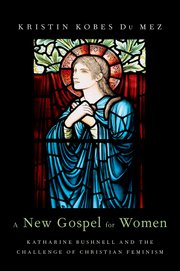
Kristin Kobes Du Mez is the author of A New Gospel for Women: Katharine Bushnell and the Challenge of Christian Feminism, recently released from Oxford University Press.
Discover more from Feminism and Religion
Subscribe to get the latest posts sent to your email.

