Are You Ready for Some Football? by John Erickson

Although putting women in charge of drafting new policies that address the “woman problem” currently facing the NFL, it too reeks of the similar dismissive and patronizing actions women face when trying to obtain leadership roles in their religious traditions. Supercilious progress for the sake of progress isn’t progress and progress under the guise of silence is still misogyny. We need women in positions of leadership in both the NFL as well as in religious traditions. The culture of violence and silence will only continue, albeit with a Band-Aid firmly in place, holding the painful experiences and histories of women, long forgotten and often overlooked, until society values their rights just as much as the men leading the prayers and those that are being prayed for on Sundays across America.

John Erickson, sports, coming out.There is never a reason for physical violence.  There is never a reason to hit your partner or child to the point where they are unconscious or bruised.  There is never a reason to inflict violence against someone else, but apparently there are exceptions to these rules if you’re an NFL football player.

In my native state of Wisconsin, watching football on Sunday is synonymous with attending church prior to the game.  Watching football on Sunday is a cultural norm in many, if not all, different regions of the country where individuals, whether you like it or not, gather each Sunday to both praise and pray that your team ends up on top.
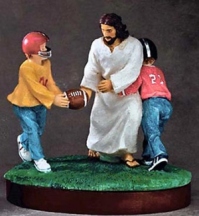
Football Jesus

In Wisconsin, you attend church with your family and head to your desired destination where you gather with friends and family to eat, talk about your life, and of course watch your local football team battle their weekly rival.  Although I am not much of a football fan these days, I have very fond memories of attending football games, watching them with my family and talking about the Green Bay Packers’ Super Bowl chances.  It was my time to both bond with the men of my family as well as catch up on the gossip the women would whisper back and forth to each other at the dinner table while the men were in the other room screaming at the TV.

Although I’m sure I will watch more games in my future, lately, all I do is cringe when I think about the growing violence that women and children face and have faced in the large shadow of an organization worth north of $9 billion dollars.

The biggest scandal to hit the news waves lately is that of Baltimore Ravens running back Ray Rice’s assault of his wife in an Atlantic City elevator.  Although Rice and the various other incidents regarding NFL players and violence is disturbing, the biggest problem facing the NFL isn’t just its treatment of women but its continual commodification of them as a disposable resource emblematic with the culture of violence that it has created.

photo (1)

If you didn’t know, women make up an estimated 45% of the NFL‘s more than 150 million American fans and have, in recent weeks, become their most valuable resource and source of criticism.  However, after a long string of incidents stemming back from NFL teams underpaying cheerleaders to the Ray Rice incident, one needs to ask what the roles of women, if any, are outside of the disturbing images of the abused wife, hypersexualized cheerleader?  Is being dragged out of an elevator by your abusive husband the only way to get women’s issues addressed in the NFL by fans, league owners, and the NFL commission?

The roles of women in the NFL and religion have many similarities.  Aside from end zone celebrations where players praise God for his apparent direct role in helping them score a winning touchdown or certain players edifications as gods on Earth, women make up the crux of both NFL fandom and attendance but are responsible for the gatherings similar to the ones I, and many others, grew up with.
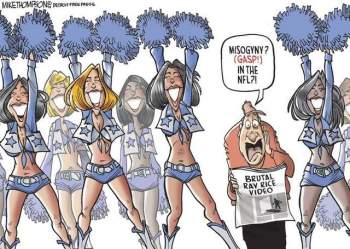
bilde

Although putting women in charge of drafting new policies that address the “woman problem” currently facing the NFL, it too reeks of the similar dismissive and patronizing actions women face when trying to obtain leadership roles in their religious traditions.  Supercilious progress for the sake of progress isn’t progress and progress under the guise of silence is still misogyny.  We need women in positions of leadership in both the NFL as well as in religious traditions.  The culture of violence and silence will only continue, albeit with a Band-Aid firmly in place, holding the painful experiences and histories of women, long forgotten and often overlooked, until society values their rights just as much as the men leading the prayers and those that are being prayed for on Sundays across America.

Ann Braude said it best in her foundational text Sisters and Saints that “if we want to understand the history of American women, we need to examine the religious beliefs and activities that so many have found so meaningful.” Without women, we wouldn’t have many, if not all, of the religions that are present throughout the world today and in case we forget, without women, we too wouldn’t have the millions of little boys who grow up being taken to and from practice by their mothers with the hope that they too could one day become the professional football players that fans scream and pray for.

Without women, there is no NFL and without women, there is no religion.  Kelly Brown Douglas said it best on this very blog when she stated, “It is the violence that violence creates.”  Although I agree with her, I would only add that while violence does indeed create violence, the real sin isn’t the violence itself but rather the silence that follows.

Let us pray that we will continue to not be silent and that we will rise up and fight for the millions of women (and men) each day who do not live in fear that their significant other’s multimillion dollar contract will not be reinstated but rather that they and their children may not see another day on this Earth.

 John Erickson is a Ph.D. Candidate in American Religious History at Claremont Graduate University.  He holds a MA in Women’s Studies in Religion; an MA in Applied Women’s Studies; and a BA in Women’s Literature and Women’s Studies. The LGBTQ and women’s rights movements, masculinity studies, gender theory, and the utilization of technology in forming communities and creating new teaching methodologies influence his research interests.  His work is inspired by the intersectionality of feminism, queer identity, LGBTQ history, and religious and sexual cultural rhetoric. He is a Non-Fiction Reviewer for Lambda Literary, the leader in LGBT reviews, author interviews, opinions and news since 1989 and the Co-Chair of the Queer Studies in Religion section of the American Academy of Religion’s Western Region, the only regional section of the American Academy of Religion that is dedicated to the exploration of queer studies in religion and other relevant fields in the nation.  When he is not working on his dissertation, he can be found at West Hollywood City Hall where he is the City Council Deputy and Chief of Staff to Councilmember Abbe Land. He is the author of the blog From Wisconsin, with Love and can be followed on Twitter @JErickson85

From Evangelical Christianity to Feminist Evangelism by Andreea Nica

AndreeaI always knew I was a feminist, despite my lack of knowledge in the movement and philosophy growing up. I did, however, have the religious support of my family and community to be an Evangelical Christian. I knew all the right words, mannerisms, and behaviors to represent myself as the proper Christian woman. I went on mission trips abroad, wore purity rings, attended sexual purity retreats and church camps, prayed fervently, spoke in tongues (glossolalia), contributed 10 percent of my meager earnings, and above all, fell in love with God.

As a first-generation college student, I was thirsty for knowledge and ready to take on the world. Some of my favorite courses during my undergraduate career included: “Psychology of Women,” “Women, Gender, and Ethnicity,” and “Psychology of Sexuality.” My coursework in gender, sexuality, and the social sciences compelled me to pursue graduate studies in gender, culture, and media at a university abroad. My studies in gender theory and feminist philosophy, and how it intersects with religion and social institutions ignited my spirit.

As a result, my relationship with god suffered. My newfound feminist beliefs were not solely to blame, however. Rather, a variety of reasons contributed to my detachment from god and the Evangelical church which I explain in my post, “Leaving Behind My First Love.” My new feminist identity was the main driver for questioning my relationship with god. Everything from the male-dominated language and rhetoric used in the church, to the discrimination and prohibition of female pastors, to the stringent gender roles expected of congregants. Continue reading “From Evangelical Christianity to Feminist Evangelism by Andreea Nica”

Lessons Learned from the Atheist Alliance of America Convention by Andreea Nica

Andreea Nica, pentecostalismThe Atheist Alliance of America National Convention 2014 held earlier this month in Seattle, Washington granted me the opportunity to interview, converse with, and listen to renowned speakers, comedians, and influential figures in the atheist movement including the likes of David Fitzgerald, Dr. Steven Pinker, Dr. Rebecca Goldstein, Richard Haynes, and Dr. Richard Carrier.

This year’s convention drew in approximately 100 attendees throughout the weekend, according to Amy Monsky, Executive Director of Atheist Alliance of America (AAA). Monsky states that the AAA National Convention has several primary goals including: to bring atheists together; to hear great speakers; to network and socialize; and to raise awareness through education.

The family-friendly event was comprised of educational and activist-oriented sessions, debate, a comedy show, VIP non-prayer breakfast, film by Jeremiah Camara, “2014 Richard Dawkins Award” banquet, and a Sunday outing to Snoqualmie Falls and Chateau Ste. Michelle Winery.

Below is an overview of the sessions I attended, the conversations I had with presenters and experts, and the interviews I conducted. Continue reading “Lessons Learned from the Atheist Alliance of America Convention by Andreea Nica”

Women at the Secular Student Alliance Conference by Kile Jones

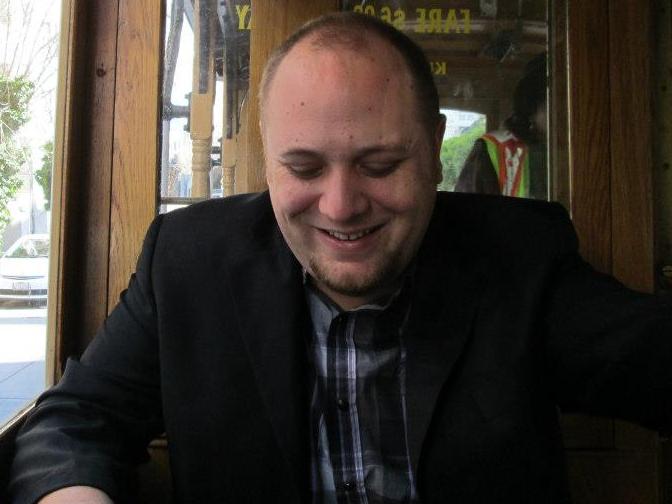
KileA few days ago I had the pleasure of giving a talk at the Secular Student Alliance Conference on how non-believing persons can work with Churches.  Amidst the chaos of conferences–managing your time, deciding which talks to attend, and making sure you have enough water (it was a Burning Ring of Fire outside in Tempe, AZ)–I got to meet some pretty incredible secular women.

One of them was Heina Dadabhoy.

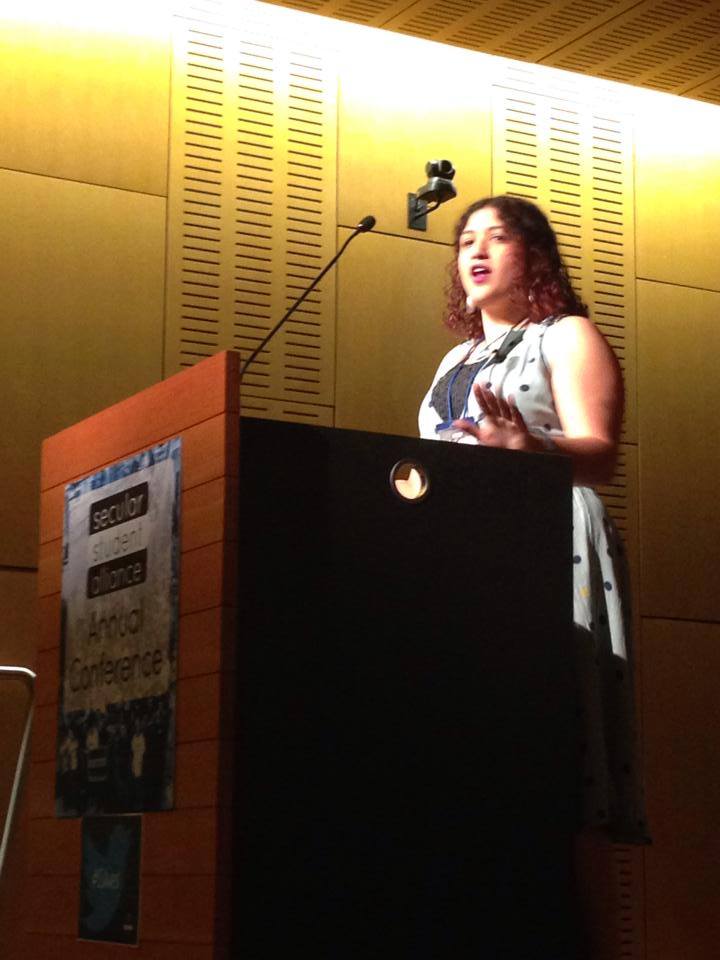
Heina speaking at SSA
Heina speaking at SSA.

Former Muslim, blogger at Freethought Blogs, and overall bad-ass, Heina spoke about ways in which secular groups can create a more welcoming environment for ex-Muslims and Muslims beginning to doubt.  Her talk, “Of Murtids and Muslims,” (a “murtid” is a public apostate) was not only about her experiences coming out as a secular humanist, but considered some of the absurd questions people ask her (and other ex-Muslims) about leaving Islam.  “So did your parents try to honor kill you?”  “Have you gone through FGM?”  It was disturbingly humorous.

What I considered to be Heina’s main point, was that we should respect each others’ individual differences and not generalize and caricature all Muslims with the depictions of some.  “Just because you read Ayaan Hirsi Ali’s book,” Heina notes, “does not make you an expert on Islam.”  Heina made sure to emphasize the radical diversity that exists in Islam.  She also spoke of the some of the issues that people go through when they leave Islam: How do I create a new identity when my old one was intricately tied up in my Muslim community, family, and culture?  How do I navigate popular culture when I have missed a bunch of it?  How do I find myself in this new secular world?  Heina’s answers were refreshingly honest and insightful.

P.S. Aisha (one of Muhammed’s wives) should not simply be reduced to the young person Muhammed married; she was also a war leader, influential Muslim thinker, and someone who contributed greatly to early Islam.  This is, of course, Heina’s insight.

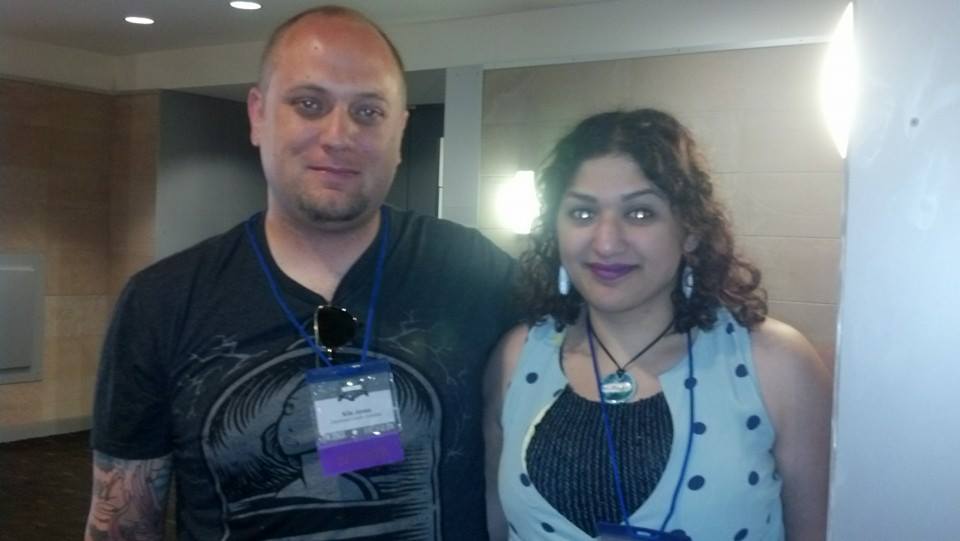
Me and Heina at SSA
Me and Heina at SSA

Another awesome secular woman I met, was Sarah Morehead.

Sarah. Photo from Apostacon.

Sarah is a former evangelical Southern Baptist, Executive Director of the “Recovering From Religion” project, and another overall bad-ass.  She spoke on how to start up a Recovering From Religion group on your campus.  Here is a blurb about Recovering From Religion,

“If you are one of the many people who have determined that religion no longer has a place in their life, but are still dealing with the after-effects in some way or another, Recovering From Religion (RR) may be just the right spot for you. Many people come to a point that they no longer accept the supernatural explanations for the world around them, or they realize just how much conflict religious belief creates. It can be difficult to leave religion because family and culture put so much pressure on us to stay and pretend to believe the unbelievable. If this is you, we want to help you find your way out. Don’t let people convince you that you just didn’t have ‘enough’ faith, or that you just haven’t found the “right” religion.”

Sarah and I chatted (and often laughed) about our old experiences as conservative Christians.  We discussed some of the funny language (Christian-eze) we used to use, the various levels of guilt and shame that were cast upon us, and how science helps explain some of the interesting displays of piety often seen at Pentecostal services.  Sarah’s jovial and welcoming demeanor was calming, and as an Executive Director for a project aimed at helping people “recover” from religion, I cannot think of a better person for the job.

Lyz.  Photo by SSA.
Lyz. Photo by SSA.

The last woman I have in mind is Lyz Liddell.

Lyz is the Director of Campus Organizing for the Secular Student Alliance.  I have an interview I did with her a while back, on this very blog!  Besides running around with her headset on, standing on chairs for announcements, and generally keeping the world of SSA from not crumbling into oblivion, Lyz is a great motivation and example.  If you are ever interested in starting a SSA group on your campus, talk to her.

To all those who attended this years SSA West, or who are involved with helping secular students: Unite!

Kile Jones holds a Bachelors of Theology (B.Th.) from Faith Seminary, a Masters of Theological Studies (M.T.S.) and a Masters of Sacred Theology (S.T.M.) from Boston University, and is a current Ph.D. in Religion student at Claremont Lincoln University.  He also holds a Certificate in Science and Religion from the Boston Theological Institute.  Mr. Jones has been published in Zygon: Journal of Religion and Science, Philosophy Now, Free Inquiry, World Futures, Human Affairs, and the Secular Web.  He is the Founder/Editor-in-Chief of Claremont Journal of Religion (www.claremontjournal.com), and is the Founder/Director of Interview an Atheist at Church Day (interviewatheists.wordpress.com).

#YesAllWomen, the Darwin Debate, and the God Complex by John Erickson

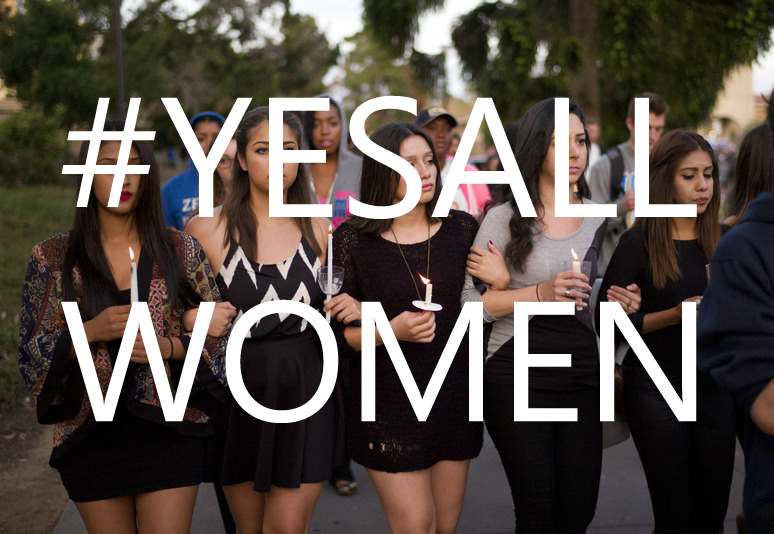
#YesAllWomen proved that although not all men commit horrible crimes against women, the men that often get the headlines and create the most controversy are the ones that need to be watched out for.

John EricksonThe one thing I typically will choose to do on the rare occasion that I’m able to sit down and relax is to watch a documentary.  While some people may go to the gym, read a book, or hang with friends, I typically choose to stay in, nestle up on my couch, and learn.  While on my last bout of relaxation, I chose to watch the HBO documentary Questioning Darwin. Although it offers very little new insight into the evolution vs. creationism debate, it does offer an interesting new way to look at the recent social media hashtag war feminists, allies, and supporters found themselves in over the #YesAllWomen movement that took the world by storm.

yesallwomen

Now, before I discuss #YesAllWomen, I have to admit that I did not enter into the safe space women created for themselves to tell tales of the horrible things they have and have had to face on a daily basis.  I firmly believe that men should not have entered into the digital space Continue reading “#YesAllWomen, the Darwin Debate, and the God Complex by John Erickson”

Christian Sex Ain’t So Vanilla by Andreea Nica

Andreea Nica, pentecostalismMy recent literary digests have included memoirs and nonfiction audiobooks on sex, relationships, and non-monogamy. A recent listen, Open: Love, Sex and Life in an Open Marriage by feminist activist Jenny Block, provides insight into the paradigmatic features of open marriage drawing on the personal experiences of a bisexual woman. Currently, I’m musing over my latest read: The Ethical Slut: A Practical Guide to Polyamory, Open Relationships & Other Adventures written by psychotherapist Dossie Easton and author and sex educator Janet W. Hardy. Through my literary adventures, I can’t help but reflect on my own sexual conditioning and upbringing in the Pentecostal church.

The authors of these feminist-friendly, sex-positive books and social movements did not exist in the church I grew up in, and I feel quite saddened by this. While my sexual conditioning in the church was far from liberating, these reads have helped me realize that the religious community wasn’t as mundane as I thought. My early sex education which was conservative consisted of the anatomical and biological basics (Arizona education system, need I say more?) and early conditioning of sex morals and ethics in the church. The latter was more influential to my perception of sex, gender, and relationships. Of course the media and my peers constructed my views of sexual culture and gender norms, but the church had the greatest impact during my childhood and adolescence. Continue reading “Christian Sex Ain’t So Vanilla by Andreea Nica”

Songs for the Soul by Elise M. Edwards

Elise EdwardsDuring the Christian season of Lent, many Christians focus on spiritual practices or disciplines that bring them closer to God. This year, I did not really engage in this type of reflection until the end of Lent. I have been wrapping up my first year teaching college students full-time, I’ve been focused on several writing projects, and I’ve been traveling. I did not intentionally think about spiritual practices until I participated in a silent retreat before Holy Week and traveled first to spend the holiday with my family and then again to mourn and remember the life of my aunt.  I reflected on them when I most needed them.

Continue reading “Songs for the Soul by Elise M. Edwards”

Resurrection Garden, Resurrection Feast by Elizabeth Cunningham

Elizabeth Cunningham headshot jpegIn John’s account of the Resurrection, Mary Magdalen mistakes Jesus for the gardener.  Or perhaps it is not a mistake or not just a mistake but also a poetic truth. In any event, John’s Gospel makes clear:  the Resurrection takes place in a garden!

(For the feminist significance of horticulture, I refer you to Carol Christ’s recent post on this site: Women and Weeding, the first 10,000 years .)

Many  prominent (male) theologians, historians, anthropologists, and psychoanalysts among them James Frazer, Jung, and C.S. Lewis made the case for and/or against (in Lewis’ case) Jesus being another dying rising god of vegetation with Christianity borrowing imagery and ritual from earlier or even contemporary cults. The argument against insists that Jesus’s life, death and resurrection is historical, redemptive, and unique.  From a tour of Bloglandia, the debate pro and con appears to continue unabated.  I say better to pull weeds (if you are lucky enough to have a garden) than pontificate. Continue reading “Resurrection Garden, Resurrection Feast by Elizabeth Cunningham”

Gendered Imagery of God (Part 2) by Elise M. Edwards

Elise Edwards

In my previous post, I shared some of the ways in which I’ve been wrestling with gendered imagery for God, the first person of the Christian Trinity often referred to as God the Father. In this entry, I’d like to reflect on ways I am reconsidering the gender of the Christ.

It is only recently, after reading Melinda Bielas’ post “Waiting for Jesus… I mean, Superman” (December 17, 2013), that I began to question male language for the Christ. I got into an interesting conversation with Grace Kao in January about it. My thoughts on this topic are still unformed and more theologically “speculative” than I usually share on this site, but I’d love to hear what you think. I think it is important for Christian feminists to consider the doctrines of the faith and assess where they support the co-humanity of women and when they degrade it. Continue reading “Gendered Imagery of God (Part 2) by Elise M. Edwards”

Watching “Noah” Brought Me Closer to Humanity by Andreea Nica

Andreea Nica, pentecostalismAs a child, I enjoyed the story of Noah’s Ark. I would often imagine pairs of animals running for safety in Noah’s architecturally majestic haven. Practical questions didn’t enter my mind during this blissful period of naivety. I ignored the part where God expressed regret in creating humanity, or when Noah gets drunk and lies bare naked for his children to cover his shame. My bible study teacher would explain to us that the point of the story was that Noah, a holy man, trusted God and carried out his will.

Disclaimer: I understand that the film is not meant to be an exact representation of the story in the bible, but loosely based around it. Also, if you plan on watching the film, read at your discretion.

In the film, Noah’s character is played by leading actor Russell Crowe, who appears strong, confident, and zealous in his trust in God – all necessary qualities to fulfill God’s demand of killing off the rest of humanity because of their wickedness. Later in the film, Noah realizes that he and his family are also wicked leading to his revelation, ahem, God’s revelation, that humanity must cease with Noah’s family. This doesn’t pan out too well with his children and wife. It was also bad news for Emma Watson, the orphan girl Noah’s family saves and raises as their own, who after accepting that she is barren is miraculously healed and gives birth to two girls. Noah decides that the female infants must die according to God’s will to end humanity. Continue reading “Watching “Noah” Brought Me Closer to Humanity by Andreea Nica”