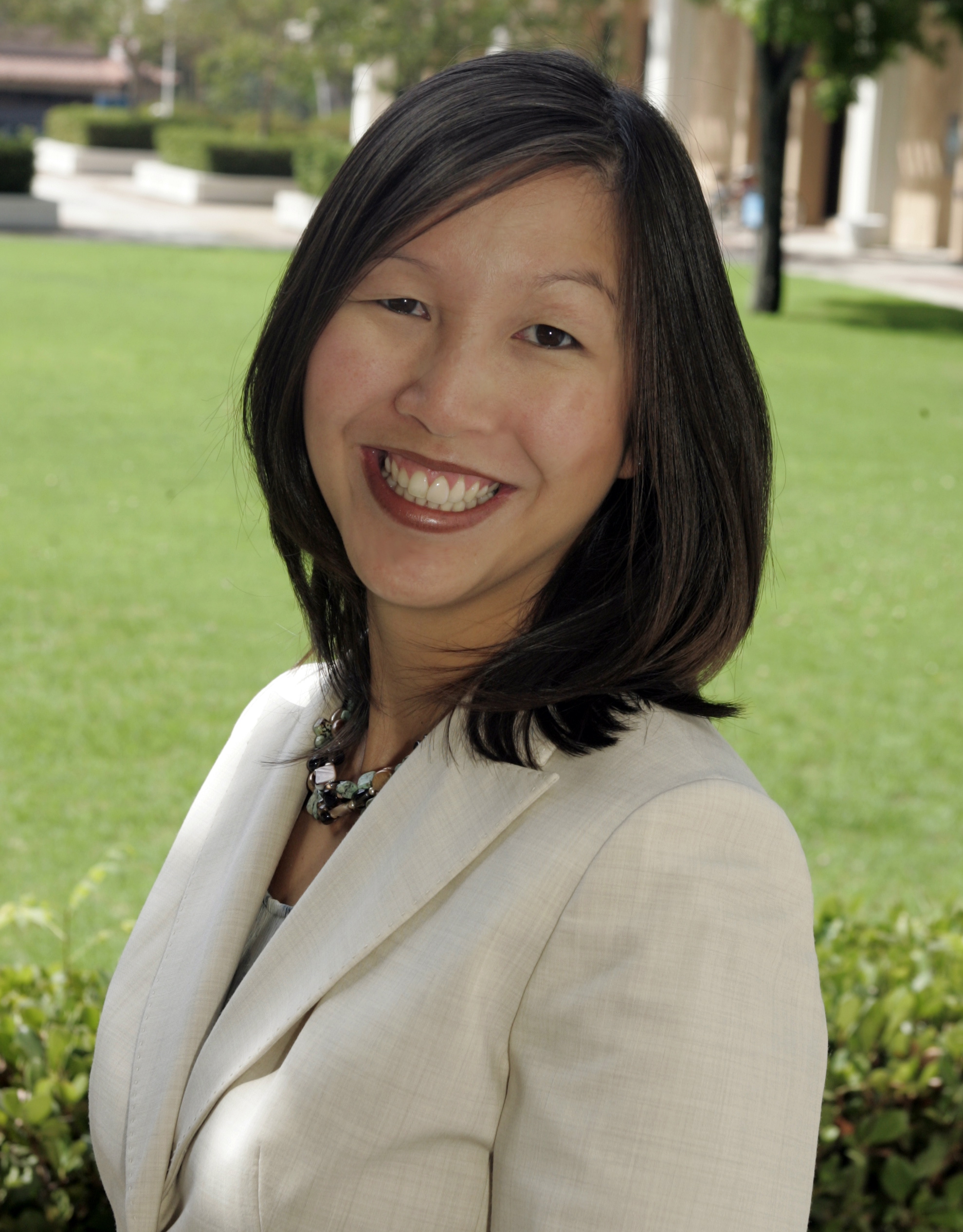
Celebrating Asian American and Pacific Islander Heritage Month by Grace Yia-Hei Kao

“Did you know that…the Asian population grew faster than any other race group in the United States between 2000 and 2010…[and that] Chinese is the second most widely spoken non-English language in the country (behind Spanish)”?

Continue reading “Celebrating Asian American and Pacific Islander Heritage Month by Grace Yia-Hei Kao”

Abuse of Power in the Catholic Church: Undoing Almost Fifty Years of Progress – Part I, by Michele Stopera Freyhauf

“Now the Vatican says that nuns are too interested in “the social Gospel” (which is the Gospel), when they should be more interested in Gospel teachings about abortion and contraception (which do not exist).  Nuns were quick to respond to the AIDS crisis, and to the spiritual needs of gay people—which earned them an earlier rebuke from Rome. They were active in the civil rights movement.  They ran soup kitchens.” —  Roman Catholic Women Priests (via Facebook)

I once had a conversation with my New Testament Professor about the issue of women ordination.  He was optimistic and thought there might be a possibility that change was in the air – that was six years ago.  The basis for his statement had to do with language.  Of the journals and articles read, he felt the language used was more inclusive and that once people adjust to this discrete change in gender inclusive language, change for women in the Church can come.

He was right about change coming.  The result was not equality and ordination for women, but an attempt to silence and force these women back into their habits and cloisters. Continue reading “Abuse of Power in the Catholic Church: Undoing Almost Fifty Years of Progress – Part I, by Michele Stopera Freyhauf”

A Semester of “Gendering Mormonism” by Patrick Mason

Readers of FAR have been treated to a number of posts over the past few months from members of the “Gendering Mormonism” class I taught this semester at Claremont Graduate University.  I was fairly apprehensive in offering the course.  For one, I’m not a scholar of gender, gender studies, feminist theory, feminist theology, queer studies, queer theology, or anything related—I’m a historian of American religion, and most of my training to that effect was about the white guys in American religion (most of whom, you’ll be shocked to learn, weren’t exactly feminists).  I have also spent some time in international peace studies, where I got a crash course in issues of gender justice.  But I entered this course as a relative novice.  This is one of the fun things about being a member of a graduate faculty—as a professor I don’t have to pretend to be the fount of all wisdom all the time, and I learn a lot from students who are often more expert in a particular field than I am. Continue reading “A Semester of “Gendering Mormonism” by Patrick Mason”

Home At The Margins With My Sisters By Xochitl Alvizo

My faith is in living and being shaped into the divine way of life that happens at the margins, with others who also see that a new world is needed and are willing to participate with one another in creating it.

I wasn’t always a student of theology – obviously. So the summer before I started my masters program at Boston University, I spent my days reading primers in theology. As I read, I started to notice a trend; chapter by chapter, authors would discuss a specific theological topic or doctrine and toward the end of the chapter would usually add, almost as if an afterthought, the critiques or insights from feminist theology regarding the particular theological doctrine or theme being discussed. Even back then, before feminism had even had the chance to seep into my bones, I wondered why feminist theology, along with the other liberation theologies mentioned, was always presented as an afterthought, a footnote, clearly not as important as the theological perspective from which the authors happened to be speaking. I knew though, even from my first reading of these feminist theological perspectives at the margins of these primers, that feminist theology rang true and was important to me; what I didn’t know or understand was why it didn’t seem to shape “mainstream” theology in a central way but was instead relegated to afterthoughts by the authors of these primers. Continue reading “Home At The Margins With My Sisters By Xochitl Alvizo”

The Boldness of Grace Ji-Sun Kim by Grace Yia-Hei Kao

“The Grace of Sophia is an openly ‘syncretistic’ work.”

Continue reading “The Boldness of Grace Ji-Sun Kim by Grace Yia-Hei Kao”

Re-Imagining Resurrection in Light of The Hunger Games by Tiffany L. Steinwert

Love is defiant. In a cruel world of violence and vengeance, love is the ultimate rebellion: the only thing that can beat back the forces of death and destruction.

It is an interesting coincidence that when both Jewish and Christian communities were rehearsing our respective salvation narratives, the world outside of synagogues and congregations was consumed with the story of The Hunger Games, a young adult novel turned Hollywood hit. This trilogy chronicles the coming of age and struggle for freedom of Katniss Everdeen, a 16 year old citizen of the post-apocalyptic nation of Panem.

As we in the Christian tradition journey through the Easter season, the dystopic world of the Hunger Games invites us to re-imagine resurrection in light of a crucified world.

We first meet Katniss as she sets off for the annual Hunger Games, a state sponsored television show, a cross between the pseudo-reality shows of Survivor and Fear Factor and the very real, ancient Roman gladiator battles. Invented by the Capitol as a form of perpetual discipline and punish for a past rebellion of the 12 (once 13) districts, the Games require each district to send two children, or tributes, to star in a live broadcast battle in which the adolescent scapegoats kill one another until only one remains.

There is a reason why our nation has been captivated by this tale and it is not because it is so fantastical that we cannot imagine it. Continue reading “Re-Imagining Resurrection in Light of The Hunger Games by Tiffany L. Steinwert”

1972: Can We Talk? — Looking for Spaces to Share by Lisa Clayton

“Why do you care what God says?”

““Don’t you want to be liberated?”

“How can you be serious about being a Mormon?”

Those were a few of the questions I fielded the year I, a devout Mormon, worked as an intern at the University of Utah’s new Women’s Resource Center.  As I studied at the “U” in the early 1970’s I encountered second wave feminism and its brand of secularism that challenged the prevailing Mormon-centric environment.

I was introduced to feminism in workshops at the newborn Resource Center, and as an intern I helped plan and put on its inaugural women’s conference.  The women there were excited and exciting.  They were exploring feminist ideas during a very heady time for college women. Continue reading “1972: Can We Talk? — Looking for Spaces to Share by Lisa Clayton”

The Need for a Positive Counter-Narrative of Religious Involvement in Feminism by Ivy Helman

I’ve admired JC for years.  That’s Joan Chittister, OSB the Benedictine nun of course.  I first saw her speak when I was in graduate school and she visited Yale.  I’ve also read a number of her books.    Her life is an example of how religious people support feminist ideals.    There is a story in Beyond Beijing: The Next Step for Women: A Personal Journal that I would like to share with you

Chittister began her historic journey on the Peace Train to the UN Conference on Women in Beijing in 1995.  As she  entered a conference room to register as a Peace Train participant, she was handed a large manila envelope.  To her surprise it was filled with condoms. At first, she thought that the woman who handed them to her meant to hand them to someone else.  However, Chittister was told (quite emphatically according to her) that she should distribute the condoms to the health workers she encounters while on the train and in the small towns she visits along the way to Beijing.  Eventually after much thought, Chittister decided to do just that and stuffs the manila envelope into her backpack.  Trying to find some humor in what she considered an awkward situation for a nun to be in she remarked, “Now all I have to do is to try not to die in front of some bishop with condoms in my backpack.”

My first reaction to this story is to laugh along with her.  I am also struck by her thoughtfulness to share the story publicly.  She could have been given the envelope, quietly distributed the condoms and then never told a soul.  But, no.  She includes the account of this feminist action she undertook in her book for the world to read.  What an amazing amount of courage and integrity this woman has! Continue reading “The Need for a Positive Counter-Narrative of Religious Involvement in Feminism by Ivy Helman”

Presumed Guilty by the Sin of Silence: U.S. Nuns, Network, and The Congregation for the Doctrine of the Faith by Cynthia Garrity-Bond

In 1965, the Council document Perfectae Caritatis, Decree on the Adaptation and Renewal of Religious Life, encouraged women religious to situate themselves and their vocations in the social milieu to which they belonged.  Each religious community adjusted rules and customs to accommodate the needs and demands of particular ministerial vocations. For those communities that embraced Perfectae Caritatis entered into a complete paradigm shift in thinking that changed forever how they understood themselves and their chosen vocations. I recall vividly the morning, when, in 1968, Sister Mary DePatzie entered our classroom clad in a shorter habit and dress revealing the startling fact she 1) indeed had brilliant, beautiful red hair; and 2) rather shapely legs even in her sensible shoes.  Continue reading “Presumed Guilty by the Sin of Silence: U.S. Nuns, Network, and The Congregation for the Doctrine of the Faith by Cynthia Garrity-Bond”

Feminists Be Silent! Making a Stand in Solidarity with our LGBT Friends Against Bullying and Harassment By Michele Stopera Freyhauf

“A Day of Silence” occurs tomorrow, April 20th.  Created in 1996, University of Virginia students wanted to raise awareness of the bullying and harassment of issues that LGBT students faced on campus.  Since then, A Day of Silence makes a statement against those who have tried to silence LGBT teens and young adults in school through harassment, bias, abuse, and bullying. Participating students, led by GLSEN, will hand out cards that read the following:

“Please understand my reasons for not speaking today. I am participating in the Day of Silence, a national youth movement protesting the silence faced by lesbian, gay, bisexual and transgender people and their allies in schools. My deliberate silence echoes that silence, which is caused by harassment, prejudice, and discrimination. I believe that ending the silence is the first step toward fighting these injustices. Think about the voices you are not hearing today. What are you going to do to end the silence?”

Family Picture (wikipedi.com)
Family Picture from wikipedia.com

The issue of bullying LGBT teens resonated with the world when Tyler Clementi took his life in 2010 after his roommate secretly transmitted via webcam Tyler’s sexual encounter with someone of the same sex. Tyler’s suicide brought national attention to the issue of bullying and harassment that LGBT people face.  To my chagrin, while writing this article, another victim fell.  Kenneth Weishuhn, Jr., a 14-year-old gay teen, committed suicide because of the intolerable harassment and bullying he dealt with at school.

To really understand the magnitude of this issue, I wanted to examine the statistics surrounding bullying. The numbers are staggering. However, when adding the LGBT component to that same teen, the numbers escalate.  Continue reading “Feminists Be Silent! Making a Stand in Solidarity with our LGBT Friends Against Bullying and Harassment By Michele Stopera Freyhauf”