

 I am all for the critical deconstruction of Disney Princesses, especially since now I see more of a commercial push for them as a collection than when I was growing up in the late 80’s. However, I too had a favorite princess growing up, Ariel from The Little Mermaid. I lived next to the ocean and it made sense that she would be the most relatable Disney character to a Puerto Rican 5-year-old at that time; a character like Moana was not yet in site to appeal to this isleña.[1] I remember going to the beach every week and hoping to find a fish or a seagull that could talk. What drew me into the film was her story and the whimsical animal characters, not particularly the “finding prince charming” fairytale.
Recently, as more modern and independent female characters continue to make their Disney debut, I hear people refer to Ariel as the worst princess of them all. ¡Ay bendito![2] Poor Ariel is always critiqued and looked down on for giving up her voice for a man. But in reality she was infatuated with humans and wanted to be “part of [that] world” long before she met Eric. She was an explorer, a questioner and as naïve as we all can be sometimes when we set our hearts to follow a dream. Regardless, she wanted more! Continue reading “Ariel, just fighting to get above water…by Yara González-Justiniano”

 About 5 years ago, I began a consistent yoga practice. Right around the same time, I started a PhD program in Women’s Spirituality at the California Institute of Integral Studies where I eventually wrote my dissertation on Women’s Spiritual Leadership. Throughout my studies, I realized that the path of the Divine Feminine is an intricate journey that accentuates the mind, body, soul connection. The yogic path does the same. In late 2018, I enrolled in an intensive 5-week 300-hour yoga teacher training in India where I continued my spiritual explorations. Hindu culture reveres the Divine Feminine and Divine Masculine and yoga is viewed as a pathway into God/dess through the body. Here’s the first part of the story…
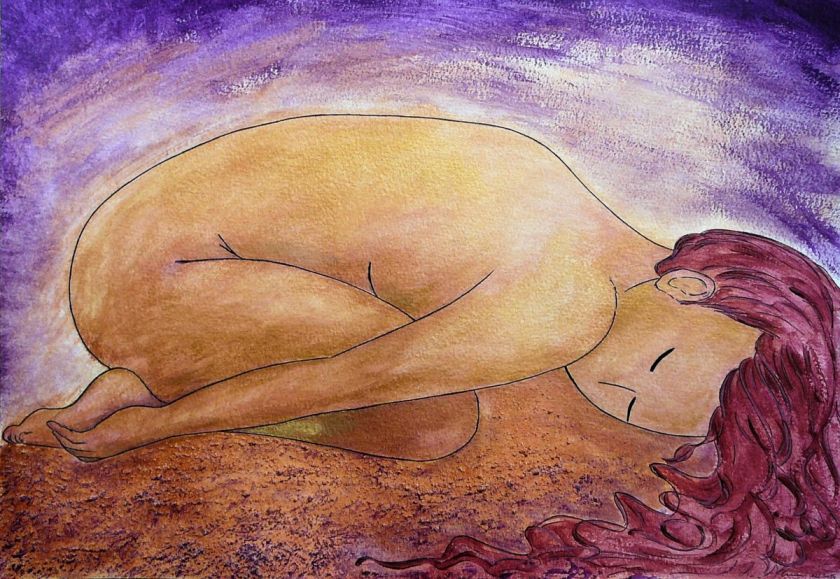



 Though represented by its detractors as an incursion of paganism into Christianity, and presented as an integrally and intrinsically Christian phenomenon by its supporters, the truth about the Re-Imagining Conference and movement is that it was a product of a wider feminist awakening. The critique of patriarchal religions that emerged in the academy and in churches and synagogues in the late 1960s and early 1970s was part of the emerging feminist uprising. The feminist movement placed a question mark over all patriarchal texts and traditions, secular and religious, and as such was beholden to none.
