Carol P. Christ’s Legacy: Women And Weeding, The First 10,000 Years* by Carol P. Christ

Moderator’s Note: We here at FAR have been so fortunate to work along side Carol Christ for many years. She died from cancer in July, 2021. Her work continues through her non-profit foundation, the Ariadne Institute for the Study of Myth and Ritual and the Goddess Pilgrimage to Crete. To honor her legacy, as well as allow as many people as possible to read her thought-provoking and important blogs, we are pleased to offer this new column to highlight her work. We will be picking out special blogs for reposting. This blog was originally posted February 10, 2014. You can read it long with its original comments here.
Mary, Mary, quite contrary, how does your garden grow? With silver bells and cockle shells, and pretty little maids all in a row.

From the beginning of horticulture about 8000 BCE or earlier to the present day, weeding has been women’s work. Women, who were the gatherers and preparers of food in traditional nomadic societies, no doubt were the first to discover that seeds dropped at a campsite one year sometimes sprung up as plants the next year. When this discovery was systematized, agriculture was invented, and human beings began to settle down in the first villages and towns.

Continue reading “Carol P. Christ’s Legacy: Women And Weeding, The First 10,000 Years* by Carol P. Christ”

The Patriarchy of Ki Tisa and a Call to Reimagine Divinity by Ivy Helman.

This week’s Torah portion is Ki Tisa, Exodus 30:11-34:35.  Its events revolve around the theme of creation, destruction, and recreation.  From a feminist perspective, it is quite clear that this cyclical process is a result of a patriarchal understanding of the divine as jealous, distant, and rage-filled.  

Ki Tisa begins soon after the Israelites have been delivered from Egyptain slavery.  This delivery creates a new people devoted to this divine liberator.  Yet, Ki Tisa starts with both that deity and their leader, Moses, nowhere to be found. So, what do the Israelites do being in such a vulnerable spot?  They create a golden calf in order to have a spiritual connection to something.  

Continue reading “The Patriarchy of Ki Tisa and a Call to Reimagine Divinity by Ivy Helman.”

From the Archives: Women’s Bodies and the Bible by Janet Maika’i Rudolph

Moderator’s note: This marvelous FAR site has been running for 10 years and has had more than 3,600 posts in that time. There are so many treasures that have been posted in this decade that they tend to get lost in the archives. We are beginning this column so that we can all revisit some of these gems. Today’s blogpost was originally posted May 20, 2019. You can click here to see the original comments.

Trigger Alert:  The bible on its face is quite violent to women.

Amidst the ugliness that is American politics in general and abortion politics specifically, I began to look for guidance to understand what is happening. I ended up pulling out two books that I read long ago. The first is Woe to the Women-The Bible Tells Me So by Annie Laurie Gaylor. Gaylor, in turn, was inspired by the work of Elizabeth Cady Stanton in her The Women’s Bible which was originally published in two parts (1895 and 1898).

I had forgotten how inspired I have been by both books. Together, they motivated me to begin looking at how the bible is a foundational paradigm of our culture. I started researching how translations have been altered from original meanings. I have already written a few blogs about how the representations of Eve have been changed to strip Her of the roots of Her original power. Take a look here and here.

Continue reading “From the Archives: Women’s Bodies and the Bible by Janet Maika’i Rudolph”

To Nurse at the Same Breasts: Muslim-Jewish Kinship in Literature and Life by Joyce Zonana

It is tempting to read these recurring images of milk twins in Arab-Jewish literature as no more than a symbol, albeit a powerful one, of the profoundly intimate “brother- (and sister-)hood” of Jews and Muslims in the  pre-partition culture of the Middle East and North Africa.

But the image of “milk twins” is much more than a metaphor or a symbol: it represents a reality. For it seems that many Jewish and Muslim women, living side by side as they did, had in fact regularly nursed one another’s children.

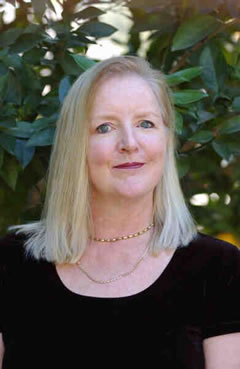
Joyce Zonana. headshotTobie Nathan’s panoramic novel about Jews and Muslims (and Christians) in early twentieth-century Egypt, A Land Like You, revolves around one central image: two infants—one Jewish, one Muslim; one male, one female—peacefully nursing at the breasts of a young Muslim woman, Oum Jinane (“Mother Paradise”).
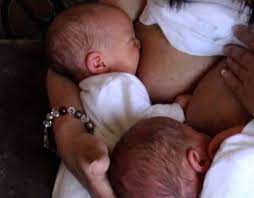
After the birth of her long-desired daughter Masreya (“The Egyptian Woman”), Jinane travels from her poor Muslim neighborhood to a poor Jewish neighborhood to help another young mother whose long-desired infant son is languishing because she has no milk.  “It’s a miracle, a great miracle,” the Jewish boy’s relatives declare:

images

Never had any neighborhood in Cairo been so excited by a baby’s nursing. Until bedtime, the child nursed three more times at the breasts of abundance. He took hold of one nipple, little Masreya  another, and the two children’s hands sometimes touched. You would have thought they were two lovers entering Paradise as they held each other’s hands.

Continue reading “To Nurse at the Same Breasts: Muslim-Jewish Kinship in Literature and Life by Joyce Zonana”

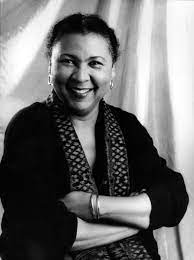
In Memoriam: bell hooks by Elizabeth Ann Bartlett

In a world where the words of black women writers, even our very names are often soon forgotten, it is essential and necessary that we live through writing and teaching the words of our great and good writers, whose voices must no longer be silenced, even by death.[i]

                                                                                    – bell hooks

On December 15, 2021, the world lost the great feminist theorist, teacher, activist, and writer bell hooks.  As a white feminist theorist, I valued immensely the ways her work widened my partial perspective, challenged my blind sports, and gave me important viewpoints on everything from sexism, racism, classism, pedagogy, militarism, work, and parenting.   Her piece on feminist solidarity is the best I know — examining not just the ways we are divided by classism and racism, but also by sexism, addressing the very real and destructive ways that women undermine, abuse, and disregard each other, and how important it is to unlearn this with each other. She used the term “feminist movement,” rather than the feminist movement, knowing it not to be one thing, but rather a verb, a process of moving, changing, and transforming. Championing the power of coming to voice, she spoke truth to power, engaging in honest exploration of often difficult and divisive topics. It was this honest, liberatory voice that spoke throughout her work and made her voice so compelling, and so valuable.

Continue reading “In Memoriam: bell hooks by Elizabeth Ann Bartlett”

Women’s Speaking Justified: Reflections on Fell, Feminism and History by Liz Cooledge Jenkins

Moderator’s note: Today’s post has been paired deliberately with yesterday’s archival post by Mary Sharratt. Both pay homage to Margaret Fell in very different yet complementary ways.

In the conservative evangelical church world—a world I was deeply invested in for most of my twenties—people often spoke of Christian feminism as if it appeared for the first time in our generation, or maybe one generation prior. I’m not totally sure why I accepted this as true—but I did, for a long time. It wasn’t until seminary that I learned otherwise.

It turns out that the dream of full, real, felt equality for women within Christianity is a very, very old dream. The history of women in church is a great deal more complex than I had assumed, or been led to believe. Over the course of two thousand years of Christian history, women have fought for, and sometimes experienced, freedom to lead and minister and be fully human.

Continue reading “Women’s Speaking Justified: Reflections on Fell, Feminism and History by Liz Cooledge Jenkins”

From the Archives: I Am in Peace: the Ministry of Margaret Fell by Mary Sharratt

Moderator’s note: This marvelous FAR site has been running for 10 years and has had more than 3,600 posts in that time. There are so many treasures that have been posted in this decade that they tend to get lost in the archives. We have created this column so that we can all revisit some of these gems. Today’s blogpost was originally posted March 6, 2019. It is paired with a new guest post abut Margaret Fell which will be posted tomorrow. You can visit the original post here to see the comments.

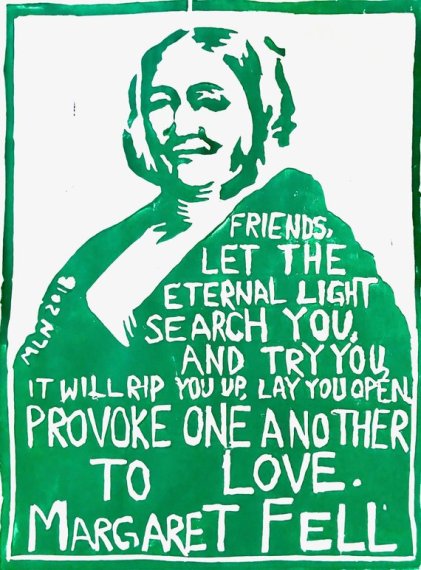
margaret fell

This linoprint of Margaret Fell can be ordered here.

Pendle Hill will forever be associated to the Pendle Witches of 1612 who live on in the undying soul of the landscape and its folklore and who inspired my 2010 novel, Daughters of the Witching Hill. Pendle Hill also gave birth to the Quaker movement.

In 1652, George Fox, a simple weaver’s son and cobbler’s apprentice turned dissenting preacher, wandered across England on a spiritual quest. When he climbed Pendle Hill, his revelation came to him—an event that would change both Fox and the world forever. He envisioned a “great multitude waiting to be gathered.”

Continue reading “From the Archives: I Am in Peace: the Ministry of Margaret Fell by Mary Sharratt”

Of an Anniversary, a Methodology and the Parshah Yitro by Ivy Helman.

This month’s blog post marks my 10-year anniversary writing for feminismandreligion.com (FAR) and my 122nd post.  I would just like to take a moment to acknowledge this milestone and thank the community for both its dialogue with me and support over these years.  I look forward to writing for FAR for years to come.

Speaking of dialogue and support, this post is structured in the form of an answer to Barbara Ardinger’s question on my last post.  She asked in what language I read Torah.  I found that intriguing.  To me, what I do is obvious.  Yet, for the reader, I have never explicitly walked through the steps of how I create these Torah commentaries.  In this walk-through, the reader is getting a rather unedited look into my process.

Continue reading “Of an Anniversary, a Methodology and the Parshah Yitro by Ivy Helman.”

Moving to Ursula: Dream Wisdom and the Sacred Feminine by Rabbi Jill Hammer, PhD

For the last seven years, I have been conducting research for my book Undertorah: An Earth-Based Kabbalah of Dreams, which is about to appear courtesy of Ayin Press.  On this writing journey, I’ve interviewed seventy dreamers, and have studied pre-modern dreams from texts of ancient Israel and ancient Sumer to dream accounts of women kabbalists and Chasidic masters.  I’ve also sat with my own dreams and their odd truths. Many of the dreams I’ve encountered express powerful visions of the feminine. I find these often odd and eerie visions particularly useful in expressing “the multiplicity of experiences of [the feminine]… rather than an imposed definition of those experiences…”[i]

Continue reading “Moving to Ursula: Dream Wisdom and the Sacred Feminine by Rabbi Jill Hammer, PhD”

What’s Your Feminism I.Q.? by Barbara Ardinger

Let’s begin a new year by finding out what we know about feminist history and goddess scholarship. Take this little quiz and find out where you stand as a Feminism/Goddess Scholar. (It’s okay to laugh at some of the choices. Laughing shows you’re paying attention.)

1. Who wrote When God Was a Woman?

            a. Ernest Hemingway                         b. Merlin Stone

            c. Sharyn McCrumb                           d. Isabel Allende

Continue reading “What’s Your Feminism I.Q.? by Barbara Ardinger”