Reclaiming Our Birthright of Joy by Mary Gelfand

Part 2 was posted yesterday

In my earlier piece on joy I wrote about collective joy—the kind that can be experienced in larger groups of people engaging in a shared experience that brings them a sense of joy and connection, like dancing in the streets. Here I’m talking about a more personal kind of joy, shared perhaps with a few people.  

Speaking as a woman and a feminist, I have often been conflicted about joy.  Sure I want to experience joy, but I often feel guilty about it.  How can I allow myself to feel the simple joy that beauty and cosmic connection can bring when there is so much suffering in the world? When I was finally able to accept that denying myself joy did not reduce the suffering of others and was harmful to me, I was able to move past the guilt trip induced by my Christian upbringing. I began to look for ways to bring more joy into my life, and discovered a mother-lode of wisdom from multiple sources. 

Continue reading “Reclaiming Our Birthright of Joy by Mary Gelfand”
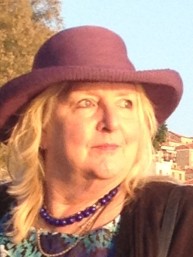
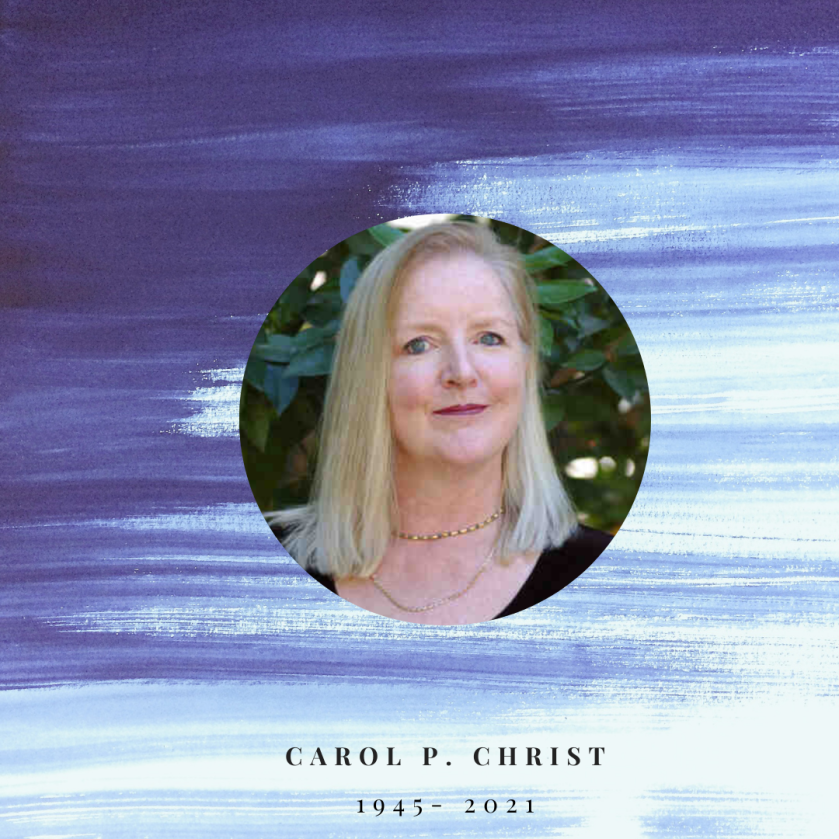
Legacy of Carol P. Christ: The Sacred Feminine or Goddess Feminism?

This was originally posted on January 25, 2016

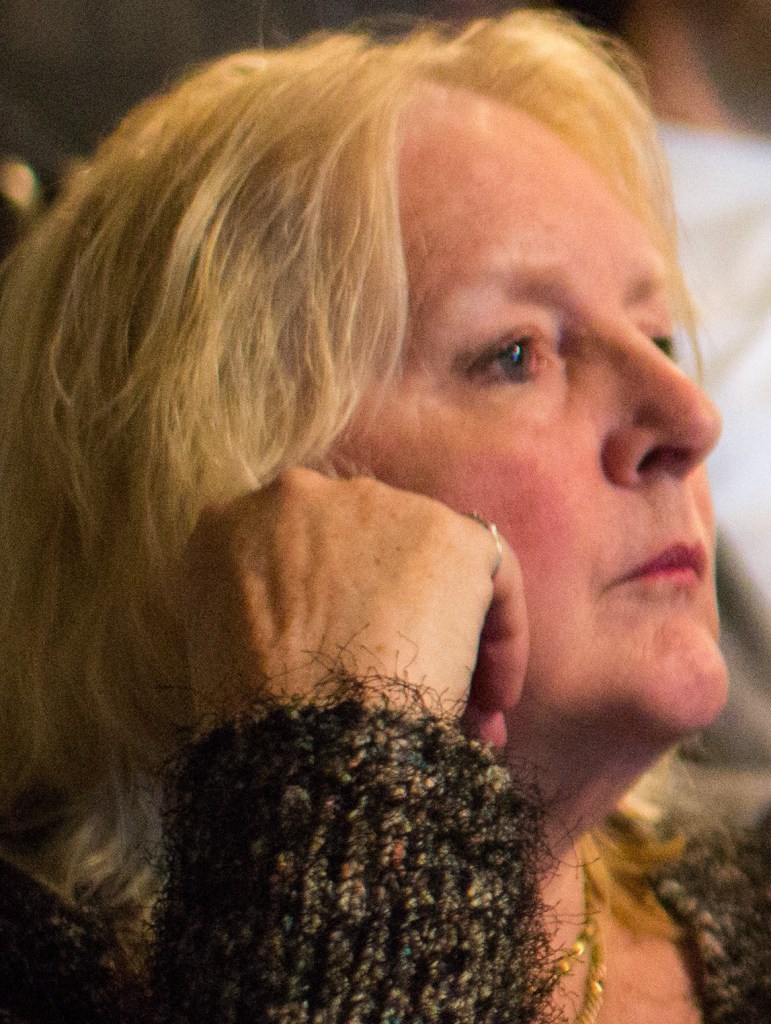
Carol Molivos by Andrea Sarris 2

In recent years “the Sacred Feminine” has become interchangeable with (for some) and preferable to (for others) “Goddess” and “Goddess feminism.” The terms Goddess and feminism, it is sometimes argued, raise hackles: Is Goddess to replace God? And if so why? Does feminism imply an aggressive stance? And if so, against whom or what?

In contrast, the term “sacred feminine” (with or without caps) feels warm and fuzzy, implying love, care, and concern without invoking the G word or even the M(other) word–about which some people have mixed feelings. Advocates of the sacred feminine stand against no one, for men have their “sacred feminine” sides, while women have their “sacred masculine” sides as well.

Nothing lost, and much to be gained. Right? Wrong.

Continue reading “Legacy of Carol P. Christ: The Sacred Feminine or Goddess Feminism?”

Legacy of Carol P. Christ: Sacred Marriage or Unholy Cover-up?

This was originally posted on November 7, 2016

Many women are drawn to the image of the Sacred Marriage—perhaps especially those raised in Roman Catholic or Protestant traditions where sex is viewed as necessary for procreation but nothing more, and who learn that the naked female body as symbolized by Eve is the source of sin and evil. In this context, the positive valuing of sexuality and the female body found in symbols of the Sacred Marriage can feel and even be liberating.

Jungians have claimed that the Sacred Marriage is an archetype of the wedding between the “masculine” and the “feminine.” Many women have been attracted to this idea as well. It “softens” the radical feminist critique of patriarchy and male dominance. Rather than “castrating” the “phallocracy” as Mary Daly urged, we can think in terms of the “marriage” of qualities traditionally associated with male and female roles. Women, it is said, can use a good dose of ego and assertiveness traditionally associated with the masculine, while men need to have their dominating rational egos tempered by feminine qualities like care and compassion.

Continue reading “Legacy of Carol P. Christ: Sacred Marriage or Unholy Cover-up?”

OMÓS DO SINÉAD O’Connor by Rev. Nóirín Ní Riain

Sinéad contacted me for the first time in 1995 asking me if I would teach her some Gregorian Chant. I was living in Glenstal Abbey at the time and she came to my home to spend a few days with me.

I was working on a doctorate then on the Sound of God and we had great conversations in between moments of teaching and at meal times. She was an extraordinary student. Sing her a phrase and she had it immediately; sing to her an entire chant, no notes taken, but she could sing it straight back to you. She loved Gregorian chant and in the afternoons, we would steal into the church and try out the morning’s learnings. One evening in particular I shall never forget. We went up to Compline – Night Prayer at 8.35pm. Afterwards, one of the community, Br. Ciarán, came down to us and Sinéad asked him if she could sing the hymn which the community had just sung once the monks had left. She did and indeed it became her favourite encore at many concerts she gave at that time.

Continue reading “OMÓS DO SINÉAD O’Connor by Rev. Nóirín Ní Riain”

Abundant Life Is for Women, Too by Liz Cooledge Jenkins

I lived in East Palo Alto, CA, for two years in my mid-twenties. During the first year, a man was killed down the street from my apartment building, in the parking lot of the building where my friends lived. I walked through that parking lot often, as a shortcut back to my own place from wherever I could find street parking. I didn’t know the man, but I knew people who knew him. His death was both disturbing and tragic. The neighborhood mourned. My friends and I got together and wrote a prayer for our community. The murder changed my experience of living there.

Continue reading “Abundant Life Is for Women, Too by Liz Cooledge Jenkins”

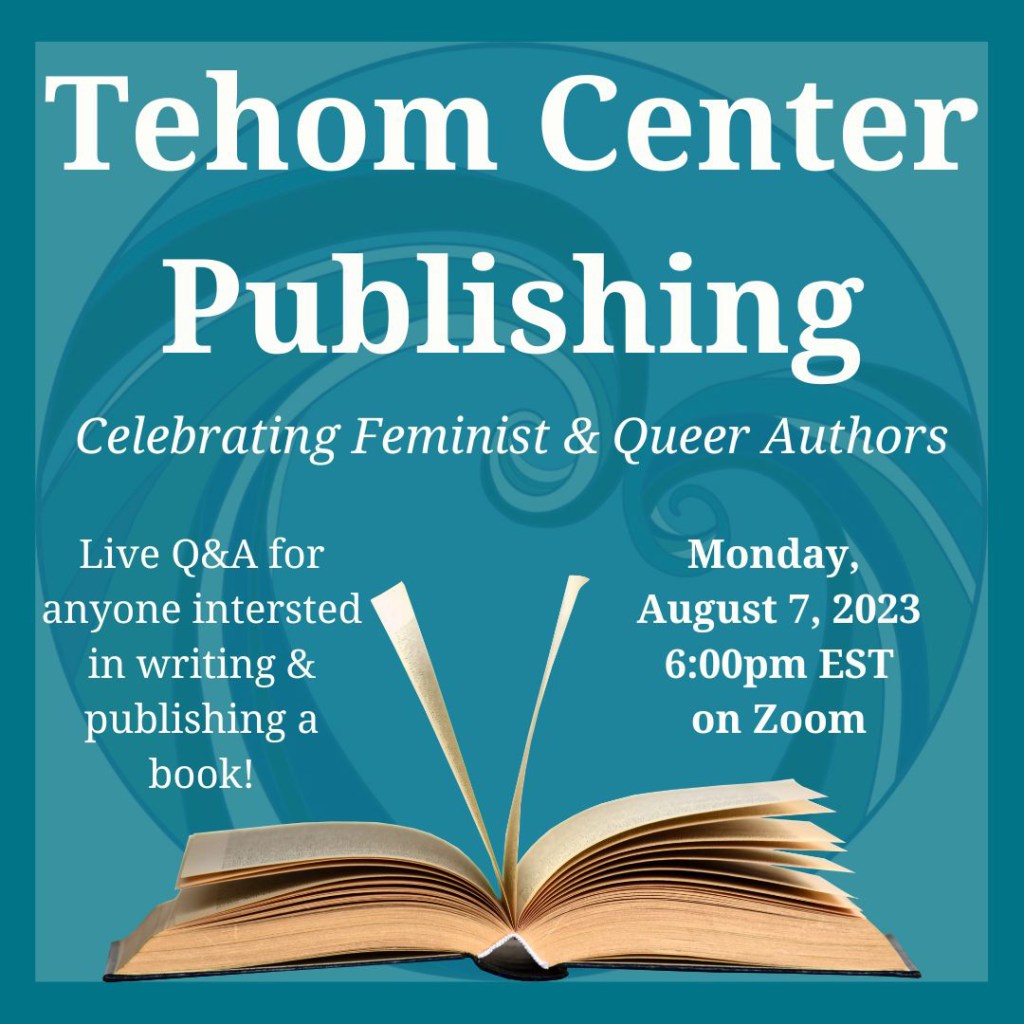
The World Needs More Feminist Books…And Why You Should Write One of Them by Dr. Angela Yarber

I believe more women—and particularly queer and/or BIPOC women—deserve to publish books. Let me explain why.

It was my first year of seminary. After majoring in religion in undergrad, I had a decent handle on feminist theology, but I hadn’t yet reconciled my strong, feminist upbringing with the faith tradition that held my ordination in their patriarchal hands. A seminary friend recommended I read Sue Monk Kidd’s Dance of the Dissident Daughter and everything changed.

This was twenty years ago. That one book helped me internalize the intersectional feminist theory that had always dwelled outside of me. Decades later, I find myself teaching in my own seminary classrooms and mentoring DMin students, requiring that same text, along with one of my own books, Queering the American Dream, and Christena Cleveland’s God is a Black Woman when discussing the power of feminist memoir in religious leadership.

Continue reading “The World Needs More Feminist Books…And Why You Should Write One of Them by Dr. Angela Yarber”

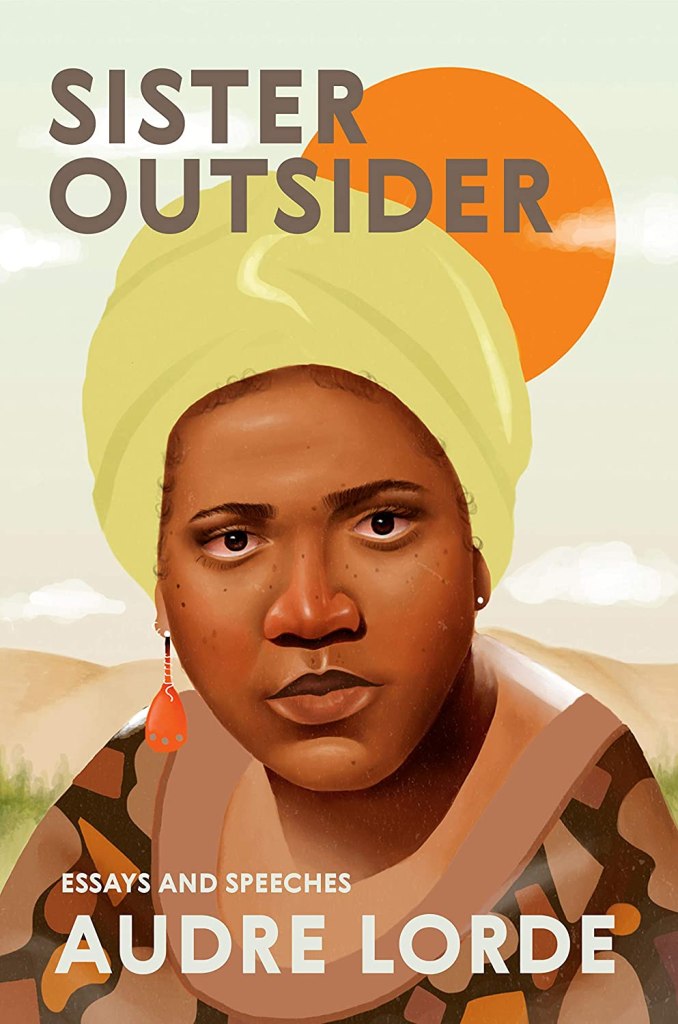
Legacy of Carol P. Christ: Remembering Audre Lorde and “The Uses Of The Erotic”

This was originally posted on March 18, 2013

Moderator’s Note: Carol’s original essay had links to the essay which are no longer active. The essay can be found in Sister Outsider.

I was  given a copy of Audre Lorde’s essay “The Uses of the Erotic” in my first year of teaching at San Jose State by a young white lesbian M.A. student named Terry.  It was 1978.  I was in my early 30s.  This essay came into my life and the lives of my students, friends, and colleagues at “the right time.”  It became a kind of “sacred text” that authorized us to continue to explore the feelings of our bodies and to take them seriously.

The second wave of the women’s movement was about to enter its second decade. We had already been through years of consciousness raising groups.  There we learned to “hear each other to speech” about feelings we had learned to suppress because we had been told they were not acceptable for us as women to have or to express.  Those early days of the women’s movement were one big “coming out” movement.  We were bringing our feelings and ourselves out of the closet.

Continue reading “Legacy of Carol P. Christ: Remembering Audre Lorde and “The Uses Of The Erotic””

From the Archives: Artemis As Artemisia: Ancient Female Spirituality & Modern Medicine by Stuart Dean

This was originally posted on November 29, 2015

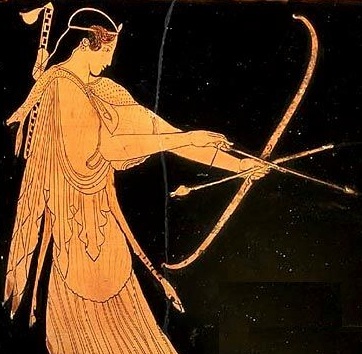
Detail of Artemis from a 5th century BCE Attic Vase

The 2015 Nobel Prize for Medicine was awarded in part to a Chinese woman (Tu) for her identification and isolation to treat malaria of a chemical known as Artemisinin.  The name of that chemical derives from the fact that it is found in varying amounts in the ‘family’ (technically, genus) of plants known as Artemisia.  The name of that family derives from its association with the goddess Artemis.

Because Tu’s work began in China in the 1960s it is understandable that even if she knew this about Artemisia (a term I use to refer to any one plant or all of the plants of that family) it would not have been a ‘careerbuilder’ for her to point it out to those for whom she was working.  It was bad enough that she was a woman.  At that place and time, however, if she had said or done something that could be associated with Western culture her name might not even be known today.


Continue reading “From the Archives: Artemis As Artemisia: Ancient Female Spirituality & Modern Medicine by Stuart Dean”

Legacy of Carol P. Christ: Argument from “Absence” and Absence of Dialogue

This was originally posted August 31, 2015

Recently in a conversation with a noted archaeologist and his male graduate student assistant, I proposed that the absence of war and the trappings of war, including images of larger than life-size warrior kings, suggested to me that we should not understand the social structure of ancient Crete on the model of patriarchal kingship. “Kings are always warriors,” I said, “yet there is no clear and convincing evidence of organized warfare in ancient Crete. And,” I continued, “because warrior kingship is not a ‘natural state,’ but one achieved through warfare and domination, kings must legitimate and celebrate their power through larger than life-size images of themselves. Such images were common in ancient Sumer and in ancient Egypt, but are not found in ancient Crete.”

The response I received was unexpected: both archaeologists seemed dumbfounded. “Is kingship always associated with war?” they asked. “Yes,” I responded, “this is a conclusion I reached many years ago while studying the cultures of ancient Greece and ancient Israel, and I have recently elaborated this theory in a series of essays on the blog Feminism and Religion ( See “Patriarchy as a System of Male Dominance Created at the Intersection of the the Control of Women, Private Property, and War”).”

Continue reading “Legacy of Carol P. Christ: Argument from “Absence” and Absence of Dialogue”

From the Archives: The Three Mothers: Feminine Elements and the Early Kabbalah by Jill Hammer

This was originally posted May 22, 2108

For over ten years, I’ve been teaching a work of early Jewish mysticism known as Sefer Yetzirah, or the Book of Creation.  There are widely differing opinions on the book’s origin and dating, but many scholars date it to the sixth century.  Its core concept can be described simply: the Divine used the Hebrew letters as metaphysical channels to create the different aspects of reality: the directions, the elements, the planets, the months of the year, and so forth.  Each letter is a channel by which God creates a unique form or entity, and meditating on the letters provides us with a connection to divine creative power. In its discussion of the letters, Sefer Yetzirah shows a strong connection to feminine imagery, and thus helps the later kabbalah develop its own link to the feminine.

Continue reading “From the Archives: The Three Mothers: Feminine Elements and the Early Kabbalah by Jill Hammer”