Dear [Insert Name Here],
Something died on November 8, 2016, and I do not think I’ll ever be able to get it back. I sat there, walking back to my house, in disbelief and utter shock and scared about the next 4 years of my life.
For weeks leading up to the election, I had found myself praying in the copy room at my work almost daily. I would sit there, silent and alone, having just read some misleading article or alt-right post from a family member that called Hillary Clinton the devil, and wonder: when did everything go so off the rails?
Although we’ll spend years trying to figure the answer to my above question out, for me, it is a question I have been asking myself ever since election night and specifically knowing how certain members of my family would, and ultimately did, vote. Continue reading “A Letter to Those I’ve Lost by John Erickson”
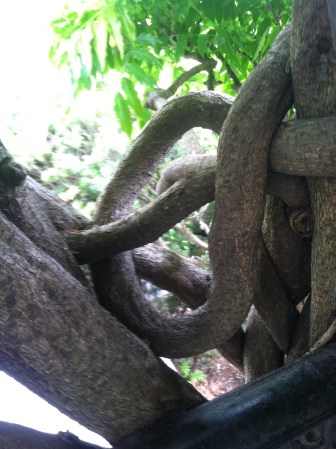 Isaac Luria, a Jewish mystic in the city of Sfat, told this tale of creation in the seventeenth century. It caught the Jewish imagination and has been wildly popular as a Jewish creation myth ever since. It captures our longing for wholeness and our experience of brokenness. It also offers a parallel with the Big Bang (a hot seed of light that expands into the universe as we know it) that many find quite compelling. I have loved this story for a long time. To me, it is reminiscent of the story of birth: an empty space that becomes full, then leaks out into the world as a new being. Yet as a feminist who is also committed to sustainability, as more news of our planet’s scorching rolls in, I find this myth is beginning to crack.
  When I was a little boy I was terrified that I would live to experience the end of the world. Whether it was by an asteroid, Y2K, or a zombie plague, I would make myself sick by picturing these horrible things that could befall me and my family. Although I was a precocious child, the crippling fear that would lurch its way up my stomach and into my head would sometimes make it impossible to sleep at night. While I like to think I grew out of that phase, I now sit here feeling that way again. I’m crippled with fear that the end of the world is at hand and there may be nothing we can do to stop it. How will the world end? No, it isn’t Lucifer himself coming from hell to bring in the end times, it is someone far worse, and his name is Donald Trump.
 Last month, I took a dear friend on a
  As a practicing witch, feminist, energy worker and a student of life, I am often puzzled as to why, in this day and age, we continue using the terms “masculine” and “feminine” as descriptive modifiers. What exactly does it mean when we call an energy masculine or feminine, anyway? While I understand that these are descriptors that generally address what are typical characteristics – why do we insist on being so vague, misunderstood and perhaps even, insulting, depending on who we are speaking to?
  I often recall the time many years ago when a relative sympathized with the fact that my kittie had been spayed. Pigou was one of five girl cats we had and rather than face the difficult task of having to find homes for all of their offspring, or worse, put their lives in danger for lack of adequate care, we decided to get Mama Cat along with her four daughters fixed. My aunt’s words still resonate in my ears: “That is so sad. After all, every woman nurtures a desire to be a mother.” I remember feeling terrible. My parents and I had just committed the grave sin of severing Pigou (along with her sisters) from her identity – her natural role of mother. As I have gotten older, my views on Pigou and her lack of choice in the whole matter have changed, although I acknowledge that it may remain an ethical issue for some. Much as I empathize, however, Pigou and animal rights are not the center of this post, although a related topic is – that of motherhood.
 ‘Someone needs to gather the stories, to keep the cauldron,’ said the late Goddess feminist artist
  I’ve been asked by both academics and Pagans what inspired me to pursue doctoral research on the British Goddess movement: of the many ways that people first
  My
My  Earlier this week, social media was all abuzz about the Pope’s investigation into restoring women to the diaconate. In the