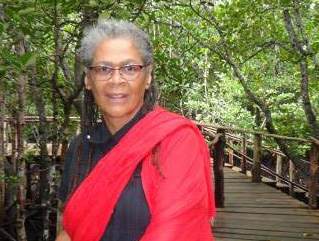
Does Masculine Have to Be the Opposite of Feminine? by Carol P. Christ

“Furthermore, like Obama, [de Blasio] projects a masculinity that is empathic and introspective — anathema to the patriarchal attitudes that dominate hierarchal institutions like the police.”

I wish the analysis that accompanies this quote had been mine, but maybe I should be glad that it comes from an insightful young man who goes by the name liamcdg. He argues that the real beef the New York police have with Bill de Blasio is his challenge to their definition of masculinity as dominance, or shall we say white male dominance.

As noted by liamcdg, in the NYPD version of reality, parents should teach children to comply “to comply with New York City police officers even if they think it’s unjust.” In terms of competing definitions of masculinity, the NYPD version is that men in power should be respected simply in virtue of their position, even if they are acting or appearing to act unjustly. In other words we should respect the powerful because they are powerful.

To be empathetic is to be able to put yourself in another person’s place, and in its literal meaning, to feel the feelings of another. In the recent public conversations about race and the police, both Obama and de Blasio have invited white Americans to put themselves in the place of a black man stopped by the police for little or no reason and to ask themselves how they would feel in that situation.

In so doing, liamcdg asserts, Obama and de Blasio were not only trying to explain the feelings of those on the other side of the racial divide, but they were also redefining masculinity. We all know that according to traditional stereotypes, the realm of feeling is the realm of women. And of course we also know that real men don’t cry. Yet what is happening to black men is enough to make anyone who feels their feelings want to cry.

The conflicts between de Blasio and the police and between Obama and a large segment of the older white male voting public may have as much to do with the challenge to white male privilege as it has to do with any particular event or issue. White male privilege involves a complex interconnection of race and sex. It is about the power that comes or is expected to come to one simply by virtue of being born into a white male body.

In recent weeks I have been asking myself why the police are so upset. After all there is room for improvement in any profession. Over the past few years I have also struggled to understand why some people object so strongly to the idea that women have a right to control their own bodies, to choose birth control or abortion. I am coming to the conclusion that the vehemence of the protest is rooted in the perception that the patriarchal edifice is crumbling.

Forty years ago, inspired by the feminist movement, men began to speak about redefining masculinity. This was easier said than done. It is so easy to accuse men who criticize male power as domination of being “sissies,” “girls,” or “gay.” Even men who might want to discuss the subject may be afraid of being labeled.

I say the fact that the NYPD is turning its back on de Blasio is one measure of how far we have come. I suggest that the NYPD recognizes that a different definition of masculinity and male power is being born right before their eyes. And it is this that they cannot bear to see.

We have been taught that feeling and feeling the feelings of others belongs in the feminine realm. What if it doesn’t? What if in the end male power and female power are much the same? And what if they both begin with empathy?

Perhaps we really have “come a long way baby.”

According to Heide Goettner-Abendroth, whose work I am fond of discussing on FAR, matriarchal societies defined the power of males and the power of females similarly.

What if Freud got it wrong? What if males do not have to differentiate themselves from their mothers by becoming “not like” women and girls? What if masculinity and femininity are not polar opposites? What if all any of us has to do is to learn to embody the qualities of those who nurture us?

We are beginning to glimpse a different world. Any thoughts on how to bring the NYPD and other older white males into a new world along with us?

Carol leads the life-transforming Goddess Pilgrimage to Crete (facebook and twitter) spring and fall–early bird discount available now on the 2015 tours.  Carol can be heard in interviews on Voices of the Sacred Feminine, Goddess Alive Radio, and Voices of Women.  Her books include She Who Changes and Rebirth of the Goddess and with Judith Plaskow, the widely-used anthologies Womanspirit Rising and Weaving the Visions and the forthcoming Turning to the World: Goddess and God in Our Time. Photo of Carol by Michael Bakas.


Reading “Women” by Laury Silvers

My friends make my life difficult. They make me see what I could not see before. Kecia Ali, Aisha Geissinger, Karen Ruffle and Kathleen Self taught me how to read for gender in the classical texts I use for my academic work. It’s a way of doing close readings by paying attention to the way gender shows up in the text. Aisha sat with me one afternoon and walked me through my own sources pointing out references to gender in the sources. She showed me how the sources I was reading used gender to express social norms. She kept asking me, “What work is gender doing in the text?”

Don’t laugh you been-reading-gender-forever-and-a-day people! Okay laugh. I was a bit slow to pick up this gender thing at first, but I caught up okay. Now I cannot unsee it. I see it everywhere. For instance, I was heading to the stairs at work after a long day and was brain tired. I saw this sign at the stairs:

I nearly kept walking past the stairs thinking for a second that it meant they were for people that society designates as having “male” bodies only. I actually thought that. Then I started laughing at myself. I took a picture and posted it on social media with a story complaining how my friends have absolutely ruined me! Continue reading “Reading “Women” by Laury Silvers”

The Season of Pilgrimage by amina wadud

amina - featureThis weekend those of us not performing the ritual pilgrimage, or Hajj, will enjoy the Festival of the Sacrifice of Eid al-Adha. Celebrated on the 10th day of the 12th lunar calendar month, it tends to creep up without warning, since we operate on the solar Gregorian calendar. The next day I jump a plane to Southeast Asia so my attention is already diverted.

The sacrifice here refers to Prophet Abraham’s botched contract with God over his first son. Muslims stick with the sheer biology that it was his first son, Ishma’il rather than Sarah’s first biological son, Isaac as recognized in Christianity and Judaism. It’s political, I won’t go there.

Instead I want to focus on this veneration of things masculine across all three Abrahamic faiths with the attention surrounding this particular patriarch. For example, I recall an Eid sermon which dwelt at length on Abraham circumcising himself in full adulthood without anesthesia. All I could think was, WHO should care about that? This particular manhood seems to excel over any reminder of his humanity, or of his devotion to monotheism in a community steeped in Idol worship. Continue reading “The Season of Pilgrimage by amina wadud”

Are You Ready for Some Football? by John Erickson

Although putting women in charge of drafting new policies that address the “woman problem” currently facing the NFL, it too reeks of the similar dismissive and patronizing actions women face when trying to obtain leadership roles in their religious traditions. Supercilious progress for the sake of progress isn’t progress and progress under the guise of silence is still misogyny. We need women in positions of leadership in both the NFL as well as in religious traditions. The culture of violence and silence will only continue, albeit with a Band-Aid firmly in place, holding the painful experiences and histories of women, long forgotten and often overlooked, until society values their rights just as much as the men leading the prayers and those that are being prayed for on Sundays across America.

John Erickson, sports, coming out.There is never a reason for physical violence.  There is never a reason to hit your partner or child to the point where they are unconscious or bruised.  There is never a reason to inflict violence against someone else, but apparently there are exceptions to these rules if you’re an NFL football player.

In my native state of Wisconsin, watching football on Sunday is synonymous with attending church prior to the game.  Watching football on Sunday is a cultural norm in many, if not all, different regions of the country where individuals, whether you like it or not, gather each Sunday to both praise and pray that your team ends up on top.
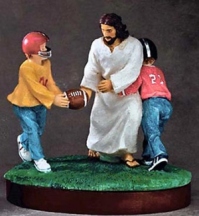
Football Jesus

In Wisconsin, you attend church with your family and head to your desired destination where you gather with friends and family to eat, talk about your life, and of course watch your local football team battle their weekly rival.  Although I am not much of a football fan these days, I have very fond memories of attending football games, watching them with my family and talking about the Green Bay Packers’ Super Bowl chances.  It was my time to both bond with the men of my family as well as catch up on the gossip the women would whisper back and forth to each other at the dinner table while the men were in the other room screaming at the TV.

Although I’m sure I will watch more games in my future, lately, all I do is cringe when I think about the growing violence that women and children face and have faced in the large shadow of an organization worth north of $9 billion dollars.

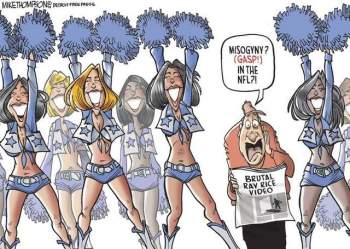
The biggest scandal to hit the news waves lately is that of Baltimore Ravens running back Ray Rice’s assault of his wife in an Atlantic City elevator.  Although Rice and the various other incidents regarding NFL players and violence is disturbing, the biggest problem facing the NFL isn’t just its treatment of women but its continual commodification of them as a disposable resource emblematic with the culture of violence that it has created.
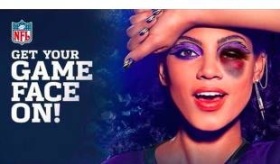
photo (1)

If you didn’t know, women make up an estimated 45% of the NFL‘s more than 150 million American fans and have, in recent weeks, become their most valuable resource and source of criticism.  However, after a long string of incidents stemming back from NFL teams underpaying cheerleaders to the Ray Rice incident, one needs to ask what the roles of women, if any, are outside of the disturbing images of the abused wife, hypersexualized cheerleader?  Is being dragged out of an elevator by your abusive husband the only way to get women’s issues addressed in the NFL by fans, league owners, and the NFL commission?

The roles of women in the NFL and religion have many similarities.  Aside from end zone celebrations where players praise God for his apparent direct role in helping them score a winning touchdown or certain players edifications as gods on Earth, women make up the crux of both NFL fandom and attendance but are responsible for the gatherings similar to the ones I, and many others, grew up with.
bilde

Although putting women in charge of drafting new policies that address the “woman problem” currently facing the NFL, it too reeks of the similar dismissive and patronizing actions women face when trying to obtain leadership roles in their religious traditions.  Supercilious progress for the sake of progress isn’t progress and progress under the guise of silence is still misogyny.  We need women in positions of leadership in both the NFL as well as in religious traditions.  The culture of violence and silence will only continue, albeit with a Band-Aid firmly in place, holding the painful experiences and histories of women, long forgotten and often overlooked, until society values their rights just as much as the men leading the prayers and those that are being prayed for on Sundays across America.

Ann Braude said it best in her foundational text Sisters and Saints that “if we want to understand the history of American women, we need to examine the religious beliefs and activities that so many have found so meaningful.” Without women, we wouldn’t have many, if not all, of the religions that are present throughout the world today and in case we forget, without women, we too wouldn’t have the millions of little boys who grow up being taken to and from practice by their mothers with the hope that they too could one day become the professional football players that fans scream and pray for.

Without women, there is no NFL and without women, there is no religion.  Kelly Brown Douglas said it best on this very blog when she stated, “It is the violence that violence creates.”  Although I agree with her, I would only add that while violence does indeed create violence, the real sin isn’t the violence itself but rather the silence that follows.

Let us pray that we will continue to not be silent and that we will rise up and fight for the millions of women (and men) each day who do not live in fear that their significant other’s multimillion dollar contract will not be reinstated but rather that they and their children may not see another day on this Earth.

 John Erickson is a Ph.D. Candidate in American Religious History at Claremont Graduate University.  He holds a MA in Women’s Studies in Religion; an MA in Applied Women’s Studies; and a BA in Women’s Literature and Women’s Studies. The LGBTQ and women’s rights movements, masculinity studies, gender theory, and the utilization of technology in forming communities and creating new teaching methodologies influence his research interests.  His work is inspired by the intersectionality of feminism, queer identity, LGBTQ history, and religious and sexual cultural rhetoric. He is a Non-Fiction Reviewer for Lambda Literary, the leader in LGBT reviews, author interviews, opinions and news since 1989 and the Co-Chair of the Queer Studies in Religion section of the American Academy of Religion’s Western Region, the only regional section of the American Academy of Religion that is dedicated to the exploration of queer studies in religion and other relevant fields in the nation.  When he is not working on his dissertation, he can be found at West Hollywood City Hall where he is the City Council Deputy and Chief of Staff to Councilmember Abbe Land. He is the author of the blog From Wisconsin, with Love and can be followed on Twitter @JErickson85

More than Individual Concerns by Elise M. Edwards

Elise EdwardsWell, the fall semester of the school year has begun. I’m teaching undergraduate classes in Christian Ethics and Bioethics this fall. I’ve designed my classes so that they are much more discussion-based than they have been in previous semesters and as a result, I’m noticing the things that challenge and confuse my students fairly early. I have readings from feminist, womanist, and mujerista thinkers in these courses, and unsurprisingly, some of my students don’t know what to do with the arguments feminists make about how we arrive at moral decisions and live them out. I hope that as we work through the essays together, my students and I learn from each other.

I assigned an essay called “Theology’s Role in Public Bioethics” by Lisa Sowle Cahill that was included in the Handbook of Bioethics and Religion edited by David E. Guinn (2006). Cahill, a feminist thinker, asserts that theology can be a conversation partner in public debate about bioethics and also an advocate for just, compassionate, and inclusive health care practices. Citing the work of another feminist, Maura Ryan, Cahill argues that ethical questions about reproductive technologies should be examined not only as individual dilemmas but as issues that exist within a social justice context. In the conclusion of the essay, she states, ”Specifically, one of [theology’s] most important and distinctive contributions to public discourse is a critique of the ways in which modern biomedicine and biotechnology have become luxury items marketed to economically privileged classes, while the world’s poor majority lacks basic health needs.” (55).

I suppose because I’ve been reading feminist thought, theology, and social ethics for years, some of the claims that my students see as radical and new are commonplace and go unquestioned by me. I expected some of my students to disagree with Cahill and Ryan’s particular positions about assisted reproduction. But I was surprised by students’ rejection of the idea that debates about reproductive technologies include MORE than individual considerations.

I’ve blogged on this site about reproductive rights before, and let me be clear that I do not think that the church, state, or any institution should have more governance over a person’s body than that person herself. But while respecting individuals’ rights to make health decisions for themselves, I also acknowledge that these “individual” decisions have broader social implications and meanings. This is one reason second-wave feminists have insisted that “the personal is political.”

Feminists routinely relate individual, “personal” acts and beliefs to larger constructs and the too-often asymmetrical power dynamics at work within them. This is why we are disturbed by video of a man who knocks his fiancée out and drags her unconscious body from an elevator and pop stars who gain commercial success by graphic displays and descriptions of sexuality that is objectifying or exploitative. And, in response to one of my students who wondered if feminist interpreters of religious texts go too far, that is why they point to patriarchy in a story that seems to be about devotion (referring to the Book of Ruth).

I’m grateful to my students for prompting me to explain some of these convictions that feminists hold. Certainly feminism is not monolithic. We feminists disagree on many issues including the scope of individual rights, the role of religion in public debate, and the extent of harm (or lack thereof) in media portrayals of female sexuality. But I believe we tend to agree that our personal decisions as well as our societal issues should be addressed with a consciousness that as humans we are beings-in-relation. Our conviction that we are connected and affected by each other lies behind our motivation to make the world a better place for women and girls and others who suffer from patterns of dominance.

What do you think?

Elise M. Edwards, PhD is a Lecturer in Christian Ethics at Baylor University and a graduate of Claremont Graduate University. She is also a registered architect in the State of Florida. Her interdisciplinary work examines issues of civic engagement and how beliefs and commitments are expressed publicly. As a black feminist, she primarily focuses on cultural expressions by, for, and about women and marginalized communities. Follow her on twitter, google+ or academia.edu.

From Evangelical Christianity to Feminist Evangelism by Andreea Nica

AndreeaI always knew I was a feminist, despite my lack of knowledge in the movement and philosophy growing up. I did, however, have the religious support of my family and community to be an Evangelical Christian. I knew all the right words, mannerisms, and behaviors to represent myself as the proper Christian woman. I went on mission trips abroad, wore purity rings, attended sexual purity retreats and church camps, prayed fervently, spoke in tongues (glossolalia), contributed 10 percent of my meager earnings, and above all, fell in love with God.
As a first-generation college student, I was thirsty for knowledge and ready to take on the world. Some of my favorite courses during my undergraduate career included: “Psychology of Women,” “Women, Gender, and Ethnicity,” and “Psychology of Sexuality.” My coursework in gender, sexuality, and the social sciences compelled me to pursue graduate studies in gender, culture, and media at a university abroad. My studies in gender theory and feminist philosophy, and how it intersects with religion and social institutions ignited my spirit.

As a result, my relationship with god suffered. My newfound feminist beliefs were not solely to blame, however. Rather, a variety of reasons contributed to my detachment from god and the Evangelical church which I explain in my post, “Leaving Behind My First Love.” My new feminist identity was the main driver for questioning my relationship with god. Everything from the male-dominated language and rhetoric used in the church, to the discrimination and prohibition of female pastors, to the stringent gender roles expected of congregants. Continue reading “From Evangelical Christianity to Feminist Evangelism by Andreea Nica”

Exuberant Noise by Safa Plenty

wpid-wp-1409462860041.jpeg

 She is the firefly
that lights up our nights,
her cherubed face,
and cheeky smile,
laying siege on our living spaces.

Her tiny form occupying,
our basement steps,
as she joyously serenaded us
in an infantile song,
spanglish laced with berber.

Her two energetic companions,
careening from couch
to table, then to floor,
laughing and screaming,
racing feet threading
across laminate floors. Continue reading “Exuberant Noise by Safa Plenty”

A letter to feminists…from a 70-year-old white guy by Peter Wilkes

Peter Wilkes - CopyHello everyone —

I’m new at this, so be gentle…  I’m also aware that some might believe this letter to be “mansplaining” (a term I just learned).  I trust it won’t be.

First, I’m not a theologian, and definitely not an academic.  I’m just a guy, like any guy you might see on the street.

But I believe that feminism – defined as true and honest equality – is the only thing that’s going to save this messed-up world.  I’m also convinced the biggest obstacle to this happening is organized religion.  However, most importantly, I’m distressed that other guys don’t get this.  So, before I leave this life, I’m determined to do something about that.

I didn’t always think this way but, in my fifties, as I was kicking and screaming and going down for the third time, I reached for Merlin Stone’s book, When God was a Woman.  Only then did things start to make sense.  I’ve always been told I’m a late bloomer.  I never realized how late “late” would be.

But really, it’s just logical that early man watching a child grow inside the body of a woman – then seeing it emerge from that same body – must have found something amazing, wondrous, and worthy of great praise and adoration.  And also worship, for something like that to happen was, and always will be, a true miracle.  Continue reading “A letter to feminists…from a 70-year-old white guy by Peter Wilkes”

Woman – The Essential Other by Natalie Weaver

Natalie Weaver editedI am writing from Oxford, England, where I am privileged to be staying this summer while attending an institute on the theme of “Otherness” in medieval Judaism.  Our readings have focused on a variety of topics, including: the development of Christian anti-Jewish polemics; the development of Jewish anti-Christian polemics; the development of medieval Christian visual representations of Jews; and the European medieval expulsions of Jews.  The well-planned program, sponsored by the National Endowment for the Humanities, has been illuminating for all – speakers and participants alike, I think.  It has also been, at least for me, an occasion of intellectual sadness.  It is not that I am surprised by how ugly polemics, pictures, and history can be.  It is that I feel myself coming to a deeper appreciation of the dangerous power dynamics in religion, driven by political and economic aims, that strike me as the underlying cause of practical conflict, yet cloaked as principally theological tensions.

If it were not manifestly obvious that procurement and retention of resources, goods, and position drive personal/familial commitments and tribalistic frameworks for meaning and ultimacy, one of the clues – at least for me – has been the repetition of charges and accusations across polemical perspectives.  And, what is more, one unmistakable commonality in the charges and indictments seems to be the accusation of effeminacy.  This accusation need not be directly stated, such as, “Your people think like women,” or the like.  It comes across in the overlap, speaking specifically concerning Christian writings, between discussions of women and discussions of Jews.  The phenomenon, though, is not unilaterally Christian.  Continue reading “Woman – The Essential Other by Natalie Weaver”

Hobby Lobby, Not Invited at the Spiritual Negotiating Table by Qumyka Rasheeda Howell

Q HowellSupreme Court Justice Ruth Bader Ginsburg said it best when she quoted Planned Parenthood of Southeastern Pennsylvania vs. Casey court case expressing her dissent on the Hobby Lobby decision made on Monday, June 30, 2014.

“The ability of women to participate equally in the economic and social life of the nation has been facilitated by their ability to control their reproductive lives.”

The Supreme Court ruled 5-4 in Burwell v. Hobby Lobby that closely held companies with religious objections can opt out of providing contraception coverage under the Affordable Care Act. The Supreme Court’s majority also rejected the Obama administration’s argument that for-profit companies cannot assert religious rights under Religious Freedom Restoration Act.  As the RFRA only refers to persons, closely held companies are designating themselves as persons in the case. Closely held companies such as Hobby Lobby are owned by one person or are family owned business and are not a publicly traded company. Justice Sonia Sotomayor agreed with Justice Ruth Ginsburg’s dissent that companies do not have such rights – publicly traded on not.

The Burwell v. Hobby Lobby was about asserting patriarchal power and retaining profit–not about religious freedom. The Obama administration argued that the contraception requirement was not a mandate because companies could have dropped their insurance coverage and offered their employees another insurance option. The truth to Hobby Lobby is they wanted to have the privileged advantage of tax breaks offered under the Affordable Care Act while securing more money by skirting the contraception requirement under the cloth of religious freedom. Continue reading “Hobby Lobby, Not Invited at the Spiritual Negotiating Table by Qumyka Rasheeda Howell”