5 Interesting Facts about Religion and Modern Society by Kile Jones

Kile

Following up on an older (and my most popular) post, 5 Interesting Facts about Women and Religion, I am going to draw your attention to 5 other telling facts.

1: Women clergy are blowing up in the Anglican Church!

In U.K. Church Statistics, 2005-2015, Dr. Peter Brierly shows that out of 9,615 Anglican ministers, 1,928 are women.  This is a radical spike since 2005.  That is 20.05% of all Anglican ministers.  This is about double compared to lead pastoral roles in U.S. Protestant Churches (see here).  The year of 2010 showed the first time women outnumbered men in Anglican ordination, and it continues to rise up to the present day.  And although they are growing as ministers, they are still blocked from becoming Bishops.  The vote for allowing female bishops at a General Synod in 2012 failed to get the 2/3 support BY 6 VOTES! Continue reading “5 Interesting Facts about Religion and Modern Society by Kile Jones”

Creating Space: Mosques Affirming All Bodies, Minds, and Hearts by Laury Silvers

Silvers, Bio Pic FRBlogIn my first blog for Feminism and Religion, I discussed the cognitive and embodied dissonance that some Muslims experience as a result of historically (not eternally) gendered ritual forms. I ended with a promise to share with readers the ways in which el-Tawhid Juma Circle mosques try to create space to break free of those forms. Our mosques affirm all human beings as spiritually, socially, and ritually equal and try to break down the social hierarchy of ritual and theological leadership by opening up a space for all bodies, minds, and hearts to lead and follow as equals among each other.

Continue reading “Creating Space: Mosques Affirming All Bodies, Minds, and Hearts by Laury Silvers”

Yes, You’re a Homophobe by John Erickson

Jesus loved sinners and Jesus would rather be dancing with me in West Hollywood on a Friday night than lugging through a swamp luring ducks into a trap with a duck caller made by a clan who think that my sexual actions are similar to that of an individual having sex with an animal.

John Erickson, sports, coming out.

To be able to walk down the street holding the hand of the one you love is a great feeling and an action that some of us aren’t able to perform without fear.

A line has been drawn in the sand between those who support gay rights and those who do not.  While some call it being on the “right side of history,” I simply now refer to it as not sounding and looking like a bigot in the halls of history and in the various books, Facebook posts, and Tweets that our children will one day read. Continue reading “Yes, You’re a Homophobe by John Erickson”

A Reflection on Feminist Theology and the Real Woman by Vanessa Rivera de la Fuente

 Vanessa Rivera de la Fuente. Feminism and TheologyThe XVII Conference of Latin American Religious Alternatives is being held this week in Porto Alegre, Brazil. This event will bring together scholars and researchers from across the continent to talk together about religion, integration, and identity. I will be presenting three papers, all about Islamic feminism. I am pleased to have such a space to discuss new ways of understanding the phenomenon of religion in Latin America and the role of feminism in Latin American religion.  I want to share some of my personal reflections regarding gender, feminism and religion with you today.   

It is true that today all so-called ‘major’ religions—Islam, too—are patriarchal and male minded. It would be a fall into denial to say that abuses in the name of religion do not have a concrete impact on the lives of many women around the world. While it is possible to differentiate between what the Qur’an says and the discourse of patriarchy on Islam, the reality is that it is this patriarchy that dominates our understanding of religion

The revealed messages have been used to reinforce gender oppression in bans on “women’s issues” from therapeutic abortion to driving a car. But we know these bans do not come from the holy books themselves, as the revealed messages can support a reading of oppression or liberation. The problems are the historical authority of sexist readings as criteria of truth and the incorporation of androcentrism as the axis in relation to the divine. Sexist readings and androcentrism both give rise to oppression and violence in the name of God.

Feminists have denounced these abuses over and over again. Many feminists say religions are patriarchal, so let’s leave them without feminist intervention. I think this is not enough. We need to recognize that the religious world is patriarchal. We must name and draw attention to women and their contributions to the development of religion. We must also remove the legitimacy and authority of the androcentric understandings of the spiritual, which have caused much damage throughout history. Feminism in religion is essential.

It is often said that feminists want to undermine the foundations of the faith. Who says this? The same people who justify the exploitation of human beings, the degradation of women, and wars in the name of a God whose message is peace, mercy and social justice. But I ask—is it so dangerous that women and groups historically segregated from society want to own their spiritual experiences and live them autonomously?

What kind of God is adored by those who oppose our approaching the Divine from a feminist point of view? Just listening to their diatribes is to know that it is misogyny and not piety that motivates their messages. Misogyny also lies behind the violence against women. And behind the violence lurks the fear.

Beyond the Female Believer

Patriarchy has silenced its fear and built an “ideal believer” to legitimize the control of women in religion. But feminists no longer want to remain silent and obedient. We are seek to respond by creating our own theologies.

However, even in feminist theology, heteronormativity is still present. It is a bias that still sees gays, lesbians, trans and queer people as “abnormal” outsiders. This approach validates the patriarchal ideas of “minority” and “marginality” regarding the male-female heteronormative assumptions that dominate the religious world.

Dismantling the patriarchy in religion is not only about making the feminine more visible in the mystical, historical, and experiential approaches to religion. We must also demystify and dismantle the axis of androcentrism and heteronormativity and the hold it has in the academy and the “mainstream”.

For example, more than once, sisters who call themselves feminists, have called me “whore,” “deviant,” and “immoral” for my queer understanding of gender roles and my critique of marriage as “half the Deen” [the Islamic idea that for women marriage completes their faith, which in Arabic is ‘Deen’], a replica of the romantic patriarchal discourse of the “other half” that is so damaging to the autonomy and the self-esteem of women in the real world.

This is a problem. Feminism in religion is not landing in the everyday lives of women. Feminist theology still speaks to a woman who is cis-gendered and heterosexual, who wants to marry and have children. Feminist theology is still quoting patriarchy.

The master’s tools will never dismantle the master’s house

The reality is that not all women in religious communities are heterosexual, not all heterosexuals wish to get married, and not all married woman understand their position in marriage as subordinate and complementary to the male.

Along with eliminating the patriarchal “revelations,” feminists who theorize regarding faith must be decolonized from the need to build another “perfect believer.” We should not assume an archetype of woman, as this exercise gives authority to patriarchy’s model of the female believer that imprisons women in destructive and limited dimensions with labels like saint, mother, and whore.

I think we must remove from women the roles that are supposed to make them proper “believers.” In fact, I think we have to destroy once and for all both the concept of “believer” itself and the category of “woman” as we know it in religion. Assessing the degree of spiritual development and the agency of the religious woman according to the degree of her functionality as a “Model” is NOT emancipatory, but is both limited and sexist. If there are “role models,” someone will always be outside the norm.

Instead, let us take over the theologies and feminisms, regain power over ourselves, and raise awareness in communities that feminism is not only a field of study and analysis but also an outlook on life. We can legitimize the authority of the feminist perspectives of religion, and commit sacrilege against the exemplary women and models that are imposed on us.  Let us not talk anymore about “Muslim women” or “Christian women” or “Jewish women,” but about ourselves as women.

Above all, and essentially, we must act on behalf of women of everyday, on behalf of those women who do not want to be “perfect believers,” but who want to be happy and fulfill their goals in a world that belittles them in many ways on a daily basis. Reasonable, imperfect, diverse and ‘under-construction’ women were created by God to be in this world as an expression of life and humanity.

Vanessa Rivera de la Fuente is a Writer, Mentor and Community Educator in Capacity Building for Grass Roots Female Leaders and Advocates. A Muslim Feminist who is an Independent Researcher of Gender and Islam in Latin America on Feminist Hermeneutics, Muslim Women Representations, Queer Identities and Movement Building. She blogs in Spanish at Mezquita de Mujeres, a site dedicated to explore the links between Gender, Religion and Feminism as well to Women from the Global South as Change Makers in their communities.

“Enlightened Sexism” and The Media: The Cultural Attack on Feminism by Michele Stopera Freyhauf

Freyhauf, Feminism, Religion, Durham, Old Testament, Blogger, Bible, Gender, Violence, Ursuline, John CarrollWhat is a feminist mother of four daughters to do these days?  Look at our media and how girls and women are portrayed to our daughters, teens, and young adults. Then take a look at how media portrays the face of feminism, promoting every negative stereotype out there.  As I scroll through the magazines, listen to songs on the radio, and watch the programming targeted at girls in junior high and up, I cannot help but ask the question – Is the media trying to destroy feminism?

While this introduction might sound drastic, much truth lies behind the questions.  One merely needs to look around and watch former Disney Star, Miley Cyrus, twerk and make lewd gestures with a foam finger while grinding against a man, almost twice her age, as he sings about the blurred lines of sexual consent. When I saw the news stories and yes, watched the video, I was utterly mortified and stunned.  Gloria Steinem, in a statement that seems to condone this behavior stated that Cyrus’ performance (actions) is not a new phenomenon, but a product of American culture.  Instead of looking at it through the lens of degradation and influence, she defended the young star by saying:

 “I wish we didn’t have to be nude to get noticed. But given the game as it exists, women make decisions.  For instance, the Miss America contest… the single greatest source of scholarship money for women in the United States.  If a contest based only on appearance was the single greatest source of scholarship money for men, then we would be saying ‘this is why China wins.’ You know?  But that’s the way culture is.  I think that we need to change culture, not blame the people that are playing the game that exists.”

When Cyrus’ actions are boiled down to being “nude to get noticed,”  and we accept this behavior by merely chalking her performance up to  culture – isn’t it time to change culture?  Continue reading ““Enlightened Sexism” and The Media: The Cultural Attack on Feminism by Michele Stopera Freyhauf”

The Purity Complex: Are Men Really Less Affected Than Women? by Andreea Nica

Andreea Nica, pentecostalismWomen’s bodies continue to receive an inexhaustible amount of attention. As a society, we have glorified, scrutinized, degraded, hypersexualized, underrepresented, and misunderstood the female body. Purity culture has orchestrated a movement around the management, perception, and regulation of women’s bodies. As a former Pentecostalist, I grew up knowing there was more focus on my body versus those of my  brothers in Christ. There was a bodily divergence between men and women that I did not fully comprehend but felt obligated to adhere to; the ideological basis of this difference was filled with much ambiguity.

Each time the church organized a sexual purity event and/or discussion, boys and girls were unfailingly segregated. I was always so curious about what was discussed in the boy’s group so I would ask my brother, Christian boyfriend, and male friends at the church to fill me in on the gossip. In my teens, I didn’t know how to perceive the information relayed to me. Looking back now, I am surprised at the discourse around purity culture and masculinity in the church. During my earlier years at college, I convened with the male pastoral leadership, and they confirmed the following main themes taught to men during sexual purity discussions. Continue reading “The Purity Complex: Are Men Really Less Affected Than Women? by Andreea Nica”

The Hot Seat by John Erickson

Being a man in feminism isn’t easy and that’s how it is supposed to be.

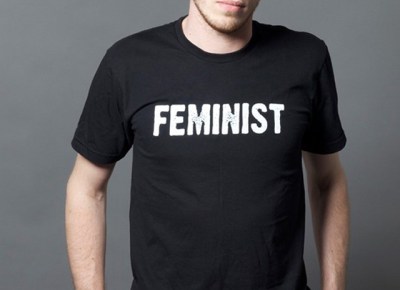
men_feminist_mainI’ve been thinking a lot about what it means to be a male feminist lately.  As the only man to be a permanent blogger on this very site until my colleague and friend Kile Jones came on board, I took my role, as a man in a traditional feminist (online) space very seriously.  Although the ongoing struggle to be a male feminist is one continually wrought with dialogues about power and positionality (amongst a host of many other topics), I am often conflicted when I see male feminists take advantage and destroy the hard work that many, specifically on this site and beyond, worked hard to build and defend.

Not wanting to reopen old wounds or start new online battles, men have been involved in feminism for quite some time.  From James Mott chairing the first women’s rights convention, to radical feminist Andrea Dworkin’s life partner John Stoltenberg, to Michael Kimmel and Michael Kaufman’s life long work to legitimize not only men in feminism but also what it means to be a man who works for gender equality, being a man in feminism isn’t easy and that’s how it is supposed to be. Continue reading “The Hot Seat by John Erickson”

Birth Warrior by Molly

editMollyNov 083“In this culture…a woman can be made to feel foolish for emphasizing the centrality of giving birth to her identity or her personal religiousness, her ‘womanspirit…’” –Stephanie Demetrakopoulos (Listening to Our Bodies)

After the birth of my daughter in 2011, I received a small package from a Birthing from Within mentor friend. In it was a sweet little t-shirt imprinted with the words, My Mama is a Birth Warrior. The words on the shirt surrounded a labyrinth image, which I love as a metaphor for birth and life

Written on the enclosed card was the following:

Imagine a tribe in which a woman is prepared for childbirth in the same way warriors are prepared for battle. Imagine a Ceremony for this woman before she gives birth, a grand send-off with holy songs and fire. Imagine a feast, prepared just for her.

Her tribe tells her, they say to her “Go to your journey, you have prepared. We have prepared you. If you fall from your horse once or a hundred times, it does not matter. All that matters is that you come back to us, that you come home.

Throughout your journey–your labyrinth of Great Love, Great Determination, Great Faith and Great Doubt—you rode on!

The Great Tribe of Mothers welcomes you back from your birth journey with honor.

Modeling her little t-shirt.

Imagine, indeed. After I read this note I reflected that I did feel I embarked on a mighty journey during my last pregnancy, I did pass through those Gates, and I did ride on. I AM a birth warrior!  Continue reading “Birth Warrior by Molly”

Adventures in Churchgoing by Elise M. Edwards

Elise EdwardsI am often greeted by warm smiles and handshakes–and sometimes even hugs–from churchgoers around me.  But I wonder if the friendly people would be so welcoming if they knew that I identify as feminist.

It’s hard being a feminist and visiting a new church.  I’ve recently moved to Texas from California and I’m looking for a church to attend.  There are many things I love about church: corporate worship, talks with people of faith, gatherings where friendships are built, and opportunities to serve and to learn. I also love to sing, and my not-ready-for-primetime voice would love to join a choir with and contribute to other people’s worship experience.

In my past, I’ve been a member (or regular attender) of churches where I felt welcomed and affirmed. Yet, I always feel defensive when I seek out new places to worship.  I question whether a church will be affirming to women and girls as whole selves – as embodied, thinking, feeling beings.  I mentally prepare myself to hear male imagery and language for God and I pray themes of male headship vs. female servanthood are not expressed.  I feel like an investigator seeking out clues to determine our compatibility.  It’s no wonder that I’ve recently heard several people compare visiting churches to dating.

Continue reading “Adventures in Churchgoing by Elise M. Edwards”

To Have and to Hold: Gay Marriage and the Religion Question

If a conservative religious traditions can’t give their mothers or sisters full equality, how can we expect them to give a GLBT individual the time of day?

John Erickson, sports, coming out.Outrage.  Anger.  Fear.  Hatred.  These are just a few of the words that flashed across my Twitter feed as I woke up on that fateful Wednesday, June 26 morning when the Supreme Court of the United States ruled that the Defense of Marriage Act (or DOMA) was unconstitutional and that supporters of Proposition 8, the hotly contested voter initiative in California that banned same-sex marriage, had no standing.   People were mad.  However, it wasn’t just the typical kind of mad that is associated with hatred, it was a type gay_marriage_81102178_620x350of mad that was met with impossible anguish because what I was reading and feeling was a result of one thing: there was nothing more they could do.

What does all this mean?  Questions from friends and family were filling up my inbox and although I wanted to take a moment to just hit “Reply All,” and input the words: Equality, I had to hold back and start to examine the notion that although equality may now be firmly on the proverbial table, there is still a lot of work to be done, specifically for gay marriage and those wanting to marrying inside the traditional church spaces they grew up in and not just the ones that have come out as open and affirming in recent years towards LGBT individuals. Continue reading “To Have and to Hold: Gay Marriage and the Religion Question”