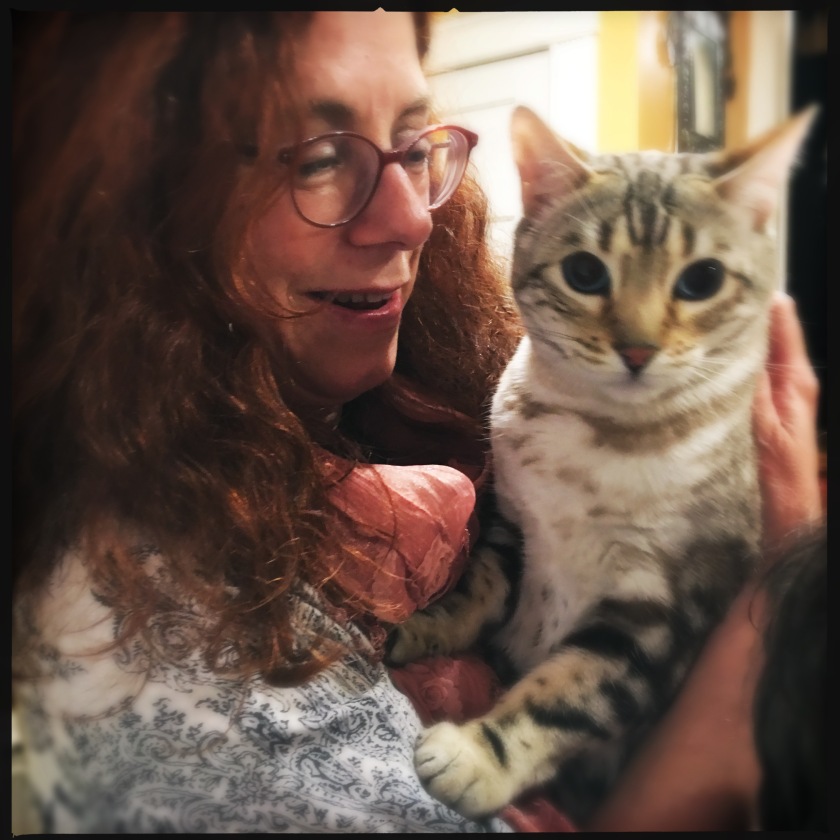
Mary shares an uplifting moment with a dear friend’s gorgeous cat. Photo by Kris Waldherr.
As a New Year rolls in, many of us make New Year’s resolutions, often based on the received perception that we are not good enough as we are. We look for ways to improve ourselves in terms of fitness, weight loss, and other measurable habits. And while these goals may be very worthy ones, in 2020 I’m turning my attention to something more subtle and fundamental to my basic well being–the company I keep.
Women have been socialized to be far too tolerant of people who diminish and undermine us. Whatever happens or however badly the other person behaves, we want to be seen as “nice” and not make a fuss.
We don’t always get to choose our relationships. If we work at a company, we will inevitably encounter conflict on some level with people whom we can’t so easily avoid. The same is true in co-housing situations and kinship groups.
But in our leisure time, we DO get to choose who we hang out with. And we need to pick our friends and companions with care.
A friend of mine who is a realtor gives the following advice to people who are moving to a new area and wanting to make friends and integrate in the local community: “Don’t hang out in the pub with the losers and the people who are always complaining. Join some group focused around positive activity like hiking or tennis or yoga. These are the positive people looking to do something good.”
I’ve noticed similar effects in groups I’ve belonged to in my local community. My writers group is a powerhouse of inspiration and support and always lifts me higher. The same is true for my yoga and meditation classes with Blair Read. These are completely uplifting and filled with positive people who sincerely want to be in harmony with others. People who have set their course on both physical health and spiritual liberation.
The biggest culprit for mean and negative behavior these days seems to be social media. For this reason, I have given up Facebook and Twitter to a large extent and only use it for book promotion and networking with other writers. However, I can still receive personal messages from Facebook “friends.” An acquaintance from the stable yard where I used to keep my horse sent me–apropos nothing–a nasty text message on New Year’s Day! At this time I was on vacation in Portugal, enjoying the time of my life, not even on the same landmass as this negative person. Talk about a wake up call to be more mindful of the company I keep.
So what’s up with negative people? Is the damage they cause all in our heads?
Author and life coach Lisa Romano says that when we are around negative, backbiting people, we must use the following mantra, “Hold on to your Self. Hold on to your Self.” Meaning our higher Self that can never be dragged down.
Narcissists and other negative people make up stories in their heads, then accuse you of that made up story. Then you feel, “Oh no, I must prove to her that’s not true!” No, you do not, according to Romano. We must not entertain their accusatory invented stories.
To have healthy relationships with people who support us, we must learn to detach from negative people, set boundaries, and love ourselves. If you feel like you’re being manipulated by someone, you probably are. Accept what you feel, feel what you feel, and decide what you want to do about it.
If you need to seek validation from others, then you tend to attract narcissists. Likewise, if you are an empath, you will attract them, because they lack empathy and want yours. They enjoy upsetting us because they need to feel they have power over us.
If someone keeps trying to undermine you until you have to struggle to trust your own perceptions, you are experiencing narcissistic abuse and need to distance yourself from this person. You absolutely need to listen to your perceptions and intuition to keep yourself safe. Your pain and disappointment are valid. Your anger is valid.
Romano believes that when we are around narcissists, they try to drag us down to their level of being and behaving. The core of the suffering we experience in these relationships is that we’ve been dragged down to a negative state of being that is not natural for us. We can’t change their behavior or raise their frequency. Being with a narcissistic person can bring us far away from who we really are. To survive in an environment ruled by negative people, we have to be in a state of perpetual anger, defensiveness, and (self)hatred that is ultimately soul-destroying.
This kind of environment damages our neural pathways. To heal ourselves, we need to break away from these people and see them for who they are. We need to surround ourselves by positive people.
Quarantine yourself from toxic people. Grow your own wings and soar with the true friends who lift you higher.
Cal Newport, author of the life-changing book, Digital Minimalism, offers a strategy for an “Analog January” to boost our real world connections with positive people.
Mary Sharratt is on a mission to write women back into history. Her most recent novel Ecstasy is about the composer Alma Schindler Mahler. If you enjoyed this article, sign up for Mary’s newsletter or visit her website.


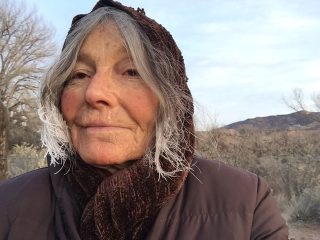 “Let me sing to you about how people turn into other things.” (Ovid)
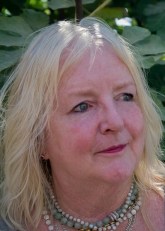 It is commonly accepted in American culture that children–boys especially–must go through a “phase” where they hate their mothers in order to grow up. We are told that the mother-child bond is so intense as to become suffocating. We are told that unless children – boys especially – reject their mothers, they will not individuate, become individuals. And nobody, we are told, wants a mama’s boy.*
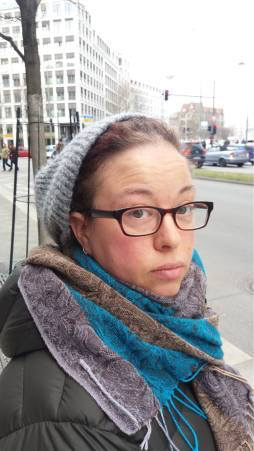 This week’s Torah portion, or parshah, is Shemot (Exodus 1:1-6:1). This parshah sets the scene for the liberation of the Israelites from slavery both by introducing main characters and elaborating on just how difficult life was for the Isrealites under Pharoah’s rule. The parshah contains many noteworthy aspects: the death of Joseph and the multiplication of the Isrealites in Egypt; the increasing wrath of the Egptians; the birth and adoption of Moses; Moses’ encounter with the Divine in the form of a burning, yet unconsumed, bush; the revelation of the divine name, G-d’s plan for Moses’ role in the liberation of the Israelites from slavery; Moses’ attempts to get out of his assigned role; and Moses’ first confrontation with Pharoah.
  It’s between semesters and as I’ve done for the past three or four years, I’m back in Las Cruces, New Mexico, for the winter break. I only spend a month here at this time of year and find myself thinking about the time I’ll move here permanently if things go according to plan.