

 In my widely read blog and academic essay offering a new definition of patriarchy, I argued that patriarchy is a system of male dominance that arose at the intersection of the control of female sexuality, private property, and war. In it, bracketed the question of how patriarchy began. Today I want to share some thoughts provoked by a short paragraph in Harald Haarmann’s ground-breaking Roots of Ancient Greek Civilization. Haarmann briefly mentions (but does not discuss) the hypothesis that patriarchy arose among the steppe pastoralists as a result of conflicts over grazing lands. As these conflicts became increasingly violent, patriarchal warriors assumed clan leadership in order to protect animal herds, grazing lands, and the women and children of the clan. Continue reading “Is This How Patriarchy Began? by Carol P Christ”
Category: General
Rhetoric of a Talking Body by Vanessa Rivera de la Fuente

I have been thinking lately in the female body: object of foreign narratives and appropriations to their geography
Who decides what is right to say about a woman’s body? The correct answer is the most logical: The same woman who has something to say, of course. But things are not like that in real life. In everyday life, women still do not have the right to create and elaborate on a rhetoric about our own bodies. Rather, it is still subject to the rhetoric of others.
Rhetoric of Oppression
To speak of rhetoric, in this case, is to speak of the discourses, narratives and representations that dominate the bodies of women. In general, these rhetorics say that if a woman exposes any of the parts of her body that are considered sexually attractive, it is because she seeks sex. If she is covered, she is a modest and timid woman. A woman wearing a suit is considered “fit”, while another wearing a miniskirt is an easy girl in search of “action”. A woman who covers her breasts is a serious woman. A woman who does not, is not and has to endure the “compliments.”
Why? Who defines this? Continue reading “Rhetoric of a Talking Body by Vanessa Rivera de la Fuente”
On Our Beit Midrash: Kavannah, Writing and Study by Ivy Helman
 Kavannah is a Jewish concept meaning intention or motivation, perhaps most associated with Hasidism. Hassidism teaches that prayer and the fulfillment of mitzvot connects one more with the Holy One if the right state of mind is cultivated before participating in said activity. While going through the motions (prayer, mitzvot, etc.) is important and still technically fulfills the mitzvot, it is not as spiritually beneficial to the individual as is doing those tasks with kavannah. Praying and fulfilling mitzvot within a certain mental space more fully connects you to the divine. Judaism is not alone regarding this religious insight. Clearly there is something to it.
Hasidic teachers often inspire and encourage their adherents to find a way to enter into the right mood before starting prayers or performing mitzvot. What works for you may not work for me and vice versa. The same is often not the case within community. Continue reading “On Our Beit Midrash: Kavannah, Writing and Study by Ivy Helman”
Breaking Down the Concept of Arranged Marriages by Vibha Shetiya
 One of the first things my American friends and family ask me when they learn I used to be married to an Indian man is: was it an arranged marriage? I understand the intrigue, the bewilderment and even horror that the phrase “arranged marriage” can conjure up in unfamiliar Western minds. Images of forcing women to marry strangers encountered upon the street or child betrothals or women being dragged to the wedding site to be married off to mustachioed men are likely to flash before one’s eyes. While such incidents may have occurred from time to time, and in the past, as with child marriages, the long-established concept of “arranged marriage” is very different and not as frightening as may seem.
Traditionally speaking, proposals materialized through word-of-mouth – family and friends recommended a good alliance, or a parent would approach someone directly or indirectly to ask for a daughter or son’s hand in marriage. Even then, personal histories were well researched into, before both parties decided to “see” each other. Marriages in India continue to be alliances between families, and so it is important to check into family background – what are the parents’ and siblings’ occupations? How much does the prospective groom earn? After all, he may be the sole earning member of his family and may not be able to provide for his own family once he starts one. Is there a history of crime or mental illness? This investigation makes perfect sense in a society that is community and family-oriented, and wherein joint family situations are still the norm, especially in smaller towns and villages. It is thus imperative that everyone try and get along. “Arranged marriage” is certainly not synonymous with an “Oh-let’s-just-get-rid-of-our-daughter” arrangement.
Continue reading “Breaking Down the Concept of Arranged Marriages by Vibha Shetiya”
Make Humanity Great Again by Gina Messina
 The Handmaid’s Tale on Hulu has become my latest guilty pleasure. I rarely watch television and when I do my channel is set to MSNBC. But the news has been almost too much to handle. I still find myself living in disbelief that we are a nation under the Trump Administration. And it seems that if you miss one day of the news cycle, you’ve missed a year with all the Trumptastic failures that continue to arise.
I decided one night to switch over to this series I had heard so much about. I was instantly gripped by the plot and the eerie reminder of what our nation could become with a growing alt right population. And with social policy continually being utilized as a weapon against women’s rights, there are many parallels to draw with The Handmaid’s Tale and our supposed “Christian” Nation. Even escapism landed me back in the frightening reality of our world.
81% of Evangelicals and 65% of Catholics voted Trump into the White House. While some argue faith has no place in politics, the real issue is that most do not vote with their faith in mind. Or perhaps they do, but the foundation of the Christian tradition is lost on them. Like the characters in The Handmaid’s Tale, many God-fearing Christians live “under His eye” and see progressive attitudes as a threat to natural order. The response is to overlook hatred in favor of calming fears. We fear what we do not know, we fear those who think differently than we do, and that fear has taken a hold of our nation with encouragement from our POTUS 45. Continue reading “Make Humanity Great Again by Gina Messina”
The Blue No Gaia Wants: Protecting the Sacred through our Lawns by Elisabeth Schilling
 If Gaia is a living body, why are we painting her blue? Whether it is public parks or residential lawns, when there is that special odor in the air, I know to look down and there it is, an endless dye job on the grass indicating treatment. My city is concrete and blue dye for miles. Furthermore, I have sales people knocking at my door monthly asking if I want to spray pesticide around the house to decimate wasps, ants and spiders.
Many religious texts encourage us to mindfully consider the earth. The Jain Acaranga sutra, for instance, says, “a wise [person] should not act sinfully toward plants” (I.1.5.7). One way we sin against the earth so casually is by these mindless manipulations of our lawns, if we have them. (Technically, I do not have a lawn, but my roommate does, and I try to protect it). I do not think most people think about researching what they allow into the earth. Continue reading “The Blue No Gaia Wants: Protecting the Sacred through our Lawns by Elisabeth Schilling”
A Mother’s Gifts by Dawn Morais Webster
 Parvati is a gentle mother goddess. But as Kali, she also wields enormous power. The daughter of Himavan, the king of the Himalayas, consort of Lord Shiva, and mother of Ganesha, the Elephant-Headed Lord, Parvati is the embodiment of all the energy in the universe. Her seat is on a lion or a tiger. In the words of a hymn to this goddess, she is “the auspiciousness of all that is auspicious.”
Lakshmi, the consort of Sri Maha Vishnu is often depicted as a very beautiful woman, seated on a full-bloomed lotus, holding lotus buds in two of her hands, a pot of gold in the third. She is flanked by elephants, reflecting her royal status. Lakshmi, as the Goddess of Prosperity, is brilliant in red silk, gold and precious stones. She also offers peace and a sense of balance.
Mother’s Day provided good reason to remember these Hindu deities. They lent their names to the two cows who were milked daily to feed me in the first six months of my life in my grandparents’ home by the sea in Thiruvananthapuram—or Trivandrum, Kerala. I wrote those foreign place names for decades in application letters and immigration forms but it was more than five decades before I first returned to the place where I was born. Continue reading “A Mother’s Gifts by Dawn Morais Webster”
What Could ‘Masculinity’ Mean in 2017? by Meghana Bahar

There have been so many times
I have seen a man wanting to weep
but instead,
Beat his heart until it was unconscious.
— ‘Masculine’, Nayyirah Waheed
PART I of II
There have been many times when I have wondered whether the world has reached a peak in a broken kind of masculinity.
The notion that there is only one kind of masculinity deserving pedestalisation, or even just one kind of masculinity, has long been discarded in the enclaves I have access to as a grassroots activist and scholar. These are not secret societies that are password-protected. They are protected, of course, by communities that uphold principles of freedom, dignity, equality and justice. But anyone is welcome.
It remains to be seen whether everyone will come.
Six years ago, news broke out that sixty-six teenaged boys had been sent to a government-authorised “anti-gay” boot camp in the state of Terengganu, a rather conservative Islamic province in eastern Malaysia. Their offence? They were considered ‘effeminate’ by their custodian-teachers. The boys were sent to a week-long counselling camp to ‘correct’ their behaviour. Continue reading “What Could ‘Masculinity’ Mean in 2017? by Meghana Bahar”
Do All Religions Teach Love and Justice? Or Do Some Religions Teach Domination? by Carol P. Christ
 Recently at a discussion of Goddess and God in the World, Judith Plaskow and I were asked if the dialogue across religious difference we embody and advocate in our book is a “liberal thing.” Can it, the questioner wondered, occur with those who do not have a liberal view of religion and religious meaning?
I answered that Judith and I identified two principles that made our dialogue possible. The first and most important is that we share the conviction that individuals and communities always interpret their texts and traditions from particular standpoints, deciding with aspects of text or tradition they will make central and which they will criticize or ignore.
For example, those who advocate Lev. 18:22’s injunction that “you shall not lie with a male as with a woman” (NRSV) generally expand its meaning to include female as well as male homosexuality. They ignore the fact that extending this text to a prohibition of lesbianism is an “interpretation” not found in the original Hebrew. At the same time, they ignore other provisions in the text–including that it condones slavery under certain conditions as the notorious letter to Dr. Laura “Why Can’t I Own a Canadian?” attests. Continue reading “Do All Religions Teach Love and Justice? Or Do Some Religions Teach Domination? by Carol P. Christ”
Recalling the Courage of Shamima Shaikh by Vanessa Rivera de la Fuente
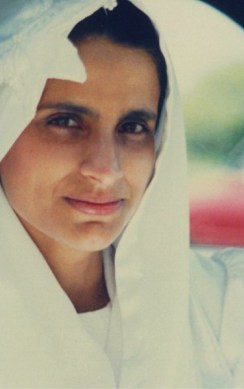
Shamima Shaikh’s name may be unfamiliar for you and many who are not deeply informed about Islam and gender issues in South Africa or who tend to identify Muslim women and/or activism for women’s rights in Islam with the Arab region. Why should you know about her? Because Shamima Shaikh was one of the most notable Muslim anti-apartheid activists and advocates for the rights of Muslim women in her country—a prominent feminist, journalist, radio producer, movement builder, trailblazer, and fearless activist.
This year—2017—marks the 20th anniversary of her death, and I think it’s a special occasion to recall her brave legacy, not only because twenty is a special number. In the context of violence against women in South Africa and worldwide—in particular the violence against and exclusion of Muslim women in Syria, Palestine, Yemen, and Saudi Arabia—as well as the gendered Islamophobia that targets our sisters in Europe, claiming the courage and spirit of resistance of Shamima Shaikh as part of our ethos as women living in a patriarchal world that hates us is absolutely necessary. Continue reading “Recalling the Courage of Shamima Shaikh by Vanessa Rivera de la Fuente”

