

 During the Christian season of Lent, many Christians focus on spiritual practices or disciplines that bring them closer to God. This year, I did not really engage in this type of reflection until the end of Lent. I have been wrapping up my first year teaching college students full-time, I’ve been focused on several writing projects, and I’ve been traveling. I did not intentionally think about spiritual practices until I participated in a silent retreat before Holy Week and traveled first to spend the holiday with my family and then again to mourn and remember the life of my aunt. I reflected on them when I most needed them.
Category: God
What’s Good About Good Friday? by Barbara Ardinger
 I grew up Calvinist and Republican in a suburb of St. Louis, Missouri. My parents belonged to—but rarely attended—Immanuel Evangelical & Reformed Church in Ferguson, Missouri. When children reached the age of twelve, they were “confirmed” in the church, which meant taking a Bible class taught by the minister, Rev. Press, and then going through a ceremony that made them eligible to take communion, which in that church was grape juice and tasteless crackers. Transubstantiation? I learned what the word meant, but I had (and still have) no idea if it really happens.
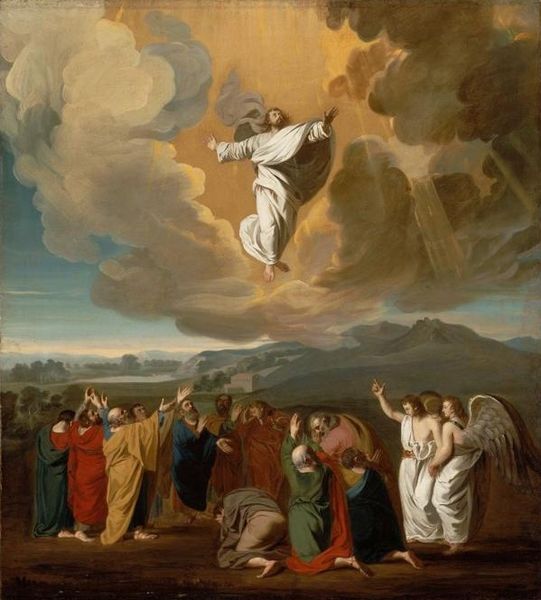
I’ve always been one to ask untidy questions, so of course I asked a lot of questions in confirmation class. God tells us half a dozen times in the Old Testament, for example, that he is a “jealous god.” How, I asked Rev. Press, can a jealous god be a loving god? What’s good about a jealous god? (A couple decades later, when I was studying the Aramaic Bible as translated by George M. Lamsa from the Pshitta manuscripts, I learned that the correct word is “zealous.” That was no help. I still don’t see much good in either jealousy or zealotry.) A week or two later, I asked Rev. Press, “What’s good about Good Friday?” Shortly thereafter, my mother advised me to stop asking questions in confirmation class. (Can we assume she’d received a pastoral phone call?) Continue reading “What’s Good About Good Friday? by Barbara Ardinger”
Gendered Imagery of God (Part 2) by Elise M. Edwards
In my previous post, I shared some of the ways in which I’ve been wrestling with gendered imagery for God, the first person of the Christian Trinity often referred to as God the Father. In this entry, I’d like to reflect on ways I am reconsidering the gender of the Christ.
It is only recently, after reading Melinda Bielas’ post “Waiting for Jesus… I mean, Superman” (December 17, 2013), that I began to question male language for the Christ. I got into an interesting conversation with Grace Kao in January about it. My thoughts on this topic are still unformed and more theologically “speculative” than I usually share on this site, but I’d love to hear what you think. I think it is important for Christian feminists to consider the doctrines of the faith and assess where they support the co-humanity of women and when they degrade it. Continue reading “Gendered Imagery of God (Part 2) by Elise M. Edwards”
Watching “Noah” Brought Me Closer to Humanity by Andreea Nica
 As a child, I enjoyed the story of Noah’s Ark. I would often imagine pairs of animals running for safety in Noah’s architecturally majestic haven. Practical questions didn’t enter my mind during this blissful period of naivety. I ignored the part where God expressed regret in creating humanity, or when Noah gets drunk and lies bare naked for his children to cover his shame. My bible study teacher would explain to us that the point of the story was that Noah, a holy man, trusted God and carried out his will.
Disclaimer: I understand that the film is not meant to be an exact representation of the story in the bible, but loosely based around it. Also, if you plan on watching the film, read at your discretion.
In the film, Noah’s character is played by leading actor Russell Crowe, who appears strong, confident, and zealous in his trust in God – all necessary qualities to fulfill God’s demand of killing off the rest of humanity because of their wickedness. Later in the film, Noah realizes that he and his family are also wicked leading to his revelation, ahem, God’s revelation, that humanity must cease with Noah’s family. This doesn’t pan out too well with his children and wife. It was also bad news for Emma Watson, the orphan girl Noah’s family saves and raises as their own, who after accepting that she is barren is miraculously healed and gives birth to two girls. Noah decides that the female infants must die according to God’s will to end humanity. Continue reading “Watching “Noah” Brought Me Closer to Humanity by Andreea Nica”
IS EVIL PART OF THE NATURE OF REALITY AND DIVINITY? by Carol P. Christ
 What is the origin of evil? Is it innate in human nature or even in the nature of the universe? Judith Plaskow and I discuss this question in our forthcoming book Goddess and God in the World and this is a chance to listen in our conversation.
I am responding to Judith’s allegation that in imagining Goddess as loving and good I am fantasizing an ideal deity who exists apart from the evil-and-good world that we know. Judith speaks of an “evil impulse” in human beings which she considers to be innate in human beings and in the nature of reality. Judith says that my “defense” of the goodness of God comes down to “the traditional free will defense.” She also questions my view that human beings can
I argue that it does not because the traditional free will defense imagines an omnipotent God who existed before the creation of the world. Then I continue:
I think what you meant to say is that like those who invoke the traditional free will defense of the omnipotent God, I attribute humanly chosen evil entirely to human beings—and not to Goddess or God. Continue reading “IS EVIL PART OF THE NATURE OF REALITY AND DIVINITY? by Carol P. Christ”
In Memoriam – God Hates Fags
Phelps didn’t just live a life filled with hate but he also embodied the very reasoning why so many communities cannot cross that proverbial bridge to work together to see past their differences and maybe never will. In the case of Phelps, sticks and stones may break our bones, but words really do hurt.
Fred Phelps, an American Pas tor who headed the Westboro Baptist Church in Topeka, Kansas died at the age of 84 on March 19, 2014. While some individuals leave behind legacies of their good deeds and loving memories, the only thing Phelps left behind was a family and church founded on the principle of hate.
A frequent eyesore at various events ranging from military funerals and gay pride gatherings to mainstream events that captured the attention of our pop-culture obsessed society, Fred Phelps and his clan believed it was their sacred duty to warn others of God’s anger over the growing acceptance of not only modernity in general but also issues like gay rights and abortion. From slogans and signs such as ‘God Hates Fags’ to ‘Thank God for IEDs (Improvised Explosive Devices), Phelps has caused many controversies both during his lifetime and after his death.
Gendered Imagery of God (Part 1) by Elise M. Edwards
I have been doing a lot of thinking about gendered imagery and language for God over the past few months. Honestly, a lot of this reflection was provoked by hostile comments I got from my college students at the end of the fall semester because I require gender-neutral language for God and gender-inclusive language when referring to people. The policy in my syllabus is this:
For academic discourse, spoken and written, students are expected to use gender-inclusive language for human beings, and gender-neutral language for God. (e.g. “God” instead of “He;” “God’s” instead of “His;” etc.) This is to prepare students to communicate to the world beyond the Christian university setting. I want to equip you to succeed in graduate school, in the corporate world, and in public communication, all settings in which gender inclusive language for is increasingly expected.
I provide links to websites that discuss the issue, and we talk about it more when we discuss 20th century feminist issues in my course on the Christian Heritage and when we discuss prejudice and sexism in my ethics class. Some students have thanked me for the policy. But many students are perplexed by it, and I’m perplexed by their confusion. It shocks my system when I hear people refer to “man” for all people; I first became aware of the issue when I was in 2nd or 3rd grade and the Girl Scouts changed their pledge because it referred to “mankind.” That was over 30 years ago!
While I’m confused as to why replacing “man” with “people” is such a difficult task, I am more empathetic to the reorientation required to replace “He” with “God.” (And I also acknowledge that the term “God” is not completely genderless either.) I recognize that for many of my students, I might be the first one to challenge their gendered conceptions of God. So I am empathetic, but insistent.
The way discussions about the “gender” of God and Savior are often dismissed as irrelevant, unimportant, silly, or the remote concern of “those feminists” bothers me. Traditional Christian theology asserts that God is a different kind of being than humans are. Therefore, God (the first person of the Trinity) and the Holy Spirit do not have a sex or gender, as sex is a characteristic associated with physical creature-ness and gender is (to simplify) a social construction related to sex. The second person of the Trinity, Jesus, is thought to be male. In the Incarnation, the eternal God became human while also divine, and therefore has a sex and gender in the person of Jesus. But the Trinity as a whole is without sex and has characteristics that we would associate with femininity, masculinity, and genders in between. According to this logic, references to the maleness of God should only be understood metaphoricall,y not literally, and therefore replacing that language with genderless/sexless language should not be inherently problematic.
I’m not saying that the use of any language in reference to God is appropriate or acceptable within the bounds of traditional theology. We (traditionals and non-traditionals alike) should be concerned with how we refer to God, because as Sallie McFague and others remind us, these metaphors/models of God have consequences in the world beyond language. Maleness becomes deified or closer to godliness than femaleness, maleness becomes the model for the priesthood, maleness is the true form of authority, etc. I believe that many of the concerns about feminine imagery for God are based in this same concern: that by associating God with one sex or gender, we claim God’s preference for that sex or gender. In a patriarchal system, this correlation between God and the feminine simply will not do. Feminists who assert feminine qualities of God are merely making projections of themselves, critics claim.
How we conceptualize the being we worship matters. It matters to me, at least. While I acknowledge that there is a danger of simply projecting an image of myself as a deity that I worship, I also think there is great harm in loving and worshiping the divine imaged as those who are at times hostile to me, and historically have been so to my ancestors and kin. So although I know and have good relationships with older, white males, I see no reason why I should image and worship God “the Father” who looks like an old white man. How would that benefit my spiritual practice?
Thank you Carol Christ, for asking me to state my views about this in the comments to my last post. I look forward to more discussions with you and the members of this community. When I read your work years ago, I was convinced about the validity and rightness of affirming feminine forms of divinity. Although the Christian (patriarchal) tradition does not have much room for Goddess language, I am comfortable with it, at least for the first and third persons of the Trinity. In my next post, I’ll talk more about the ways I am considering the gender of the Christ.
Elise M. Edwards, PhD is a Lecturer in Christian Ethics at Baylor University and a graduate of Claremont Graduate University. She is also a registered architect in the State of Florida. Her interdisciplinary work examines issues of civic engagement and how beliefs and commitments are expressed publicly. As a black feminist, she primarily focuses on cultural expressions by, for, and about women and marginalized communities. Follow her on twitter, google+ or academia.edu.
Religion: Trapped in Love Through Shame by Andreea Nica
I was first introduced to shame in the church. Shame paradoxically drew me closer to God, prevented me from committing sins, and helped me repress certain natural urges. The church I grew up in indoctrinated its congregation to believe that shame would transform us into true and wholehearted believers – that as carnal beings, we needed to feel both guilt and shame in order to be saved and transformed into spiritual entities.
One question that permeated my mind growing up, but I’d never dare to publicly ask:
Why would Jesus die for me when I never asked Him to? Continue reading “Religion: Trapped in Love Through Shame by Andreea Nica”
IS GODDESS “WITH US” OR “IN CONTROL” OF EVERYTHING? THE “THEOLOGICAL MISTAKE” OF DIVINE OMNIPOTENCE by Carol P. Christ
How do we make sense of loss, great loss, and everyday disappointment? Some would tell us that “everything has a purpose” or that whatever happens “must be the will of God.” I have found that these answers to questions raised by life as we know it often do more harm than good. Yet they have a sticking power–we hear them all the time, sometimes even from other feminist seekers.
From the beginning feminists in religion rejected “the God out there” who rules the world from a throne in heaven. Most of us have insisted that “God” is more “in” the world than “beyond” or “outside it.” However we have not always been consistent in our convictions. When feminists are confronted with untimely death or great evil or just not getting what we think we want, we can sometimes be overheard to wonder, “Why did God (or Goddess) let that happen?” This question is based in the assumption that God or Goddess is omnipotent and rules the world from outside it. This is the theological idea I intend to question today.
The “zero fallacy” is a term philosopher Charles Hartshorne used to explain the “theological mistake” known as divine omnipotence. Hartshorne pointed out that if God is omnipotent, then God has “all” or “100%” of the power. If this is so, then human beings and all other beings have “zero” power. But if we have zero power, then do we even exist? Continue reading “IS GODDESS “WITH US” OR “IN CONTROL” OF EVERYTHING? THE “THEOLOGICAL MISTAKE” OF DIVINE OMNIPOTENCE by Carol P. Christ”
Love and Happiness by Elise M. Edwards
As Valentine’s Day approaches, it seems normal to think of love, perhaps with cynicism or hope or a mix of conflicted emotions. Last year, I wrote a post on this site about Valentine’s Day, and I’m happy to contribute this year around the same time. But this year I’ve been doing a different kind of reflection. Maybe it’s because I just took my artificial Christmas tree down this past weekend, but I’ve been a little slow to get in the Valentine’s spirit, more specifically to reflect on the idea of a holiday dedicated to love.
It’s not that I haven’t been talking about love and relationships—I’ve been doing a lot of that lately. I’m teaching a class that is currently in the middle of a unit on Christian sexual ethics, I’ve been conversing with friends about their upcoming weddings and future plans, and I have spent a lot of time on the phone navigating the terrain of a long-distance relationship. But all this talk hasn’t left me too much time to reflect. It wasn’t until last night, as the church choir rehearsal I was attending was ending, that my thoughts of devouring chocolate hearts were interrupted by a litany prepared by two choir members in honor of Valentine’s Day. Continue reading “Love and Happiness by Elise M. Edwards”
 Feminism and Religion