The Exclusion and Embrace of Trans-women within Feminist Spirituality by Kelly Palmer

Women-only circles have long existed within the Goddess movement, the Red Tent movement for example exists as an inter-faith, grass-roots movement for women only to come together to claim safe and sacred space. But too often ‘women-only’ in fact means ‘cis women only’. Trans women are not allowed. This has been the topic of much heated debate in recent years, culminating last year in the publication of ‘Female Erasure’ an anthology of essays on gender politics and feminist spirituality that has led to calls for the editor Ruth Barrett to be expelled from her thealogical seminary on grounds of transphobia. Barrett and many of her contemporaries openly call for the exclusion of transwomen from women-only Goddess circles and respond to criticism by saying that asking for ‘women born women only’ space is not meant to be antitrans but simply carving out a space for people with similar life experience – in the same way that people of specific ethnic minorities may gather, or LGBTQ people. Surely, they may say, the answer is for trans women to create their own spaces?

There are two problems with this. Firstly, trans women are in a significant minority, making access to groups of other trans women practicing Goddess spirituality difficult. If a local woman’s circle is their only means to practicing their religion with others, and they are excluded by this on the basis of their genitalia, this exclusion is incredibly hurtful and undermines not just one’s ability to practice a faith but one’s very identity and esteem. Secondly, it is not just local, personal groups that are practicing this exclusion, but large and public gatherings, making very public pronouncements that trans women are not welcome. They have been excluded from womens rituals at PantheaCon in 2011 and Michigan Womyns Music Festival has a policy of excluding trans women from the entire event.

Continue reading “The Exclusion and Embrace of Trans-women within Feminist Spirituality by Kelly Palmer”

The Ninth Touchstone: Repair the Web by Carol P. Christ

As I reflected on the Nine Touchstones again recently, I was pleased to discover that the first and the eighth touchstones are articulations of the central values of egalitarian matriarchal societies. Few of us live today in egalitarian matriarchies, and it would not be possible for all of us to return to cultivating the land. I offer the Nine Touchstones in the hope that they can help us to find a way to express and embody the values of egalitarian matriarchal cultures in the modern world. The touchstones are intended to inform all our relationships, personal, communal, social, and political.

Nurture life.

Walk in love and beauty.

Trust the knowledge that comes through the body.

Speak the truth about conflict, pain, and suffering.

Take only what you need.

Think about the consequences of your actions for seven generations.

Approach the taking of life with great restraint.

Practice great generosity.

Repair the web
The ninth touchstone is based on the Jewish “commandment” to repair the world. It is derived from the mystical tradition in which prayers were directed towards reuniting the broken sherds that became the created world with their transcendent source. It was reinterpreted by liberal Jews in America as a commandment to create justice in this world through social and political action. I rephrase it as “Repair the web,” to underscore to the need to repair not only the human community, but also the web of life in which it is situated.

To nurture life is to protect the weak and the vulnerable and to create the conditions in which human beings and all beings can experience the joy of living.

To walk in love and beauty is to love yourself, other human beings, and all beings in the web of life, and to appreciate the beauty that is found in all of our diversity and difference.

To speak the truth about conflict, pain, and suffering is to recognize that everything is not love and light in the modern world: to speak the truth about that which is broken is the path to healing.

To take only what you need is to recognize the interdependence of life: when we take more than we need, we take from others without reason.

To think about the consequences of your actions for seven generations is to recognize that what we do today will affect the next generations and the planet as a whole, in good ways, and in bad.

To approach the taking of life with great restraint is to think about what we eat, never to kill unnecessarily, and not to react with violence when there are other ways to resolve conflict.

To practice great generosity is to recognize that none of us has the God-given right to own anything, and to learn to give and receive in the grace of life.

To repair the web is to always act to create a better life for ourselves, for the next generations, and for the species with which we share life this earth.

The Nine Touchstones help us to imagine the way to a better world. Can we join together to create it?


*Parts of this blog will be included in my keynote address at The Parliament of World Religions on November 5, 2018 in Toronto, Canada.

*Also see: Ethics of Goddess Religion: Healing the World , Nurture Life: Ethics of Goddess Spirituality,  Walk in Love and Beauty: A Touchstone for Healing,  Trust the Knowledge that Comes through the Body: Heal Yourself, Heal the World,  Speak the Truth About Conflict, Pain, and Suffering, Take Only What You Need, Think About the Consequences of Your Actions for Seven Generations, Approach the Taking of Life with Great Restraint,  Practice Great Generosity


Carol P. Christ is an internationally known feminist writer, activist, and educator currently living in Lasithi Prefecture, Crete. Carol’s recent book written with Judith Plaskow, Goddess and God in the World: Conversations in Embodied Theology, is on Amazon. A Serpentine Path: Mysteries of the Goddess is on sale for $9.99 on Amazon. Carol  has been leading Goddess Pilgrimage to Crete for over twenty years: join her in Crete. Carol’s photo by Michael Bakas. Carol will be speaking at the 25th Anniversary Celebration of the Re-Imagining Conference at Hamline College in St. Paul Minnesota on November 1 and 3 and at the Parliament of World Religions in Toronto, Canada on November 5.


Take Only What You Need: Can We? by Carol P. Christ

Nurture life.

Walk in love and beauty.

Trust the knowledge that comes through the body.

Speak the truth about conflict, pain, and suffering.

Take only what you need.

Think about the consequences of your actions for seven generations.

Approach the taking of life with great restraint.

Practice great generosity.

Repair the web


In Rebirth of the Goddess, I offered Nine Touchstones of Goddess Spirituality as an alternative to the Ten Commandments. The Nine Touchstones are intended to inform all our relationships, whether personal, communal, social, or political.

The fifth touchstone, “Take only what you need” may be the most difficult one for modern human beings to follow. Those of us not living in traditional un-modernized villages have more things, from cars to big houses, to clothes to electronic devices, than we really need. Those of us in the middle and upper classes have so much more than we need, that the mind boggles when we begin to think about whether we need everything we have or want to have.

In capitalist societies, advertising is geared to cause us to want things we don’t really need, whether it be a new pair of shoes when we already have than we can wear to the most up-to-date ipad or smart phone when the one we have still works just fine. For many of us “shopping therapy” is our first response to boredom, anxiety, or depression. Buying something brings an adrenaline rush that temporarily makes us feel better.

In some indigenous cultures, the notion of taking only what you need is rooted in a deep feeling for and understanding of the interdependence of life. These cultures teach the young that taking from the web of life always has a cost. Yes, you can pick the plants you need to eat and the others you need as herbal remedies. But when you do, you thank the plant whose life you have taken, by leaving a gift. You would learn never to pick all of the plants in a particular area because you always leave some for others and some to die and go to seed so there will be the same plants in the same place the next year. You would never throw food away because you would not have taken or prepared more than you needed, and if you had something left over, you would offer it to a neighbor.

If you grew and picked flax or sheared wool and spun it into thread and then wove the fabric that would become your sheets and blankets and clothing, you would learn to treasure what you have as the work of your own or your mother’s or grandmother’s hands, and you would not consider these precious items to be disposable. In fact you might feel sad when something wore out, knowing that you would never have the joy of using or wearing it again and knowing that you cannot replace the tangible memories associated with it.

How far we have come from this mentality, for many of us, in only a few generations. We are always looking for the newest and so ready to throw out or replace anything that we ourselves or others might consider dated or old-fashioned.

We are destroying ecosystems and using up the world’s resources to meet our needs. The notion that the world should be our resource is part of the problem. If we do not curb our need and our greed, species will continue to go extinct and the generations that come after us will struggle to survive. This is a political, not only a personal issue. We must move towards a green sustainable energy and green sustainable economies.

It is not likely that anyone reading this blog—myself included—will ever reach the state of being where we consistently take only what we need. But we can try little by little to appreciate what we have and not to keep wanting and then buying the things we do not need. We can live with so much less than we think we can. If we could stop having to have what we think we want, we might find that there is more than enough to go around. We might be able to create a world where no one has to go without and where everyone can experience the joy and grace of life.

Also see: Ethics of Goddess Religion: Healing the World , Nurture Life: Ethics of Goddess Spirituality,  Walk in Love and Beauty: A Touchstone for Healing,  Trust the Knowledge that Comes through the Body: Heal Yourself, Heal the World, and Speak the Truth About Conflict, Pain, and Suffering


Carol P. Christ is an internationally known feminist writer, activist, and educator currently living in Lasithi Prefecture, Crete. Carol’s recent book written with Judith Plaskow, Goddess and God in the World: Conversations in Embodied Theology, is on Amazon. A Serpentine Path: Mysteries of the Goddess is on sale for $10.98 on Amazon. Carol  has been leading Goddess Pilgrimage to Crete for over twenty years: join her in Crete. Carol’s photo by Michael Bakas.

 

Speak the Truth about Conflict, Pain, and Suffering: It Is Not All Love and Light by Carol P. Christ

Nurture life.

Walk in love and beauty.

Trust the knowledge that comes through the body.

Speak the truth about conflict, pain, and suffering.

Take only what you need.

Think about the consequences of your actions for seven generations.

Approach the taking of life with great restraint.

Practice great generosity.

Repair the web


In Rebirth of the Goddess, I offered Nine Touchstones of Goddess Spirituality as an alternative to the Ten Commandments. The Nine Touchstones are intended to inform all our relationships, whether personal, communal, social, or political.

Ours is a broken world. We must speak the truth. Spirituality is not only about “love and light.” Goddess Spirituality, which I often call Goddess feminism, grew out of the feminist movement, which was born in the recognition that all is not well in the world. A central insight of Goddess feminism is that women need the Goddess because when we picture God as exclusively male, we create a world in which boys and men believe they are like God, while girls and women believe they are less than men and God.

In this world in which rape is an ordinary part of war, women are paid less than men for the same work, sexual harassment and sexual aggression are tolerated in workplaces, one in three women will suffer physical or sexual violence from an intimate partner and many of them will be murdered by an intimate partner. Feminism was born when women began to speak up about these injustices and many others. Continue reading “Speak the Truth about Conflict, Pain, and Suffering: It Is Not All Love and Light by Carol P. Christ”

Trust the Knowledge that Comes through the Body: Heal Yourself, Heal the World by Carol P. Christ

Nurture life.

Walk in love and beauty.

Trust the knowledge that comes through the body.

Speak the truth about conflict, pain, and suffering.

Take only what you need.

Think about the consequences of your actions for seven generations.

Approach the taking of life with great restraint.

Practice great generosity.

Repair the web


In Rebirth of the Goddess, I offered Nine Touchstones of Goddess Spirituality as an alternative to the Ten Commandments. The Nine Touchstones are intended to inform all our relationships, whether personal, communal, social, or political.

Though several of the touchstones are influenced by indigenous teachings, the third touchstone, “trust the knowledge that comes through the body,” is a response to the separation of mind and body common in western cultures. In the Symposium, Socrates taught that the journey of the soul begins in the appreciation of physical beauty, but ends in the contemplation of unchanging transcendental beauty. Christian ascetics believed that the body must be disciplined and subdued in order for the mind to commune with divinity. Up through the present day, Christians are taught that the pleasures of the body are a temptation because we are destined for something “higher.” Continue reading “Trust the Knowledge that Comes through the Body: Heal Yourself, Heal the World by Carol P. Christ”

America’s Two National Goddesses by Barbara Ardinger

I bet almost no one knows this secret: the United States is being watched over by two goddesses! One of them stands on top of the Capitol dome in Washington, D.C. The other stands on an island in New York harbor.
The goddess standing above our congressional building is named Libertas, or Freedom. She’s a Roman civic goddess whose sisters are Concordia and Pax. Although the Romans hardly ever experienced freedom, civic harmony, or peace, they always kept their eyes on the possibilities. Libertas was sometimes merged with Jupiter, sometimes with Feronia, who was originally an Etruscan or Sabine goddess of agriculture or fire. In Rome, Feronia became the goddess of freed slaves. Libertas is shown on Roman coins as a matron in flowing dress and wearing either a wreath of laurel leaves or a tall pilleus, which is called a “liberty cap” and looks like a witch hat without the brim. And there’s also a bird—is it a raven?? She holds either a liberty pole (vindicta) or a spear, and in some paintings of her (she was a popular subject in the 19th century) there is a cat at her feet. Continue reading “America’s Two National Goddesses by Barbara Ardinger”

Ethics of Goddess Religion: Healing the World by Carol P. Christ

Nurture life.

Walk in love and beauty.

Trust the knowledge that comes through the body.

Speak the truth about conflict, pain, and suffering.

Take only what you need.

Think about the consequences of your actions for seven generations.

Approach the taking of life with great restraint.

Practice great generosity.

Repair the web.


In a recent interview on Voices of the Sacred Feminine on “Gratitude and Sharing: Principles of Goddess Spirituality,” Karen Tate asked me to review the “Nine Touchstones” of Goddess religion I offered in Rebirth of the Goddess as an alternative to the Ten Commandments. Tate expressed concern about the lack of social and political ethics in New Age spirituality and in some parts of the Neo-pagan movement at a time when ethical discernment and action is more necessary than ever.

Before discussing the ethical principles of Goddess feminism, it is necessary to dispel a common assumption that there can be no ethics in Goddess religion because ethics stem from a transcendent principle of justice that stands outside the world. Christian liberation theologians usually identify this transcendent principle with the commanding “Word of God” in the prophetic traditions of the Bible. They often assume that this word comes from outside ourselves and outside nature and as such is the only firm basis for ethics. Continue reading “Ethics of Goddess Religion: Healing the World by Carol P. Christ”

 Witches in the Weeds by Sara Wright

In folklore Old women are believed to control all aspects of Nature – Fire, Earth, Air and Water, but in myth and story they have a special relationship with water.
The title “witches in the weeds” emerged after I did some research on the Datura plant. This plant is usually associated with old women and sorcery in myth and story. For example, in European mythology, the dark goddesses, Hecate, and Baba Yaga are associated with Datura. Datura is considered to be a ‘witch weed’ and is categorized as a poison along with deadly nightshade, henbane and mandrake. The seeds and flowers have a history of creating visions, delirious states, and causing death. Datura thrives in wilderness areas. Old women, dark goddesses and Datura have a lot in common.

Women and birds have been associated since Neolithic times. Scholar and mytho-archeologist Marija Gimbutas unearthed many bird-women sculptures that were fashioned out of clay in “Old Europe”. Old women in particular are most often associated with owls, herons, crows, ravens, and black birds of all kinds. It is probably the relationship between women and birds that is one of the roots behind the belief that old women can fly. The other root behind flight can probably be found in the relationship between women healers and the plants they used. Plants like Datura contain alkaloid properties (scopolamine, hyoscyamine, and atropine) that are capable of producing visions of flight and are used by folk healers and medicine women and men. Continue reading ” Witches in the Weeds by Sara Wright”

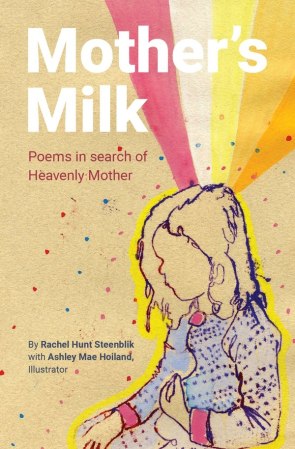
Finding Heavenly Mother with Rachel Hunt Steenblik by Caryn D. Riswold

Feminist theologies are filled with queries and questions about the divine feminine. Whether women need the Goddess. If She really is. Where herchurch might flourish. I have my own complicated views about the subject, and continue to be enriched by those who seek and find. Rachel Hunt Steenblik is the newest voice calling to and from the divine feminine, singing in a distinctively Mormon key.

If you read Mother’s Milk: Poems in Search of Heavenly Mother from front to back, you encounter what seem like scratches of verse and fragments of wisdom from a young mother catching time to write in the midst of her graced obligation to feed and sustain tiny bodies. If you read it back to front, you encounter a wealth and depth of engagement with Christian sacraments, feminist theology, sacred texts, Mormon history, modern philosophy, and children’s books and movies. This cacophony of source material and influence is distilled into sparse poems whose brevity bely decades of the author’s feminist engagement with vast religious history, philosophy, and theology.

In my review of Mormon Feminism: Essential Writings, edited by Steenblik along with Joanna Brooks and Hannah Wheelwright, I noted that feminists in many religious traditions “have had to document their history, make their theological case, and engage their scriptures as robustly as any conservative traditionalist would.” In Mother’s Milk, Steenblik offers us her contribution to the reconstruction of religious tradition. The words of her introduction state plainly: “These are the poems that I could write with my questions, my hurt, my hope, and my reading. Others could write other poems with theirs. I hope they will. We need them all.”

Continue reading “Finding Heavenly Mother with Rachel Hunt Steenblik by Caryn D. Riswold”

Celtic Myth, Moon Blood, and the White Beauty Standard by Marisa Goudy

My woman’s body is entering the dark time of the moon, even with blinding white snow lashing the windows, even with a full moon tracing its way far above thick clouds. My mood is black and soon I’ll be flowing red, and the snow will just drive on white, white, white.

In The White Goddess, Robert Graves tells us: “…the New Moon is the white goddess of birth and growth; the Full Moon, the red goddess of love and battle; the Old Moon, the black goddess of death and divination.”

The Celt in me feels cradled by this imagery, even if, as Judith Shaw and Carol P. Christ have pointed out elsewhere on this site, the idea of maid, mother, and crone is a modern invention, not gift from the past. I agree with Christ:  “My suggestion is that we give up the idea that the details of contemporary Goddess Spirituality are rooted in and authorized by tradition. We can instead acknowledge that though we are inspired by the past, we are the ones who are creating contemporary Goddess Spirituality.”

Continue reading “Celtic Myth, Moon Blood, and the White Beauty Standard by Marisa Goudy”