

 For the last year, I have been scheduled and planning a trip to Brazil, having been invited to speak, plus do a workshop at a conference in Sao Paulo and then two workshops in Brasilia. Four weeks ago, and three days after a Pertussis vaccine (needed before I could see my new great-granddaughter), I was hit with bronchitis which exacerbated an acute flare of my asthma. I was in the ER three weeks ago, but went home trusting that the steroids would work. They did not. So Sunday (the 15th), I once more bit the bullet and headed to the ER, now in a panic, unable to breathe. Continue reading “Letting Go by Deanne Quarrie, D. Min.”
Category: Healing
What Dorothee Soelle Taught Me about Creativity by Elise M. Edwards
 I’m currently developing a book that considers how theological and ethical considerations in architectural design can define good architecture. My book discusses five virtues related to the architectural design process that promote human participation in bringing out God’s intention of flourishing for humanity and creation. Those five virtues (or values) are: empathy, creativity, discernment, beauty, and sustainability. In the book, I’ll explain how these virtues orient design tasks to the social and ethical aims of architecture.
In this virtual space, I want to have a discussion about what these virtues mean from a feminist standpoint. In my writing, I draw from theological ethics, architectural theory, and feminist theory to emphasize community discernment and participation. It’s fitting, then, to claim opportunities in my work to acknowledge the feminists who have influenced me while also opening up the dialogue to the feminists in this community who continue to inspire and guide me to do my best work. Continue reading “What Dorothee Soelle Taught Me about Creativity by Elise M. Edwards”
To Work and to Pray in Remembrance by Elise M. Edwards
One hundred years ago, Jesse Washington was lynched downtown in Waco, Texas. Next week, on March 20th, some of my colleagues and I are organizing a memorial service to remember this horrific event and pray for a better future for our city.
We invited submissions of original prayers, poems, spoken-word pieces, music, drama, and other pieces of liturgy for this ecumenical memorial event. We received a number of thoughtful, heartfelt submissions, but we also a question:
“Why in the world do we need a memorial for one person who was lynched?!?! In the reality of things, Jesse Washington was one of thousands of Blacks that were lynched in America during the time period.”
I thought the answer was so obvious that I initially brushed off the question. But as our group proceeded with the plans, I thought about the question and wondered whether our university community would understand why we are doing this. And honestly, in moments of exhaustion when I put off responding to emails, I wondered, too. Why am I doing this?
To remember. We memorialize one person who was lynched to remind us that every single one of the thousands who were lynched was a human being who was killed unjustly.
In the speech “Lynch Law in America,” from 1900, Ida B. Wells-Barnett describes the injustice: “Our country’s national crime is lynching. It is not the creature of an hour, the sudden outburst of uncontrolled fury, or the unspeakable brutality of an insane mob. It represents the cool, calculating deliberation of intelligent people who openly avow that there is an “unwritten law” that justifies them in putting human beings to death without complaint under oath, without trial by jury, without opportunity to make defense, and without right of appeal.”
Wells-Barnett was an African-American journalist and activist for civil rights and women’s suffrage. Her writings and activism advanced anti-lynching campaigns adopted by Black women’s clubs and the NAACP. Unsurprisingly, her work was controversial, even among women’s groups. Wells-Barnett argued that lynching began after the emancipation of slaves to repress “race riots.” When a constitutional amendment permitted black men to vote, lynching was used to violently prevent their participation in state and national elections. When fraud, intimidation, and local policy succeeded in suppressing the black vote, the brutality continued in the name of avenging or preventing rape and assault of white women.[1] For this argument, lawmakers, ministers, and women’s groups accused Wells-Barnett of defending rapists and subverting “justice” for their alleged victims.
She did not defend rapists. (Neither do I.) She condemned a system that used allegations of rape of white women to legitimate hanging, burning alive, shooting, drowning, dismembering, dragging, and displaying black men’s bodies. Some allegations may have been true. Many were false. Despite the veracity of the allegations, the vigilantes tortured and killed men, women, and children in brutal, public ways, and we must not mistake that for any form of justice. Lynching apologists explicitly valued white lives over others. Lynching was, and remains a crime against humanity.
In our own age of campaigns against the impartiality of law and law enforcement, we should remember the lynching victims and the tensions within earlier waves of feminism and the temperance movement over anti-lynching campaigns. We do not have to condone criminal behavior to call for humane law enforcement or prison reform. We can affirm the humanity of accused and convicted criminals in the pursuit of justice. So we remember Jesse Washington and the other lynching victims to engage more consciously in the activism of our time. We remember so that we don’t lose sight of the complexities of our work. We work in remembrance of the many victims of injustice.
We also gather to pray. For some people, prayer is about making requests to the divine. But in a more expansive sense, prayer is communication with the divine. In prayer, we set time aside to connect to something greater than ourselves. It’s our hope that gathering as a community to pray for the future of our city prompts us to see beyond individual concerns. In a liberation ethics framework, as explained by Miguel De La Torre[2], prayer is not limited to individual, private conversations with God in hopes of gaining wisdom and guidance. De La Torre presents prayer as a communal activity that brings together different members of the spiritual body. It involves the critical application of the biblical text to the situation at hand. This involves critical analysis of the social context that gave rise to the text or its common interpretation. So we pray to give us time to come together, to read scripture, to seek God and hear God through other members of our community.
So why are we gathering? Why do we memorialize one person when there are so many others who have been harmed, not just in my local community but all of our communities?
To remember past wrongs.
To commemorate.
To honor.
To inspire.
To call attention to persisting injustices.
To make us mindful in our work.
To provoke us to pray.
[1] This argument about the reasons for lynching is found in several of Wells-Barnett’s essays, but is quite developed in The Red Record: Tabulated Statistics and Alleged Causes of Lynching in the United States (1895).
[2] See Miguel A. De La Torre’s Doing Christian Ethics from the Margins (2nd Edition, 2014).
Elise M. Edwards, PhD is a Lecturer in Christian Ethics at Baylor University and a graduate of Claremont Graduate University. She is also a registered architect in the State of Florida. Her interdisciplinary work examines issues of civic engagement and how beliefs and commitments are expressed publicly. As a black feminist, she primarily focuses on cultural expressions by, for, and about women and marginalized communities. Follow her on twitter, google+ or academia.edu.
Releasing Artemis by Carol P. Christ
As I was writing th is story, my Word program froze several times, and I lost what I had written. This has never happened before. The fifth time, it occurred to me that Artemis was not happy with the way I was telling the story of her life and death. I lit a candle and prayed for her spirit to fly free like the gulls over the sea that I could see out my window and began again. The words in italic are the ones she added.
Yesterday morning I heard the church bells tolling a plaintive, “dong, dong, dong,” as they do when someone dies. Quite a few people die in our village in winter, and I did not wonder who it might be. You didn’t think of me? A few hours later, I saw the death notice on a telephone pole next to my car. My friend and neighbor Artemis died. The words “Theos voithos,” “with the help of God,” came immediately to my mind. Continue reading “Releasing Artemis by Carol P. Christ”
Remembering to Be Thankful by John Erickson
Remembering to be thankful may just be a privileged illusion that individuals in positions of power get to write about in the December of each year to self-congratulate themselves about being actually able to be able to be thankful. It may just seem like people who write about being thankful are complaining or pontificating that being thankful is in itself a chore.
http://www.rebeccadru.com
With the holidays just around the corner and the frazzled, crisp ping of anxiety, rush, and panic take over the air around us, it is easy to forget to stop and “smell the roses.” In times where teaching positions continue to shrink and more universities switch to adjunct labor, fees and class costs continue to rise, or just simply life becomes a little more complicated, due to the nature of balancing life, activism, work, friendships, or relationships, remembering to remind myself to be thankful is another task, I find adding to the never-ending list of stuff I always seem I have to do.
However, remembering to be thankful, scheduling it into one’s daily schedule are vital to our success as new and emerging faculty or activists or just in general because being thankful reminds us that we have aspects of our lives that are worth being thankful for. Remembering to be thankful proves that we are in some way, connected to a larger sense of life that, at times, grants our wishes, wants, or desires, brings us despair, and then allows us to get through it, or even makes us feel alive.
As I sit back and look at the personal and professional landscape around me I understand that I have a lot to be thankful for both consciously and unconsciously. Most recently at AAR, I participated on a panel in response to Bernadette Barton’s Pray the Gay Away. During the course of our panel, the conversation of chosen vs. biological families came up. Most recently, my mentor and panel moderator, Dr. Marie Cartier, talked about the same topic here on FAR and the difficulties many of us experience in regards to our chosen families vs. our biological families. With the holiday season all around us, and regardless of what or if, you celebrate it or not, it is quite hard to get away from it all without realizing who your “family” is and whether or not you’re close or connected with them can be traumatizing during these times where we’re taught or expected to be with them.
After our discussion on the panel and then at the hotel bar, people discussed the pains and traumas in relation to not having a biological family to go home to during the holidays. Sitting there and listening to the conversations, I realized that, for once in my life, I had nothing to say. Continue reading “Remembering to Be Thankful by John Erickson”
Gather the Women and Heal What Ails Us by Karen Moon
 I wrote this piece in response to an e-mail from a friend that said: “Yes, women’s circles may help you with your headaches that you have every 3 to 7 days (or whatever else ails you.)”
I think women (and men as well, but I think women feel this more deeply in general) are missing a genuine connection to others, a safe place to be heard and accepted, a chance to step outside of their roles and responsibilities in life (if only to see how very similar our challenges are), and a chance to honor beauty whether that be by reading a poem, singing a song or listening to music.
When the minister at the church turned you off towards Christianity by his fear and misdirected anger, you were searching for Divinity within someone else. But Divinity resides within yourself. Continue reading “Gather the Women and Heal What Ails Us by Karen Moon”
On Being of Sound Mind, Body, (&/or) Soul by Juliane Hammer
 As I write yet another email apologizing in advance that I will miss a deadline, I debate whether to provide a reason. Should I write that I am struggling with sometimes crippling anxiety, that I have physical symptoms related to that anxiety and to depression? Or should I stick with “some health issues”? Or is even that too much information? Is it better not to provide a reason at all?
I have written quite a few such emails over the years and it is only now that I both fear and anticipate the response. If I openly acknowledge what others would call mental health challenges, I usually get no response at all or one that entirely ignores that part of the discussion. Using physical illness as an explanation rarely generates a more direct response either, and if it does, it usually takes the form of wishes that I get well soon, as if I have caught the flu. If only depression and anxiety or even their somatic manifestations went away or could be cured!
When I am able, I analyze such responses for what they can tell me about this society’s willingness and ability to take seriously how we feel, how we function, and what either of those have to do with meaningful living.
There are two main concerns in the above: that we cannot openly discuss our mental and physical health challenges and instead we are expected to suppress them in polite company; and that the boundary between being healthy (mentally or otherwise) and being unhealthy, does not in fact exist despite the language we employ that seems to insist on such a boundary.
As I become a little more confident about sharing my struggles, I find that doing so encourages others to share as well. In conversations with my students, undergrads as well as graduate students, and occasionally with colleagues, I see the light of hope and with that hope, I see relief. I understand that academia, my work environment is as much part of the capitalist system as any other workplace, so the expectation to be functional, perform one’s work tasks and generate profit is not surprising. It is, however, hurting countless individuals, women as well as men, and that, combined with my feminist idealism, has me convinced that a system that enables theoretical reflection and sometimes even induces change in society (however reluctantly) should do better than it does at this point. We may have some access to mental health services (also part of capitalism and thus costing money), but professional services are not all we need.
This brings me to my second point, one which is for me at least more directly related to religion. I realize that the mind, body, and soul division is the product of a particular history, philosophy, and time period. But I do not experience these supposed parts of my being as three distinct thirds that form a whole. They seamlessly blend into each other, all making me who I am and who God made me to be. Why then is it so difficult some days for me to do anything at all? Should it be a daily exercise to determine where I seem to fall that day on a five point spectrum, from mentally healthy (5) to mentally ill (1)? How often do I not have a concrete answer? And whose “mental state” can truly be captured by such a simple scale?
I do not know whether I have ever had a day on which I felt normal or didn’t worry about being normal. Normal compared to whom? Stuck somewhere between protestant work ethic, socialist utility for the community, and gratitude owed to God for being alive, I have serious difficulty relating to modern psychiatry and even conventional medicine. And perhaps the five-point spectrum above exists simultaneously for physical health or even more likely for the same whole. If my body, mind, and soul are all interconnected, it makes sense that my physical health cannot be measured separately from my mental or spiritual health.
Continue reading “On Being of Sound Mind, Body, (&/or) Soul by Juliane Hammer”
Artemis As Artemisia: Ancient Female Spirituality & Modern Medicine by Stuart Dean
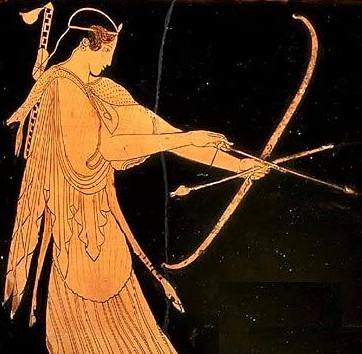
The 2015 Nobel Prize for Medicine was awarded in part to a Chinese woman (Tu) for her identification and isolation to treat malaria of a chemical known as Artemisinin. The name of that chemical derives from the fact that it is found in varying amounts in the ‘family’ (technically, genus) of plants known as Artemisia. The name of that family derives from its association with the goddess Artemis.
Because Tu’s work began in China in the 1960s it is understandable that even if she knew this about Artemisia (a term I use to refer to any one plant or all of the plants of that family) it would not have been a ‘careerbuilder’ for her to point it out to those for whom she was working. It was bad enough that she was a woman. At that place and time, however, if she had said or done something that could be associated with Western culture her name might not even be known today.
Nevertheless, because those awarding the Nobel Prize are free from discrimination or intimidation, it is startling that in the explanation provided for the award no mention is made of the Western legacy of Artemisia. To begin with, the very fact that the Prize was being awarded to a woman for a plant named after a goddess should have elicited at a sense of uncanniness that arguably deserved mention. Be that as it may, the failure to mention that Artemisia has a long history of being used medicinally in the West not only as an insect repellent but also to treat fever–a common symptom of malaria–is simply inexcusable. Continue reading “Artemis As Artemisia: Ancient Female Spirituality & Modern Medicine by Stuart Dean”
The Mother of Socrates: Priestess, Pharmacist, Obstetrician by Stuart Dean
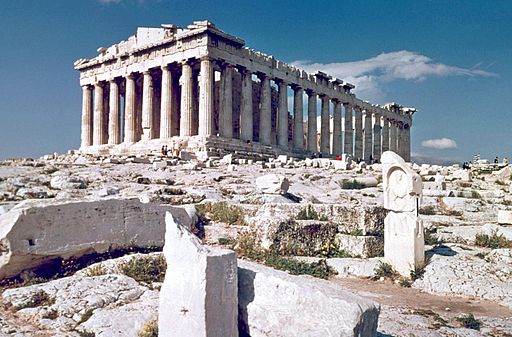 Because the dates for the life of Socrates are certain, it is safe to conclude his mother, Phaenarete, was born about 500 BCE. She seems to have lived well past menopause and thus was certainly alive to see the start of construction of the Parthenon (447 BCE) and probably its completion (432 BCE). As was traditional for many Greek mothers, after menopause she became a priestess, pharmacist and obstetrician.
The relevance of the chronology for Phaenarete requires some context to appreciate. Writing had yet to be widely adopted during her life (the alphabet was not standardized until about 400 BCE). Literary evidence in particular for the practice of medicine before and during her life is scarce. Although Hippocrates was a contemporary of her son, nothing survives of medical writings from antiquity that can confidently be attributed to him. Parmenides and Empedocles (contemporaries of Phaenarete) appear to have been medical practitioners, but what survives of their poetry relates to nature philosophy in general and only in places to medical theory.
Hence, it is extraordinary that an account of Phaenarete’s medical practice survives in Plato’s dialogue, Theaetetus, 149a-150a (hereafter “PMP”). Though PMP was composed by Plato in the 300s BCE, he emphasizes it is based on a transcript of an actual conversation from the late 400s BCE. PMP records what Socrates said about his own mother. It is as authoritative a source of information about her as it is about the origins of the sine qua non of medical practice: optimizing human reproduction.
While evidence exists for women healers in many ancient cultures, the specifics PMP provides show postmenopausal mothers were especially important to early Greek medicine. Curiously, there was no word for ‘menopause’ itself, a fact that suggests it was thought of more in metaphysical than physical terms. Evidence indicates it was thought of as a type of ‘virginity’ (parthenia), the metaphysical meaning of which can be detected in its association with goddesses such as Artemis and Athena (cf. ‘Parthenon’ for her temple’s name). It marked the completion of the ‘internship’ of motherhood, the prerequisite to graduate to become a priestess of Artemis. The name of Socrates’s mother, Phaenarete, evinces that religious context: it essentially means “Revelator.” The Greek for “obstetrician,” maia, also evinces that context: it was also the name of a goddess. The status such a word then connoted is lost in translating it, as many do, as ‘midwife.’ Continue reading “The Mother of Socrates: Priestess, Pharmacist, Obstetrician by Stuart Dean”
Relaxation as a Spiritual Discipline by Katey Zeh
 I have a productivity obsession. I wouldn’t go so far as to call it an addiction, though in describing to a friend how euphoric it feels to check off a bunch of to-dos, he said, “You kind of sound like a junkie.” He may be right. Up until a year ago I didn’t think I had a problem. When I heard experts talk about self-care and meditation and “me” time, I’d roll my eyes a bit. Self-care is for wimps, I thought to myself. And I was certainly not one of those. I didn’t need time off for self-care. I had my to-do lists.
I started to question if I really had this all figured out when I was two weeks postpartum and back to work full-time because like most workers in the United States, I didn’t have paid family leave. Between the hormonal fluctuations and sleep deprivation, I lacked the mental clarity I needed to prioritize tasks. So then every task became the most urgent thing. On top of caring for a newborn and recovering from the birth, this created a perpetual state of mental exhaustion that was simply not sustainable. I needed to do something before I burned out completely.
One of the first steps I took was doing a self-assessment of the current state of my overall wellness–physical, mental, emotional, and spiritual. The first thing I jotted down was, “I’m stretched to my limits. I’m productive to a fault.” That was telling. My next step was to write out a wellness prescription. Since lists and schedules are my drugs of choice, could I try using them for good? I wrote out a self-care to-do list with a dozen different items, including weekly yoga sessions and scheduled downtime. Continue reading “Relaxation as a Spiritual Discipline by Katey Zeh”

