Is There a Such Thing as a Code of Ethics in Academia?  by Michele Stopera Freyhauf


One of things that has dismayed me since I began graduate school and started focusing my study on the Bible, is how much sensationalism exists. We are told in the academy not to use Wikipedia or watch the History Channel. The first, as we know, is unreliable due to the fact that anyone can enter information and make changes. The other caters to the general public. What compounds this problem is the fact that scholars, many times – even reputable ones – appear on these shows. Sometimes creative licenses are exercised by the producer distorting or otherwise shifting the message of what the scholar was trying to explain. Other times, scholars will just give the producers and the public exactly what they want to hear and thus perpetuating myths rooted in literalism.

Alpocalypse_Cave
Cave in the Church of the Apocalypse in Patmos, Greece

This is not the only time this issues manifests.  The other time I encountered this is when I travel to sacred or holy sites in the Middle East.  The people in charge of sites may want raise money and increase tourism – so they give the people what they want.  What do I mean by this?  Walking into a place that has a story whether true or not provides pilgrims a sense of awe and wonder.

Certainly I am not saying that this experience should be diminished or should be taken away. What I am saying is that we should be a bit more truthful in our descriptions and remove the shroud of literalism that seems to fuel tourism and not faith. What was difficult for me when visiting Patmos is the rhetoric surrounding the island. It may or may not have been where John had his visions, but certainly the mystique surrounding the Church of the Apocalypse seems to perpetuate the literalism that surrounds the Book of Revelation as being prophetic in dealing with the end times.  Moreover, the vendors around the Church certainly focus their merchandise to support this myth.  However, while I study the Book of Revelation and teach that it is something other than prophetic, a person visits the island and the church, are told that it is prophetic – who is a person to believe?   Me or the religious order running the Church or the vendors living on the island?

This also happens at dig sites.  If a tourist is led by a guide or lead at a holy site being excavated and they tell them what they want to hear so they come back and tell their friends, who has more creditability – me or the person who guides on the site?  When scholars like myself, write about a topic that seems to gel with what the commonly held view of the academy, and goes against literalism or fundamentalist beliefs, we become heretics in relation to the information being fed by the sensationalism on the History Channel and the tourist industry.  So the popular view does not change and the academic view is left on the margins and Biblical literalism wins.

Continue reading “Is There a Such Thing as a Code of Ethics in Academia?  by Michele Stopera Freyhauf”

Caitlyn Jenner is a Friend of Mine

To speak ones truth is oftentimes a difficult and nearly impossible act. However, to live one’s truth, on a day-to-day basis, is an aspect of life that has become so foreign to individuals who have become so comfortable in their own skin that I fear the activist and social justice roots that we all claim to hail from have fallen at the wayside and been replaced by complacency and reductionism.

caitlyn-jenner-transformation-high-cost-surgery-clothes-house-5I’m deeply troubled by some of the anti-trans and anti-queer commentary that has been taking place on some of the comments on this blog in recent months. I’ll never forget when this project first began—talking with the founders about its original purpose: to bring the “F” word back into the mainstream religious discourse and more importantly, to be a place where scholars, young and old, senior or junior, could write, collaborate and eventually converse with across cyberspace.

However, in recent months, I’ve found myself being more of a watchdog rather than a frequent commentator on issues pertaining to feminist religious discourse. I’ve found myself reading comments about issues I may not frankly identify or agree with just to make sure that the cisgendering or anti-trans narratives do not become symbolic of what this blog is now rather than what was supposed to be at the beginning.

When I sat down to write my very first post I was scared. I was terrified that feminists from all communities would see me only as I appeared and not for whom I actually was. I was afraid that all I had worked for throughout my life would be moot with the first bad comment on one of my posts. While all of those fears were real and valid they quickly faded away as I was embraced by this community and many others for my passion rather than my gender; my life’s work rather than my privilege; and more importantly, the personal mission to make the world a safer and better place for women and girls everywhere.

To speak ones truth is oftentimes a difficult and nearly impossible act. However, to live one’s truth, on a day-to-day basis, is an aspect of life that has become so foreign to individuals who have become so comfortable in their own skin that I fear the activist and social justice roots that we all claim to hail from have fallen at the wayside and been replaced by complacency and reductionism.

Caitlyn Jenner’s story is one that many individuals, often not highlighted on this blog, know all too well. Caitlyn Jenner’s story and personal experiences are valid and for members of the feminist community to refer to her as not “feminist” or merely as a man “masquerading” as a woman while still utilizing his privilege from being biologically born as a man is troubling and the root of the problem facing many trans individuals today when they’re negotiating coming out as their true selves.

Trans individuals face a cadre of other horrible social, physical and mental statistics that oftentimes lead them to be more likely to self-harm.   However, as feminists, isn’t it our job to make sure that all groups have access to the same freedoms rather than working towards denying it for certain groups while trolling the comments sections of posts?

Shakespeare said: “To thine own self be true” and for those of us who identify with the Golden Rule, if we no longer treat others as we would like to treat ourselves, then we really have failed as feminists; and if the comments on recent blogs are any indication, we still have a long way to go before all voices can feel welcomed not only on FAR but also in the world at-large.

John Erickson is a Ph.D. Candidate in American Religious History at Claremont Graduate University. He holds a MA in Women’s Studies in Religion; an MA in Applied Women’s Studies; and a BA in Women’s Literature and Women’s Studies. He is a Permanent Contributor to the blog Feminism and Religion, a Non-Fiction Reviewer for Lambda Literary, the leader in LGBT reviews, author interviews, opinions and news since 1989 and the Co-Chair of the Queer Studies in Religion section of the American Academy of Religion’s Western Region, the only regional section of the American Academy of Religion that is dedicated to the exploration of queer studies in religion and other relevant fields in the nation and the President of the University of Wisconsin Oshkosh’s LGBTQA+ Alumni Association. When he is not working on his dissertation, he can be found at West Hollywood City Hall where he is the Community Events Technician and works on policies and special events relating to women, gender, sexuality, and human rights issues that are sponsored or co-sponsored by the City of West Hollywood. He is the author of the blog From Wisconsin, with Love and can be followed on Twitter @JErickson85

Gender Identity, Religious Identity and Performance.

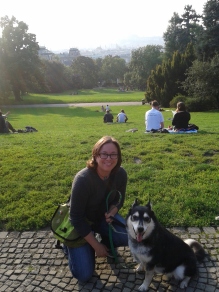
10953174_10152933322533089_8073456879508513260_oWhen I cover my head in respect for the Holy One, it feels right. This act touches on a religious truth of who I am. To me, it not only matches who I am, it also expresses something about who I strive to be and the relationship I want to have with G-d.

Seeing Caitlyn Jenner on the cover of Vanity Fair, I think she’d say something similar about herself. Her outward appearance touches to the very core of who she is and who she has had the strength and courage to become.   Not only that, it feels right.

Sure, there is a wide gulf between the public nature of Jenner’s cover photo and my public head covering, yet, in these two examples, I see a number of connections. First, there is the real possibility of harm and danger. Second, there is a link between outside actions that express something true about the person on the inside. Third, value is placed on the agency and autonomy of the individual carrying out those actions. Finally, there is a performativity connection between religiosity and gender. It is the last point that I find particularly compelling.

I don’t cover my head anymore on a daily basis although I used to before I moved to Europe. Even though it doesn’t feel right, with the rise of anti-Semitism, it seems like the safe and unfortunately prudent thing to do. I also don’t wear any signifying my religion except for a small star of David earring. In 2014, by the Jewish community’s own account, anti-Semitism grew 200% in the Czech Republic alone.  Statistics seems to support my actions.

Jenner too, like so many members of the trans community, now has the real threat of violence against her person. While her public persona may make her somewhat safer, too many trans men and women have been harmed and even murdered just for being themselves. In fact, many trans people live closeted lives because of this danger and the fear of rejection from family, friends and the larger society.

While not minimizing the fear and danger, I want to return to the more theoretical link between gender expression, gender identity and religious identity. In 1990, Judith Butler wrote Gender Trouble: Feminism and the Subversion of Identity. For Butler, what we think of sex and its connections to gender as masculinity and femininity often come down to a person performing gender in a way that is socially recognizable. People wear clothing, do actions, speak words and use body language that marks them as woman or man and therefore individual agents adhere to societal constructions of gender at the same time they reinforce societal expectations for men and women. Butler’s suggestion is that gender performances, that subvert “normal” discourses on gender expression, show the ways in which gender is culturally constructed. They also disrupt what has been seen as somehow inherently natural. In other words, biologically-sexed females acting, dressing, speaking and behaving in ways typically associated with masculinity disrupts what it means to be both a woman and to be masculine. This would be impossible if things were as natural as society thinks they are.

One of Butler’s goal, in my opinion, is not only to expose the culturally constructed nature of sex/gender, but also to open up individual agency to perform gender in ways that would disrupt the power these “natural notions” have over peoples’ lives. Subversive gender performances, for Butler, creates more freedom in society and would hopefully undermine blanket misogyny and disrupt patriarchal power.

Yes, Butler has often been criticized in many ways, including the attempt to erase any notion of substance behind personhood and its gendered expression especially as it relates to transgendered individuals. Butler has spoken to this specific criticism saying on transadvocate.com that, “…others have a strong sense of self bound up with their genders, so to get rid of gender would be to shatter their self-hood. I think we have to accept a wide variety of positions on gender. Some want to be gender-free, but others want to be free really to be a gender that is crucial to who they are.”20150128_132833

In the end, what is essential for Butler is individual autonomy and freedom to be. Performing sex/gender is one possible way to get there. Let me suggest another that builds off Butler’s ideas of performativity. Religiosity is a type of culturally-laden performance. After all, what are kippot, hijabi, nuns’ habits, ministers’ robes, etc.? They are religious markers tied up in gender identity.

Just as masculine women subvert and disrupt social constructions, couldn’t a Jewish lesbian perform gender in a way that she passes for an orthodox man (or woman)? Doesn’t this disrupt what it means to be both lesbian and orthodox? I think so. This passing person also destabilizes the power of orthodox men to define womanhood and women’s sexuality. She defines for herself who she is. She may very well consider herself to be orthodox and masculine, just as masculine women consider their masculinity as part of who they are.  She may connect deeply with Jewish orthodox feminine styles of dress.  Nonetheless, her outward performance expresses something about her commitment to G-d and who she is as a Jew at the same time it subverts received religious notions of gender and sexuality.  Another example is a woman minister who wears priestly attire including the black shirt and white collar.   She too disrupts power relations, gender assumptions and, for some people, the very notion of women and ordination.  Religious performance is powerful stuff.

To go back to the point I made at the beginning. I think expressions of religiosity are similar to expressions of gender. In addition, claiming for one’s self a religious identity subverts patriarchal notions of gender. Yet, most importantly, performing a religious identity often expresses an inner truth. In both of these ways, religious identity performances could create freedom, disrupt power-over and destabilize patriarchy just as Butler hopes gender performativity does.  I would modify Butler’s approach somewhat to say, “I think we have to accept a wide variety of positions on gender [and/or religious identity]. Some want to be gender-free [and/or religion-free], but others want to be free really to be a gender [and/or religious indentity] that is crucial to who they are.”

The Religiosity of Silence by John Erickson

In a repetitive culture of abuse and silence, is it really shocking to find out that an individual who preached such hate and discontent for others actually perpetuated other forms of heinous abuse against others?

John Erickson, sports, coming out.In 2013, I wrote an article about the then latest reality TV scandal featuring A&E’s Duck Dynasty’s Phil Robertson and his rampant foot-in-mouth disease that caused him to express, in the pages of GQ, his true distaste for the LGBT community and specifically for the sexual proclivities of gay men.

Now, two years later in another reality TV show, TLC’s ’19 Kids and Counting’, it isn’t star Josh Duggar’s anti-LGBT statements getting him into trouble but rather his sexual assault and molestation of 5 girls, including two of his sisters. However, while the Internet explodes with attacks against Josh Duggar and his Quiverfull background, it is vital to remember that the silence that he and his family inflicted upon his victims since 2006 has not only been ongoing since then but is also being reemphasized today with each keystroke focusing on the assailant rather than the victims. Continue reading “The Religiosity of Silence by John Erickson”

Genderqueering by John Erickson

We find our versions of home in these communities and it is within these spaces where our home not only begins to define who we are but we, as a reflection of that space, begin to outwardly redefine the spaces we exist in. If we slowly begin, through our experiences to shape our homes based on privilege and power without self-reflection and acknowledgment of others, then we are no better than those oppressive forces we say we’re against.

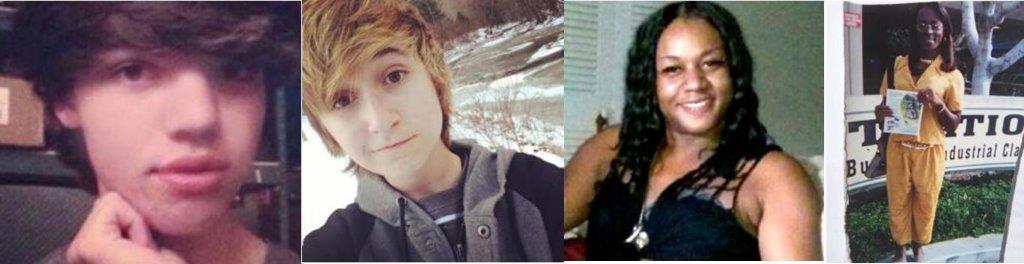
Leelah Alcorn, Ash Haffner, Aniya Knee Parker, Yaz'min Shancez
Leelah Alcorn, Ash Haffner, Aniya Knee Parker, Yaz’min Shancez

This post is a response to a recent blog entry titled “Who is Gender Queer?” on this site from Carol Christ.  The post can be read by clicking here.  I want to thank my friend, advocate, and upcoming scholar Martha Ovadia for reasons only she knows!  Stay brave, speak up, be heard!
_________________________________________

It is terrifying to know that something is wrong but not be able to speak truth to power.

It is even more terrifying to know something is wrong, be able to speak to it, and then silence those voices that do not have that same privilege, power, or position.

The struggle that many of us in positions of privilege and power face is not just that of being ostracizing and essentializing forces—it is that we, as allies, members of communities, or even those dedicated to a cause, can ourselves participate in the oppression we are fighting against and can do harm.

It’s taken me a long time to not only be comfortable with who I identify as, but also how I go about fighting and defining my life based on said identity and experience. However, the one thing that I have the ability to do is choose that identity more freely than others. Unlike Leelah Alcorn, Ash Haffner, Aniya Knee Parker, or Yaz’min Shancez pictured above, I did not have to face the types of oppressions they did, to which they sadly lost their lives, as a result of the fact that we exist in a society that can’t deal with the inability to leave things undefined or to allow people to define who they are on their own terms.

It is vital that although my lived experiences could never meet nor match the same types of oppression that these brave individuals had to face, I, as a white, cisgendered gay male, do not become part of their oppression through my own position and privilege.

As a man who exists in the world of feminism and within various women’s communities, I walk a daily tightrope of privilege and power to insure that I do not silence those that I consider allies, friends, mentors, or colleagues. As a man who exists in the world of the LGBTQ community, I walk an additional tightrope to additionally not take away from or diminish the experiences of those members of our community that do not have the same type of lived experiences as myself.   Even within minority communities, there are positions of hierarchy and within these hierarchies of knowledge, identity, or power, comes a responsibility to insure that the oppressed do not become the oppressors.

We find our versions of home in these communities and it is within these spaces where our home not only begins to define who we are but we, as a reflection of that space, begin to outwardly redefine the spaces we exist in. If we slowly begin to shape our homes based on privilege and power without self-reflection and acknowledgment of others, then we are no better than those oppressive forces we say we’re against.

I can’t speak for what identity feels like –I can only speak for what essentializing does, and what it does is reflected in the deaths of Lelah, Ash, and the many others who die nameless.   It is our responsibility, as allies, members of communities, and those fighting to end sexist, patriarchal, and, even now, homonormative oppression, to make sure that no more deaths occur on our watch or that truth is spoken to power even when power is masquerading around as truth.

John Erickson is a Ph.D. Candidate in American Religious History at Claremont Graduate University. He holds a MA in Women’s Studies in Religion; an MA in Applied Women’s Studies; and a BA in Women’s Literature and Women’s Studies.  He is a Non-Fiction Reviewer for Lambda Literary, the leader in LGBT reviews, author interviews, opinions and news since 1989 and the Co-Chair of the Queer Studies in Religion section of the American Academy of Religion’s Western Region, the only regional section of the American Academy of Religion that is dedicated to the exploration of queer studies in religion and other relevant fields in the nation and the President of the University of Wisconsin Oshkosh’s LGBTQA+ Alumni Association.  When he is not working on his dissertation, he can be found at West Hollywood City Hall where he is the Community Events Technician and works on policies and special events relating to women, gender, sexuality, and human rights issues that are sponsored or co-sponsored by the City of West Hollywood. He is the author of the blog From Wisconsin, with Love and can be followed on Twitter @JErickson85

Ignorance and Invisibility by Ivy Helman

20140903_180423According to the United States Holocaust Memorial Museum, the Jewish population of Czechoslovakia numbered some 357,000 in 1933. By 1950, it was recorded to be 17,000. To be sure, some escaped to Israel or the United States. Yet, within the modern boundaries of the Czech Republic, some 77,000+ perished. You can find the names of the dead inscribed on the walls of Prague’s Pinkas Synagogue. The Jewish community here remains extremely affected by the effects of WWII and the lingering legacy of communism.

How much of that did you know? Did you know that Prague is home to what the Nazis once wanted to call the “Museum of an Extinct Race”? Did you know that most of the synagogues in this entire country are boarded up, torn down or used for something else? Did you know that the entire Jewish Quarter of Prague was almost destroyed until someone stepped in and persuaded others to preserve it? Did you know that Western media is saying that Jewish life in Prague is undergoing a grand rebirth, while at the same time, most tourists leave Prague thinking there are no Jews here anymore? Continue reading “Ignorance and Invisibility by Ivy Helman”

From Evangelical Christianity to Feminist Evangelism by Andreea Nica

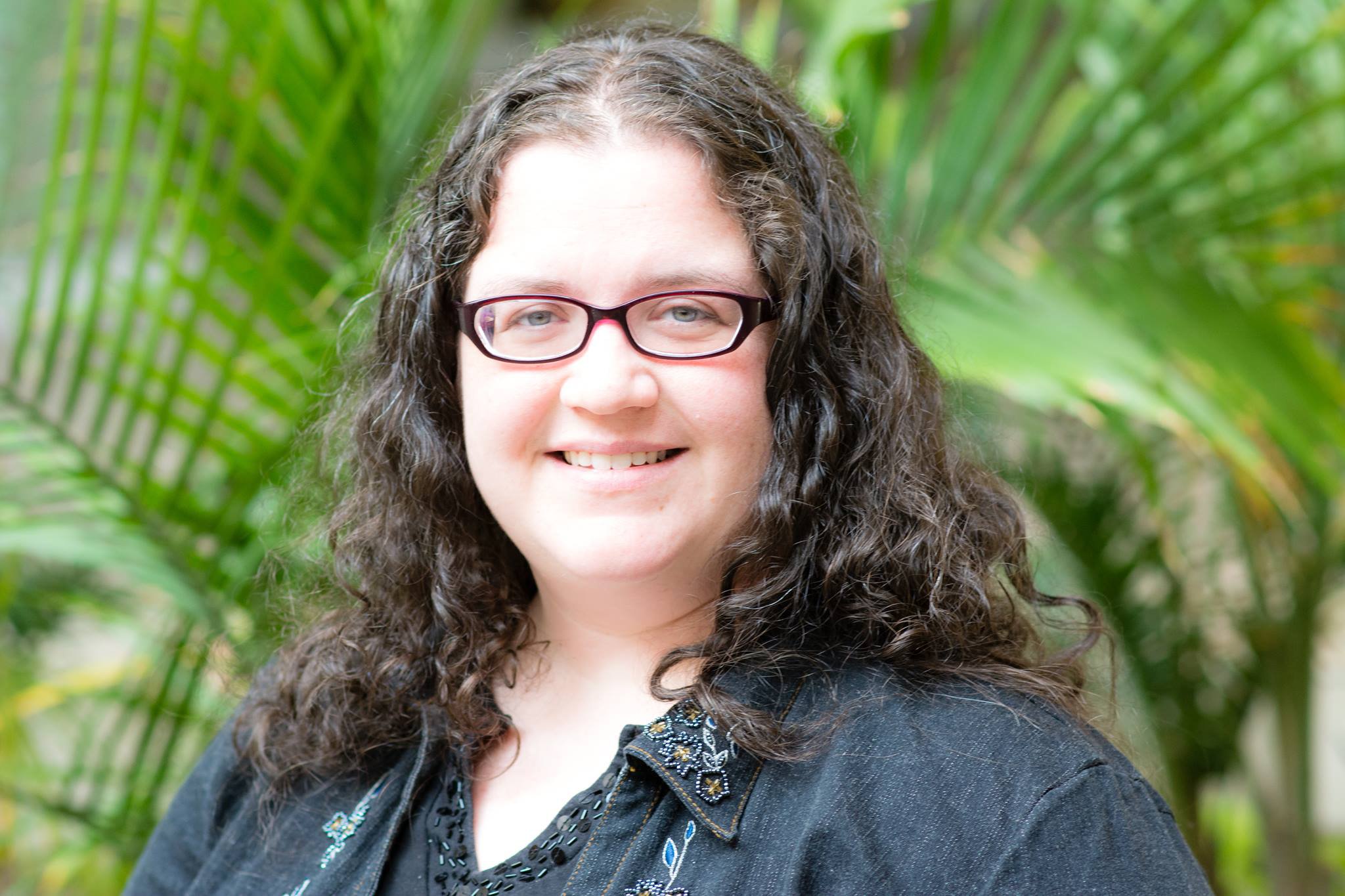
AndreeaI always knew I was a feminist, despite my lack of knowledge in the movement and philosophy growing up. I did, however, have the religious support of my family and community to be an Evangelical Christian. I knew all the right words, mannerisms, and behaviors to represent myself as the proper Christian woman. I went on mission trips abroad, wore purity rings, attended sexual purity retreats and church camps, prayed fervently, spoke in tongues (glossolalia), contributed 10 percent of my meager earnings, and above all, fell in love with God.
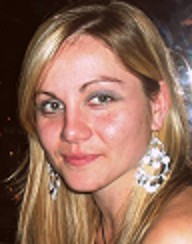
As a first-generation college student, I was thirsty for knowledge and ready to take on the world. Some of my favorite courses during my undergraduate career included: “Psychology of Women,” “Women, Gender, and Ethnicity,” and “Psychology of Sexuality.” My coursework in gender, sexuality, and the social sciences compelled me to pursue graduate studies in gender, culture, and media at a university abroad. My studies in gender theory and feminist philosophy, and how it intersects with religion and social institutions ignited my spirit.

As a result, my relationship with god suffered. My newfound feminist beliefs were not solely to blame, however. Rather, a variety of reasons contributed to my detachment from god and the Evangelical church which I explain in my post, “Leaving Behind My First Love.” My new feminist identity was the main driver for questioning my relationship with god. Everything from the male-dominated language and rhetoric used in the church, to the discrimination and prohibition of female pastors, to the stringent gender roles expected of congregants. Continue reading “From Evangelical Christianity to Feminist Evangelism by Andreea Nica”

The Mosaic Language of God by Andreea Nica

Andreea Nica, pentecostalismThroughout my “bible-thumping, smitten with God” years, I scribbled countless thoughts and prayers in four devotional journals. Recently I came across these journals, wiping away the years of dust accumulated. As I have been detaching from the Pentecostal god, it was a painful, downright mortifying experience to read through my past communication with god. This god seemed so foreign now given my liberated, enlightened, evolved self. I remember writing to and about Him, but I couldn’t help thinking how dysfunctional and convoluted the language I used really was.

I love you Father. Take me…surrender me to your will…your ways. Let me not lean on my own understanding and foolishness.

Mary Daly in Beyond God the Father advocates, “Time to go beyond God the Father. Don’t you see? If God is male, then the male is God. Reclaim the right to name your self, your world, your God. The liberation of language is rooted in the liberation of ourselves. Be a wild woman…God is not A Being. God is Be-ing.”

Many social scientists contend that language is the foundation of our socially constructed realities. We use language as a creative tool and guide to frame our perceptions of the world around us. We also use language to create our own unique creative expressions. That even though we share and appropriate from the accessible pool of creative expressions, each individual designs and discovers their own true form. Continue reading “The Mosaic Language of God by Andreea Nica”

Women at the Secular Student Alliance Conference by Kile Jones

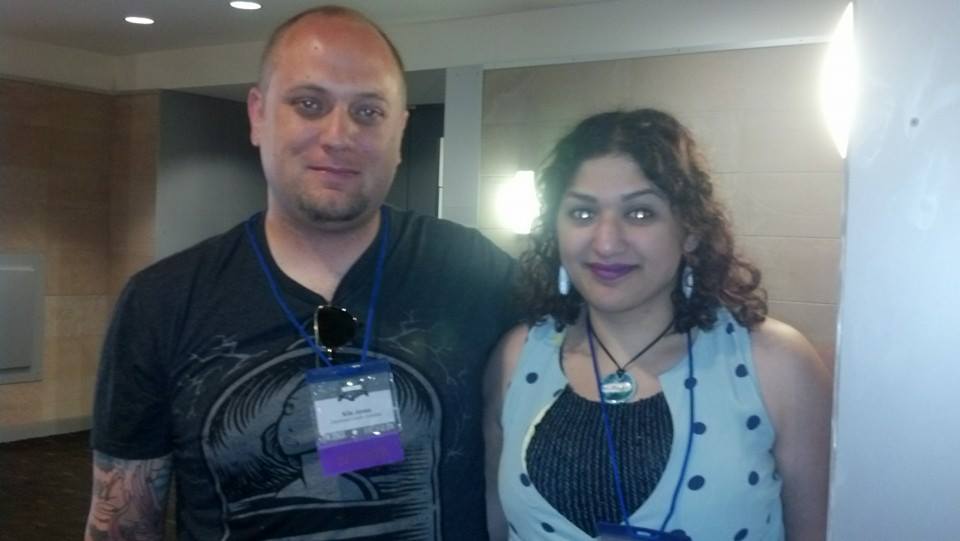
KileA few days ago I had the pleasure of giving a talk at the Secular Student Alliance Conference on how non-believing persons can work with Churches.  Amidst the chaos of conferences–managing your time, deciding which talks to attend, and making sure you have enough water (it was a Burning Ring of Fire outside in Tempe, AZ)–I got to meet some pretty incredible secular women.

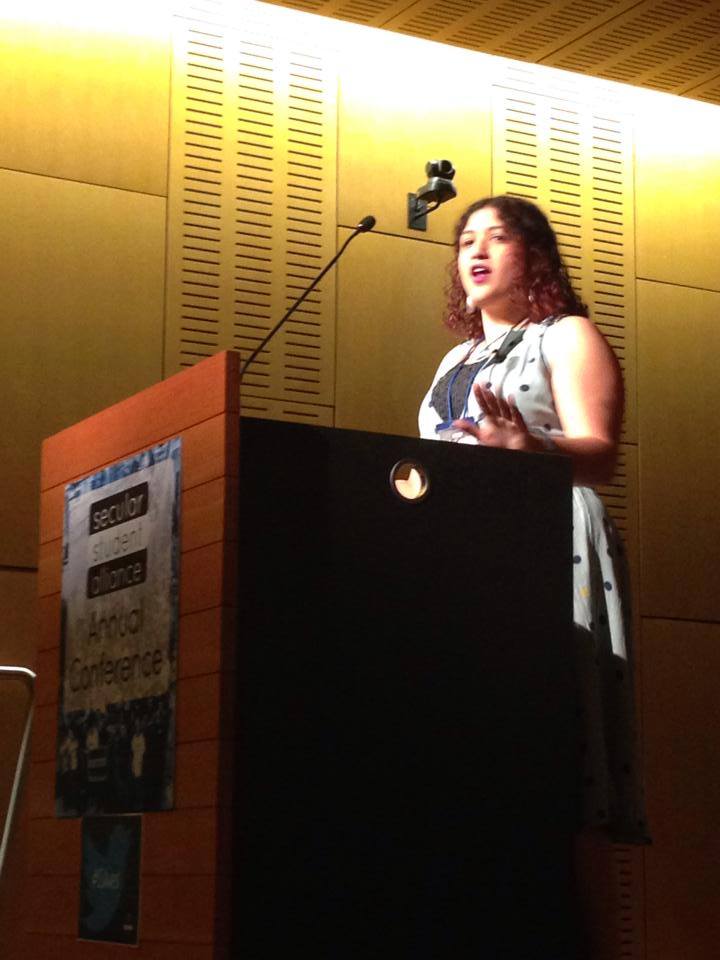
One of them was Heina Dadabhoy.

Heina speaking at SSA
Heina speaking at SSA.

Former Muslim, blogger at Freethought Blogs, and overall bad-ass, Heina spoke about ways in which secular groups can create a more welcoming environment for ex-Muslims and Muslims beginning to doubt.  Her talk, “Of Murtids and Muslims,” (a “murtid” is a public apostate) was not only about her experiences coming out as a secular humanist, but considered some of the absurd questions people ask her (and other ex-Muslims) about leaving Islam.  “So did your parents try to honor kill you?”  “Have you gone through FGM?”  It was disturbingly humorous.

What I considered to be Heina’s main point, was that we should respect each others’ individual differences and not generalize and caricature all Muslims with the depictions of some.  “Just because you read Ayaan Hirsi Ali’s book,” Heina notes, “does not make you an expert on Islam.”  Heina made sure to emphasize the radical diversity that exists in Islam.  She also spoke of the some of the issues that people go through when they leave Islam: How do I create a new identity when my old one was intricately tied up in my Muslim community, family, and culture?  How do I navigate popular culture when I have missed a bunch of it?  How do I find myself in this new secular world?  Heina’s answers were refreshingly honest and insightful.

P.S. Aisha (one of Muhammed’s wives) should not simply be reduced to the young person Muhammed married; she was also a war leader, influential Muslim thinker, and someone who contributed greatly to early Islam.  This is, of course, Heina’s insight.

Me and Heina at SSA
Me and Heina at SSA

Another awesome secular woman I met, was Sarah Morehead.

Sarah. Photo from Apostacon.

Sarah is a former evangelical Southern Baptist, Executive Director of the “Recovering From Religion” project, and another overall bad-ass.  She spoke on how to start up a Recovering From Religion group on your campus.  Here is a blurb about Recovering From Religion,

“If you are one of the many people who have determined that religion no longer has a place in their life, but are still dealing with the after-effects in some way or another, Recovering From Religion (RR) may be just the right spot for you. Many people come to a point that they no longer accept the supernatural explanations for the world around them, or they realize just how much conflict religious belief creates. It can be difficult to leave religion because family and culture put so much pressure on us to stay and pretend to believe the unbelievable. If this is you, we want to help you find your way out. Don’t let people convince you that you just didn’t have ‘enough’ faith, or that you just haven’t found the “right” religion.”

Sarah and I chatted (and often laughed) about our old experiences as conservative Christians.  We discussed some of the funny language (Christian-eze) we used to use, the various levels of guilt and shame that were cast upon us, and how science helps explain some of the interesting displays of piety often seen at Pentecostal services.  Sarah’s jovial and welcoming demeanor was calming, and as an Executive Director for a project aimed at helping people “recover” from religion, I cannot think of a better person for the job.

Lyz.  Photo by SSA.
Lyz. Photo by SSA.

The last woman I have in mind is Lyz Liddell.

Lyz is the Director of Campus Organizing for the Secular Student Alliance.  I have an interview I did with her a while back, on this very blog!  Besides running around with her headset on, standing on chairs for announcements, and generally keeping the world of SSA from not crumbling into oblivion, Lyz is a great motivation and example.  If you are ever interested in starting a SSA group on your campus, talk to her.

To all those who attended this years SSA West, or who are involved with helping secular students: Unite!

Kile Jones holds a Bachelors of Theology (B.Th.) from Faith Seminary, a Masters of Theological Studies (M.T.S.) and a Masters of Sacred Theology (S.T.M.) from Boston University, and is a current Ph.D. in Religion student at Claremont Lincoln University.  He also holds a Certificate in Science and Religion from the Boston Theological Institute.  Mr. Jones has been published in Zygon: Journal of Religion and Science, Philosophy Now, Free Inquiry, World Futures, Human Affairs, and the Secular Web.  He is the Founder/Editor-in-Chief of Claremont Journal of Religion (www.claremontjournal.com), and is the Founder/Director of Interview an Atheist at Church Day (interviewatheists.wordpress.com).

“Don’t break the bucket” by Oxana Poberejnaia

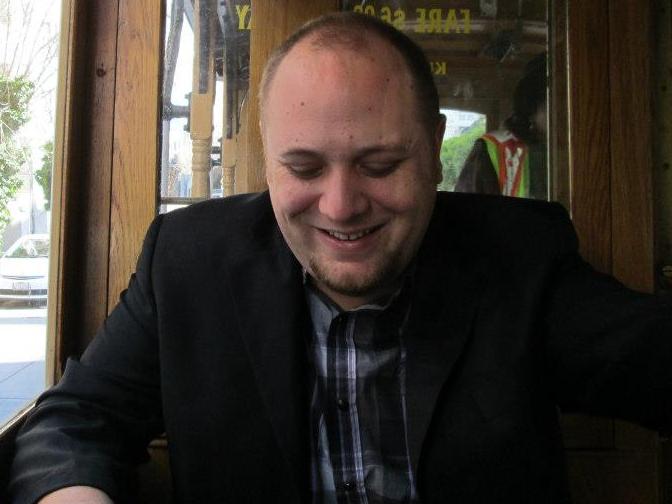
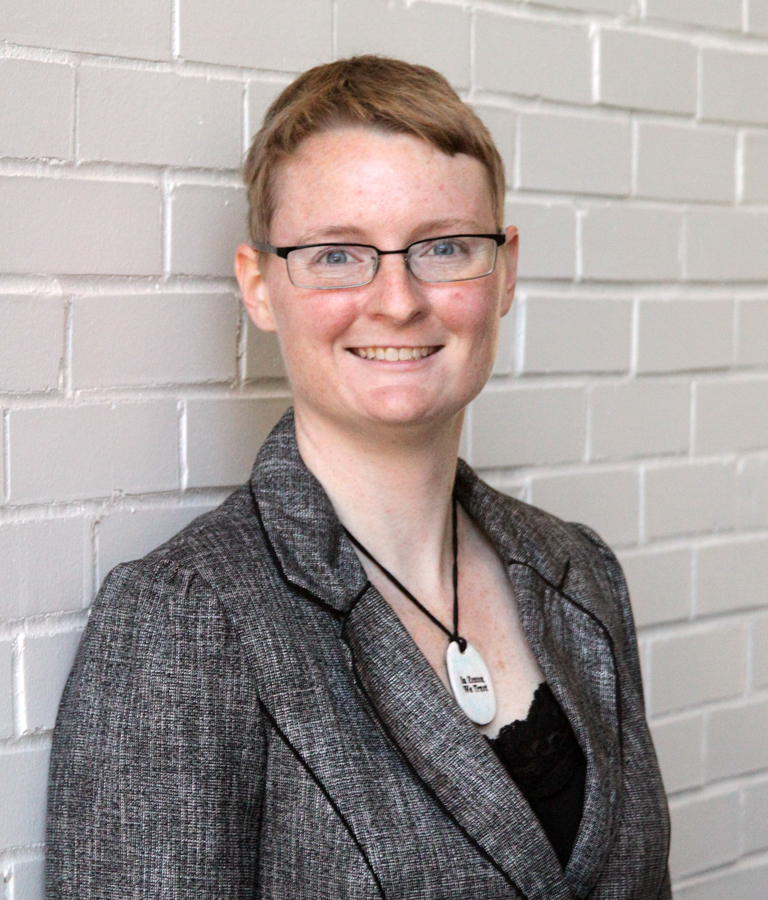
oxanaVictor Pelevin is a prominent contemporary Russian author, with books translated into a multitude of languages. To me, his novels act as a series of Dhamma talks (Buddhist sermons, if you will).

I have also always thought that Pelevin’s novels can be broadly divided into two groups: “This is how to do it” and “This is how not to do it” groups. For instance, “The Clay Machine Gun” and “The Sacred Book of the Werewolf” are “How to do it” stories, with the protagonists reaching his and her (respectively) destinations. “Babylon”, on the other hand, is the “How not to do it” story, as the protagonist ends up enslaved by the world he has created.

Victor Pelevin
Victor Pelevin

One of my favourite novels by Pelevin is “Life of Insects”, which tells the tales of a number of characters, all of them “How not to do it” stories bar one. One of the most interesting quotes from the positive story for me is “Don’t break the bucket”.

Continue reading ““Don’t break the bucket” by Oxana Poberejnaia”