

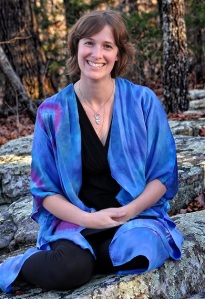
 There were some things about my grandmother that I didn’t find out until after she died. For example, in 1974, she co-organized a “Women’s Exchange” in Fresno, California with the theme: Stop the World…We Want to Get On. How much I would have liked to talk to her about that! While I didn’t know about the fair, I do know that she was successful with her vision of getting on this brightly spinning world. My grandma was a woman who was hiking in the Channel Islands one month before receiving a diagnosis of aggressive pancreatic cancer. She was incredible.
After reading Grace Yia-Hei Kao’s recent post about giving a eulogy at her grandmother’s funeral, my thoughts turned to my grandmother’s memorial services this past spring. What, if any, are the components of a feminist eulogy? Grace wonders. In reading this, I reflected on the components of the services I prepared and participated in for my grandmother and I believe they fit the bill. In a pleasingly feminist move in itself, I was asked by my extended family to serve as the priestess at my grandmother’s “committal” service (in which her ashes were interred in the above-ground burial chamber that received my grandfather’s body in 1989).
It was deeply important to me to have multiple voices represented during the small, family-only, service and I enlisted all the grandchildren present, as well as her step-grandchildren, in an adapted responsive reading based on Walt Whitman’s “Song of the Open Road”. I chose it precisely because it spoke to the irrepressible, adventuresome spirit of my grandmother. It was a lot of pressure to be responsible for the family ceremony for the interment of her ashes. I wanted it to be perfect. I wanted it to be what she deserved. I wanted it to “speak” to every person there. I wanted it to be worthy of her. I hope it was enough. Continue reading “An Epic Woman: A Feminist Eulogy by Molly”


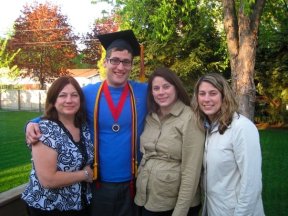 The first question I always get asked when I’m in feminist spaces is: “What inspired you to become a feminist?” Although I could go into the various histories revolving around men’s involvement in the early stages of the women’s movement to the similarities between the LGBTQ and women’s movements, my simple answer has always relied on one person: my mother.


 Feminism and Religion