Dr. Debbie Downer Discourses on the Lives of Early Pious and Sufi Women by Laury Silvers

Silvers, Bio Pic FRBlogI’ve been called a downer because I take what seems like a jaundiced perspective on the early history of pious and Sufi women. There is a tendency in some scholarship, and nearly all contemporary popular treatments of these women’s lives, to over-focus on the positive. They fasten to aspects of their lives that we (post) moderns regard as “positive” or even “liberating,” while ignoring what we find less attractive or troubling. For them, these treatments tell a story of a lost tradition of feminine and egalitarian spirituality representing a golden period that we only need to reclaim to overcome the present state of sexist affairs in our religion. I know these kinds of stories work for women, or they would not keep retelling them. But they don’t work for me. Continue reading “Dr. Debbie Downer Discourses on the Lives of Early Pious and Sufi Women by Laury Silvers”

Happy International Women’s Day, Men and Women of the World by Oxana Poberejnaia

oxanaI am writing this on International Women’s Day. I know from living in three different countries what different faces this day can have. And I can see how these different perceptions are informed by each country’s history and political situation. This is a Buddhist principle of dependent co-arising: nothing exists in separation from anything else, all phenomena arise in dependence on everything else.

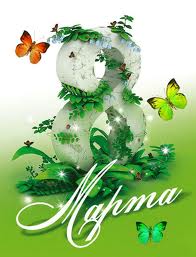
8 Marta - 8 March Russian card
8 Marta – 8 March Russian card

For instance, the Soviet 8th March was a public holiday and culturally it was a day to celebrate femininity, and – separately but connected – awakening of nature in spring. In the US, International Women’s Day was next to non-existing when I lived there in mid-1990s, apart from for hardcore Communists and Socialists, who celebrated it as a milestone on the road to Socialist equality. In the UK nowadays, International Women’s Day takes on a shape of a women-only day, a statement of women’s independence and very often celebration of same-sex love between women.

Continue reading “Happy International Women’s Day, Men and Women of the World by Oxana Poberejnaia”

A Not So Ideal Deal: Perspectives On Sexism In “Islamic Marriage” by Vanessa Rivera de la Fuente

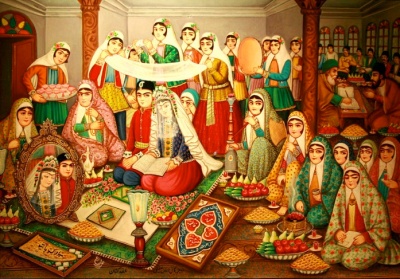
Vanessa Rivera de la Fuente. Marriage in IslamOne topic that emerges from the discussions I have with other Muslims and people in general relates to marriage. Starting with, I don’t agree with marriage. Not because I think married life is negative but because, under the prevailing patriarchal logic, marriage is not conducive to full relationships. Patriarchy has also polluted Islam and, therefore, the way in which gender relations are understood as part of a Muslim’s life including the concept of marriage.

Since I converted to Islam, I have received 11 marriage proposals. I have refused them all. Many people have seen in my attitude a sign of pride and rebellion. They are wrong. I do not rebel against married life, but against the terms in which it is presented to me and the role I am supposed to have because I am a woman in it. Manly-man-male ideas about women, prejudices related to the fact that I am not “pure Muslim, but converted,” “not Arab,” and stereotypes about Hispanic-Latina women, have all played a major role in the deep indignation and disgust with which I have rejected each prospect. Continue reading “A Not So Ideal Deal: Perspectives On Sexism In “Islamic Marriage” by Vanessa Rivera de la Fuente”

Heart of the Matter by Oxana Poberejnaia

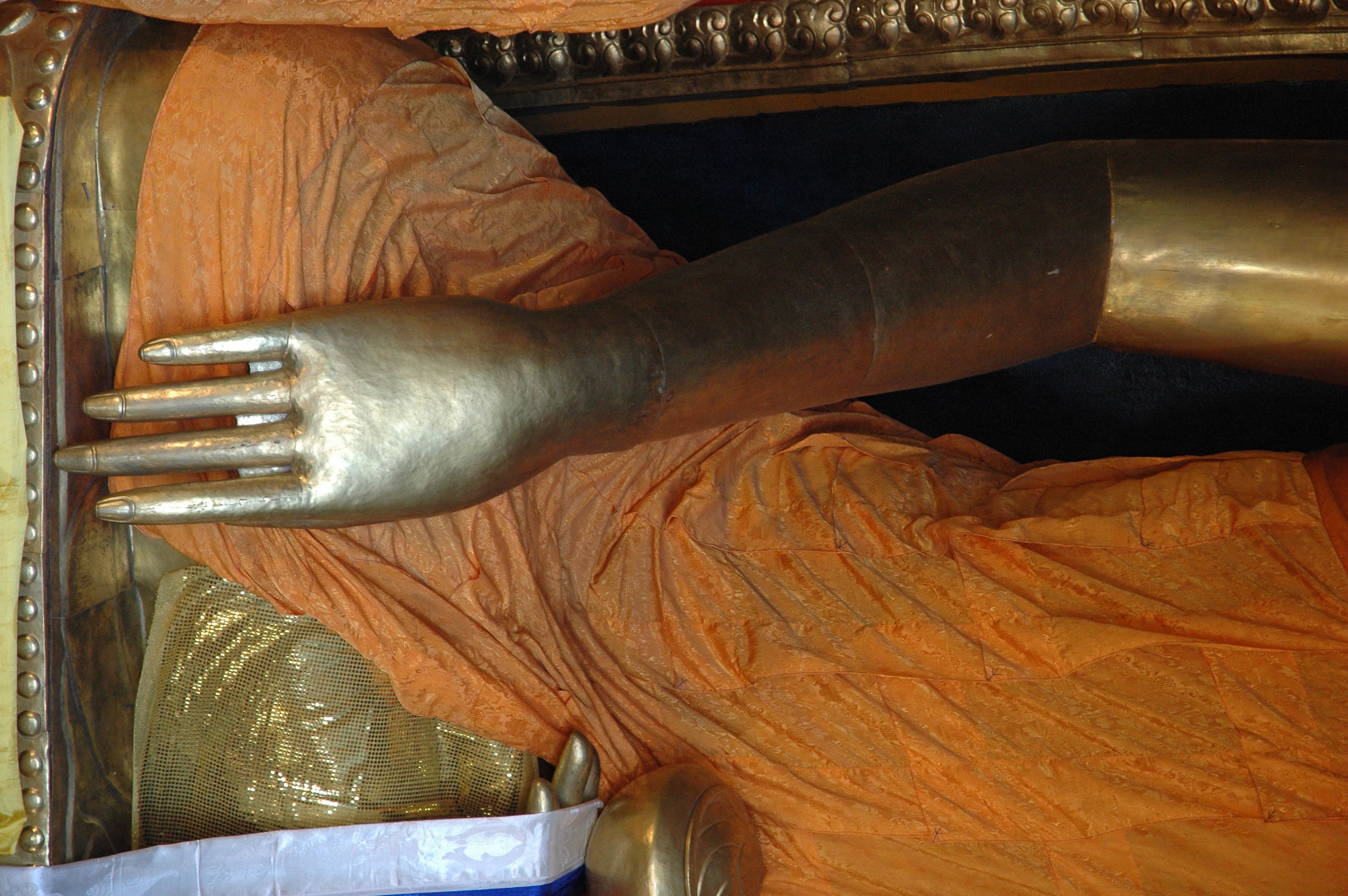
oxanaMy friend whom I teach frame drumming teaches us shamanic journeying. There was an episode in one of my journeys, when, unable to see the way forward, I put the palm of my hand on the ground and went down a hole I was creating to the core of the earth. Since then, this scene came into my mind several times when I was talking to friends about inner truth. Also, the posture itself bears uncanny resemblance to the iconic Buddha posture of touching earth with his right hand.

Touch the Earth Mudra

According to a Buddhist legend, on the night of Enlightenment Prince Siddhartha encountered Mara, the Lord of Death, who threw various hindrances the Buddha’s way to prevent him from attaining Supreme Enlightenment.  The final challenge was Mara’s claim that the Buddha had no right to be in the seat of Enlightenment. The Buddha then touched the earth with his right hand to call Her as a witness of his past spiritual achievements and his right to gain Enlightenment.

Continue reading “Heart of the Matter by Oxana Poberejnaia”

Why I Don’t Believe in Female Pastors by Andreea Nica

Andreea Nica, pentecostalismIt may come as a surprise to those who identify as both feminists and religious practitioners that I don’t believe women should be pastors of any dominant religious congregation. This includes most religions which, I assert, are rooted in and structured by the tenets of patriarchy. Does that mean I think women should be congregants of a patriarchal-originated religious system? You guessed it – no. While this may seem like a radical notion to some, it took me quite some time to come to terms with my own conflict in being both feminist and a believer.

My transition from the Pentecostal sect was a long, intricate process that involved life-altering decisions. The notion of leaving the church was driven by my immersion in women’s studies during my undergraduate degree. There were many difficult questions I simply didn’t have an answer for, as the church didn’t provide me with them.

One of them being: Can women instruct an entire congregation of believers?

For those who are female pastors, I’m sure you’ve heard this one a million times, but somehow it never fades from religious and secular discourse. Whether it’s the Islamic, Jewish, Christian, or Mormon faith, women have had to constantly fight for their right to preach religious doctrine. In the beginning of my transition, I was on the side of: Preach it ladies! Continue reading “Why I Don’t Believe in Female Pastors by Andreea Nica”

Yes, You’re a Homophobe by John Erickson

Jesus loved sinners and Jesus would rather be dancing with me in West Hollywood on a Friday night than lugging through a swamp luring ducks into a trap with a duck caller made by a clan who think that my sexual actions are similar to that of an individual having sex with an animal.

John Erickson, sports, coming out.

To be able to walk down the street holding the hand of the one you love is a great feeling and an action that some of us aren’t able to perform without fear.

A line has been drawn in the sand between those who support gay rights and those who do not.  While some call it being on the “right side of history,” I simply now refer to it as not sounding and looking like a bigot in the halls of history and in the various books, Facebook posts, and Tweets that our children will one day read. Continue reading “Yes, You’re a Homophobe by John Erickson”

Waiting for Jesus… I mean, Superman by Melinda Bielas

mindy BielasI grew up in a white-middleclass-fundamentalist-Protestant community. As a result I learned to think of God as my Father, and Jesus as my savior, similar to the fairytale prince in shinning armor or the ultimate boyfriend. As an undergraduate studying Religious Studies, I learned of other ways to relate to the Divine and discovered how to be a Feminist Christian. However, many women with backgrounds like mine do not have the opportunities that I did to discover different and liberating pictures of God. As a result they must choose between a religious life that enforces patriarchal norms, or life as a “secular” feminist. A recent song by a modern rock band, Daughtry, “Waiting for Superman,” reveals how the dependence on a male savior prevents Christian women from claiming their own personhood, independent of a patriarch. Continue reading “Waiting for Jesus… I mean, Superman by Melinda Bielas”

Buttons and Hooks by Oxana Poberejnaia

oxanaI have a problem. Some women push my buttons. Some men anger me, but in the context of feminism it is different. I usually dismiss men’s offensive actions and words as expressions of patriarchy. I take action, when I can – for instance recently I complained about the BBC radio 2 broadcasting misogynist statement when discussing a proposed Paternity bill. Complaining about the BBC to the BBC is like trying to stop a tide single-handedly. However, if no one does anything, nothing changes, as we know. In addition, I hope that statements such as “women of child-bearing age should only be employed by striptease bars” broadcast completely unopposed on the national radio service (for which we the listeners pay annual subscription) will raise more than one objection.

But coming back to women. I have noticed recently that very often I end up in deadlocks with women over silly issues. Once I was engaged in a debate about capitalism with a woman to the point when I completely forgot that I was supposed to be doing something completely different for work. The mysterious aspect of these “quarrels” is that more often than not the women have more in common with me than not: they are intellectual, independent and strong-willed. I suppose it is slight differences that unnerve me.

Continue reading “Buttons and Hooks by Oxana Poberejnaia”

A Reflection on Feminist Theology and the Real Woman by Vanessa Rivera de la Fuente

 Vanessa Rivera de la Fuente. Feminism and TheologyThe XVII Conference of Latin American Religious Alternatives is being held this week in Porto Alegre, Brazil. This event will bring together scholars and researchers from across the continent to talk together about religion, integration, and identity. I will be presenting three papers, all about Islamic feminism. I am pleased to have such a space to discuss new ways of understanding the phenomenon of religion in Latin America and the role of feminism in Latin American religion.  I want to share some of my personal reflections regarding gender, feminism and religion with you today.   

It is true that today all so-called ‘major’ religions—Islam, too—are patriarchal and male minded. It would be a fall into denial to say that abuses in the name of religion do not have a concrete impact on the lives of many women around the world. While it is possible to differentiate between what the Qur’an says and the discourse of patriarchy on Islam, the reality is that it is this patriarchy that dominates our understanding of religion

The revealed messages have been used to reinforce gender oppression in bans on “women’s issues” from therapeutic abortion to driving a car. But we know these bans do not come from the holy books themselves, as the revealed messages can support a reading of oppression or liberation. The problems are the historical authority of sexist readings as criteria of truth and the incorporation of androcentrism as the axis in relation to the divine. Sexist readings and androcentrism both give rise to oppression and violence in the name of God.

Feminists have denounced these abuses over and over again. Many feminists say religions are patriarchal, so let’s leave them without feminist intervention. I think this is not enough. We need to recognize that the religious world is patriarchal. We must name and draw attention to women and their contributions to the development of religion. We must also remove the legitimacy and authority of the androcentric understandings of the spiritual, which have caused much damage throughout history. Feminism in religion is essential.

It is often said that feminists want to undermine the foundations of the faith. Who says this? The same people who justify the exploitation of human beings, the degradation of women, and wars in the name of a God whose message is peace, mercy and social justice. But I ask—is it so dangerous that women and groups historically segregated from society want to own their spiritual experiences and live them autonomously?

What kind of God is adored by those who oppose our approaching the Divine from a feminist point of view? Just listening to their diatribes is to know that it is misogyny and not piety that motivates their messages. Misogyny also lies behind the violence against women. And behind the violence lurks the fear.

Beyond the Female Believer

Patriarchy has silenced its fear and built an “ideal believer” to legitimize the control of women in religion. But feminists no longer want to remain silent and obedient. We are seek to respond by creating our own theologies.

However, even in feminist theology, heteronormativity is still present. It is a bias that still sees gays, lesbians, trans and queer people as “abnormal” outsiders. This approach validates the patriarchal ideas of “minority” and “marginality” regarding the male-female heteronormative assumptions that dominate the religious world.

Dismantling the patriarchy in religion is not only about making the feminine more visible in the mystical, historical, and experiential approaches to religion. We must also demystify and dismantle the axis of androcentrism and heteronormativity and the hold it has in the academy and the “mainstream”.

For example, more than once, sisters who call themselves feminists, have called me “whore,” “deviant,” and “immoral” for my queer understanding of gender roles and my critique of marriage as “half the Deen” [the Islamic idea that for women marriage completes their faith, which in Arabic is ‘Deen’], a replica of the romantic patriarchal discourse of the “other half” that is so damaging to the autonomy and the self-esteem of women in the real world.

This is a problem. Feminism in religion is not landing in the everyday lives of women. Feminist theology still speaks to a woman who is cis-gendered and heterosexual, who wants to marry and have children. Feminist theology is still quoting patriarchy.

The master’s tools will never dismantle the master’s house

The reality is that not all women in religious communities are heterosexual, not all heterosexuals wish to get married, and not all married woman understand their position in marriage as subordinate and complementary to the male.

Along with eliminating the patriarchal “revelations,” feminists who theorize regarding faith must be decolonized from the need to build another “perfect believer.” We should not assume an archetype of woman, as this exercise gives authority to patriarchy’s model of the female believer that imprisons women in destructive and limited dimensions with labels like saint, mother, and whore.

I think we must remove from women the roles that are supposed to make them proper “believers.” In fact, I think we have to destroy once and for all both the concept of “believer” itself and the category of “woman” as we know it in religion. Assessing the degree of spiritual development and the agency of the religious woman according to the degree of her functionality as a “Model” is NOT emancipatory, but is both limited and sexist. If there are “role models,” someone will always be outside the norm.

Instead, let us take over the theologies and feminisms, regain power over ourselves, and raise awareness in communities that feminism is not only a field of study and analysis but also an outlook on life. We can legitimize the authority of the feminist perspectives of religion, and commit sacrilege against the exemplary women and models that are imposed on us.  Let us not talk anymore about “Muslim women” or “Christian women” or “Jewish women,” but about ourselves as women.

Above all, and essentially, we must act on behalf of women of everyday, on behalf of those women who do not want to be “perfect believers,” but who want to be happy and fulfill their goals in a world that belittles them in many ways on a daily basis. Reasonable, imperfect, diverse and ‘under-construction’ women were created by God to be in this world as an expression of life and humanity.

Vanessa Rivera de la Fuente is a Writer, Mentor and Community Educator in Capacity Building for Grass Roots Female Leaders and Advocates. A Muslim Feminist who is an Independent Researcher of Gender and Islam in Latin America on Feminist Hermeneutics, Muslim Women Representations, Queer Identities and Movement Building. She blogs in Spanish at Mezquita de Mujeres, a site dedicated to explore the links between Gender, Religion and Feminism as well to Women from the Global South as Change Makers in their communities.

Can Secular Immigrant Assimilation Promote Equality? Pt. 2

Andreea Nica, pentecostalismI often wonder how my life would have been different if I had undergone a secular immigrant assimilation process. My former faith within Pentecostalism not only shaped my identity, but augmented my ability to assimilate into the American culture. Subsequently, this led me to explore how nonreligious narratives help immigrants better acculturate to western society. Despite my interests originating in personal exploration, emergent studies within religion and sociology show that there are many factors that come into play when considering social and cultural assimilation.

Following up on my most recent post, Liberations of Immigrant Women in Western Religious Conversion, I will draw on a comparative analysis to consider secular immigrant assimilation processes. Women’s experiences during their migration process contribute to their cultural and social identity formation. Many studies point to the established idea that religion is a key variable in influencing immigrant assimilation, particularly among the Latino community. “Faith plays an important role in their lives: 74 percent of Latinos say religion provides a ‘great deal’ or ‘quite a bit’ of guidance for them” (Philanthropy Roundtable). Continue reading “Can Secular Immigrant Assimilation Promote Equality? Pt. 2”