Thealogy of the Ordinary by Molly

crop027

The Goddess Gaia is alive
In this time and in this space
She speaks in sunrises
And waves against the shore
She sings with the wind
She dances in moonlight
She holds you close
Your heart beats in time with hers
A great, grand hope and possibility
For this planet…

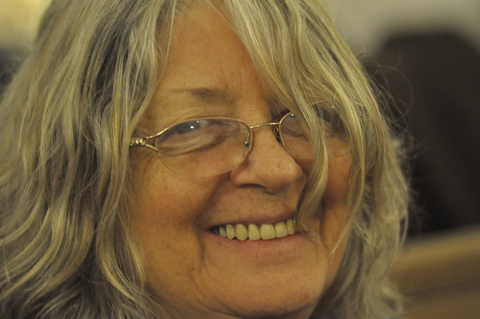
Over the last two months, I have been listening to a wonderful telesummit about priestesses. I am also a huge fan of the radio show, Voices of the Sacred Feminine. However, as I listen to both, I sometimes find myself wondering if walking a Goddess path is also viewed as synonymous with, “believe everything, question nothing.” Crystal essences, gemstone healing, soul contracts, past lives, spirit guides, astrology, the many realms and dimensions of the occult, mystical, New Age and metaphysical. Is wholesale suspension of logic required to join hands with the Goddess? Is deft management of the tarot essential to the priestess path?  Is excavating my “inner masculine” relevant or appropriate? Must I ascribe to “enlightened” tenets like, “you are not your body,” “I am a spiritual being having a spiritual experience” and “we made an agreement to do this work before we showed up in this body at this time and place” in order to move forward? Continue reading “Thealogy of the Ordinary by Molly”

Painting La Negrita by Angela Yarber

angelaOne week ago thousands of Costa Ricans made a pilgrimage to visit their patron saint on August 2. Some penitents walked the 22 kilometers on their knees from the capital of San José to the Nuestra Señora de los Angeles Basilica in Cartago where the small statue of La Negrita is now on display. Joining Virginia Woolf , the Shulamite, Mary Daly, Baby Suggs, Pachamama and Gaia, Frida Kahlo, Salome, Guadalupe and Mary, Fatima, Sojourner Truth, Saraswati, Jarena Lee, Isadora Duncan, Miriam, Lilith, Georgia O’Keeffe, Guanyin, Dorothy Day, Sappho, Jephthah’s daughter, Anna Julia Cooper, the Holy Woman Icon archetype, Maya Angelou, Martha Graham, Pauli Murray, and all my other Holy Women Icons with a folk feminist twist is this seemingly small saint who has done big and mighty things: La Negrita.

Also known as La Virgen de los Angeles, the Black Virgin is a very small representation of the Virgin Mary. She was originally discovered by an indigenous woman on August 2, 1635. When the poor indigenous woman tried to take the stone statuette, it miraculously reappeared. The people responded by building a shrine around her. Continue reading “Painting La Negrita by Angela Yarber”

Queering Iconography, Painting Pauli Murray by Angela Yarber

angelaEven as my book, Holy Women Icons, is printed, bound, and available for purchase, filled with the stories of nearly fifty holy women, my project of painting these beloved saints continues. Joining all my other Holy Women Icons with a folk feminist twist is the brave, bold, and revolutionary Pauli Murray.

This month is a celebration of Murray’s life and witness is several meaningful ways. The first of July was her feast day, as she was deemed an Episcopal saint in 2012. LGBTQ author and activist, Kittredge Cherry, detailed Murray’s feast day, celebrating her as a “Human rights champion and queer saint…renowned civil rights pioneer, feminist, author, lawyer and the first black woman ordained as an Episcopal priest.” And the celebration of Pauli Murray’s radical witness continues as the icon bearing her image joins seventeen of my other Holy Women Icons at the North Star LGBTQ Center Gallery in Winston-Salem, NC for an exhibition entitled, “Queering Iconography: Holy Women Icons from Sappho to Pauli Murray.” Continue reading “Queering Iconography, Painting Pauli Murray by Angela Yarber”

The Outraged Ancestral Mother by Molly


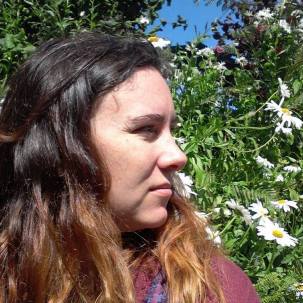
crop027During the fifth week of the Rise Up and Call Her Name curriculum by Elizabeth Fisher, “We honor the Outraged Ancestral Mother and the belief that the sacred and secular are one.” When I priestessed this session for my women’s circle, I was caught by the idea of the Outraged Ancestral Mother and we spent some time discussing her and the degree to which humanity has hurt our planet. The next morning while I was practicing yoga, snippets of a poem came floating to my mind. I had the distinct feeling that the Outraged Ancestral Mother was ready to speak to me. I went down to the woods to listen to what she had to say.

Continue reading “The Outraged Ancestral Mother by Molly”

Love Facing by Safa Plenty

aqua and red

This piece titled, ‘Love Facing’ is a meditation on the intergenerational dynamics of family violence and our need to move beyond labels in order to understand the complexities of American violence. It begins with a narrative critic of spanking as a corrective measure and its propensity to escalate into other forms of violence. The poem continues with reflection on how male privilege and power impact the disempowerment of women and girls. It signals forgiveness as a possible means of understanding intergenerational trauma and stress, however.  The piece advocates an understanding of male privilege and dynamics of power and control, as a means of empowering women and children, affected by family violence. Furthermore, it examines our societies failure to raise healthy men and boys, who are comfortable openly expressing their emotions. In the end, the poem signals our human need for unconditional love, respect, and honor and need for religious and spiritual practice imbued with compassion, mercy, and kindness, or feminine attributes of the Divine.

“When the power of love overcomes the love of power, the world will know peace.” ― Jimi Hendrix

Continue reading “Love Facing by Safa Plenty”

Resurrection Garden, Resurrection Feast by Elizabeth Cunningham

Elizabeth Cunningham headshot jpegIn John’s account of the Resurrection, Mary Magdalen mistakes Jesus for the gardener.  Or perhaps it is not a mistake or not just a mistake but also a poetic truth. In any event, John’s Gospel makes clear:  the Resurrection takes place in a garden!

(For the feminist significance of horticulture, I refer you to Carol Christ’s recent post on this site: Women and Weeding, the first 10,000 years .)

Many  prominent (male) theologians, historians, anthropologists, and psychoanalysts among them James Frazer, Jung, and C.S. Lewis made the case for and/or against (in Lewis’ case) Jesus being another dying rising god of vegetation with Christianity borrowing imagery and ritual from earlier or even contemporary cults. The argument against insists that Jesus’s life, death and resurrection is historical, redemptive, and unique.  From a tour of Bloglandia, the debate pro and con appears to continue unabated.  I say better to pull weeds (if you are lucky enough to have a garden) than pontificate. Continue reading “Resurrection Garden, Resurrection Feast by Elizabeth Cunningham”

Painting Maya Angelou by Angela Yarber

angelaAuthor. Performer. Activist. Poet. Actress. Playwright. There are few others whose accomplishments are as prestigious, prolific, or expansive as Maya Angelou’s. I initially encountered her work in a ninth grade literature class. The first of her seven autobiographies was our assigned reading. I voraciously consumed every word of I Know Why the Caged Bird Sings, my heart filled with grief, my eyes filled with tears, my mind filled with questions. It is no wonder this book is the most acclaimed of all her autobiographies, books of poetry, and essays. As a fourteen year-old, my mind was opened to the power of stories, particularly the stories of those vastly different from oneself, and to the oppression black women like Angelou experienced in the United States. As a native white Southerner, I Know Why the Caged Bird Sings was my first foray into grappling with the nuances of white privilege.

In college, my creative writing professor packed all ten of the creative writing minors into a van to drive to a neighboring college where Angelou was lecturing. I sat in awe, riveted by every word. And upon the completion of my Ph.D., I moved to Winston-Salem, the place Angelou calls home. I have yet to meet her. If I could, I’d surely hand her the icon I painted in her honor, knowing that my words would fail to express how profound my gratitude is for the work she has done in our world. Continue reading “Painting Maya Angelou by Angela Yarber”

Sanctuary of Echoes by Natalie Weaver

Natalie WeaverTomorrow I will have the unique opportunity to hear my son recite a poem I wrote before his class. The students were invited to select a poem to memorize and perform along with props or costumes as suited the material. The only conditions were that the poem be a minimum of twelve lines, published in a book, and in good taste. A poorly chosen poem, he said, would result in perpetual detention.

I was excited when he expressed enthusiasm for the assignment. I asked him what kind of poem he would like to learn. Something humorous? Something dramatic? Something tragic? Something about love? War? I read to him first those famous opening words of Virgil’s Aeneid: Arma virumque cano (I sing of arms and a man…). I thought surely he would be intrigued by the rhythm and the promise of such a tale. He asked for some other options, so I presented favorites from the Medieval Hebrew canon. I taught him Adon Olam, since he was curious about learning poetry in a foreign language. He liked it quite a bit and learned how to pronounce the Hebrew, but this was not his choice. I pulled out selections from Catullus’ eulogies for his brother. I searched Sappho for something playful. We read more contemporary options from the usual suspects in an anthology of poetry that I had used in a college course: Frost, Dickinson, Poe. I even introduced him to the seductive “duende” of the great early 20th century Spanish poet Federico Garcia Lorca in his Poet in New York.

Continue reading “Sanctuary of Echoes by Natalie Weaver”

Melding Consciousness by Safa Plenty

SafaWe, becoming lost 
in the chaotic whirlwind of existence,
within its patterns and dimensions,
between seven layers of separation,
weaving us through
 a multitude of realities.
 
We, puzzling at hairline fractures,
arising from lapses of our consciousness,
exposing our humanness
agitating our frontal lobes,
levering us from our perception
into a sensory mode.
 
We, portal points of perception
 passing from potential
 to actual existence in an instant
 to bear witness
 to the infinite storehouses
 of what loved to be known
 through the senses.
 
Yes, this Out-breath of pure existence
 beyond dimensions situated
in space and time,
  clay and water,
   grape and wine,
beats and rhymes
   suspended in between
   bap and boom,
 & the kaf and the nun
 of the Kun f’ya kun
 the ripples of time,
conscious spirit.
 
We, reverberating through
 physical finite mystical hindsight
– I am in the opinion of my slave –
 not all apertures are set to take
 in the same amount of divine light.

Melding Consciousness ©2014

 
Safa N. Plenty is an educator and mental health counselor. She holds a Masters of Social Work from Columbia University in Applied Generalist Practice and Programming and an undergraduate degree in interdisciplinary studies with a minor in Africana Studies. Her research interest include Sufism, Attachment to God, indigenous eschatology, particularly Native American and Somatic psychology. She is also interested in religious mysticism, mindfulness practice in Buddhism and the role of feminism and religion in cultivating a peacemaking capacity among young Muslim women. Safa is currently working to develop a faith based healthy relationships program for Mothers and daughters. She enjoys writing poetry, research, and contemplative practice in art and crafts in her free time.

Echoes of Mesopotamia by Molly

IMG_0522

Echoes of Mesopotamia
small figures from ancient places
ancient times
and ancient faces
ancient words
and ancient wisdom
still flowing in my veins

Clay in my hands
clay in her hands
running on the rivers of time
spiraling in the mysteries of being
spinning in the eddies and ripples of eternity…

I have a strong emotional connection to ancient Paleolithic and Neolithic goddess sculptures. I do not find that I feel as personally connected to later goddess imagery, but very ancient figures call to something deep and powerful within me. I have a sculpture of the Goddess of Willendorf at a central point on my altar. Sometimes I hold her and wonder and muse about who carved the original. I almost feel a thread that reaches out and continues to connect us to that nearly lost past—all the culture and society and how very much we don’t know about early human history. There is such a solid power to these early figures and to me they speak of the numinous, non-personified, Great Goddess weaving her way throughout time and space. Continue reading “Echoes of Mesopotamia by Molly”