It is late autumn, 2009. I am 30 years old and pregnant with my third baby. He dies during the early part of my second trimester and I give birth to him in my bathroom, on my own with only my husband as witness. The blood comes, welling up over my fingers and spilling from my body in clots the size of grapefruits. I feel myself losing consciousness and am unable to distinguish whether I am fainting or dying. As my mom drives me to the emergency room, I lie on the back seat, humming: “Woman am I. spirit am I. I am the infinite within my soul. I have no beginning and I have no end. All this I am,” so that my husband and mother will know I am still alive.
I do not die.
This crisis in my life and the complicated and dark walk through grief is a spiritual catalyst for me. A turning point in my understanding of myself, my purpose, my identity, and my spirituality.
It is my 31st birthday. May 3rd. My baby’s due date. I go to the labyrinth in my front yard alone and walk through my labor with him, remembering, releasing, letting go of the stored up body memory of his pregnancy. I am not pregnant with him anymore. I have given birth. This pregnancy is over. I walk the labyrinth singing and when I emerge, I make a formal pledge, a dedication of service and commitment to the Goddess. I do not yet identify myself verbally as a priestess, but this is where the vow of my heart begins.
I do not know at the time, but less than two weeks later, I discover I am in fact pregnant with my daughter, my precious treasure of a rainbow baby girl who is born into my own hands on my living room floor the next winter. As I greet her, I cry, “you’re alive! You’re alive! There’s nothing wrong with me!” and feel a wild, sweet relief and painful joy like I have never experienced before.
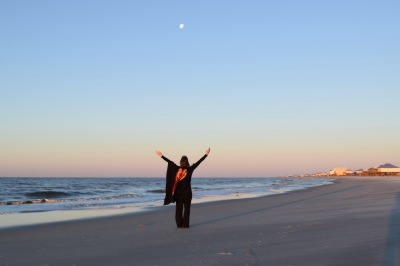
“When all is said and done I think every Witch should, at some time, face the moon alone, feet planted on the ground, with only his or her voice chanting in the starry night.”
–Laurie Cabot, Power of the Witch
I will never forget the first time I heard someone recite the Charge of the Goddess from memory. Bare-breasted, she strode around the fire in sacred circle at a large goddess festival in Kansas, delivering the words with power, grace, and confident resonance. I thought: I will do that someday.
In February of this year, we took a family trip to Dauphin Island. While there, the afternoon of the full moon, I
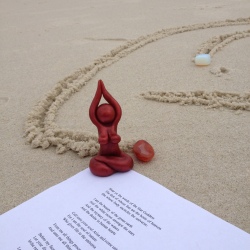
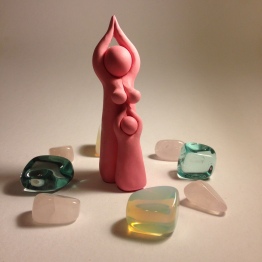
decided that the time had come. I was going to memorize the Charge of the Goddess. First, I thought I would only memorize it a piece at a time. It seemed “too big” to do in a single sitting. I had it printed out on a piece of paper that rapidly became damp with the salty sea air. I drew a labyrinth in the sand with my toes, set one of my goddess sculptures at its entrance, and drew a Womanrunes card.
One stanza at a time, slowly I began to repeat the poem* aloud:
hear ye, the words of the star goddess
the dust of whose feet are the hosts of heaven...
Over and over, I said the words, letting them twine around my tongue and in the air, experimenting with cadence and rhythm. After I could reliably repeat one section, I’d move to the next, letting it build in my memory until I could put the two together confidently and then moving to the next.
I am the beauty of the green earth
the white moon amongst the stars..
I stared into the waves, listening to them rise and fall along with my words. My three older children dug in the sand.
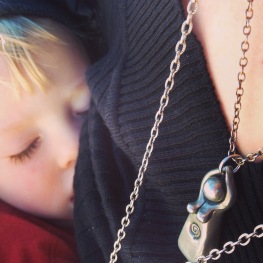
My husband fished. My toddler toddled around and then came to sit on my lap and nursed to sleep for nap time:
before my face
beloved of all…
I whispered into his damp hair. I felt in an altered state of consciousness. The words began to wind their way through me, becoming a part of me, embedded in me. I danced with them as I have never danced with another piece of writing. I felt them merging with me. I sang them aloud. I stated them fast and slow and I built, adding the next line and then the next…
for behold, all acts of love and pleasure
all my rituals.
I turned over hard thealogical questions as the words spun their magic through the air. What does it really mean that “all your learning and seeking shall avail you not, lest your know the mystery.” Do I really feel the goddess within? Do I find her within myself or is she only outside and if she is only outside, does she really exist at all? Tears came to my eyes: do I even like myself?
Two hours passed. My baby awoke and returned to digging in the sand. My husband packed up his fishing gear. The sky began to darken and spit rain. I stood and danced the words into the sand with my feet.
let your divine innermost self
be enfolded
in the rapture
of the infinite
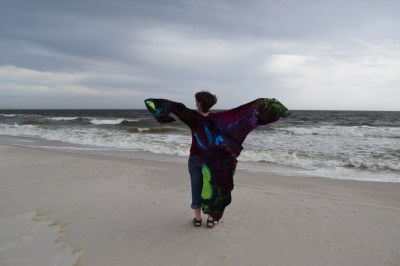
I felt rapturous. I felt triumphant. I had done it. Faster and faster my feet stamped the sand as I called the words into the waves. I spun in circles with my toddler chanting and laughing and offering my devotion before the sea, beneath the moon.
the mystery of the waters
the desire in human hearts…
*I used Shekhinah Mountainwater’s adaptation of the Charge, originally by Doreen Valiente, as included in the book Ariadne’s Thread.
Molly has been “gathering the women” to circle, sing, celebrate, and share since 2008. She plans and facilitates women’s circles, seasonal retreats and rituals, mother-daughter circles, family ceremonies, and red tent circles in rural Missouri and teaches online courses in Red Tent facilitation and Practical Priestessing. She is a priestess who holds MSW and M.Div degrees and recently finished her dissertation about contemporary priestessing in the U.S. Molly and her husband Mark co-create original goddess sculptures, ceremony kits, and jewelry at Brigid’s Grove. Molly is the author of Womanrunes, Earthprayer, and The Red Tent Resource Kit. She writes about thealogy, nature, practical priestessing, and the goddess at her Woodspriestess blog.
The United Methodist Church (UMC) General Conference, the denomination’s legislative body that meets every four years, is currently underway in Portland, Oregon. For self-avowed “MethoNerds” this is a highly anticipated event akin to watching the Olympics. Meanwhile I’m doing my best to keep my distance from the happenings there.
For six years I worked in the public policy and advocacy office of the UMC, the church into which I had been baptized as a teenager. My position was one coveted by many and for good reason. I got to write, speak, and travel the country, connecting with congregations and training people of faith in advocacy for women and girls. But I was also required to witness the political infighting of General Conference in 2012, which left me in tears and with little hope for a more just, compassionate church.
I’m going to do something I’d never thought I’d do: fill your newsfeed with yet another article pertaining to the 2016 United States Presidential election and yes, I’m going to talk about former Secretary of State Hillary Clinton (hint: I’m emphatically supporting her and I’m unapologetic about it.)
I’m going to do something I’d never thought I’d do: fill your newsfeed with yet another article pertaining to the 2016 United States Presidential election and yes, I’m going to talk about former Secretary of State Hillary Clinton (hint: I’m emphatically supporting her and I’m unapologetic about it.)
Let me start off with my central point: a vote for Hillary is a vote to change history and the world. No, not because she’ll hail in some type of new economic stimulus (although I’m sure she’ll do just fine with our economy #ThanksObama) or because she’ll save us all from the evils of the GOP (looking at you Trump/Cruz/and the “moderate” Kasich) but because she’ll do one thing that’s never been done before: become the first female President of the United States, ever.
While I have tried not to get into “it” (read: online trysts with my friends on social networks who are #FeelingtheBern) the question I beg to ask is: what’s so wrong with wanting the right woman to be the President? This is one, but not my only reason, I will cast my vote for her both in the Democratic Primary in California in June as well as in November (and, if you haven’t guessed, I do not believe or promulgate the reasoning or rhetoric that Bernie Sanders will come from behind and win the Democratic Party’s nomination because I passed 5th grade level Math.)
This week, the Christian season of Lent began. Ugh. Lent can be so somber and serious and gloomy. Last year, I didn’t want to place myself in that frame of mind. I was experiencing grief and self-doubt and loneliness, and felt that an extended period of reflection about self-denial, Christ’s suffering, and the sinful condition of humanity might pull me into an unhealthy depression. Also, I questioned why I should seek silence and solitude when I was already experiencing too much of it. I felt isolated.
This year is different for me. Once again, I’m entering the season with a grieving heart. I’m mourning the death of my cousin. But I do not feel isolated. I am not self-doubting. This January, I spent four continuous days with mentors and peers in academia who poured love and wisdom and inspiration into me. The women in our group sought each other out and had honest and authentic conversations about the successes and struggles in our lives. We affirmed self-care. We affirmed milestone birthdays. We affirmed our bodies, despite the physical limitations we sometimes feel. We affirmed the tough decisions some had made, the transformations some were pursuing, and the exciting opportunities that had developed for others since we last met over the summer.
It was a powerful experience, but there was pain, too. We confronted fear, rejection, anxiety, exhaustion, and frustration. I felt blessed—divinely gifted—to have an opportunity to speak honestly with my sisters in the spirit about the people and issues on our hearts: challenges with students, systemic racism and sexism, menopause, children, research questions, financial decisions, romance, and health.
“The tools are unimportant; we have all we need to make magic: our bodies, our breath, our voices, each other.”
–Starhawk
As November drew to a rainy close, we had a small family full moon ritual on our back deck and incorporated a simple gratitude ritual into it. The sky was overcast so we couldn’t actually see the moon, but my four-year-old daughter wanted to get out glow sticks left over from Halloween. We had so much fun dancing around with them and making patterns together in the dark night. We sang a chant I recently made up:
Hallowed evening
Hallowed night
We dance in the shadows
We offer our light.
We did a simple gratitude practice by placing corn kernels in a jar, one for each thing we are grateful for from the past month. We started out slowly and taking turns and then we sped up and the gratitude offerings came tumbling out, over one another. Even the one-year-old added corn, rapidly yet with great concentration to make it actually go in the jar. We drummed and called out, “We are ALIVE! We are GRATEFUL! We are POWERFUL! We are CREATIVE!” When we finally decided to close our ritual and go back inside, the moon peeked out from behind the clouds to briefly say hello and it felt like a blessing on the magic we’d just created together.
As we went back inside, I felt relaxed, happy, and connected. For being something very simple, not particularly pre-planned, and semi-chaotic, it felt like one of our deepest and most connected personal family rituals. The quote above from Starhawk floated back into my mind and I reflected that when I try “too hard” to get things ready for a perfect ritual, I often end up feeling a disappointed. Sometimes I feel like giving up on holding ceremonies with my children entirely. Last year, as we prepared to walk our Winter Solstice Spiral, the baby had a poopy diaper that extended up his back. I often end up snapping critically at whomever isn’t doing it “right.” My boys make fart jokes. My husband gives long-suffering sighs. Our circle looks more like a lopsided peanut. Our humming together discordant and off-key. As we lie on the ground together on the Spring Equinox to do our “Earth Listening” practice together, the kids wiggle and fight, pushing one another off the blanket and exclaiming in loud voices so no one can hear what we’re listening for. We listen to a shamanic drumming CD, but the only one to reach a trance state is the baby as I pace back and forth with him in a baby carrier. The four year old ends up crying because she doesn’t see anything and she wanted to see something cool. Martyrpriestess emerges to complain that she doesn’t know why she even bothers trying to do nice things for anyone if this is how you’re all going to act.
I recently finished reading Under Her Wings: The Making of a Magdalene, by Nicole Christine. A theme running through the book was the concept of “As Above, So Below and As Within, So Without.” I read this book as part of my research for my dissertation about contemporary priestessing and as I read, I kept thinking, I want to hear from the Mamapriestesses, from the Hearth Priestesses! Where are the other practicing priestesses with children at home? I noticed in Christine’s book that the bulk of her work took place after her children were grown and, to my mind, she also had to distance or separate from her children and her relationships in order to fully embrace her priestess self. I notice in my reading and my research group that many women seem to come to priestess work when the intensive stage of motherhood has passed, or they do not have children. Is there a very good reason why temple priestesses were “virgins” and village wise women were crones? Where does the Mamapriestess fit?
As I read Christine’s book and witnessed her intensive self-exploration, discovery, and personal ceremonies and journeys, I realized that in many ways personal exploration feels like a luxury I don’t have at this point in my parenting life. How do we balance our inner journeys with our outer processes? Christine references having to step aside and be somewhat aloof or unavailable to let inner processes and understandings develop, since our inner journeys may become significantly bogged down in groups by interpersonal relationships, dramas, venting, chatting, and so forth. For me, this distance for inner process exploration isn’t possible in the immersive stage of life as a mother. And, yet, I also know in my bones that I’m not meant to give it up. How does the As Within and the So Without actually work?
I return to our Full Moon gratitude ritual. My oldest son, 12, whose height is rapidly extending into manhood, totes his tiny brother on one hip with practiced ease, offering his own glow stick and helping my little one hold his into the air. He expresses gratitude for the fun he’s been having this month with his new video game and, “I’m grateful for you for doing things like this with us, Mom.”
My second son, 9, my bravest child, crawls willingly into the darkness under the deck to retrieve lost glow sticks, poked purposefully down porch cracks by the one year old. He returns, triumphant, holding the bundle of sticks aloft.
My daughter, nearly five, tips her face back, looking up at me with eyes alight, “I’m glad to be a Goddess Girl!” she calls out…
Molly has been “gathering the women” to circle, sing, celebrate, and share since 2008. She plans and facilitates women’s circles, seasonal retreats and rituals, mother-daughter circles, family ceremonies, and red tent circles in rural Missouri. She is an ordained priestess who holds MSW and M.Div degrees and she is currently writing her dissertation about contemporary priestessing in the U.S. Molly’s roots are in birth work and in domestic violence activism. She has worked with groups of women since 1996 and teaches college courses in group dynamics and human services. Molly is the author of Womanrunes: a guide to their use and interpretation, Earthprayer, Birthprayer, Lifeprayer, Womanprayer, and The Red Tent Resource Kit. She has maintained her Talk Birth blog since 2007 and writes about thealogy, nature, practical priestessing, and the goddess at her Woodspriestess blog. Molly and her husband Mark co-create original birth art jewelry, figurines, and goddess pendants at Brigid’s Grove.
Note: If you have children at home, I’d love to hear from you about the Mamapriestess topic! If you do not have children by choice, how does this play into your spiritual work? If you do not have children and that is not by choice, how does this play into your spiritual work?
I wrote this piece in response to an e-mail from a friend that said: “Yes, women’s circles may help you with your headaches that you have every 3 to 7 days (or whatever else ails you.)”
I think women (and men as well, but I think women feel this more deeply in general) are missing a genuine connection to others, a safe place to be heard and accepted, a chance to step outside of their roles and responsibilities in life (if only to see how very similar our challenges are), and a chance to honor beauty whether that be by reading a poem, singing a song or listening to music.
I have a productivity obsession. I wouldn’t go so far as to call it an addiction, though in describing to a friend how euphoric it feels to check off a bunch of to-dos, he said, “You kind of sound like a junkie.” He may be right. Up until a year ago I didn’t think I had a problem. When I heard experts talk about self-care and meditation and “me” time, I’d roll my eyes a bit. Self-care is for wimps, I thought to myself. And I was certainly not one of those. I didn’t need time off for self-care. I had my to-do lists.
I started to question if I really had this all figured out when I was two weeks postpartum and back to work full-time because like most workers in the United States, I didn’t have paid family leave. Between the hormonal fluctuations and sleep deprivation, I lacked the mental clarity I needed to prioritize tasks. So then every task became the most urgent thing. On top of caring for a newborn and recovering from the birth, this created a perpetual state of mental exhaustion that was simply not sustainable. I needed to do something before I burned out completely.
One of the first steps I took was doing a self-assessment of the current state of my overall wellness–physical, mental, emotional, and spiritual. The first thing I jotted down was, “I’m stretched to my limits. I’m productive to a fault.” That was telling. My next step was to write out a wellness prescription. Since lists and schedules are my drugs of choice, could I try using them for good? I wrote out a self-care to-do list with a dozen different items, including weekly yoga sessions and scheduled downtime. Continue reading “Relaxation as a Spiritual Discipline by Katey Zeh”
“I believe that these circles of women around us weave invisible nets of love that carry us when we’re weak and sing with us when we’re strong.”
–SARK, Succulent Wild Woman
Seven years ago, a small postcard at the local Unitarian Universalist church caught my eye. It was for a Cakes for the Queen of Heavenfacilitator training at Eliot Chapel in St. Louis. I registered for the training and went, driving alone into an unknown neighborhood. There, I circled in ceremony and sisterhood with women I’d never met, exploring an area that was new for me, and yet that felt so right and so familiar.
I’d left my two young sons home for the day with my husband and it was the first time in what felt like a long time that I’d been on my own, as a woman and not someone’s mother. At the end of the day, each of us draped in beautiful fabric and sitting in a circle around a lovely altar covered with goddess art and symbols of personal empowerment, I looked around at the circle of women and I knew: THIS is what else there is for me. Continue reading “Restoring Ourselves to Ceremony: Red Tent Circles, by Molly”
Have you ever heard of the Vitruvian Man? It’s an image from 1490 inked by Leonardo da Vinci that came to symbolize the centrality of the individual in the Renaissance. It is quite clearly a depiction of a muscular, European male. His body is perfectly proportionate and thus simultaneously represents ideal humanity and a microcosm of the universe. The Vitruvian Man is so named after the ancient Roman architect Vitruvius who describes the proportions and symmetry of a temple as being analogous to the proportions of a man.
As an architect and scholar in the humanities, I’ve been acquainted with the Vitruvian Man for many years now. I even had a da Vinci theme on my PC’s Windows software about 15 years ago, meaning that the image of the Vitruvian Man appeared regularly on my desktop and screen saver. There was nothing problematic to me about his presence until a few days ago, when I took part in a discussion about teaching philosophies with some new friends and academic colleagues.
I was listening to Tamara Lewis, an assistant professor in religion whose research and teaching addresses the medieval and Renaissance periods. When she described a metaphor for her teaching philosophy, she discussed replacing the symbol of Vitruvian Man with the “woman at the well.” The woman at the well is a figure in Christian stories about Jesus and his teachings. Her narrative in the Bible is placed in chapter 4 of the Gospel according to John. Int eh story, Jesus encounters a Samaritan woman at a well. He asks her for a drink, which begins a meaningful exchange about spiritual teachings. Jesus’ male disciples and surprised to witness this exchange, presumably because she is a woman and a Samaritan, as the text tells us that Jews do not associate with Samaritans. The woman goes back to her town, tells people about her encounter with Jesus, whom she believes is the Messiah, which prompts many of them to come to him and also believe.
Dr. Lewis described how her presence in the historical study of medieval or Renaissance periods is sometimes questioned and how the woman at the well represents this presumed misplacement. Her metaphor caught my attention not just because of its profound coherence within her own career trajectory and narrative, but its coherence within mine. As a black feminist, religion scholar, and practicing Christian, I often wrestle with questions of belonging and being in or out of place.
This summer, I’m taking the time to think about broad questions and do some vision casting. This past December, Grace Kao wrote about using sabbatical time differently, and I’ve connected this to my own practice of Sabbath keeping as a ritual. I dedicate specific times to cease work. I am engaging in some productive activity this summer, but I’m also honoring one of the truest blessings and privileges of full-time employment in my profession, which is break time to rest, reflect, and plan for the seasons ahead. The metaphor of woman at the well who intentionally replaces the Vitruvian Man provokes these questions in my reflection:
Who is the default person around which the places we inhabit are constructed? Who sits at the center of our stories about the places we will go?
As the little bio that follows my posts says, in my professional career I examine issues of civic engagement and how beliefs and commitments are expressed publicly through aesthetic and artistic practices. I’m currently writing a book-length project about theological ethics and architectural design. So these days I’m thinking a lot about the way public spaces and built environments communicate the values of those who build them and inhabit them. One of the questions I’m wrestling with is the way “common” spaces are defined by the narratives of only some people in the community. What does it mean to be literally “out of place”? What exists as a “safe space” in a public park for a man may not feel safe at all for me as a black woman. A public bench upon which I can rest in the middle of an afternoon jog may not be so uncontested for a homeless man at night.
As I think about my future, I have to ask who sits at the center of my story. I’m approaching a milestone birthday, and I don’t want to fall victim to someone else’s vision of what a 40 year old woman should be. What does the story look like with me at the center? What happens when I replace an idealized image of perfection, vitality, and beauty with an imperfect but gloriously alive and wonderfully formed vision of who I already am?
As I plan for a new academic year, who do I imagine in my classes? As I engage students in discourse about the history of Christianity, the development of its theology, and the ethical issues of today’s world, who do I place at the center? As the US becomes enmeshed in presidential election politics and ongoing racial tensions, what image to we present as the archetypal American?
I’m so grateful that I was brought to see the woman at the well as a metaphor of intentional displacement. Even in a religion that places a male Savior (Jesus) at its center, there are women who sit with him. Although they confound some of Jesus’ other followers by their presence, they remain meaningful conversation partners and witnesses to their faith.
Elise M. Edwards, PhD is a Lecturer in Christian Ethics at Baylor University and a graduate of Claremont Graduate University. She is also a registered architect in the State of Florida. Her interdisciplinary work examines issues of civic engagement and how beliefs and commitments are expressed publicly. As a black feminist, she primarily focuses on cultural expressions by, for, and about women and marginalized communities. Follow her on twitter, google+ or academia.edu.


part of my second trimester and I give birth to him in my bathroom, on my own with only my husband as witness. The blood comes, welling up over my fingers and spilling from my body in clots the size of grapefruits. I feel myself losing consciousness and am unable to distinguish whether I am fainting or dying. As my mom drives me to the emergency room, I lie on the back seat, humming: “Woman am I. spirit am I. I am the infinite within my soul. I have no beginning and I have no end. All this I am,” so that my husband and mother will know I am still alive.
 I’m going to do something I’d never thought I’d do: fill your newsfeed with yet another article pertaining to the 2016 United States Presidential election and yes, I’m going to talk about former Secretary of State Hillary Clinton (hint: I’m emphatically supporting her and I’m unapologetic about it.)
 I wrote this piece in response to an e-mail from a friend that said: “Yes, women’s circles may help you with your headaches that you have every 3 to 7 days (or whatever else ails you.)”
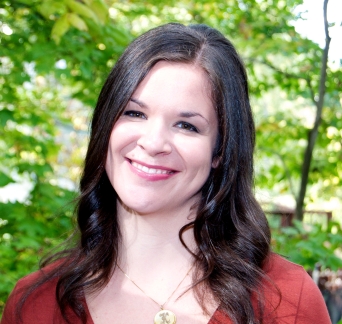 I have a productivity obsession. I wouldn’t go so far as to call it an addiction, though in describing to a friend how euphoric it feels to check off a bunch of to-dos, he said, “You kind of sound like a junkie.” He may be right. Up until a year ago I didn
 Feminism and Religion