The Spirit and Jarena Lee: Inspiration to Break Boundaries by Elise M. Edwards

elise-edwardsI am so frustrated that we are still fighting to affirm women’s place in leadership.  I’ve been thinking about this struggle in the context of church ministries (especially preaching) and social activism, seeing a stark contrast between the way institutional churches and universities promote and subvert women’s authority and the ways movements like Black Lives Matter do.

Particularly, I’ve been struck by the ways that more radical movements employ language and practices that are based in spirit more than hierarchical authority.  I have found a theme emphasizing equality in humanity’s access to spirit in both historical and contemporary movements and writings about religious experience.  I’m certainly not the first one to notice or discuss how appeals to Spirit have empowered those excluded from dominant systems of power to challenge constrictive social structures, but I would like to share how this dynamic has become more visible to me so that, together, we might find encouragement, inspiration, and food for thought.

Continue reading “The Spirit and Jarena Lee: Inspiration to Break Boundaries by Elise M. Edwards”

Moving Away from Normative Maternal Roles in the Catholic Church by Michele Stopera Freyhauf

FreyhaufEarlier this week, social media was all abuzz about the Pope’s investigation into restoring women to the diaconate. In the complete transcript of the Pope’s comments,  the traditional notion of women’s maternal role in the church is mentioned in relation to the Church.  Certainly this is nothing new.  Here the Pope describes important “maternal” work such as working with the marginalized, catechesis, and caring for the sick – once again, nothing new.

However, in the next sentence, a very subtle shift is seen when it comes to normative gender roles:

…. there are men who do the same [work as consecrated women], and it is good…..and this is important.

What does this mean – a change in language?  a laying of groundwork? or nothing at all?

imgres

It is no secret that cultural constructs of women as maternal and how a mother is defined as or even does has radically changed in today’s society; but, the Church continues to remain steadfast in normative roles between the priesthood and the “motherhood” of the Church (and therefore “motherhood” in general).

Continue reading “Moving Away from Normative Maternal Roles in the Catholic Church by Michele Stopera Freyhauf”

Reform? Progress? By Elise M. Edwards

Elise EdwardsIn my class yesterday (a survey of Christian thought and practices), I was lecturing about monastic life in the Middle Ages. Among other points, I mentioned that medieval religious orders provided settings where women could be educated and assume leadership roles (primarily among other women), thinking of Hildegard of Bingen (1098-1179) who was the Abbess of a monastic community in Rupertsberg. Other women medieval writers who developed influential writings, like Mechtild of Magdeburg (ca. 1210-1282) and Catherine of Siena (1347-80), belonged to tertiaries or third orders, which were monastic community for laypersons. This part of the lesson emphasized that monastic reforms around the 12th century opened religious orders more extensively to women and laity.

Still speaking of medieval reforms, I displayed a picture of Francis of Assisi on the screen at the front of the room. I mentioned that Francis was concerned about the poor and the animals and that he has inspired some contemporary Christians, including the current pope who took Francis as his name. We talked about how both St. Francis and Pope Francis are seen as reformers.

Because earlier in my lesson I’d made a point of speaking of women’s experience, when I spoke about the Pope’s name as a possible sign of renewal or reform, Gina Messina-Dysert’s question “What about the women?” came to mind. In her recent post, she responded to the Pope’s exclusion of many issues that concern women in his address to the US Catholic Bishops. Like Gina, I applaud many of the Pope’s reforms but I am confused about how rarely he is criticized for maintaining the long-held Catholic view that disallows women to be ordained as priests.

Let me provide an example: During the Pope’s visit to the US, one of my students described Pope Francis as “very liberal.” When I interjected that he has not supported the ordination of women, the student laughed and said the pope would be accused of heresy for supporting that! While that may be true, my more immediate concern was that in a classroom of students who are mostly supportive of women in ministry, the Catholic restrictions on the priesthood were seen as a part of the tradition not worth challenging. Why is it that preserving male leadership is excused as a part of the tradition while preserving exclusive marriage practices is something to be challenged? They are interrelated.

As we know from blogs and social media sites, many people who support LGBTQ rights were upset over news stories about the Pope meeting with Kim Davis, the county clerk who was jailed for refusing to issue marriage licenses to same-sex couples. Certainly such a meeting is disturbing to same-sex marriage advocates. But is it surprising? At least one womanist ethicist I know, Eboni Marshall Turman, pointed out in a Facebook discussion that the church has long since been public in its support of male privilege and heteronormativity. My intent is not to single out Catholicism for sexist practices. When recently asked about women’s ordination and leadership in Baptist churches in my own town of Waco Texas, I had to admit that even though ordination of women is permissible and practiced in many of the churches, the number of churches that have called women to the position of senior pastor is shockingly few.

My point is this: When we find teachings in particular religious traditions that justify the exclusion of one group, we should expect to find justifications for excluding other groups, too. In the same discussion I referenced above, Eboni Marshall Turman said, ”Oppressions are compounded and intersectional. If they come for me, it is just a matter of time before they come for you. This is basic theological ethics.”

The experiences of varied groups are not the same; our oppressions and marginalizations also differ. But practices of exclusion are constructed on the same logic that values some persons (the in-group) more than others (the outsiders). Therefore, feminists have a responsibility to advance the well-being and interests of other groups (besides women) who are being marginalized.

Another reason for this advocacy is that many women are included in other marginalized groups. To ignore the intersectionality of oppression is to deny its pervasiveness and the realities of women’s lives. This is why feminists of color are often critical of white feminism. (The recent debate over the photo shoot for the movie Suffragette is a new instance of a persistent critique of white or mainstream feminism. See Rebecca Carroll’s piece on “Suffragette’s Publicity Campaign and the Politics of Erasure”).

To counter the limitations of our own experiences and be consistent in our pursuit of equality, feminists should intentionally cultivate practices of solidarity and coalition-building in our work. I, like everyone else, am often unable to see the inconsistencies in my own practices and teachings without others’ experiences to expand my view. This is one reason I value this Feminism and Religion community. Thank you for the wisdom and practices you offer from your own religious traditions and your own experiences of marginalization. You make me a better feminist through your writings and comments.

Perhaps working together, we can bring about religious reforms that our descendants will recognize in the centuries to come.

Elise M. Edwards, PhD is a Lecturer in Christian Ethics at Baylor University and a graduate of Claremont Graduate University. She is also a registered architect in the State of Florida. Her interdisciplinary work examines issues of civic engagement and how beliefs and commitments are expressed publicly. As a black feminist, she primarily focuses on cultural expressions by, for, and about women and marginalized communities. Follow her on twitter, google+ or academia.edu.

Francis: My Holy Conundrum by Linda Pinto

Linda PintoChicago enjoys a long history of women whose voices echo a call for dignity and equality.

Jane Addams was a pioneer American-settlement social worker, public philosopher, sociologist, author, and leader in women’s suffrage movement. In an era when presidents such as Theodore Roosevelt and Woodrow Wilson identified themselves as social activists, Addams outshined them as one of the most prominent reformers of the Progressive Era.

Ida Bell Wells was an African-American journalist and newspaper editor, a sociologist, and an early leader in the women’s as well as civil rights movement. Notably and disturbingly, she courageously documented lynching in the United States, showing that it was often used as a way to control or punish blacks who competed with whites.

Frances Xavier Cabrini was an Italian nun, who founded the Missionary Sisters of the Sacred Heart, serving the Italian immigrant population in Chicago. Despite the lack of support by bishops and clergy alike, her groundbreaking outreach to the poor and marginalized, earned her the privilege of being the first naturalized citizen of the United States to be canonized by the Roman Catholic Church.

More contemporary Chicago feminist prophets include Tina Fey, Jennifer Hudson and Chaka Kahn. And, I would be remiss not to invoke the names of the Holy Trinity of contemporary Chicago women saints….Hillary Clinton, Michele Obama and Oprah Winfrey.

So, now we focus on Francis, who I call my Holy Conundrum.

His words are, indeed, impressive….listen to what he says…..

The best wines come from every person who risks everything on love.

Things have a price and can be for sale, but people have a dignity which is priceless.

Let the church always be a place of mercy and hope where everyone is welcomed, loved and forgiven.

It is vital that government leaders and financial leaders take heed and broaden their horizons working to make sure that all citizens have dignified work, education and healthcare.

Finally,

Let us not be afraid to say it: we want change, real change, structural change. We want change in our lives, in our neighborhoods, in our everyday reality. We want a change which can affect the entire world, since global interdependence calls for global answers to local problems. The globalization of hope, a hope which springs up from peoples and takes root among the poor, must replace the globalization of exclusion and indifference!

Makes one wonder….

Does Francis truly intend to inspire the church to become the open window of John XXIII, letting in the fresh air of the Spirit or does he represent an institutional dose of air freshener; hoping we would smell the roses rather than the stench of a clerical system which, at best isolates women and at worst, renders them invisible? Continue reading “Francis: My Holy Conundrum by Linda Pinto”

What is the F-word Anyway? by Kile Jones

kile jonesSocial justice. Progressive politics. Improper media depictions. What exactly is the F-word (feminism) about?
I have always understood feminism as a project that casts a very wide net, the goals and values of which can keep quite a few people dry under the shade of its umbrella. But more and more, I see a narrowing of who can count as a feminist. There are a few reasons for this constriction. First, the more the F-word becomes a pejorative in contemporary society, the greater the need is to circle the bandwagons and set up camp. Second, when a particular group has elevated levels of in-fighting occurring, it makes sense to start psychologically splitting people into “feminist” and “not feminist.” Or, on a spectrum, “strong feminist” vs. “weak feminist.” Third, there is a pragmatic need for groups to find an optimal tension with society. When social groups are too counter-cultural or revolutionary, they get branded extremist and fanatical, but when they are wishy-washy and lukewarm, they become another extension of the status quo and lose their prophetic fire.

As an atheist, I see all of this occurring in non-believing circles as well. And I’m not really sure how to navigate it. There is also no shortage of men in this social group–from Dawkins to Boghossian–who think of feminism in the negative. All of this has to do with what they think the F-word amounts to. Continue reading “What is the F-word Anyway? by Kile Jones”

The Nuns Jumped Over the Wall by Dawn Morais Webster

Dawn Morais Webster, the Pope off to his summer palace, Castel Gandolfo. He tells the world he will now become just a “humble pilgrim.”

One of the most prized dishes in Chinese cuisine is called “The Monk Jumped Over the Wall.” The name comes from the folk belief that the monk was unable to resist the aroma of this delicious dish and jumped the wall in search of it.

Reading Jo Piazza’s If Nuns Ruled The World: Ten Sisters on a Mission, it is clear that these nuns, and others like them, have been drawn by people’s needs, to jump the walls of patriarchy and prejudice.

And there’s no putting them back behind those walls.

Just ask media maven, Sr. Maureen Fiedler: “After all, Jesus was a feminist, and we claim to follow him.”

One nun, though, has accepted being put behind bars for literally breaking through the fences around the nuclear facility in Oak Ridge,Tennessee. Sr. Megan Rice is unfazed by clerical disapproval.

“I don’t believe in excommunication,” she says, “because I don’t see the institutional Church as the real Church.” Continue reading “The Nuns Jumped Over the Wall by Dawn Morais Webster”

Painting Mother Teresa by Angela Yarber

angelaOf all my Holy Women Icons, Mother Teresa joins Blessed Mary in being one of the most familiar, and often the one least cited for the cause of feminism. Joining Virginia Woolf , the Shulamite, Mary Daly, Baby Suggs, Pachamama and Gaia, Frida Kahlo, Salome, Guadalupe and Mary, Fatima, Sojourner Truth, Saraswati, Jarena Lee, Isadora Duncan, Miriam, Lilith, Georgia O’Keeffe, Guanyin, Dorothy Day, Sappho, Jephthah’s daughter, Anna Julia Cooper, the Holy Woman Icon archetype, Maya Angelou, Martha Graham, Pauli Murray, La Negrita, Tiamat/tehom, and all my other Holy Women Icons with a folk feminist twist is this holy Catholic nun.
When I first began the Holy Women Icons project, she was an obvious woman who came to mind, but I resisted painting her for several years. Perhaps it’s because her story is so familiar. Maybe it’s because this pillar of humility and service embodies so many virtues that have been used to oppress women for centuries. I cannot quite articulate my resistance, but it was real. Continue reading “Painting Mother Teresa by Angela Yarber”

Right to Life vs Right to A Life: Abortion & The Death Penalty by Marie Cartier

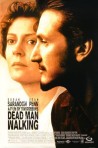
MarieCartierforKCETa-thumb-300x448-72405Earlier this week I went to hear Sr. Helen Prejean speak about the death penalty. You will remember, if the name does not immediately ring a bell, that the amazing movie Dead Man Walking (dir. Tim Robbins, 1995) was about her and her ministry to provide solace and closure with God to those inmates on Death Row. In the film, Sr. Prejean was played by Susan Sarandon. Dead Man Walking, a phenomenal hit, chronicled her first attempt at this ministry—her trials and limited success—in helping Matthew Poncelet come to grips with what he had done, ask forgiveness of the victims’ parents (because he was complicit in the murder of two teenagers) and face his death with dignity.

dead man walkingIn addition to teaching Gender and Women’s Studies, I have also been the screenwriting professor at University of California Irvine since 1992. I have used the screenplay for this movie (adapted from Prejean’s book and direct interviews) almost since it was published. It’s a great example of how research, interview, and authenticity can make a movie work—rather than “making it up.” Even the title was new to most of America- “Dead man walking!” refers to the last walk an inmate makes as he (or she) walks to his (or her) death.

So, I was enthusiastic when I heard that Sr. Helen was speaking at a local church very close to my house. Although I’ve used the screenplay for well over a decade, I had never met her or read the actual memoir she wrote. It seemed the perfect opportunity to meet her and get a signed copy—and also something my students would love to hear about when we discuss the film in the winter. Continue reading “Right to Life vs Right to A Life: Abortion & The Death Penalty by Marie Cartier”

A Tale of Two Conferences (Or Reflections of a Parent Who Occasionally Travels for Work) by Grace Yia-Hei Kao

Grace Yia-Hei KaoIn the space of twelve days I will have taken two inter-continental and two transcontinental flights to attend two conferences. I will have slept in my own bed in sunny Los Angeles for only four of those nights and been away from my family in either Bochum, Germany or Chicago for the remaining eight. Thank God this kind of travel is far from normal for me. Continue reading “A Tale of Two Conferences (Or Reflections of a Parent Who Occasionally Travels for Work) by Grace Yia-Hei Kao”

Why I Don’t Believe in Female Pastors by Andreea Nica

Andreea Nica, pentecostalismIt may come as a surprise to those who identify as both feminists and religious practitioners that I don’t believe women should be pastors of any dominant religious congregation. This includes most religions which, I assert, are rooted in and structured by the tenets of patriarchy. Does that mean I think women should be congregants of a patriarchal-originated religious system? You guessed it – no. While this may seem like a radical notion to some, it took me quite some time to come to terms with my own conflict in being both feminist and a believer.

My transition from the Pentecostal sect was a long, intricate process that involved life-altering decisions. The notion of leaving the church was driven by my immersion in women’s studies during my undergraduate degree. There were many difficult questions I simply didn’t have an answer for, as the church didn’t provide me with them.

One of them being: Can women instruct an entire congregation of believers?

For those who are female pastors, I’m sure you’ve heard this one a million times, but somehow it never fades from religious and secular discourse. Whether it’s the Islamic, Jewish, Christian, or Mormon faith, women have had to constantly fight for their right to preach religious doctrine. In the beginning of my transition, I was on the side of: Preach it ladies! Continue reading “Why I Don’t Believe in Female Pastors by Andreea Nica”