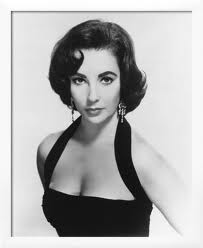
 I have begun to call my mother the “Reaper,” which I understand could be to some mums sort of insulting. Images of the Reaper are typically not terribly flattering, you know, with all that sunken skin and stringy black cloth flying around. My mom looks nothing like that, by the way. In fact, she has at all stages of her life borne a striking resemblance to Elizabeth Taylor, causing many a stranger to run up to her over the years, exclaiming, “Oh my goodness, do you know who you look like?” And, let me add, often much to the consternation of those in Mom’s company, such as, well– me, for example– when I was trying to deliver my first baby and the attending nurse ignored me in order to chat with my mom about her resemblances. But, I digress here.
Mom is the Reaper because she is at that point in her life when she rather unabashedly tells it like it is, “reaps truth” as I have come to think of it. Though she may look all violet eyes and white diamonds, she is beyond mincing words.
Is this a feature of aging? I once read that the decreased estrogen and increased testosterone levels in post-menopausal women may contribute to a personality shift where women are more inclined to report on what they are thinking. This may be a factor, but I would find it likelier that many women, menopausal or not, simply get to a point when they have seen/heard/experienced/endured enough that they find little merit in putting up fronts, regardless of hormonal predisposition.
Plus, I am wildly unimpressed by some of the material out there on menopause. It seems like a lot of conflated nonsense that correlates every aspect of female sexual maturation with hormonal imbalance and impending doom. I recently read a book by an “expert” named Dr. Miriam Stoppard – great last name for a menopause specialist, right? – that actually gave medical advice alongside hints about make-up tricks, relationship management tools for your depressed mid-life spouse, and what girdles to wear to help hold up your sagging flesh.
It is interesting that “women who speak their minds” are even an object of contemporary cultural commentary at all. I mean, would there be any talk at all about males who speak their minds? Young girls who speak their minds are cast as feminists, strong-willed, scary to boys, unfeminine, and so on. Of course, the embedded androcentric assumption is that they are doing something contrary to normative female behavior. Older women who “speak their minds” are cast as rude hags and crones, spreading around their venom and disappointment, especially if they swear. This blog on post-divorce dating, kind of says it all:
 On August 20, Alexandra Dyer, a Roman Catholic WomanPriest was the victim of a targeted acid attack to her face. Dyer had just left a meeting at
 This is the first poem I ever wrote and had published.
 It was 2004 during the first semester in one of my classes for the master’s program when my TA presented a lecture on feminist critiques of atonement and introduced me to the writings of Mary Daly. It was my first introduction to feminism as theory and theology, and my first introduction to Mary Daly the writer.



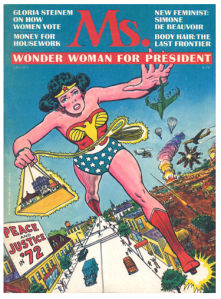
 When I was a teen in the 1970s, Wonder Woman was everywhere. A feminist cheerfully determined to right the world’s wrongs, especially against women, she boldly sprinted onto the cover of Ms. Magazine’s 1972 inaugural issue. Her tv series spun off toys, t-shirts, action figures, lunch boxes, and more. Now she’s back. Jill Lepore’s new book, T