Human Elements in Plants: Wisdom and Botanical Lore by Nazia Islam

My paternal side of the family comes from an extensive line of farmers. They were notable for growing eggplants, but they held all sorts of agricultural knowledge. My maternal side of the family has a hushed history of female kobiraj/ natural medicine practitioners. General folk knowledge was passed through mothers and mothers-in-law.

Much of this “folk knowledge” would peek into my life as I was growing up in New Jersey–especially through our garden. It didn’t matter where we lived, we would always grow something somewhere even if it was just germinating seeds for other people. My parents would go to great measures to bring back seeds of vegetables they could not find in the US–specifically gourds and beans– from Bangladesh whenever they visited.

Continue reading “Human Elements in Plants: Wisdom and Botanical Lore by Nazia Islam”

Reclaiming My Body by Carol P. Christ

Shortly after writing “Asking for Help,” a blog in which I described losing my physical strength following a series injuries, I finally took a friend’s advice—mainly to stop her from badgering me—and went to the doctor. This is something I don’t usually do, as not only have I almost always had excellent health, but also, I believe that, for the most part, the body can heal itself.  The first doctor sent me to an orthopedist who told me that the persistent bursa on my knee was nearly healed and to go ahead and exercise in order to regain my strength.

A few days later, I found myself walking to the end of my cobblestone street with my little dog and continuing on to the harbor, a walk of about fifty minutes that included a good deal of up and down, as my house is situated above the sea. As I had only planned to walk a short distance, I was amazed that I found the strength to go farther. Soon I found the perfect walk. Leaving home at 4:30 in the afternoon, I follow the road past houses and open fields down to the sea and around the harbor quay out to the lighthouse. The sun sets while I am on the quay and on most days the clear winter sky lights up and the sea turns rose-gold. The return around the harbor takes me past the little church of Agios Nikolaos where I stop to light a candle and say a prayer. Then back up the hill to my house, where I arrive just before dark. Continue reading “Reclaiming My Body by Carol P. Christ”

A Rescue Remedy, Part I by Barbara Ardinger

A year, now. It has been a full year since the phony election that put El Presidente in the Golden Office. A year since people began leaving the capital and the nation’s other large cities. While some of the refugees emigrated to quasi-democratic nations, most of them settled in the small towns and on the farms across the countryside, where they began building new, rural lives. A year ago, it was a flood of refugees. Now fewer people are able to escape.

A year, now, and even though she has studied and practiced, the wicked witch is no wickeder than she ever was. Nowadays she even forgets to put on the wicked-witch mask that she used to think scared people. But it’s easy for everyone to see that, masked or not, she’s just an ordinary woman practicing an old-time religion. She’s never fooled anyone, not the sixty or so refugees who now live on her farm, especially not the various ravens who drop by regularly for snacks in exchange for gossip.

Continue reading “A Rescue Remedy, Part I by Barbara Ardinger”

30 Years of Activism by Vanessa Rivera de la Fuente

Diseño sin título

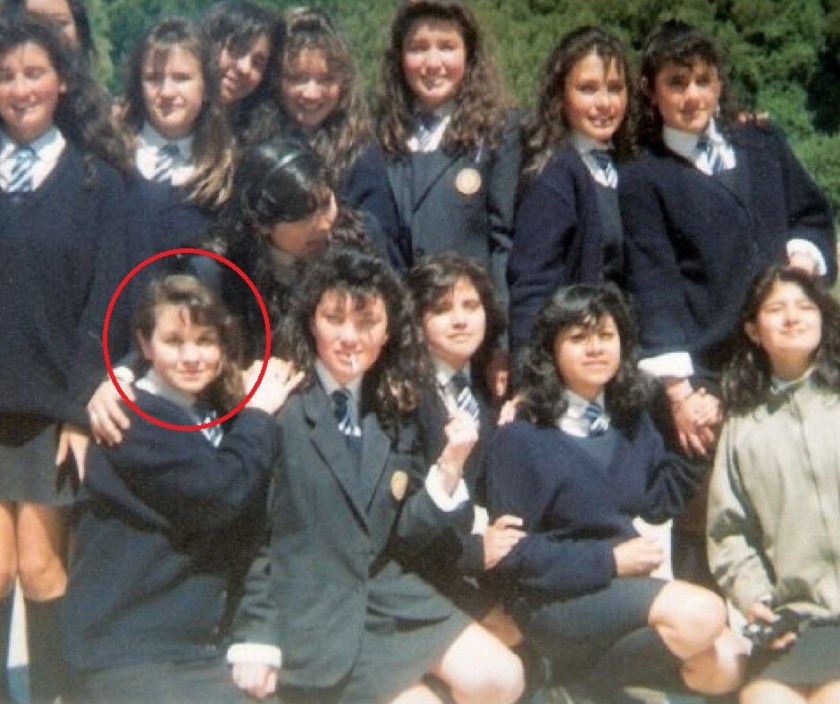
My first memory as an activist is of attending my first political public meeting to listen leaders of the resistance talking against the  Dictatorship, marching holding a sign that read “Democracy Now,” and taking my first dose of tear gas. It was 1988. I was 13 years old. My first menstrual period had come six weeks before. At that time, I didn’t know what feminism was; there were many books forbidden. Social Sciences such as Anthropology, Philosophy, and Sociology were banned in most universities.

But lack of theories could never prevent experience from happening and leaving its imprint. In 1990, at 15, I was gender conscious without recognizing my actions as feminism.

Continue reading “30 Years of Activism by Vanessa Rivera de la Fuente”

That Refreshing Change by Esther Nelson

Right now, I’m between semesters so find myself in Las Cruces, New Mexico, nestled into the house I plan to retire in—whenever that time comes.  Best to leave it all open.

While traveling here, I began feeling lighter and lighter—not unlike the sensation I got as a kid when school let out for summer recess.  Time stretched out forever, holding infinite possibilities.  Now that I’ve been in New Mexico three weeks, I wish time would slow down.  Christmas and New Year have come and gone with minimal fanfare.  I did not hang a single decoration, nor did I attend a single party.  Blessed relief.

Continue reading “That Refreshing Change by Esther Nelson”

Priestessing the Priestesses by Chris Ash

Christy CroftLast week, I had the incredible privilege of sitting vigil with a friend in hospice in her final hours on this earth. She slept for most of the time I was there, but her waking moments were lucid, if brief. She whispered how good the fresh juice tasted (it had been made for her by a friend), and she seemed to prefer having my hands on her back to pain medication. In the last hour I was with her before leaving, a mutual friend joined us and played gentle, lullaby-style music for her on the kalimba and guitar. As he sang softly to her, I could barely make out his words; the intention was pure, the moment was intimate, and I felt honored to be present for such a profoundly sacred moment.
Speaking with another mutual friend who had held space for Maria in her final days, I mentioned that as I was at hospice I had felt an awareness of priestessing the priestess. Our friend agreed, and said she’d had a similar sensation. “That’s who Maria has been for many of us, whether she claimed that title or not.”

Maria and I were not part of a shared formal congregation or spiritual community in the traditional sense. We were both part of an informal network of friends in a variety of communities whose membership and interests overlap – sacred movement, ecstatic dance, ancestral healing, sound healing, and alternative spiritualities. It’s a network that is both leaderless and full of leaders, as its inherent diversity of beliefs and practices lends itself to members who are specialists in one tradition, students in another, and generalists in deep compassion, holy presence, and unconditional love. Continue reading “Priestessing the Priestesses by Chris Ash”

Saving Joan of Arc by Natalie Weaver

I’m finished with my first semester as a studio arts major at Kent State University.  I am not sure whether I’ll be registering for a second one.  There were pros and cons about the experience, and I am not sure if one set outweighed the other. Regardless, I am on sabbatical this spring, have two books to complete, and figured I would do well not to be trekking back and forth in an hours worth of snow and ice over the next few months from my home to the school.  So, I am taking a semester off, and I have become one of those retention risks. I am grateful for the opportunity to reflect on the experience with only minimal consequence to my bank account and my (laughing) future in the arts.

It wasn’t a bad experience; it wasn’t a good one either, really.  I learned some things in drawing, but I am very much on the fence about my experience in sculpture.  For starters, I imagined playing with clay and making pinch pots while some Swayzesque spirit from beyond rubbed my shoulders.  Instead, I was more Jessica Beal with a welding mask, except, instead of wearing a swanky black leotard and off-the-shoulder-slouch-dance tunic, I was wearing ugly jeans and steal-toed shoes under the green welding suit that had half-dollar size holes in it.  The protective gear only partially worked; I was scared of the tools after a classmate almost lost a finger; and the top of my hair went up in smoke when a spark shot under my ill-fitting Vader hat on week two.  I put it out quickly, fortunately.

Continue reading “Saving Joan of Arc by Natalie Weaver”

Exploring Muslimness in the Aftermath of September 11, 2001 by Stephanie Arel

In my last post, I addressed the deeply personal accounts of Haroon Moghul’s self- and religious exploration in his memoir How to be a Muslim: An American Story. This post will broaden that reading to consider an October 2017 interview with Moghul at the 9/11 Memorial & Museum in New York City.

The interview echoes themes relevant to current global crises which implicate religion including how religious rhetoric circulates to support extremist violence and Islamophobia. Exploring how the events of 9/11 intertwine with such crises adds depth to understanding Moghul’s individual experience.

Continue reading “Exploring Muslimness in the Aftermath of September 11, 2001 by Stephanie Arel”

My Guardian Angel Is a Socialist by Carol P. Christ

When I began to research our family tree, my father told me that his grandfather George Christ emigrated from Germany because he was a socialist. I eventually learned that it was not George Christ but his parents, Thomas Christ and Anna Maria Hemmerlein, who emigrated from Bavaria. Thomas died in 1863 when George was an infant and George died in 1895 when my grandfather was an infant, which explains how their stories got confused.
Thomas and Anna Maria emigrated less than a month after negotiations for a new constitution following the uprisings of socialists and democrats the 1848 revolution ended in failure. Thomas and Anna Maria boarded the ship to America under different surnames and listing different villages of residence. This suggests that they had fallen victim to concords signed by the church and state that prevented poor men from marrying. Besides not being permitted to marry her beloved Thomas, Anna Maria was herself an illegitimate child, one of three born to sisters in the family of the poor teacher George Hemmerlein after he died.

It is easy to imagine Thomas and Anna Maria supporting the revolution of 1848 in hopes that they would be allowed to marry and be given land to farm. Nor is it difficult to understand that they were deeply disappointed and perhaps afraid of being persecuted for their beliefs when they decided to leave Bavaria in 1849. Anna Maria, who lived until 1907, would have been the one who told these stories to her son and grandsons. Continue reading “My Guardian Angel Is a Socialist by Carol P. Christ”

Hope for the New Year by Katie M. Deaver

I have never been one to set major resolutions at the beginning of the new year, but this year feels different somehow.  I can’t say that I am sad to see the end of 2017.  This year has felt like an unpredictable roller coaster both on a national and personal level.  The highs of finishing a doctoral program and building a relationship with my boyfriend’s six year-old daughter were met with the complications of job searching, concern over losing access to affordable health care, and my feeble attempts to balance appropriate and timely responses to the constant onslaught of ridiculous, or often downright appalling, headlines with my need to remain at least somewhat sane.  All in all I am ready for 2018 to begin and I feel a new drive to find ways to make this a better year for myself and for those around me.

How do I go about accomplishing this? I don’t want my new goals to go the way of so many resolutions… given up on or discarded by mid-January or perhaps February if I’m lucky.  Rather I want to find ways to dedicate myself to small changes that I can sustain long-term, small changes that help me feel as though I am having an impact.  In addition, I want to find ways to rejuvenate and reinvigorate myself and my actions on a regular basis… to make 2018 feel more like an enjoyable walk in lightly falling snow and less like slogging through five feet of that snow while carrying a heavy burden on my back.

Continue reading “Hope for the New Year by Katie M. Deaver”