


Who does Islamic(s) feminism(s) belong to?
The answer to this question seems obvious: Islamic feminism belongs to all Muslim women who wish to adhere to it, and feminism is for everybody, as bell hooks said.
In reality however, it is not so easy. Even the most well crafted theories must be implemented by human beings who have been socialized under the Patriarchy’s rules and practices. Lived experience reminds us that feminisms of all kinds are marked by dynamics of power, internalized misogyny, lack of intersectionality, egos, and personal interests.
In this situation I wonder: Are feminisms, and Islamic Feminisms in particular, truly for everyone?
Continue reading “Who Does Islamic(s) Feminism(s) Belong To? by Vanessa Rivera de la Fuente”
 What do we mean when we call girls “bossy”?
 Yesterday I sat in my car, buckled and ready to reverse just when I looked out my side window to see the people getting into their car next to mine.
 I watched this short video on facebook about
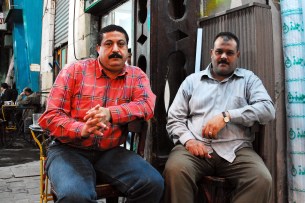 Then Sisa made the news and was honoured by governmental officials. There is footage in the report of Egyptian men watching that footage. Apparently, the men were impressed by Sisa’s efforts and they developed respect for her. One man, who knows Sisa personally, says for camera: “I treat her like a man, because she works like a man”.
 When I was in high school, I remember being preoccupied with being my “authentic” self. I am quite sure I had little idea of what that meant because I think it was akin to knowing the content of my ego, my likes and dislikes, and simply being honest about them. For someone who avoids confrontation and tends to hide or lie about the truth far too often with the more persistent people in her life, this might not have been a bad ethics to practice; although, if that was what I was aiming for, I didn’t achieve my goal then and still have not.
 In a recent article from


